Ammar Sabilarrohman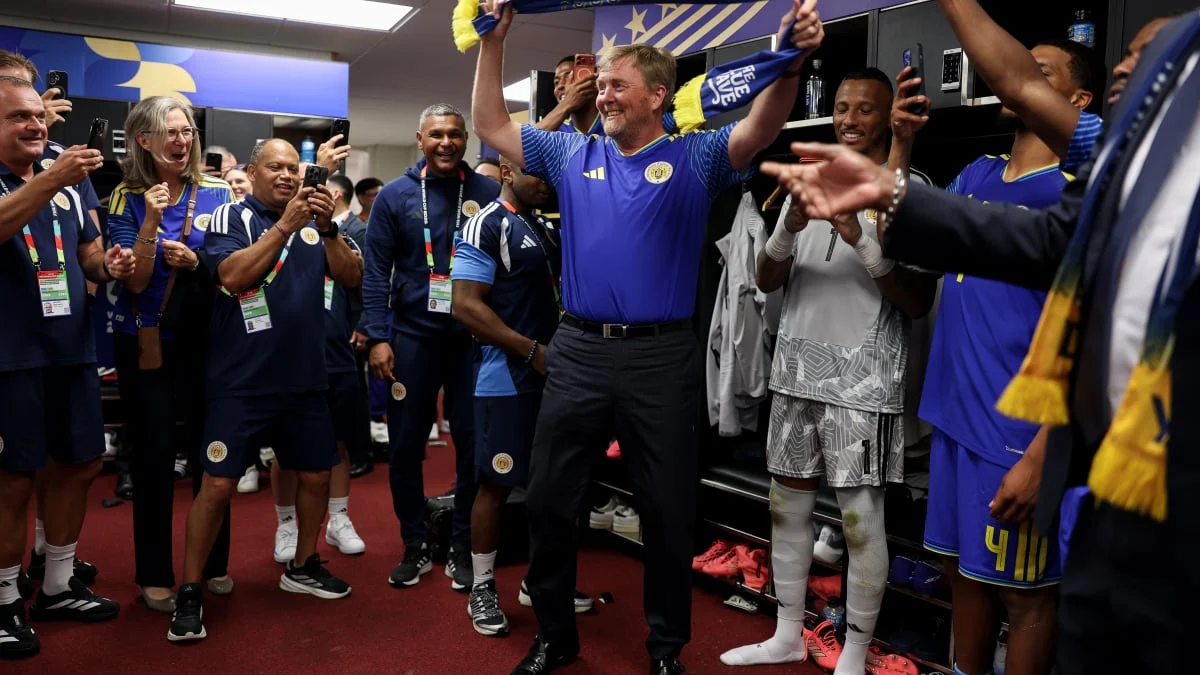
Since its inception in 1930, the FIFA World Cup has been synonymous with the pursuit of glory, usually measured in gold-plated trophies and ticker-tape parades. Yet, as the 2026 edition of the tournament unfolds, it has become increasingly clear that the most enduring legacies are not being written by the perennial favorites, but by the nations that were never expected to make it this far.
The 2026 tournament has evolved into a celebration of the "great equalizer," where the gap between global football titans and emerging nations has narrowed in ways that have captivated the sporting world. From the island spirit of Curaçao to the historic persistence of Egypt, this World Cup has proven that the heartbeat of the beautiful game often pulses strongest in the shadows of the giants.
The Great Equalizers: Analyzing the Tournament Shift
The 2026 World Cup has been defined by a distinct trend: the tactical and emotional success of teams that, on paper, should have been eliminated in the group stages. This is not merely a string of "lucky" results; it is the culmination of increased professionalization, global scouting networks, and the psychological impact of playing on the world’s biggest stage.
For nations with populations smaller than some individual stadiums, the tournament has provided a platform for national identity. The data is compelling: the number of teams making their tournament debuts or returning after multi-decade droughts has brought a new level of unpredictability to the group standings. This shift has forced powerhouses like Germany, Spain, and Belgium to adapt to a landscape where no opponent can be dismissed as a "walkover."
A Chronology of Cinderellas
The Willemstad Miracle: Curaçao’s Historic Point
Curaçao, a nation with a population of approximately 156,000, entered the tournament as the smallest country ever to participate in a FIFA World Cup. Following a crushing 7-1 opening defeat to Germany, the odds of them securing a point against Ecuador were astronomical.
Ecuador dominated the proceedings, launching nearly 30 shots and generating an expected goals (xG) metric that usually guarantees a landslide victory. However, goalkeeper Eloy Room turned in a legendary performance, recording 15 saves to secure a 0-0 draw. For the people of Willemstad, the lack of a goal was irrelevant; the draw was treated with the fervor of a championship victory. It was a testament to the resilience of a squad that refused to be defined by its lack of pedigree.
The Blue Sharks of Cape Verde
If Curaçao provided the grit, Cape Verde provided the charm. Nicknamed the "Blue Sharks," the debutants held Spain to a scoreless draw before fighting to a 2-2 stalemate with Uruguay. Kevin Pina’s 31-meter free-kick strike and Hélio Varela’s equalizer were highlight-reel moments that put the island nation on the global map.
The narrative reached a fever pitch around 40-year-old goalkeeper Vozinha, whose Instagram following ballooned from 50,000 to over 15 million. Beyond the stats, his story became the heart of the tournament. After an emotional post-match interview where he revealed his mother could not afford the visa to watch him play, diplomatic intervention—including support from the U.S. State Department and House Minority Leader Hakeem Jeffries—allowed her to attend the Miami match. It was a poignant reminder that the World Cup is, at its core, a human story.
The Dignity of Iran in Los Angeles
Not every underdog moment took place on the pitch. Iran’s journey in the 2026 tournament was fraught with logistical hurdles, as the team faced travel restrictions that forced them to base their operations in Tijuana, Mexico, only entering the U.S. for match days.
Following a hard-fought 0-0 draw against Belgium at SoFi Stadium, the team left a handwritten note in the locker room. It read: "We came to Los Angeles with pride, competed with honour, and leave with dignity." This gesture transcended the game, highlighting the resilience of athletes navigating complex geopolitical landscapes to perform at the highest level.
Supporting Data: The Impact of New Blood
The success of these nations is not anecdotal. Data from the first two weeks of the tournament indicates that possession and shots-on-target metrics are becoming more distributed among non-traditional footballing nations.
| Nation | Tournament Context | Key Milestone |
|---|---|---|
| Curaçao | Smallest nation to play | First-ever tournament point |
| Cape Verde | Tournament debut | First goals and massive viral growth |
| Uzbekistan | Central Asian debut | First World Cup goal for the region |
| Haiti | 52-year absence | Return to the world stage |
| Egypt | 92-year wait | First-ever World Cup match victory |
The inclusion of these teams has led to record-breaking viewership in their respective regions. For countries like Uzbekistan and Haiti, the matches were not just about the final score; they were events that unified populations, often overcoming narratives of crisis or obscurity with the unifying language of football.
Official Responses and Tactical Implications
FIFA officials have noted that the 2026 format—which allows for a more diverse array of global representatives—has successfully expanded the game’s reach. In a press briefing, a FIFA spokesperson stated, "The level of parity we are witnessing confirms that the development programs initiated over the last decade are yielding results. The ‘Big Five’ leagues are no longer the only places where world-class football is being played."
Tactically, analysts have observed that underdog teams are employing high-discipline "low-block" defensive structures, coupled with explosive, counter-attacking transitions. The "LinkedIn recruitment" strategy utilized by Cape Verde—finding talent through unconventional digital channels—has sent shockwaves through traditional scouting departments, suggesting that the future of international team building may move away from rigid, legacy-based pipelines.
The Broader Implications: More Than a Game
The 2026 World Cup is proving that the sport’s value lies in its capacity for transformation. For Egypt, Mohamed Salah’s leadership in securing the country’s first-ever victory sparked celebrations that spanned from Vancouver to Cairo. It was a release of 92 years of anticipation, proving that for many nations, a win is not just three points—it is a reclamation of national pride.
Haiti’s return to the tournament after over half a century represents another layer of the tournament’s importance. By qualifying entirely through away matches, the team provided a sense of normalcy and joy to a nation that is frequently portrayed through a lens of instability. The tournament has granted these players a stage to project a different image of their homelands to the world.
A New Era of Global Football
As the tournament progresses toward the knockout stages, the question remains: can these underdogs sustain their momentum? Regardless of whether they lift the trophy, the "Cinderella stories" of 2026 have already altered the trajectory of the sport.
They have challenged the hegemony of established football powers, humanized the tournament through viral stories like Vozinha’s, and reminded fans that the World Cup is at its best when it is inclusive. By the time the final whistle blows in 2026, the history books will record the winner, but the collective memory of the world will surely belong to the underdogs who refused to be forgotten.
The 2026 FIFA World Cup has not just been a display of skill; it has been a masterclass in the power of hope, proving that on the grass, in the locker room, and in the hearts of millions, anything is possible.


 Neng Nana
 Siti Muinah