Lina Irawan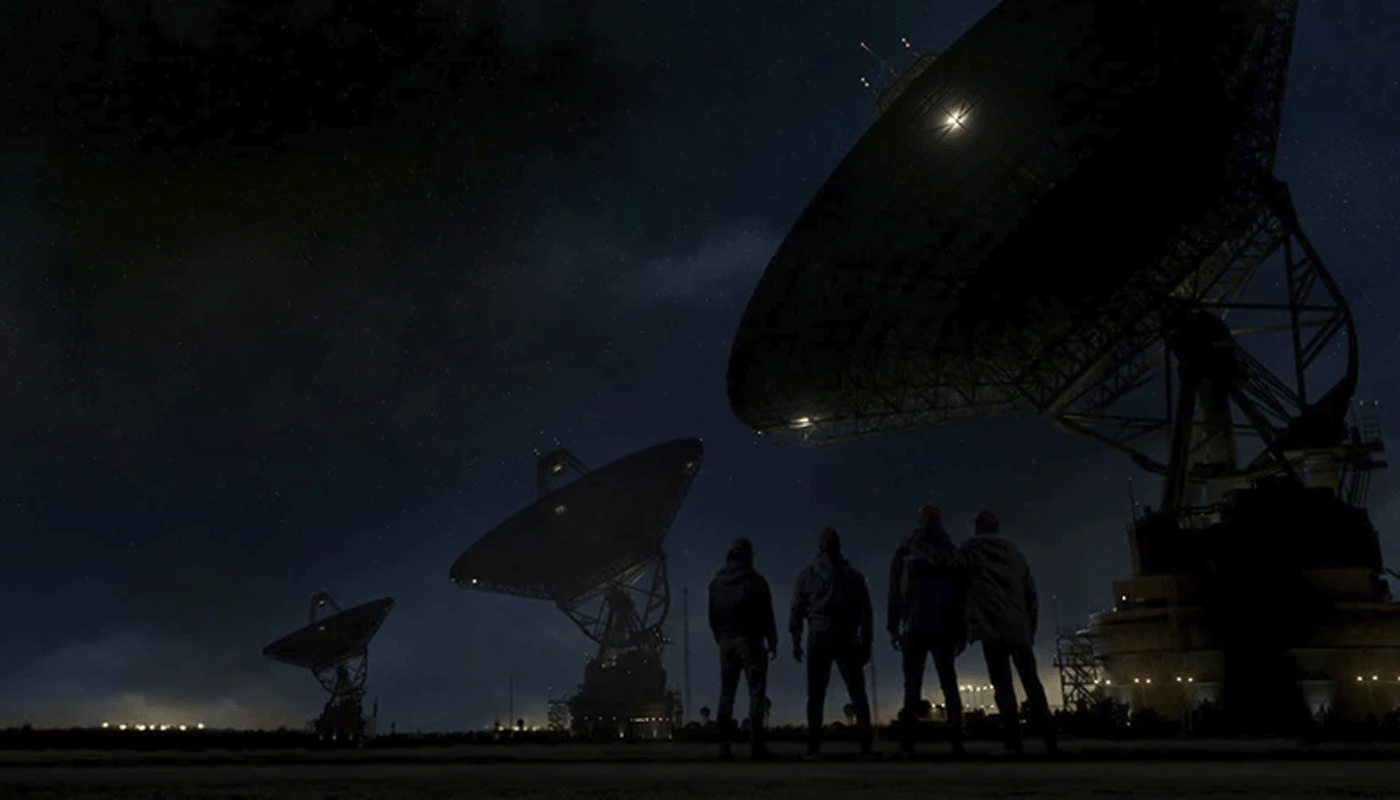
In the modern cinematic landscape, the term "low budget" has become a fluid, often contentious designation. While mainstream discourse currently fixates on the box-office success of films like Backrooms ($10 million) and Obsession ($750,000), these figures still represent a gulf of capital far removed from the reality of the average independent filmmaker. For many, a $750,000 budget is not a constraint—it is a fortune.
Enter Cosmos (2019), an ambitious science fiction feature written and directed by Elliot and Zander Weaver. A film born from the necessity of limited resources, Cosmos stands as a testament to what can be achieved when raw ingenuity replaces deep pockets. By stripping the production process down to its absolute essentials, the Weaver brothers created a polished, earnest homage to the sci-fi classics of the 1980s, offering a masterclass in modern, ultra-low-budget filmmaking.
The Genesis of a Micro-Budget Vision
The Weaver brothers, hailing from Birmingham, England, have been crafting narratives since childhood. Their journey into professional filmmaking was fueled by a deep-seated love for the earnest, awe-inspired science fiction of their youth, with Steven Spielberg’s E.T. (1982) cited as a primary influence.
However, their ambition faced a harsh industry reality. After drafting a screenplay titled Encounter, they spent years fruitlessly shopping it to producers. The feedback was a recurring, circular logic: they could not secure funding for a feature film until they had already proven they could make one. To bridge this gap, the brothers established a small production company, focusing on science and history documentaries for television. While this provided a steady income and technical experience, the desire to create their own feature remained unfulfilled.
Inspired by Robert Rodriguez’s legendary DIY approach to his 1992 debut El Mariachi, the Weavers decided to stop asking for permission. They resolved to create a film that fit within their current constraints, utilizing only the tools they had at their disposal.
A Chronology of Constraints: From Garage to Screen
The production of Cosmos was an exercise in extreme resourcefulness. The equipment list was modest: a single Blackmagic Pocket Cinema Camera (original model) with 1080p resolution, a collection of computer equipment, and the family’s station wagon. The "studio" was a friend’s garage, repurposed into a makeshift soundstage.
The crew was, by any industry standard, microscopic. It consisted of exactly five people:
- Elliot and Zander Weaver: Directors, writers, cinematographers, editors, and visual effects artists.
- Lesley Weaver: The brothers’ mother, who managed hair and makeup.
- Chris Davey: The composer responsible for the film’s atmospheric score.
- Two Production Assistants: Providing essential support during the grueling shoot.
Tragically, the brothers’ father, who had intended to be part of the production, passed away before filming commenced. This loss loomed over the project, yet the remaining team forged ahead. Because they lacked the funds to hire specialized labor, the brothers took on every technical role, from set building to complex sound design and color grading. While this was initially a choice made out of necessity, it evolved into a comprehensive education in the mechanics of filmmaking, despite the inherent inefficiencies.
For example, the film’s primary setting—a car parked in the woods—required the brothers to drive their personal vehicle to the garage each day, painstakingly setting up and breaking down the interior lighting and camera rigs for every scene. This labor-intensive cycle defined their workflow, proving that in the absence of capital, one must pay with time and sweat.
The Anatomy of the Narrative
Cosmos follows three amateur astronomers: Harry (Joshua Ford), Roy (Arjun Singh Panam), and Mike (Tom England). The trio, all connected to the aerospace industry, ventures into the woods for a routine night of stargazing. Mike, seeking to secure funding for his radio telescope data processing system, is particularly eager to prove his equipment’s worth.
The plot pivots when Mike intercepts a strange, rhythmic signal—one that falls within the "water hole" of radio frequencies, the quiet band of cosmic noise where scientists often search for extraterrestrial intelligence. After an initial, half-serious "Welcome to Earth" reply, the signal returns in a distorted, haunting format. Simultaneously, a satellite tracked by Roy mysteriously vanishes from surveillance, and equipment malfunctions begin to plague their setup.
The film excels in its early acts by leaning into the "uncanny." The isolation of the woods, combined with the claustrophobia of the car and the technical mystery of the signal, builds a palpable sense of dread and anticipation. The audience is invited to share in the characters’ confusion, rationalizing the anomalies until they can no longer be ignored.
Critical Analysis: The Climax and the Missed Opportunity
The core tension of Cosmos lies in the mystery. The filmmakers do an excellent job of establishing a "Chekhov’s gun" scenario, making the viewer feel that the forest is alive with hidden danger. However, the film’s ultimate trajectory has been a point of contention among critics and audiences.
As the story progresses, the initial sense of atmospheric horror shifts toward a more conventional, race-against-time thriller. The characters realize the signal is a response to the historic Arecibo message of 1974. The final thirty minutes, while technically competent, devolve into a frantic, somewhat repetitive struggle to preserve their discovery before their power source fails.
For many viewers, this climax feels discordant with the earlier, more patient buildup. The stakes—who gets to claim the discovery first—feel trivial compared to the implications of the signal itself. The film had primed the audience for something deeply weird and perhaps more personal to the characters; instead, it delivers a standard, high-energy finale that lacks the intellectual weight of the first hour.
Implications for Independent Cinema
Despite the shortcomings of its third act, Cosmos remains a significant achievement. It demonstrates that professional-looking, immersive sci-fi does not require a Hollywood budget. The film’s clean cinematography and sound design are arguably indistinguishable from productions costing significantly more.
The success of Cosmos highlights a broader shift in the film industry: the democratization of high-quality production tools. When a camera, a computer, and a dedicated team can produce a feature-length film that garners international attention, the gatekeepers of traditional studio systems lose their absolute monopoly on "valid" content.
However, the film also serves as a warning about the importance of story structure. As the Weavers continue to develop new projects—including a 16mm folk-horror film titled Nightstone—their evolution will likely hinge on their ability to balance their technical prowess with tighter, more thematic storytelling.
Looking Forward: The Future of the Weavers
The Weaver brothers represent a new wave of filmmakers who are not waiting for "green lights" from executive boards. Their trajectory—from documentaries to micro-budget sci-fi to experimental 16mm projects—suggests a desire to refine their craft through constant experimentation.
For the independent film community, Cosmos is more than just a movie; it is a proof-of-concept for the viability of the "garage production" model. While the story may have stumbled in its final act, the film’s existence proves that the barriers to entry are lower than ever. The question for the next generation of filmmakers is no longer, "Can we make a movie?" but rather, "What story is worth making, and how do we ensure the payoff justifies the struggle?"
As the Weavers move forward, their work will remain a focal point for those interested in the intersection of technology and creativity. Whether or not Cosmos succeeded in its narrative goals, it succeeded in its primary purpose: it announced the arrival of two filmmakers who possess the persistence, technical skill, and vision to navigate the challenging landscape of independent cinema.
Next week, our exploration of global micro-budget cinema continues as we head to Japan to analyze the "nagamawashi" technique in Beyond the Infinite Two Minutes. As we continue to examine these films, we must continue to ask: is the "low budget" tag a badge of honor, or a limitation that forces filmmakers into a corner? In the case of the Weavers, it appears to be both—and that is exactly where the most interesting films are made.


 Ammar Sabilarrohman
 Pevita Pearce