

The landscape of personal health technology is undergoing a fundamental transformation. For years, sleep trackers functioned primarily as "digital diaries," recording binary data points like time-in-bed and estimated sleep duration. Today, however, the industry has pivoted toward a more sophisticated model: active guidance. Through the integration of advanced artificial intelligence and high-fidelity sensor suites, devices are no longer just telling you how you slept—they are attempting to tell you why, and more importantly, how to fix it.
This shift represents a significant milestone in consumer wellness, but it brings with it a complex set of challenges. As these tools become more prescriptive, they risk crossing the line from supportive assistants to sources of "orthosomnia"—a preoccupation with achieving "perfect" sleep that can paradoxically increase anxiety and diminish overall sleep quality.
The Shift Toward Intelligent Coaching
The current generation of wearables, ranging from sleek smart rings to clinical-grade mattress sensors, utilizes multi-wavelength photoplethysmography (PPG) and advanced 3D accelerometry to map human physiology. The goal is to translate raw data—such as heart rate variability (HRV), respiratory rates, and blood oxygen levels—into actionable insights.
Modern AI-driven coaching now aggregates these metrics to provide personalized recommendations. If a user’s HRV drops significantly, the software might suggest a lighter training load or an earlier bedtime. If body temperature trends spike, the system might proactively flag potential illness or overexertion. When thoughtfully implemented, this evolution offers users a meaningful roadmap to better health.

The Hierarchy of Sleep Tracking: A Chronology of Innovation
To understand the current market, one must look at the progression of technology that led us here.
- The Early Years (2010–2015): The era of the simple pedometer-based tracker. These devices relied almost exclusively on motion sensing, often misinterpreting a night spent reading in bed as deep sleep.
- The Biometric Expansion (2016–2020): The introduction of wrist-based optical heart rate sensors allowed for the estimation of sleep stages (REM, Light, Deep). This period saw the rise of the "Sleep Score," a gamified metric that became the industry standard.
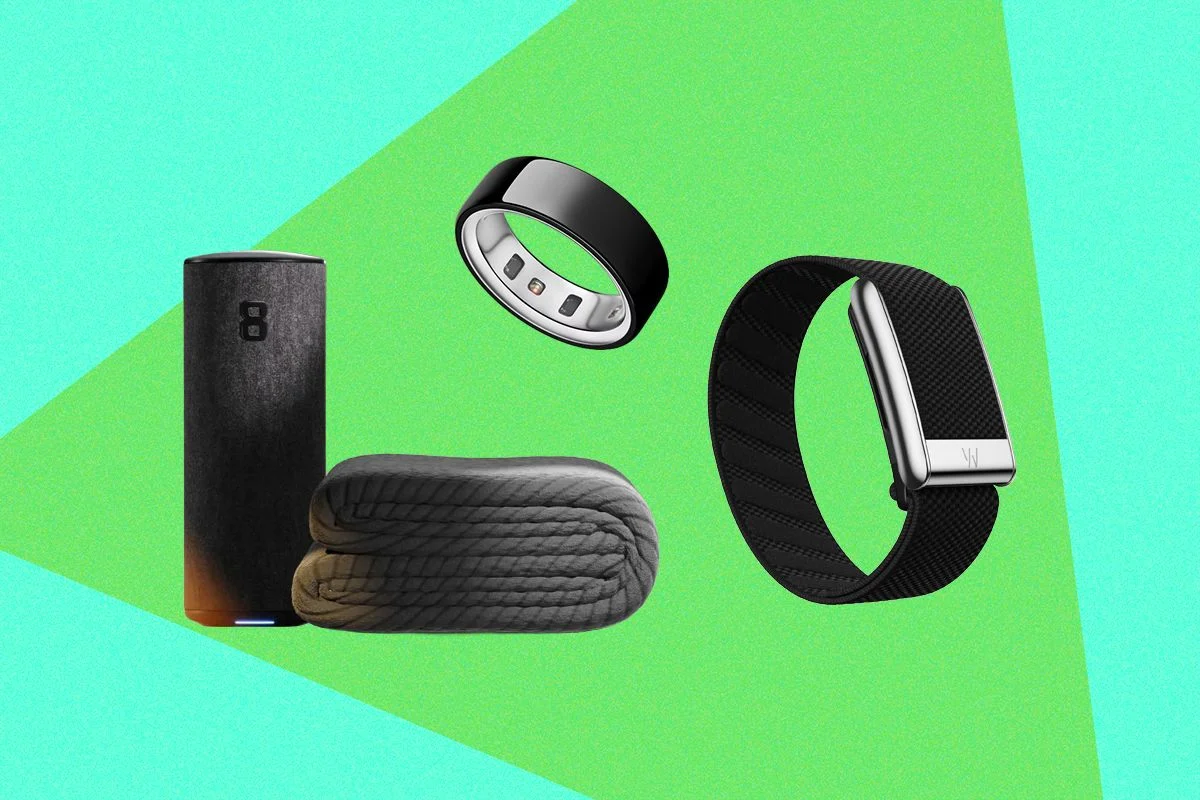
- The AI and Multi-Sensor Era (2021–Present): The current landscape features a convergence of hardware and software. Devices like the Oura Ring 4, the Whoop MG, and the Eight Sleep Pod 5 now incorporate temperature sensing, blood oxygen monitoring, and environmental controls. We have moved from simple observation to proactive, closed-loop systems that can physically adjust your environment—such as cooling your mattress—to optimize your rest.
Detailed Analysis of Top-Tier Sleep Trackers
1. Oura Ring 4: The Gold Standard in Comfort and Data
The Oura Ring remains a leader in the space due to its unobtrusive form factor. Its "multi-sensor suite" is the most robust in the ring category, utilizing 18-path PPG sensors to monitor physiological markers with high precision.
- Strengths: Exceptional comfort for overnight wear, industry-leading accuracy in sleep-stage detection, and an intuitive app interface. Its ability to auto-detect naps makes it a favorite for shift workers or those with irregular schedules.
- The Trade-off: The experience is gated behind a $6-per-month membership. Without it, the ring functions as a basic tracker, losing access to the long-term trend analysis that makes the device truly valuable.
2. Whoop MG: The Athlete’s Choice
Whoop differentiates itself by focusing on "Strain." Unlike other devices that prioritize a sleep score in isolation, Whoop calculates the recovery needed based on your daily physical exertion.
- Strengths: Excellent personalized bedtime and wake-up coaching. Its "journal" feature allows users to tag behaviors—like alcohol consumption or late-night screen time—to see a direct correlation with sleep performance.
- The Trade-off: The subscription model is more aggressive, with high-tier features like blood pressure and ECG monitoring requiring the "Life" membership ($359/year). Some users find the coaching overly ambitious, pushing for sleep durations that may be unrealistic for a busy adult.
3. Eight Sleep Pod 5: Environmental Control
Representing the non-wearable category, the Eight Sleep Pod 5 is a revolutionary approach to sleep hygiene. It functions as a climate-controlled mattress cover, capable of adjusting temperatures from 55°F to 110°F.

- Strengths: It removes the need to wear anything to bed. Its Autopilot feature makes real-time adjustments throughout the night based on your sleep state.
- The Trade-off: High entry cost and a mandatory subscription for the "Autopilot" software. Without the subscription, it remains a fancy electric blanket, losing its most powerful diagnostic and automated features.
Clinical Perspective and Expert Consensus
While consumer devices have become incredibly advanced, sleep scientists are quick to set expectations. According to sleep clinician Joseph Dzierzewski, "Neither category matches the precision of clinical sleep studies, especially for sleep staging."
The clinical community views these devices as tools for identifying trends rather than diagnosing disorders. Experts advise that users should prioritize "Total Sleep Time" (TST) over complex metrics like REM cycles. Because these devices infer brain activity from heart rate and movement, they are prone to misclassification. Relying too heavily on a proprietary algorithm’s "sleep score" can lead to unnecessary anxiety. If a device tells you that you had a "bad" night, but you feel rested, experts suggest trusting your own body’s signals first.
The Ethical Implications of Prescriptive Tech
The rise of "active guidance" poses a philosophical question: Who is in control of your sleep? As companies push for more aggressive coaching, there is a risk that users will stop listening to their own internal cues.
The goal of sleep technology should be to foster a healthy, intuitive relationship with rest, not to create a competitive environment where one must "hit" a certain score to feel successful. Developers and manufacturers are currently in a race to see who can provide the most "helpful" advice, but the most successful users are those who use the data as a background guide rather than a daily mandate.

Comparison Table: Choosing the Right Tracker
| Device | Type | Best For | Subscription Required? |
|---|---|---|---|
| Oura Ring 4 | Smart Ring | Comfort & Accuracy | Yes ($6/mo) |
| Whoop MG | Wristband | Athletic Performance | Yes (Various) |
| Eight Sleep Pod 5 | Mattress Cover | Temperature Regulation | Yes (Autopilot) |
| Pixel Watch 4 | Smartwatch | Android Users | Yes (Premium) |
Final Thoughts: The Path Forward
As we look toward 2026 and beyond, the next frontier for sleep tech will likely be the integration of ambient sensors that require even less user interaction. However, the core message remains unchanged: a tracker is an instrument, not an oracle.
Whether you choose a discreet ring, a performance-focused wristband, or an environmental mattress controller, remember that the goal is better rest, not more data. Use these tools to identify patterns—such as the impact of caffeine or late-night light exposure—and then use that knowledge to build a routine that respects your body’s natural rhythms. When the technology works as a silent, supportive partner, it can be a transformative force for long-term health. When it becomes a source of stress, it is time to turn off the notifications and trust in the simplicity of a good night’s rest.












No comments yet. Be the first to join the conversation!