

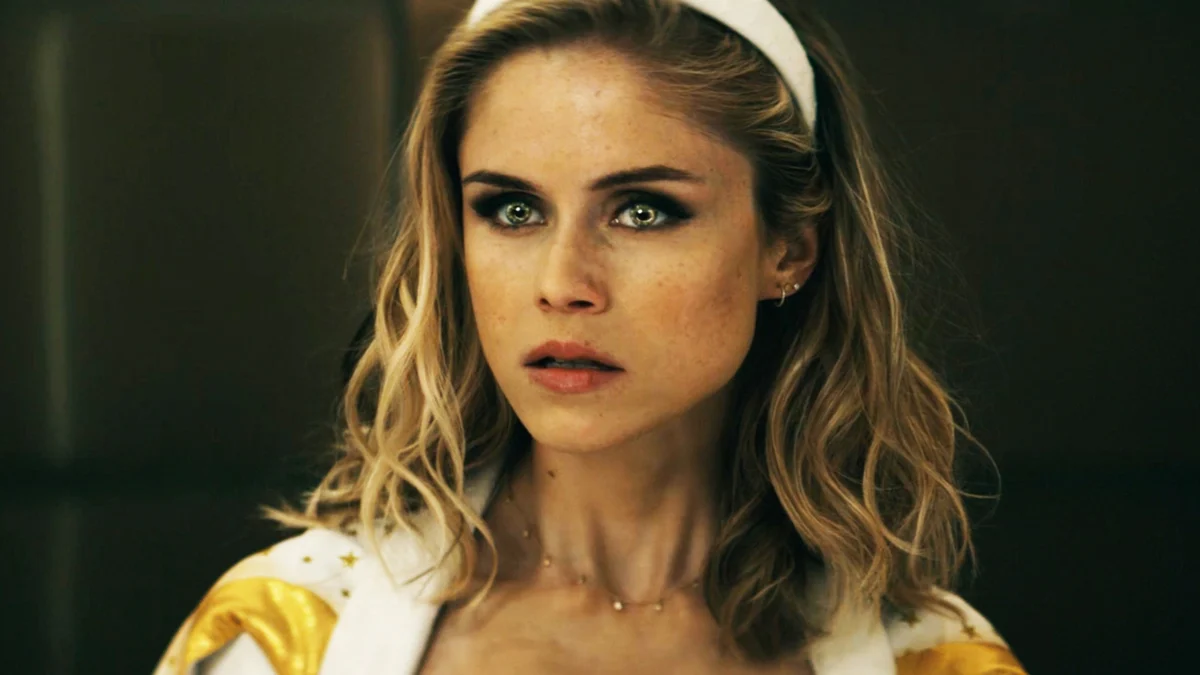
While audiences across the globe currently recognize Erin Moriarty as the beacon of moral integrity—and eventual revolutionary—within the cynical, corporate-sponsored superhero landscape of Amazon’s The Boys, her filmography is anchored by a brief but haunting appearance in what many critics consider the zenith of prestige television. Long before she donned the spandex of Annie January, better known as the incandescent Starlight, a young Moriarty cut her teeth in the murky, existential bayous of HBO’s True Detective Season 1.
For fans of contemporary television, the contrast is stark. In The Boys, Moriarty portrays a woman fighting to reclaim her autonomy from a multi-billion dollar conglomerate that treats her like a marketing asset. In True Detective, she played the role of a collateral casualty—the daughter of a man so obsessed with his own shadow that he failed to notice the light fading in his own home.
The Foundation: A Masterpiece in Modern Crime
To understand the significance of Moriarty’s early career move, one must first contextualize the cultural weight of True Detective Season 1. Premiering in 2014, the Nic Pizzolatto-penned series did not merely offer a procedural mystery; it presented a dense, atmospheric meditation on nihilism, trauma, and the nature of evil.
Anchored by the powerhouse performances of Woody Harrelson as Marty Hart and Matthew McConaughey as Rustin Cohle, the season was directed in its entirety by Cary Joji Fukunaga. Fukunaga’s cinematography, coupled with the philosophical density of the script, transformed the Southern Louisiana landscape into a character in its own right. It was a rare instance where the hype—which was astronomical—was surpassed by the quality of the product. While subsequent seasons struggled to recapture the lightning-in-a-bottle intensity of that inaugural run, the debut season remains a gold standard for HBO programming.
Chronology: Moriarty’s Rise Through the Ranks
Erin Moriarty’s inclusion in such a prestigious project was not a matter of mere coincidence, but rather the result of a keen eye for talent during the casting phase. According to interviews given by the actress to The Daily Beast shortly after the show’s conclusion, her path to the role of Audrey Hart was somewhat serendipitous.
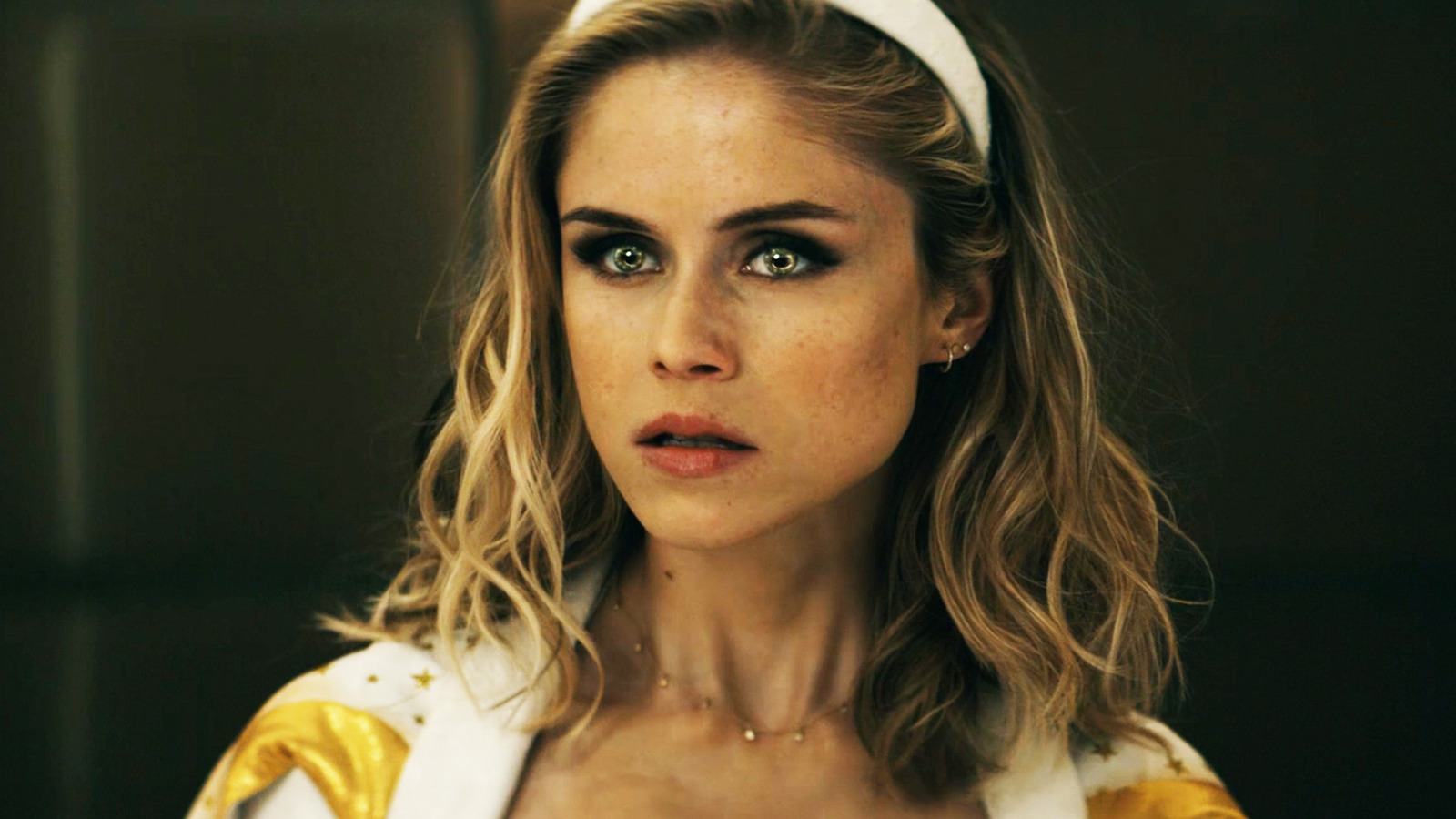
Initially, Moriarty had auditioned for a different, unnamed role within the series. However, after viewing her tape, showrunner Cary Fukunaga pivoted, seeing in her a specific, volatile energy that he felt was necessary to embody the rebellious and increasingly troubled teenage version of Marty Hart’s daughter.
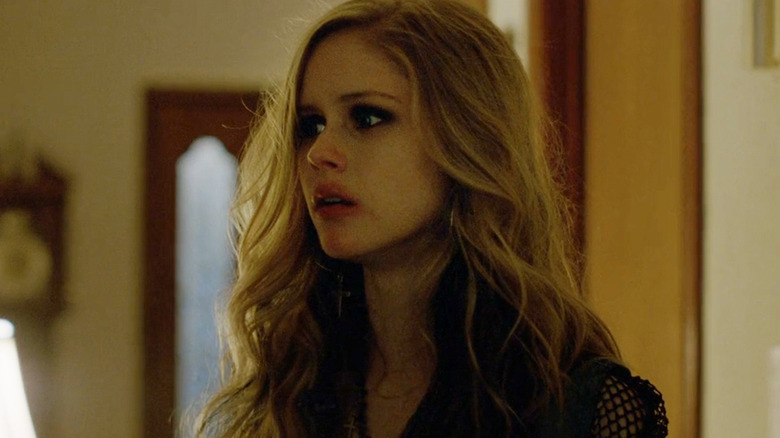
“I agreed, of course, because I wanted to work with all the amazing people involved,” Moriarty recalled. At the time, she was roughly 19 years old, standing on the precipice of a career that would soon lead her to international superstardom. The role of Audrey Hart was a microcosm of her craft: it required her to play a character who was physically present but emotionally distant—a child watching her family unit disintegrate under the weight of her father’s infidelity and professional obsession.
Supporting Data: The Anatomy of a Forgotten Performance
While Audrey Hart was not a primary investigator, she functioned as the emotional anchor for Marty Hart’s character development. In the narrative, Audrey serves as a mirror for Marty’s failures. As she transitions from a precocious child (played by Madison Wolfe) to a recalcitrant, acting-out teenager (played by Moriarty), the audience witnesses the tangible damage caused by Marty’s absenteeism.
The "Doll" Theory and Cult Influence
One of the most enduring legacies of Moriarty’s performance—and a testament to the show’s immersive nature—is the persistent fan theory regarding a scene involving Audrey and her sister, Maisie. In a chilling moment, the young girls arrange their dolls in a formation that bears a striking resemblance to the ritualistic crime scenes investigated by Cohle and Hart.
While show creators never confirmed a direct link between the children and the cult, the moment remains one of the most discussed enigmas of the series. It suggests that the evil pervading the Southern landscape was not confined to the dark corners of the woods; it had seeped into the domestic sphere, influencing the next generation in subtle, terrifying ways. Moriarty’s ability to exist within these heavy, subtext-rich scenes helped cement the show’s reputation for unsettling storytelling.
The Dynamics of Conflict
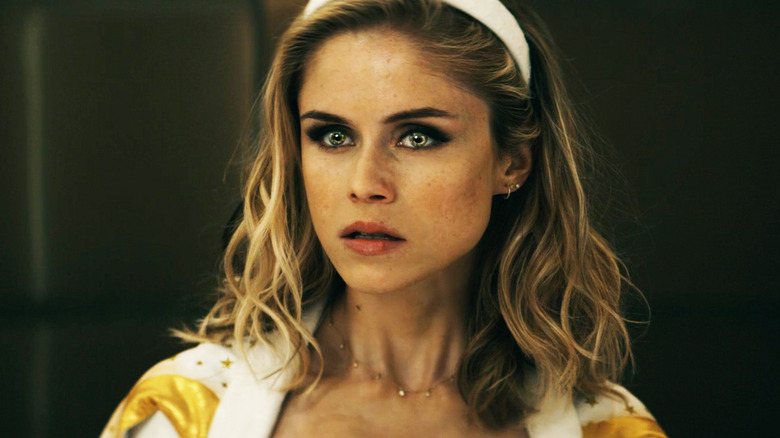
Moriarty’s performance was perhaps most notable during her volatile interactions with Woody Harrelson. In one of the season’s most emotionally charged sequences, Moriarty’s character is subjected to a physical and verbal confrontation that serves as a breaking point for the Hart family. For a young actress to stand toe-to-toe with a veteran of Harrelson’s caliber—and to hold that space with such raw vulnerability—was a clear indicator of the star power she would later display on a much grander scale in The Boys.
Official Perspectives: Reflections on the Craft
The transition from playing the neglected daughter of a detective to the "hopeful hero" of a satirical superhero series is a thematic evolution that has not gone unnoticed by critics. In The Boys, Moriarty’s character, Starlight, experiences a trajectory that parallels, in some ways, the disillusionment of Audrey Hart. Where Audrey learned that the "authority figures" in her life were fundamentally flawed, Annie January learns that the "saviors" of her world are fundamentally corrupt.
In her interviews, Moriarty has frequently spoken about the importance of choosing roles that demand emotional authenticity. Whether she is navigating the surreal, hyper-violent world of Vought International or the grit of the Louisiana bayou, her commitment to the humanity of her characters remains consistent. She does not play archetypes; she plays people caught in the machinery of systems—whether those systems are corrupt superhero agencies or broken family structures.
Implications: The Legacy of a Brief Appearance
Why does a small role from a decade ago still matter to fans today? The answer lies in the pedigree of the work. For an actor, appearing in a season of television as critically lauded as True Detective Season 1 provides a "prestige seal" that follows them throughout their career. It demonstrates an early ability to handle complex, dark, and nuanced material.
For fans of The Boys, revisiting True Detective provides a fascinating "origin story" for the actress behind Starlight. It allows viewers to see the range Moriarty possessed before she became a household name. Furthermore, it serves as a reminder of the shifting nature of television; the same actress who now fights to bring down a fictional, corporate-backed cabal of supes once helped ground one of the most intellectually demanding crime dramas in history.
Conclusion: A Must-Watch Recommendation
As the landscape of streaming television continues to expand, it is easy for older, singular masterpieces to be buried under the weight of new content. However, the first season of True Detective remains a mandatory watch for any serious enthusiast of the medium.
Whether you are a fan of Moriarty’s work in The Boys, Gen V, or her various film projects, her turn as Audrey Hart is an essential piece of the puzzle. It captures a moment in time where a young talent was given a small, pivotal role in a world-class production and rose to the occasion with grace and intensity.
If you have yet to witness the Southern Gothic brilliance of Rustin Cohle and Marty Hart, or if you simply want to see the early foundation of Erin Moriarty’s impressive career, there is no better time to revisit this HBO classic. Time, as the show famously reminds us, is a flat circle—and perhaps it is time you returned to the beginning.











No comments yet. Be the first to join the conversation!