

By Ollie Ring, Senior Editor
Updated: June 2, 2026
Riot Games has officially kicked off its annual Pride month celebrations for 2026, rolling out a suite of thematic in-game cosmetics across its expansive portfolio, including League of Legends, VALORANT, Teamfight Tactics (TFT), and Wild Rift. As the developer marks its eighth year of official Pride observances—a tradition dating back to 2018—the 2026 campaign places a heightened focus on artistic representation and community integration, aiming to provide players with tangible ways to display their support for the LGBTQIA+ community within the digital arenas they frequent daily.
Main Facts: What to Expect in the 2026 Pride Campaign
The 2026 initiative is designed to be accessible and inclusive, allowing players to claim various items—ranging from emotes and sprays to unique player titles—simply by logging into their accounts. Riot Games has structured this year’s event to ensure that whether a player is "roaming the Rift, holding B, or hitting a high roll on the convergence," they have the opportunity to engage with the celebration.
The cosmetics are not merely aesthetic; they serve as a digital hallmark of the company’s ongoing commitment to fostering an inclusive environment. While the items are free or easily obtainable, their release is accompanied by a broader internal campaign involving charitable fundraising and the spotlighting of LGBTQIA+ creators, artists, and cosplayers. This holistic approach signals a departure from simple cosmetic releases, moving toward a community-first narrative that highlights the diverse voices within the Riot ecosystem.
A Chronological Breakdown of the Event
The Pride 2026 festivities are governed by a staggered release schedule, tied closely to the patch cycles of each specific title. Understanding these timelines is crucial for players hoping to secure limited-time content:
- Teamfight Tactics (TFT): The vanguard of the celebration, TFT began its Pride initiatives on May 28 with the arrival of Patch 17.4. These events are scheduled to run through June 30, providing a month-long window for players to acquire the new "Happy Gills" Shork emote.
- League of Legends: The flagship title launched its content with Patch 26.11. The core of the event, including the new emotes and the return of legacy Pride content, will remain active through the conclusion of Patch 26.13.
- Broad Portfolio Initiatives: Throughout the month of June, Riot will be conducting internal events aimed at raising funds for various charities. These events serve as the backbone of the company’s corporate social responsibility efforts during the month, bridging the gap between in-game play and real-world impact.
Detailed Cosmetic Breakdown by Title
Riot Games has tailored the rewards to fit the distinct mechanical and thematic identity of each game. Below is the breakdown of what players can expect to find in their inventory or the shop:
League of Legends
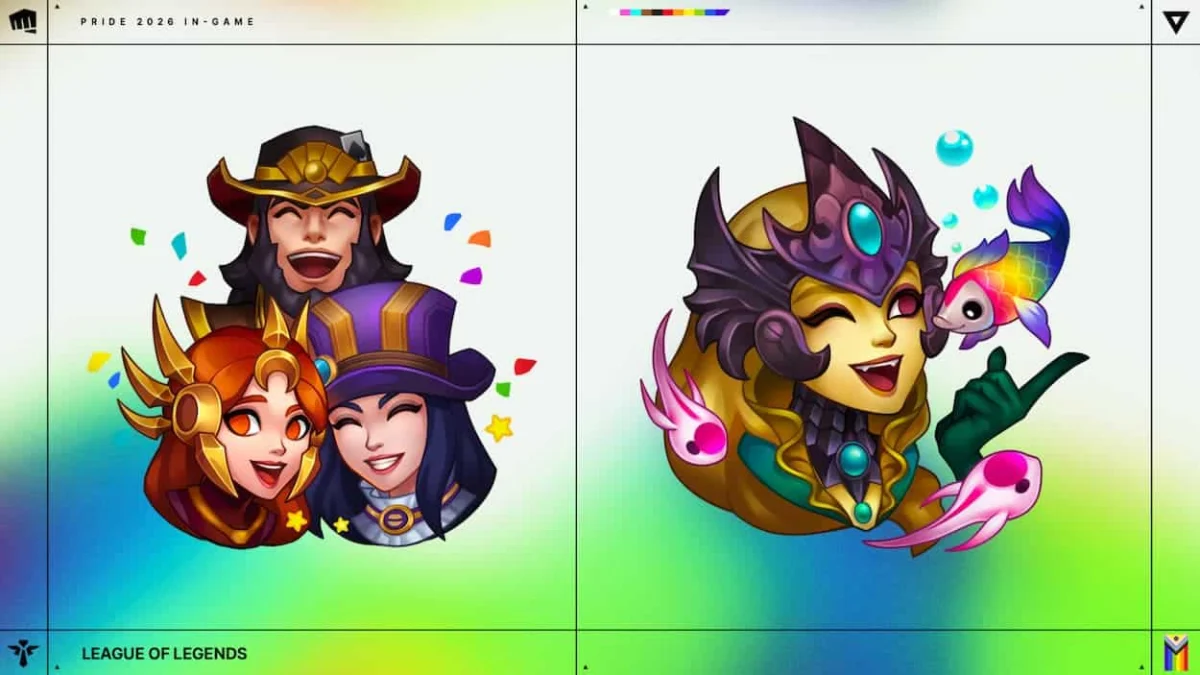
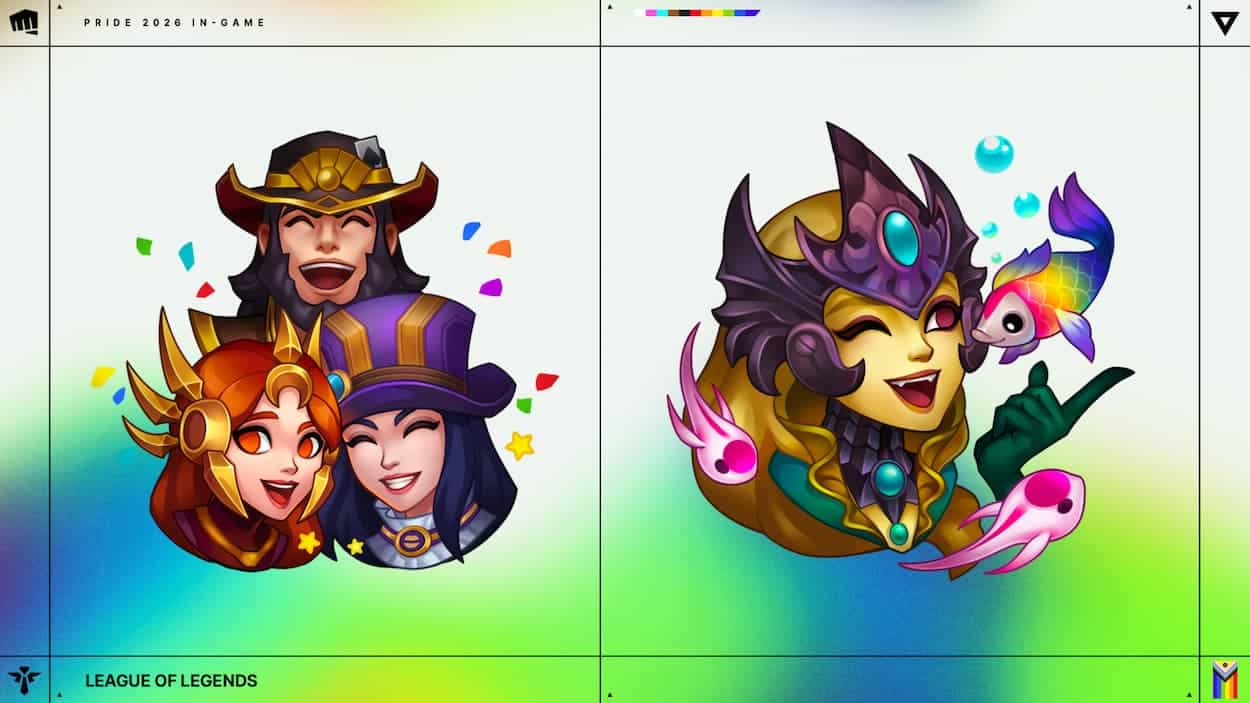
The League of Legends rollout is the most comprehensive. Players can acquire two brand-new emotes: "We Shine Together," which highlights the fan-favorite champions Twisted Fate, Caitlyn, and Leona; and "Keep Swimming," featuring Nami. Both are available in the store for the symbolic price of 1 Blue Essence.
Furthermore, Riot is re-releasing a curated selection of previous Pride assets, including icons and homeguards. The "United Together" mission, active during Patch 26.11, provides an additional layer of engagement; by playing three games with a premade team, players earn 500 Battle Pass XP, encouraging cooperative play during the event.
Teamfight Tactics
In the high-stakes world of the convergence, TFT players can secure the "Happy Gills" Shork emote. This item is available via the Rotating Store for 50 Realm Crystals, offering a unique way for tacticians to celebrate between rounds.
VALORANT
Tactical shooter fans are being treated to the "All Love" spray, which features the popular agent assistant, Wingman. Additionally, players can equip the "Holding Space" title, a subtle yet meaningful nod to the importance of inclusivity in competitive gaming spaces.
Wild Rift
The mobile adaptation, Wild Rift, is aligning its Pride celebration with the highly anticipated debut of K’Sante. Players can claim the "Stand by Me" icon and the "Built to Carry" emote, effectively merging the game’s newest champion launch with its Pride festivities.
Supporting Data: The Evolution of Inclusion
Riot Games’ history with Pride is a complex narrative of growth and iteration. Since the inaugural celebration in 2018, the studio has navigated the challenges of maintaining a global platform that serves millions of players with vastly different cultural perspectives.
While the developer has faced historical controversy—including debates over the sincerity of corporate activism and community backlash regarding how such topics are handled—the data suggests a consistent effort to standardize Pride content. By moving from sporadic, singular items to a coordinated, multi-game event, Riot is demonstrating a long-term strategic commitment to its LGBTQIA+ player base.
The involvement of eight commissioned community artists to produce bespoke artwork for titles like Legends of Runeterra, Riftbound, and the upcoming 2XKO showcases a shift toward platforming community talent. This is not just about the games; it is about providing a canvas for the artists who help define the visual language of the Riot brand.
Official Responses and Corporate Strategy
In its June 1 announcement, Riot Games emphasized that the goal of the 2026 event is to create a sense of belonging. The messaging from the studio focuses on the idea that every player should feel welcome, regardless of their identity.
"Our goal is to ensure that Pride is not just a moment, but a persistent part of our culture," a company spokesperson noted. This philosophy is reflected in the ease of access for these items. By pricing most assets at 1 Blue Essence or making them available through simple missions, the studio is effectively removing barriers to entry, ensuring that the Pride celebration is accessible to all players, not just those willing to spend premium currency.

Implications: The Future of Esports and Pride
The implications of Riot Games’ sustained commitment to Pride are significant for the broader esports industry. As gaming continues to mature into a mainstream cultural pillar, the expectations placed on developers to act as social architects grow accordingly.
1. Normalizing Diversity
By integrating Pride content into the core gameplay loops of titles like VALORANT and League of Legends, Riot is helping to normalize the presence of LGBTQIA+ themes in environments that have historically been perceived as exclusionary. This contributes to a broader cultural shift where gaming is increasingly viewed as a safe space for all demographics.
2. The Power of "Legacy" Content
The decision to bring back legacy content is a clever strategy. It allows newer players to catch up on years of history while signaling to long-term players that the studio values the continuity of its initiatives. It prevents the "one-off" feeling of typical brand activations and instead builds a sense of tradition.
3. Economic and Social Impact
While the items themselves are low-cost, the charitable aspect of the month-long internal events represents a substantial investment. By focusing on charity, Riot leverages its massive platform to generate real-world support for LGBTQIA+ organizations. This serves as a model for other major esports publishers who are looking for ways to engage in social advocacy without resorting to performative gestures.
4. Community-Led Development
The decision to commission community artists is perhaps the most vital aspect of the 2026 campaign. It validates the work of LGBTQIA+ creators within the player base, transforming them from passive consumers into active contributors to the game’s official lore and aesthetic. This creates a feedback loop of representation that strengthens the relationship between the developer and the community.
Conclusion
The 2026 Pride campaign from Riot Games is a testament to the maturation of the studio’s approach to inclusivity. By focusing on accessibility, community collaboration, and a consistent, multi-title rollout, Riot is attempting to move beyond the controversies of the past and establish a standard for how global gaming companies can engage with social movements.
Whether it is the new "Happy Gills" emote in TFT or the "Holding Space" title in VALORANT, these items are more than just digital trinkets; they are symbols of an evolving industry. As Riot continues to expand its portfolio with titles like 2XKO, the precedent set by the 2026 Pride celebrations suggests that inclusivity will remain a fundamental pillar of the company’s ongoing mission to "change the game."
For players, the message is clear: the digital worlds they call home are intended to be spaces where everyone can express their true selves. As the month of June progresses, it will be interesting to see how these small, virtual tokens of pride continue to shape the social fabric of the global gaming community.










No comments yet. Be the first to join the conversation!