Reynand Wu
On June 2, 2026, at the Microsoft Build Developer Conference, the tech giant pulled back the curtain on a project that promises to fundamentally alter how enterprise environments interact with artificial intelligence. Dubbed "Project Solara," this ambitious initiative marks a departure from traditional application-based computing, ushering in an era of "agent-first" hardware. By leveraging a sophisticated chip-to-cloud architecture, Microsoft aims to replace the multipurpose PC with specialized, intelligent devices that function as portals to AI-driven workflows.
The Core Concept: From Apps to Agents
For decades, the personal computer has been defined by the application—a siloed environment where users manually navigate software to complete tasks. Project Solara seeks to dismantle this model. Developed by Microsoft’s Applied Sciences Group, the platform is designed to power enterprise devices that do not run traditional desktop apps, but instead serve as interfaces for AI agents hosted within the Azure cloud.
At the heart of this architecture is the Microsoft Device Ecosystem Platform (MDEP). Unlike the Windows-based systems one might expect from Microsoft, MDEP is built on the Android Open Source Project (AOSP). This strategic choice reflects a shift in priority: by utilizing a lightweight, highly scalable mobile-first OS, Microsoft can bypass the "legacy baggage" of Windows, ensuring that Solara devices are agile, power-efficient, and optimized for persistent, real-time connectivity to cloud-based intelligence.
Chronology of Development and Strategic Vision
The development of Project Solara is the culmination of years of internal research into human-computer interaction. While Microsoft has long been a leader in cloud computing and enterprise software, the gap between the desktop environment and the "front line" of industry—such as retail floors, hospital wards, and manufacturing plants—has remained a challenge.
- Pre-2025: Conceptualization within the Applied Sciences Group, focusing on "liminal" computing, where the operating system transcends the physical device boundaries.
- Early 2026: Formation of hardware partnerships with semiconductor leaders Qualcomm and MediaTek.
- June 2, 2026: Official unveiling at Microsoft Build, showcasing the platform’s "chip-to-cloud" orchestration capabilities.
- Post-Build 2026: Commencement of pilot programs with industry giants, including Target, CVS Health, and Levi’s, to refine agent integration for real-world enterprise scenarios.
Technical Architecture: The "Liminal" Operating System
Steven Bathiche, Corporate Vice President and Technical Fellow at Microsoft, describes the Solara operating system as "liminal." In his vision, the device itself is merely a window. The state of the user’s work, the intelligence of the agents, and the security protocols are all managed centrally within the Azure cloud.
The "Just-in-Time" UI
One of the most innovative aspects of Solara is its "Just-in-Time" UI. Traditional responsive design requires developers to manually scale layouts for different screen sizes. With Solara, Microsoft introduces an adaptive layer that allows a single AI agent to render its interface dynamically. Whether the device is a wall-mounted display, a tablet, or a wearable badge, the agent interprets the hardware’s capabilities and constructs a user experience that is optimized for that specific form factor in real-time. This reduces the burden on developers, who no longer need to write custom code for every individual device in a company’s fleet.
Hardware Partnerships and Certification
Microsoft has adopted a "certification-first" strategy, mirroring Google’s GMS (Google Mobile Services) model. By partnering with Qualcomm for portable and wearable hardware and MediaTek for stationary, IoT-focused devices, Microsoft ensures that the underlying silicon meets the stringent requirements for AI processing and connectivity. Microsoft will not manufacture the hardware itself; instead, it provides reference designs and strict certification requirements for OEMs, ensuring a consistent and secure user experience across all Solara-certified devices.
Unveiling the Hardware Prototypes
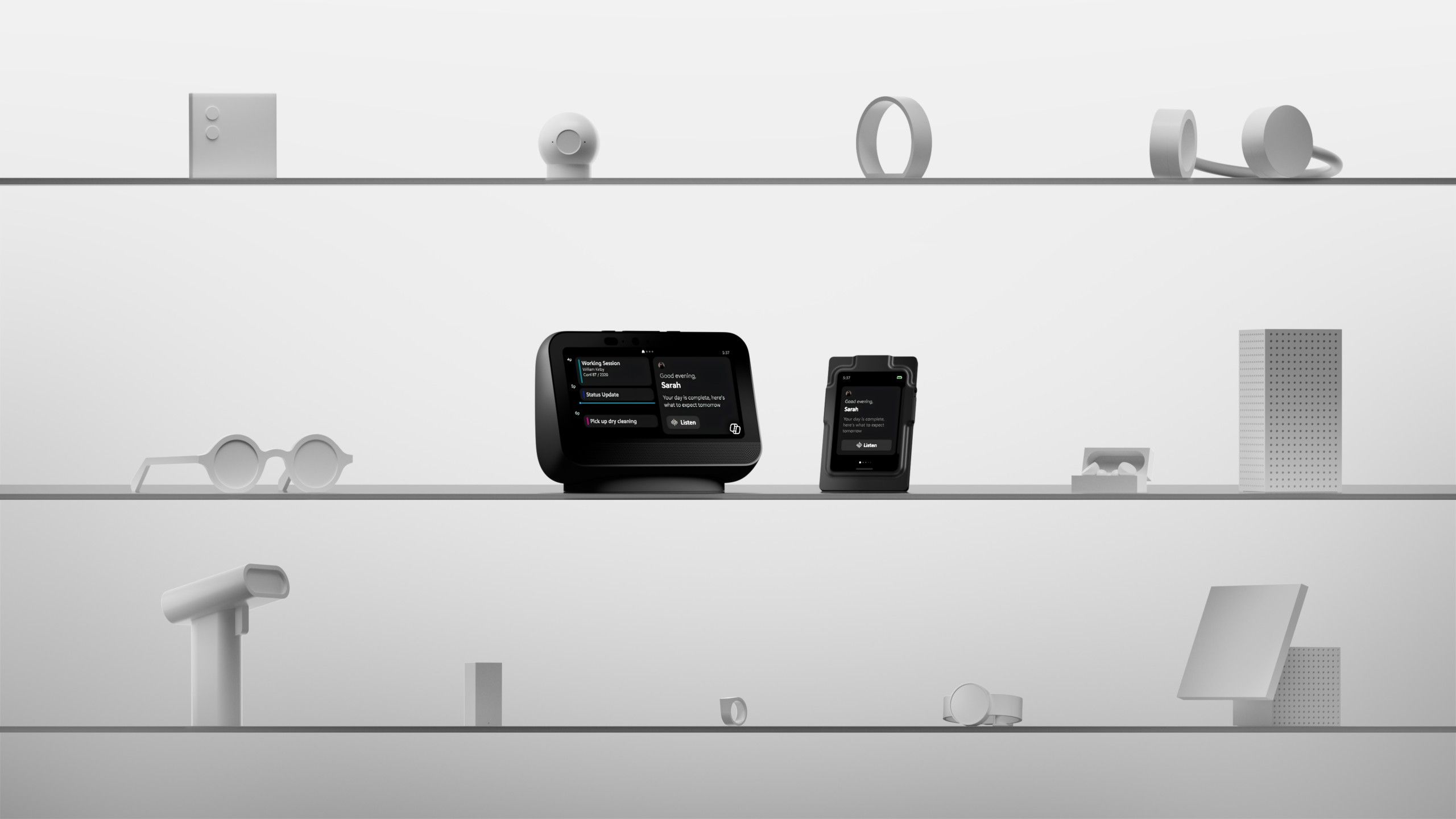
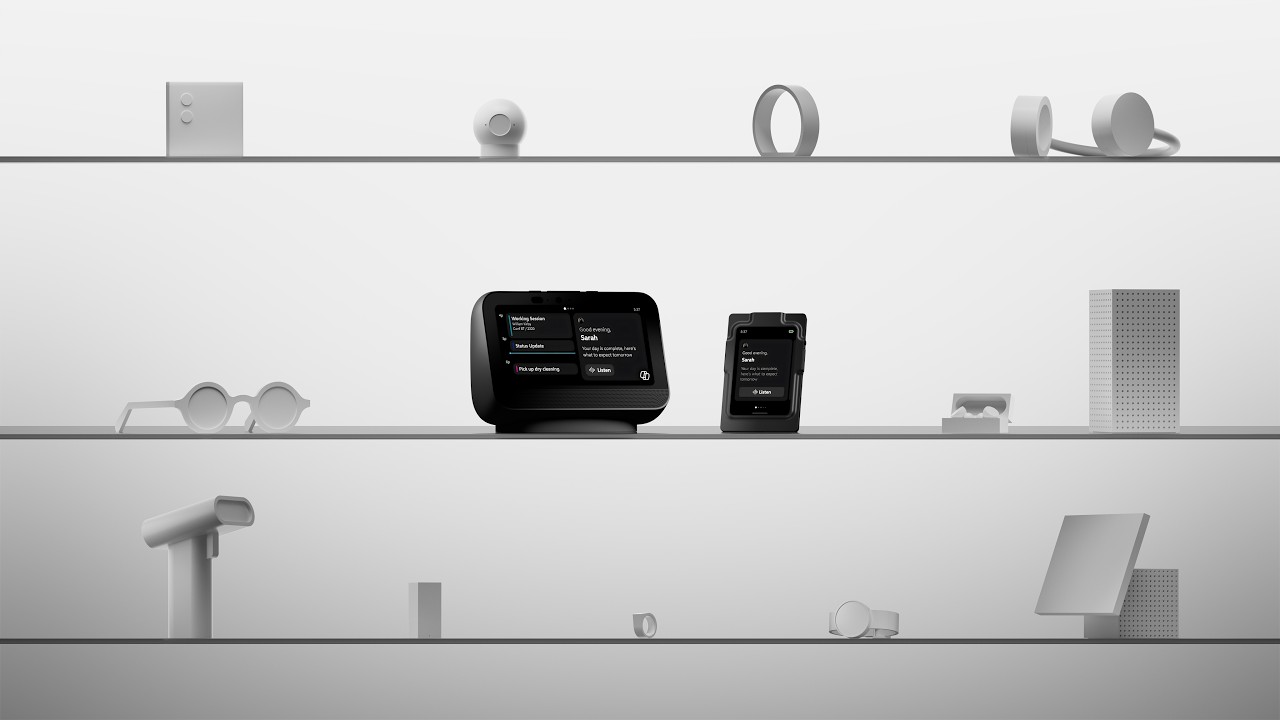
To demonstrate the capabilities of the platform, Microsoft showcased two distinct reference designs:
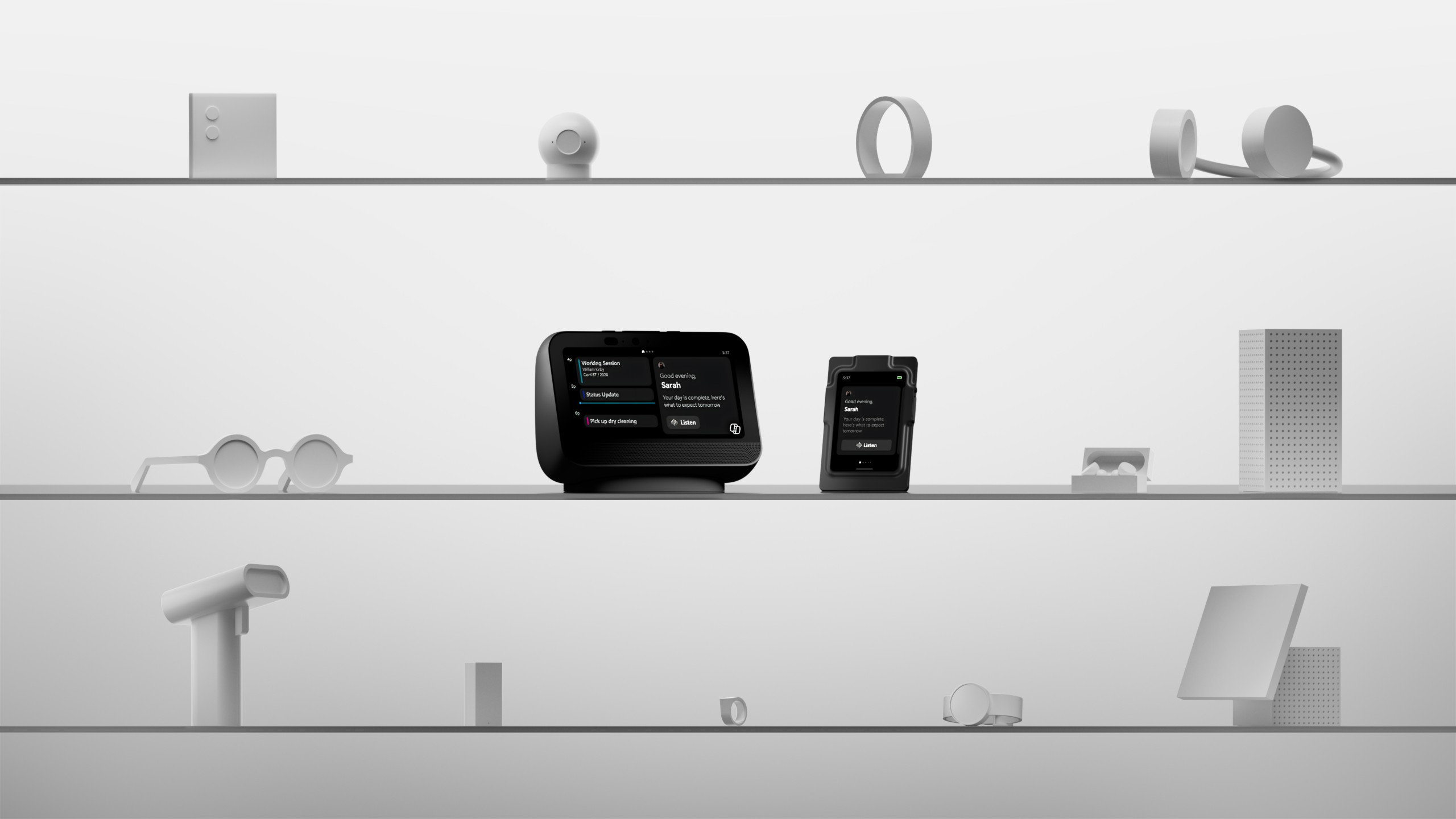
- The Desktop AI Hub: Built on MediaTek IoT silicon, this device is designed for stationary workspaces. It includes an integrated display, a camera, and a sophisticated UWB (ultra-wideband) presence sensor that handles automated, secure logins and locks as the user approaches or leaves the desk. With dual far-field microphones, it acts as a constant communication portal. When paired with an external monitor, it can transition into a Windows 365 Cloud PC client, bridging the gap between agent-first tasks and traditional desktop workflows.
- The Wearable AI Badge: Targeting front-line workers, this device is a masterclass in miniaturization. It features a high-fidelity touchscreen, a biometric fingerprint sensor for secure "Hello for Business" authentication, and a high-SNR (Signal-to-Noise Ratio) microphone array. With 5G, Wi-Fi, and GNSS connectivity, it is intended for nurses, field engineers, and retail staff who require hands-free, context-aware assistance throughout their shifts.
Implications for Enterprise Productivity
The move toward agent-first hardware has profound implications for corporate IT and operational efficiency. By centralizing the "brain" of the device in the cloud, companies gain unprecedented control over security and task management.
Agent Dispatching and Orchestration
Microsoft is actively developing an "Agent Dispatcher" and "Agent Task Manager." These components are designed to automate the user experience by detecting the context of a task and surfacing the relevant agent without user intervention. For example, a nurse wearing a Solara badge might be automatically prompted by a healthcare-specific agent as they enter a patient’s room, pulling up the necessary data before the nurse even touches the screen.
Industry-Specific Verticalization
The initial focus is on sectors where the physical device is currently a bottleneck.
- Healthcare: Integration with solutions like Dragon Copilot to streamline clinical documentation.
- Retail/Hospitality: Enabling staff to access inventory data or customer profiles without being tethered to a POS terminal.
- Finance/Legal: Providing secure, mobile access to high-level data through specialized, restricted-function hardware that minimizes data leakage risks.
Addressing the "Legacy" Challenge
A recurring question in the enterprise space is how to transition away from legacy infrastructure. By choosing Android (AOSP) as the foundation for MDEP, Microsoft is effectively side-stepping the expectations of desktop application compatibility. Since Solara is designed for AI-first workflows, there is no requirement for these devices to run legacy Win32 applications. This allows Microsoft to enforce a "clean slate" architecture where security and agent-cloud communication are the primary design pillars.
Looking Ahead: The Future of the Agentic Workplace
The success of Project Solara will depend heavily on developer adoption. While Microsoft has provided the infrastructure, the ecosystem will only thrive if developers embrace the "agent-first" paradigm. Early integrations with GitHub Copilot suggest that Microsoft is betting on its existing AI toolset to drive the initial wave of adoption.
Furthermore, the "liminal" nature of the OS suggests a future where the distinction between physical devices begins to blur. A worker might interact with an agent on their wearable badge, transition to their desk hub to continue the task, and finish on a larger display—all while the agent maintains a continuous state of the work in the Azure cloud.
As Microsoft moves into the pilot phase with major retail and healthcare partners, the industry will be watching closely. If Project Solara delivers on its promise of a more fluid, context-aware, and specialized computing environment, it may well mark the beginning of the end for the general-purpose, application-centric enterprise device.
In summary, Project Solara is more than just a new platform; it is a fundamental reconfiguration of the relationship between humans, machines, and artificial intelligence. By moving the intelligence to the cloud and the interface to the edge, Microsoft is positioning itself to define the next decade of enterprise technology. The question remains whether the market is ready to abandon the app-centric model, but with the backing of giants like Qualcomm and MediaTek, the infrastructure for this transition is already being built.

 Lina Hope
 Iffa Jayyana