

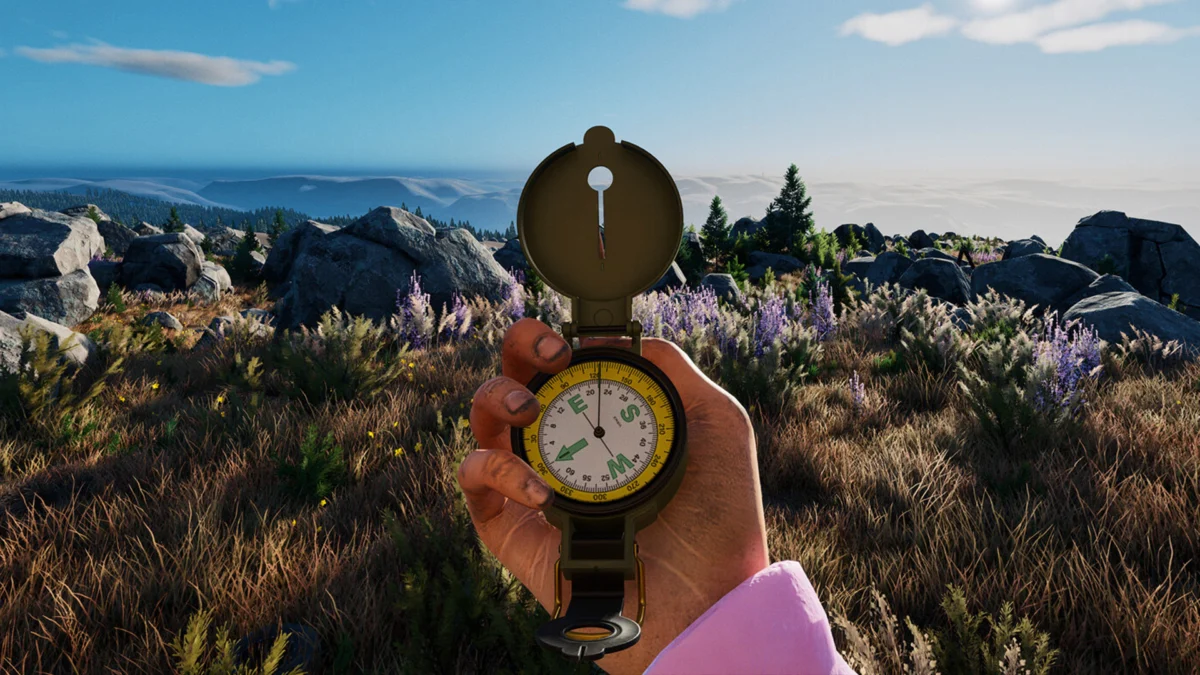
The dream of creating a "metaverse" capable of hosting planet-sized, procedurally generated worlds has hit a harsh economic reality. Brandon "PlayerUnknown" Greene, the visionary developer who rose to global fame as the architect of the battle royale genre, has announced that his independent studio, PlayerUnknown Productions, is undergoing a significant downsizing. The move marks a pivot point for a team that has spent the last several years attempting to push the boundaries of what machine learning and procedural generation can achieve in modern gaming.
The Fiscal Wall: A Studio in Transition
The announcement, delivered via a succinct statement on X (formerly Twitter), clarifies that the studio has reached a definitive "fiscal wall." For years, Greene has been self-funding the development of his proprietary "Melba" engine—a technology designed to move beyond the limitations of traditional game development by utilizing machine learning to generate massive, persistent, and highly detailed environments at scale.
"Unfortunately, I have reached the limits of how far I can continue to fund this journey in its current form," Greene stated. "As a result, I have made the hard decision to restructure the studio."
This restructuring has immediate and severe consequences for the company’s current output. While the development of the Melba engine will continue—albeit with a drastically reduced headcount—the team behind Prologue: Go Wayback, the studio’s debut survival title, appears to have been caught in the crossfire. The fate of these developers remains unconfirmed, but the industry consensus is that the project has been effectively shuttered as an active development focus.
A Chronology of Ambition: From PUBG to Melba
To understand the significance of this downsizing, one must look back at the trajectory of PlayerUnknown Productions. After stepping away from the PUBG franchise—a title that fundamentally altered the landscape of the gaming industry—Greene founded the studio in 2021 with the goal of exploring the "next generation" of online spaces.
- 2021: Independence and Ambition. Following his departure from Krafton, Greene set up shop in Amsterdam. The goal was never to make another shooter, but to build a platform for infinite scale.
- 2022–2023: The Prologue Teasers. Throughout this period, the studio began teasing Prologue, a project that functioned more as a technical showcase than a traditional game. It was here that the world first caught glimpses of the "Melba" engine’s capabilities: dynamic weather, vast landscapes, and experimental survival mechanics.
- 2024: The Steam Launch. Prologue: Go Wayback finally hit early access storefronts. It was greeted with moderate curiosity but lukewarm reception, failing to capture the mainstream attention that Greene’s previous work garnered.
- 2025–2026: The Fiscal Squeeze. Market conditions, the high cost of maintaining proprietary engine R&D, and a lack of breakout commercial success forced the studio to confront its financial runway.
The Technological Vision: What is Melba?
At the heart of the studio’s struggle is the Melba engine. Unlike Unreal or Unity, which rely heavily on manual asset placement and traditional level design, Melba was built with the premise that machines could do the "heavy lifting." The engine was designed to generate planet-sized worlds with minimal human intervention, using procedural algorithms and machine learning to populate terrain, flora, and physics-based systems.
The ultimate goal for this tech was never just one game; it was the foundation for "Project Artemis." Artemis was envisioned as a massive, unified library of user-generated worlds, all interconnected within a single, persistent universe. It was an ambitious, perhaps even utopian, vision of gaming—a digital frontier where the scale was only limited by the procedural parameters defined by the engine.
However, the industry has seen many such "grand visions" falter when the technology fails to bridge the gap between "technical proof-of-concept" and "engaging player experience." While Melba could generate a mountain, it struggled to generate a compelling reason for a player to climb it.
The State of Prologue: Go Wayback
Prologue: Go Wayback currently holds a ‘Mixed’ rating on Steam. For many players, the experience felt disjointed. It possessed impressive technical milestones—such as long-distance rendering and sophisticated lighting models—but lacked the refined gameplay loop required to retain a dedicated player base.

Critics often pointed out that Go Wayback felt like a sandbox without a purpose. It showcased the potential of the Melba engine, but it lacked the polish and "soul" that players expected from a developer of Greene’s stature.
In light of the restructuring, the studio has made the following concessions:
- Free-to-Play Transition: Prologue: Go Wayback will be transitioned to a free-to-play model in an upcoming update, acknowledging that the product in its current state is not a viable premium title.
- Refund Efforts: The studio is actively exploring methods to provide refunds to those who purchased the game on Steam and the Epic Games Store.
- Future Communication: Greene has promised that more details regarding the logistics of these refunds and the future of the game’s servers will be provided "in the near future."
Implications for the Industry
The downsizing of PlayerUnknown Productions serves as a sobering reminder of the risks inherent in "independent" R&D at scale. When a studio attempts to build its own engine, develop a proprietary AI-driven workflow, and launch a new game simultaneously, the margin for error is razor-thin.
For the broader industry, this news highlights a growing trend: the "tech-first" approach to game development is hitting a wall. Many mid-sized studios are finding that in a saturated market, players are prioritizing high-fidelity, curated experiences over the promise of "procedural infinity."
The Future of Project Artemis
The question now becomes: What happens to Project Artemis? If the team is being gutted, can the vision survive?
While Greene has stated that development on the engine will continue, the "smaller crew" will undoubtedly face a much slower development cycle. The pivot suggests that the studio may transition into a licensing entity, hoping to sell the Melba tech to other developers, rather than building the final, consumer-facing product itself. This is a common path for studios that find their proprietary tech is more valuable than their individual games.
Conclusion: A Lesson in Scale
Brandon Greene has never been a developer interested in the status quo. His work on PUBG defined an era, and his work at PlayerUnknown Productions attempted to define the next one. While this restructuring is undoubtedly a setback—and a personal defeat for those who lost their jobs—it is a logical, albeit painful, adjustment to a market that demands tangible gameplay value over abstract technical potential.
The Melba engine remains a piece of technology to watch. Whether it becomes the bedrock of a new kind of virtual world or serves as a cautionary tale about the perils of over-ambition, its legacy is still being written. For now, however, the industry is reminded that in the gaming world, even the most brilliant minds are subject to the cold, hard laws of fiscal reality.
As the studio prepares for this transition, the community waits to see if the "Project Artemis" dream can be salvaged from the wreckage, or if it will be remembered as a bold, if ultimately impossible, experiment.












No comments yet. Be the first to join the conversation!