

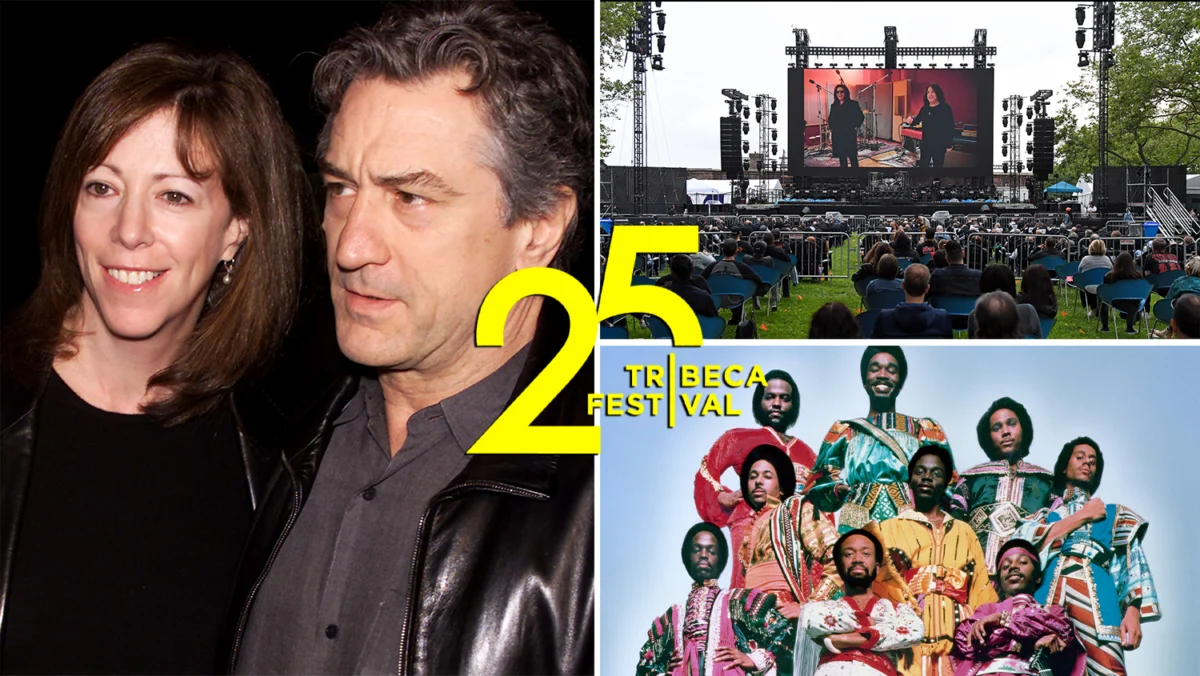
The 25th Tribeca Festival officially roared to life on Wednesday night, transforming the Beacon Theater into a hub of music, history, and civic defiance. Marking a quarter-century since its inception in the wake of the 9/11 attacks, the festival opened with the world premiere of Earth, Wind & Fire (To Be Celestial VS That’s the Weight of the World), a sweeping documentary directed by the Oscar and Grammy-winning polymath Ahmir "Questlove" Thompson. The night, however, served as more than just a cinematic showcase; it was a potent reminder of the festival’s enduring role as a pillar of New York City’s cultural and social identity.
Following the screening, the legendary funk ensemble Earth, Wind & Fire took the stage for a short, high-energy set, joined by The Roots drummer Questlove himself, sealing the night with a performance that bridged the gap between musical legacy and contemporary creative spirit.
The Power of Storytelling in a Divided Era
The opening ceremony was defined by a mix of nostalgic reflection and urgent political commentary. Robert De Niro, the festival’s co-founder and an outspoken activist, set the tone with remarks that left no room for ambiguity. Addressing the state of the nation, De Niro delivered a scathing critique of current leadership.
"We’ve always recognized the power of storytelling to bring us together," De Niro told the audience, contrasting the unifying nature of cinema with the "monstrous" actions of those he described as "immoral, cruel" leaders. "They are trying to force us apart… we’re not going to let that happen. Are we?" The rhetorical question was met with a massive, thunderous roar of approval from the crowd, underscoring the festival’s long-standing identity as a platform for challenging the status quo.
His partner, Tribeca Enterprises executive chair Jane Rosenthal, pivoted from the weight of politics to the pulse of the city. Acknowledging the night’s NBA Finals game between the New York Knicks and the San Antonio Spurs, she triggered an ear-splitting "Go Knicks!" chant that reverberated through the theater. By the time the event concluded, news arrived that New York had clinched the victory, adding a layer of communal celebration to the evening’s festivities.
From Ground Zero to a Cultural Institution: A Chronology of Impact
To understand the weight of this 25th anniversary, one must revisit the origins of the Tribeca Film Festival. Launched by De Niro and Rosenthal in 2002, the event was conceived less than a year after the 9/11 terrorist attacks had left Lower Manhattan in a state of mourning and physical ruin.
"I never thought we would be doing it again. Bob did," Rosenthal reflected in an interview with Deadline. "We just wanted to give our community a new memory, and to give them something to look forward to."
The festival began as a "green shoot" of recovery—a massive, sprawling street fair meant to bring life back to a neighborhood defined by smoke and ash. While the street fair element has long since been retired, the festival evolved into a global mecca for filmmakers. By the 10-year mark, Rosenthal realized the event had developed its own gravity. It transitioned from an April staple to a June celebration, dropped the word "film" from its title to embrace the explosion of digital media, gaming, and episodic storytelling, and cemented its status as a permanent fixture in the city’s fabric.
The significance of this longevity was further highlighted by a pre-festival event at the Perelman Performing Arts Center (PAC), located at the reconstituted World Trade Center site. The gathering honored former New York City Mayor Michael Bloomberg, whose administration was instrumental in the festival’s launch.
"We wouldn’t have even gotten to the first one without Mike’s innovative and passionate support," Rosenthal noted. Former New York Governor George Pataki, who helped spearhead the original launch alongside the founders, was also recognized for his role in the early days of community outreach.
Supporting Data: A Global Slate of Cinema
The 2026 edition of the festival is not merely a retrospective; it is a testament to the growth of independent media. The current slate includes 118 films, boasting an impressive 108 world premieres. The diversity of the selection is staggering, with 55 first-time directors representing 44 countries—ranging from Cameroon and Mongolia to the Philippines and Turkey.

The Documentary Renaissance
Documentaries have become the lifeblood of Tribeca, and this year is no exception. Questlove’s exploration of Earth, Wind & Fire is joined by a robust lineup of non-fiction works:
- "Playing POTUS": Directed by Josh Greenbaum, this doc examines the history of presidential parody.
- "How To Feed a Dictator": Andrew Neel uncovers the personal testimonies from the kitchens of history’s most notorious figures, including Pol Pot and Idi Amin.
- "American Zoo": A look at the history of the Catskill Game Farm.
- "Dreams of Violets": Ash Koosha’s entry, which claims to be the first film entirely created by AI, highlighting the festival’s commitment to technological evolution.
Narrative and Genre Diversity
The festival continues to attract A-list talent seeking the intimacy of the independent circuit. Quentin Tarantino makes a rare acting appearance in Jamie Adams’ Only What We Carry, while Al Pacino portrays a CIA operative in the political thriller Killing Castro. Comedies, dramas, and even faith-based projects like Young Washington—produced by Angel Studios—are all part of the expansive, eclectic programming.
Official Responses and Strategic Vision
Festival director Cara Cusumano has been the architect of this recent growth, steering the festival through the post-pandemic landscape. "The discovery of new voices is ultimately what’s so special about the festival," Cusumano says. "I find it really exciting that there are more submissions every year. That feels very encouraging for the health of the creative community."
The "Storytelling Summit," held at the festival’s Spring Studios hub, has become the intellectual core of the event, offering daily Q&As and workshops. The expansion into short-form content has also paid dividends; with 86 short films being showcased this year, Tribeca has solidified its position as the premier venue for emerging short-form creators.
When asked about the marketing strategy for the silver anniversary, Rosenthal remained characteristically humble. "Nobody really cares that it’s our 25th except us," she remarked. "If people want to come to the festival, they want to come because there’s good programming and fun things to do."
Implications for the Future of Independent Media
The success of the 25th Tribeca Festival carries significant implications for the future of arts in urban centers. By integrating live music, gaming, episodic television, and classic cinema, Tribeca has successfully avoided the stagnation that plagues many traditional film festivals.
The decision to honor Bruce Springsteen with the 2026 Harry Belafonte Voices for Social Justice Award—with presenters like Bono and Patti Smith—demonstrates the festival’s ability to maintain its "cool" factor while keeping its social conscience sharp.
As the festival moves toward the latter half of its current run, the focus remains on accessibility and discovery. With free outdoor screening series at Hudson Yards and an increasing focus on international voices, Tribeca is proving that a festival born from a crisis can thrive as an engine of constant reinvention.
Ultimately, the 25th anniversary is a victory lap for De Niro and Rosenthal, but more importantly, it is a statement on behalf of New York City itself. The festival has survived the shift from physical to digital, the disruption of a global pandemic, and the evolving whims of the film industry, all while keeping the same core mission: to provide a space where stories can be told, communities can gather, and the future can be imagined as something better than the bleak realities of the past. As Whoopi Goldberg noted during her introduction, "Michael Bloomberg came in and made us remember that the future could be better… We just needed to come together."
Twenty-five years later, that mission remains unchanged. Whether through the lens of a documentary on a legendary soul band or a narrative about a cult in the desert, Tribeca continues to be the place where the city—and the world—comes to see itself.









No comments yet. Be the first to join the conversation!