Azzam Bilal Chamdy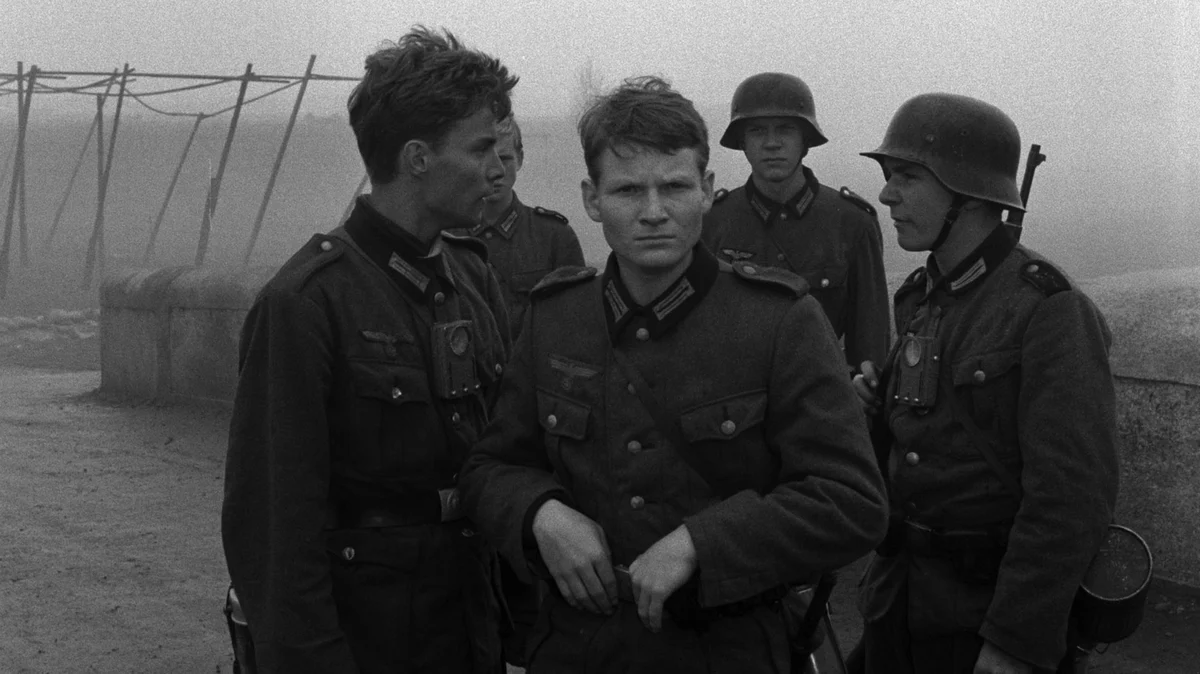
In the pantheon of cinema history, few genres are as saturated with hyperbole and romanticized bravado as the war film. From the gung-ho narratives of the mid-20th century to modern high-octane blockbusters, the medium has often struggled to divorce the imagery of combat from the intoxicating pull of heroism. However, there exists a singular, devastating exception that strips away the veneer of glory to expose the rotting core of indoctrination: Bernhard Wicki’s 1959 German masterpiece, Die Brücke (The Bridge).
Widely considered the first truly visceral anti-war film to emerge from post-WWII Germany, The Bridge is a harrowing exploration of the human cost of conflict. It is a film that refuses to offer the comfort of a moral victory or the solace of a "good war." Instead, it provides a cold, unflinching look at how propaganda, petty adolescent grievances, and the blind pursuit of patriotism conspire to waste the lives of the innocent.
Main Facts: A Story of Futility
Set in the dying days of World War II, the film follows seven teenage schoolboys living in a small, nondescript German town. As the Allied forces advance and the Third Reich collapses under the weight of its own hubris, the adults in the village—aware that the end is nigh—scramble to flee. They abandon their posts, their homes, and their responsibilities, choosing survival over the abstract loyalty demanded by the regime.
The boys, however, are trapped by the very ideology they were taught in the classroom. Under the influence of their teacher, Mr. Stern (played with chilling restraint by Wolfgang Stumpf), these youths have been conditioned to believe that service to the Fatherland is the ultimate validation of their worth as citizens. When they are finally drafted—not because they are needed, but as a bureaucratic formality—they are ordered to defend a local bridge.
The bridge itself is a metaphor for the entire war: a small, crumbling stone structure of zero strategic value. In the grand calculus of global military strategy, it is insignificant. Yet, for these seven boys, it becomes the stage for their final, meaningless stand.
The Chronology of Destruction: From Classroom to Crater
To understand the emotional impact of The Bridge, one must look at the slow, methodical erosion of innocence that precedes the final, violent act.
Phase 1: The Cult of Indoctrination
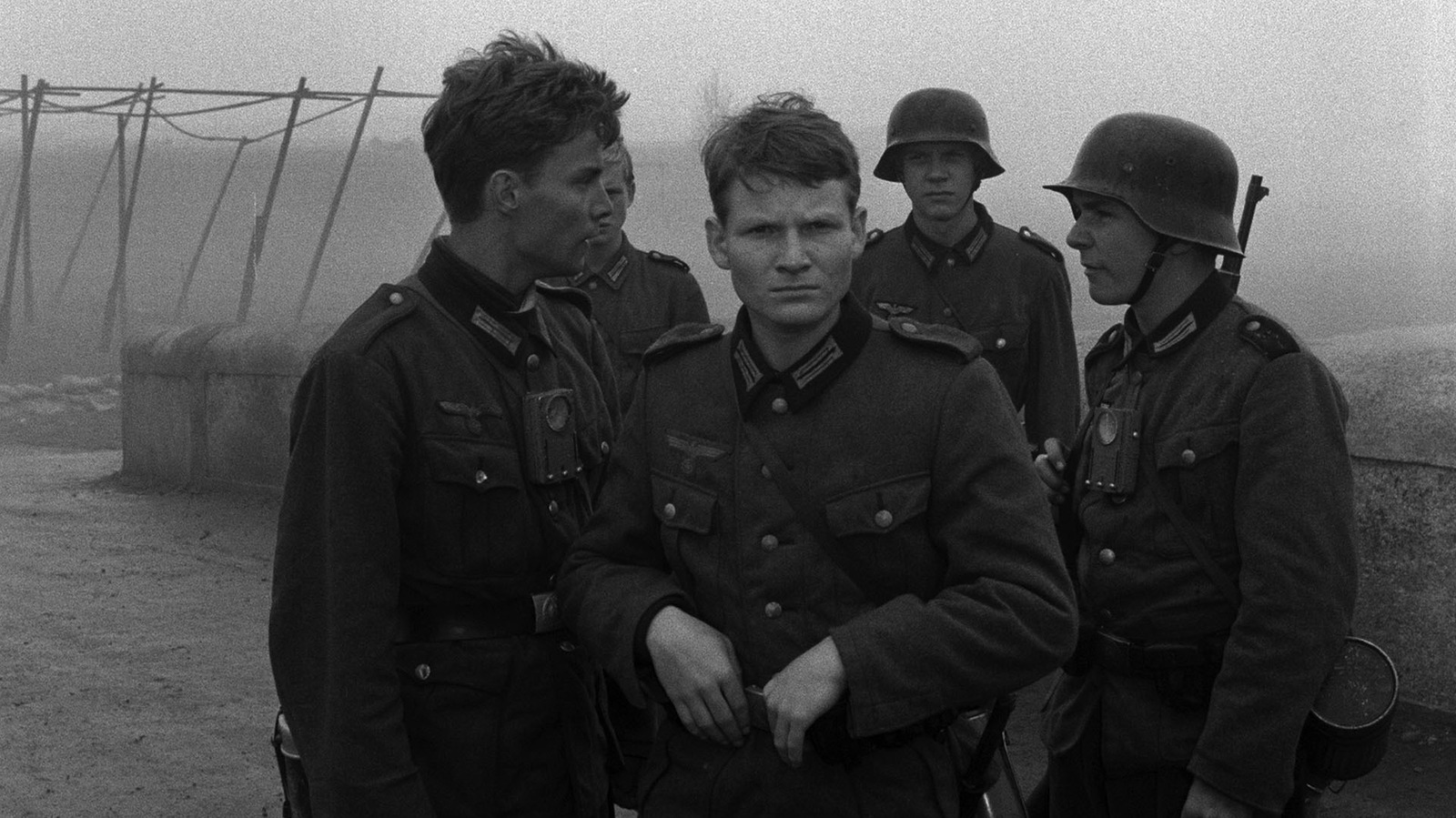
The first act of the film serves as a character study of German youth under the Nazi regime. We are introduced to the seven protagonists, each grappling with their own distinct motivations for wanting to join the fight. Walter, for instance, struggles with the perceived cowardice of his father, a soldier who has deserted his post. Jürgen is driven by a desire to avenge his father, who died in combat. Karl, dealing with the fallout of his father’s infidelity, projects his burgeoning misogyny and anger onto the battlefield.
Wicki masterfully demonstrates that these boys are not soldiers; they are children looking for meaning in a world that has failed them. Their desire to fight is not born of a political ideology they fully grasp, but of the internal pressures of masculinity, shame, and the seductive, toxic promise of "glory."
Phase 2: The Bureaucratic Death Sentence
As the Americans approach, the local military commander, seeking to keep the boys safe, assigns them to guard the bridge—a task intended to keep them away from the front lines. The irony is suffocating: the adults believe they are sparing the children by giving them a "safe" assignment, yet they are actually sending them to a location that will soon become the focal point of an unnecessary skirmish. The "favor" of letting them wear their uniforms for a single day becomes their funeral shroud.
Phase 3: The Bloody Conclusion
The final 20 minutes of the film shift from a character drama to a nightmarish, visceral descent into chaos. When the American tanks arrive, the boys refuse to retreat. They fight with a ferocity that is as impressive as it is tragic. They have been told they are defending their homeland, but they are actually dying for a regime that has already abandoned them. The violence is not cinematic or stylized; it is messy, loud, and profoundly sad. By the time the screen fades to black, the viewer is left with the crushing weight of the realization: the bridge survives, but the boys do not.
Supporting Data: A Historical and Cinematic Benchmark
The Bridge is not just a film; it is a historical artifact. As noted by the Criterion Collection, it represents a watershed moment in German cinema, marking the first time a German filmmaker dared to address the war through a lens of genuine, unfiltered remorse.
- Critical Reception: Upon its release in 1959, the film was a critical triumph. It secured four German Film Awards and earned a nomination for Best International Feature at the Academy Awards, ultimately losing to the equally brilliant Black Orpheus.
- Director’s Pedigree: The success of The Bridge propelled director Bernhard Wicki to international prominence. His command of tension and human drama led to him being hired to direct the German sequences of the 1962 epic The Longest Day, a film that remains one of the most significant depictions of the D-Day landings.
- The "True Story" Element: Perhaps the most haunting aspect of the film is the final chyron, which informs the audience that the events depicted were based on a true story. It was an incident so small, so irrelevant to the broader sweep of history, that it was never officially recorded. It was a "lost" tragedy, reclaimed by cinema to serve as a permanent indictment of war.
Official Responses and Cultural Legacy
Despite its accolades, The Bridge has seen a peculiar decline in its cultural footprint. While it is often discussed in specialized film circles, it is rarely cited in the broader canon of "must-watch" war films taught in universities or included in mainstream retrospectives.
Some critics argue that this is due to the inherent discomfort of the subject matter. Western audiences are accustomed to war films that feature clear-cut heroes and villains. The Bridge complicates this by forcing the viewer to empathize with teenagers who, while victims of propaganda, are still ostensibly fighting on behalf of the Nazi war machine. It is a complex, difficult viewing experience that denies the audience the simple catharsis of rooting for a "side."
However, to dismiss the film on these grounds is to miss its genius. Wicki is not justifying the Nazi cause; he is illustrating the mechanics of how a state can turn its children into tools of destruction. It is a cautionary tale that feels perpetually relevant in an age where nationalism and propaganda continue to thrive.
Implications: The Enduring Power of ‘The Bridge’
The ultimate implication of The Bridge is that the "nobility of combat" is a dangerous myth. The film serves as a brutal counter-argument to the pro-combat sentiments that permeate much of Hollywood’s war output. It suggests that the history books are written by those who survive, while the truth of war is often buried in the forgotten, insignificant places where the youth were sent to die.
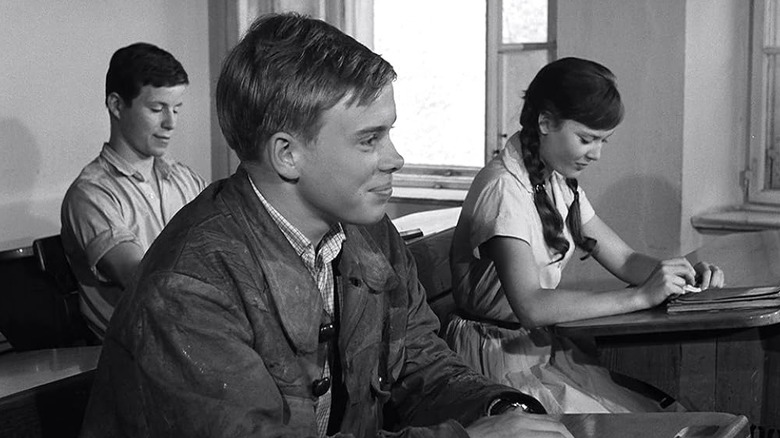
If All Quiet on the Western Front (1930) is the definitive account of the disillusionment of the First World War, then The Bridge is its necessary successor for the Second. It demands that we look beyond the political labels of "patriot" and "soldier" and see the human beings caught in the gears of a machine they cannot control.
In a world that still struggles to reconcile the glorification of military service with the horrific reality of the battlefield, Bernhard Wicki’s 1959 masterpiece remains an essential watch. It is bleak, it is uncompromising, and it is entirely necessary. It reminds us that when we talk about the "glory of war," we are often just whispering over the graves of children who were never given the chance to grow up. To watch The Bridge is to confront the truth that the most tragic casualties of war are often those who never had a say in why the fighting started in the first place.


 Reynand Wu
 Sagoh
Sagoh