Azzam Bilal Chamdy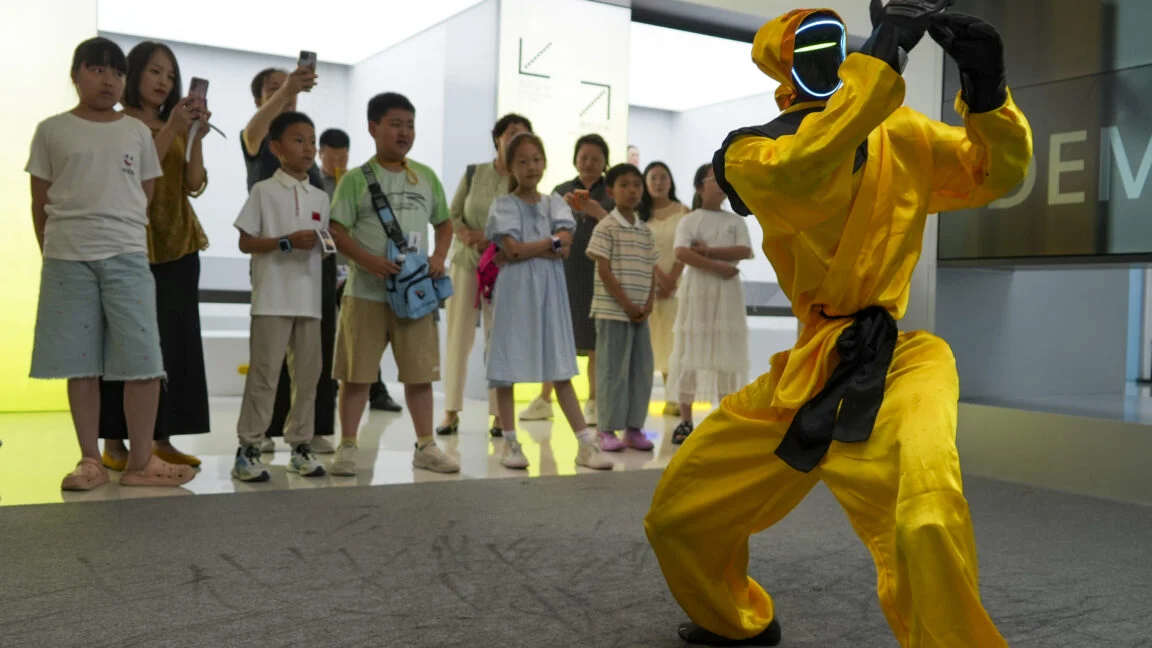
In the landscape of modern technology, few sights are as captivating as a bipedal robot executing a flawless backflip or meticulously folding a shirt. These viral videos, released with increasing frequency by Silicon Valley startups and established robotics firms alike, suggest that we are on the precipice of a new era—one where humanoid assistants handle our chores and perform manual labor with human-like dexterity.
However, beneath the polished veneer of these choreographed demonstrations lies a stark reality: there is a yawning chasm between the curated environment of a laboratory stage and the chaotic, unpredictable nature of the real world. While these robots may appear to be "almost here," industry experts warn that the gap between demonstration and reliable, autonomous utility remains vast.
The Psychology of Anthropomorphism: A Marketing Trap
The public’s fascination with humanoid robotics is not merely a product of technical achievement; it is a psychological phenomenon. Because these machines mirror the human form—complete with heads, torsos, and limbs—the human brain is hardwired to project intent, capability, and intelligence onto them. This tendency, known as anthropomorphism, is precisely what many companies are exploiting to generate investor interest.
Jonathan Hurst, co-founder of Agility Robotics and a robotics researcher at Oregon State University, notes that the visual similarity between a robot and a person triggers a cascade of false assumptions. "People automatically extrapolate and assume that the robot that looks like a person can do all the things that a person who can dance could do—which is not true," Hurst explained. "But a lot of the startup companies do kind of prey on that for being able to raise a lot of money."
When a robotic arm performs a dance move, the viewer perceives it as a mechanical feat. When a humanoid robot performs the same move, the viewer perceives it as an entity with potential. This distinction is the bedrock of a multi-billion dollar investment bubble, where the "cool factor" often masquerades as long-term commercial viability.
Chronology of the "Demo Culture"
To understand how we reached this point, we must look at the evolution of robotics demonstrations over the last two decades.
2000–2010: The Era of Stability
In the early 2000s, robotics was defined by stationary machines and research platforms like Honda’s ASIMO. These robots were largely pre-programmed, moving in stiff, predictable patterns. The goal was simple stability—can the robot walk without falling?
2011–2020: The Rise of Dynamic Feats
With the advent of advanced sensors and more powerful actuators, companies like Boston Dynamics shifted the narrative toward dynamic movement. Robots began running, jumping, and navigating uneven terrain. These demonstrations were groundbreaking, yet they were heavily scripted, often relying on pre-mapped paths and carefully calibrated environments.
2021–Present: The "General Purpose" Narrative
The current wave of robotics development is focused on "general-purpose" AI. Companies are now training robots using massive datasets—often involving imitation learning—to perform household tasks. The videos appearing on social media now feature robots interacting with objects, picking up cups, or sorting laundry. However, the move from "performing a task" to "mastering a task" remains elusive.
The Myth of Generalization: The "Wine Pouring" Problem
The fundamental struggle in modern robotics is not hardware—the motors and sensors are becoming increasingly sophisticated—but software, specifically the ability to generalize.
Sergey Levine, a computer scientist at the University of California, Berkeley, and co-founder of Physical Intelligence, highlights the difference between a robot that can repeat a specific action and one that understands the task. "Maybe the robot can pour a glass of wine, but can it pour it out of any bottle and into any glass in any environment?" Levine asks. "That’s actually a lot harder than having a robot do a backflip in one stage demo."
In a lab, the lighting is constant, the bottle is always in the same place, and the glass is standardized. In a home, the bottle might be a different shape, the lighting might be dim, and the glass might be tucked behind a bowl of fruit. Humans navigate these variables instinctively; robots currently require tedious, task-specific training for every minor variation.
Supporting Data: The Quantitative Gap
The industry currently lacks a universal "gold standard" for evaluating robotic capability. Because companies often define their own success metrics, the data presented in marketing materials is inherently biased.
To bridge this gap, researchers are advocating for "quantitative, large-scale evaluations." This involves testing robots in diverse, uncontrolled environments for extended periods. A robot that succeeds in 99 out of 100 trials in a controlled lab may fail 50% of the time in a real-world kitchen.
| Evaluation Type | Controlled Demo | Real-World Deployment |
|---|---|---|
| Environmental Variables | Fixed/Known | Dynamic/Unknown |
| Success Rate | High (95%+) | Variable (<50%) |
| Adaptability | Low (Pre-programmed) | High (Requires AI Generalization) |
| Safety Margin | High (Human-monitored) | Low (Autonomous interaction) |
The lack of longitudinal data means that we have no clear understanding of the "Mean Time Between Failure" (MTBF) for these machines. Without this metric, mass adoption remains a theoretical aspiration rather than a technical reality.
Official Responses and Industry Skepticism
The robotics community is increasingly divided between those who believe the current path of rapid iteration is sufficient and those who argue for a fundamental rethink of how we train these machines.
Some industry leaders argue that by exposing robots to enough data, they will eventually "learn" how to handle real-world complexity—a strategy similar to how Large Language Models (LLMs) learned to write poetry. However, critics point out that physical interaction is fundamentally different from text generation. A hallucinated word in a chatbot is a minor error; a "hallucinated" movement in a 150-pound humanoid robot can cause significant property damage or injury.
"There’s always a gap between the kind of things that somebody can show in a demo and what the real capability of the robot is," says Levine. The official stance of many academic researchers is one of cautious optimism, tempering the hype cycles generated by venture capital firms.
Implications: The Future of Automation
The implications of this "demonstration gap" are far-reaching.
1. The Investor Cycle
If the robotics industry continues to rely on high-budget demos to secure funding, we may face an "AI Winter" for robotics if the technology fails to deliver on its promises within the next five to seven years. Investors may lose patience if the transition from "cool demo" to "useful product" remains stalled.
2. Workforce Displacement
The promise of humanoid robots is their ability to perform tasks in spaces designed for humans, potentially displacing workers in logistics, caregiving, and manual manufacturing. However, if these robots are not yet capable of handling the unpredictability of these environments, the economic impact will be significantly delayed.
3. Safety and Regulation
As these robots move closer to commercial release, the conversation will inevitably shift toward safety. A robot that can navigate a public space must be as reliable as a modern vehicle. If the industry cannot bridge the gap between demo and reality, regulators may impose strict limitations that could stifle the very innovation that the industry seeks to promote.
Conclusion: Beyond the Viral Video
We are witnessing a fascinating moment in the history of technology. The hardware capabilities of humanoid robots have caught up to our imaginations, but the intelligence required to operate them autonomously in the wild has not.
To move forward, the robotics industry must pivot away from the "viral demo" culture and toward rigorous, open-source testing and standardization. Only when we stop treating robots as performers and start treating them as tools—evaluated on their ability to handle the messy, inconvenient, and unpredictable nature of our world—will the humanoid revolution truly begin. Until then, we must remain critical consumers of the high-definition, carefully edited videos that promise us a future that is, for now, still firmly out of reach.


 Layla Zulfa