Azzam Bilal Chamdy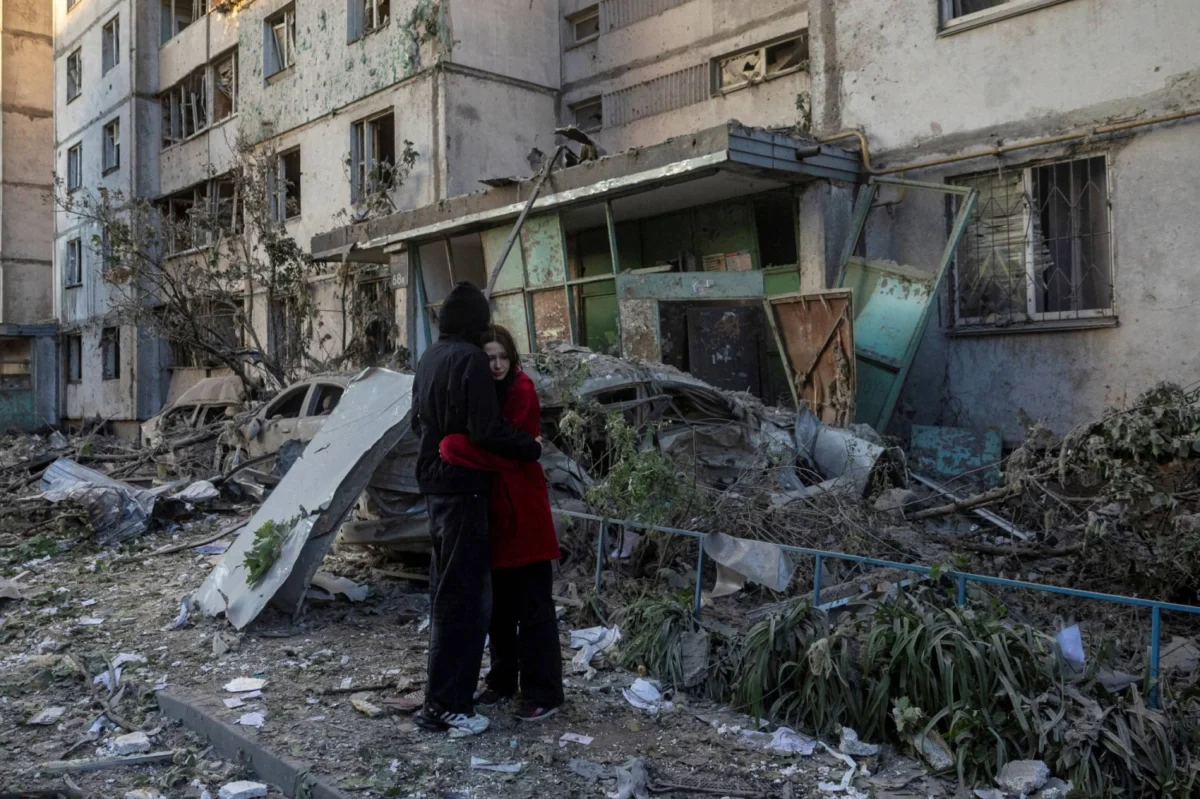
Executive Summary: A Geopolitical Pivot
As the global landscape grows increasingly volatile, the theater of war in Eastern Europe faces a perilous shift in international attention. In a striking development this week, U.S. Secretary of State Marco Rubio appeared before four separate congressional panels to delineate the current administration’s foreign policy priorities. Conspicuously absent from the core of these high-level discussions was the ongoing conflict in Ukraine, a nation that has endured over two years of relentless Russian aggression.
While the Trump administration remains preoccupied with the escalating crisis in Iran, the war in Ukraine—once the centerpiece of Western geopolitical strategy—appears to be slipping from the American radar. This shift occurs at a moment of profound vulnerability for Kyiv, which is currently grappling with a resurgence in Russian aerial assaults that have targeted civilian infrastructure with lethal precision.
The Chronology of Neglect
The timeline of the current diplomatic disconnect reveals a growing chasm between the reality on the ground in Kyiv and the legislative agenda in Washington.
- Tuesday, June 2: Russian forces launched a coordinated, overnight campaign of missile and drone strikes across multiple Ukrainian regions, including the capital, Kyiv. The attacks caused significant structural damage to residential apartment blocks, forcing civilians into shelters and leaving a trail of destruction in urban centers.
- Wednesday, June 3: Following the carnage, Ukrainian President Volodymyr Zelenskyy addressed the international community. During his briefing, he highlighted the grim toll of the previous 24 hours, noting that at least 23 people had been killed across the country. His rhetoric was marked by a palpable sense of abandonment, as he lamented the dwindling attention from Washington.
- Thursday, June 4 – Friday, June 5: Secretary of State Marco Rubio conducted a marathon series of hearings across four congressional committees. Despite the opportunity to address the deteriorating situation in Eastern Europe, the discourse remained heavily anchored to the Middle East, specifically the Iranian crisis.
Supporting Data: The Human Cost of Silence
The statistics emerging from the front lines and the rear guard of Ukraine paint a harrowing picture of a nation under sustained bombardment. The recent death toll of 23 in a single 24-hour cycle is not an anomaly but rather a reflection of the "attrition warfare" strategy currently employed by the Kremlin.
The Scale of Destruction
Beyond the immediate loss of life, the material damage to Ukraine’s critical infrastructure—power grids, housing blocks, and transport hubs—has reached a critical threshold. Independent observers note that the frequency of these "wave attacks," which utilize a combination of Iranian-designed drones and sophisticated cruise missiles, is designed to overwhelm existing air defense systems.
Economic and Humanitarian Strain
According to recent reports, the displacement of populations continues to rise. With thousands of residential units damaged or destroyed in the latest strikes, the humanitarian burden on local municipalities is immense. International aid organizations have signaled that without sustained Western financial and military intervention, the capacity for Ukraine to maintain basic social services is rapidly eroding.
Official Responses and Diplomatic Friction
The View from Kyiv
President Zelenskyy’s recent comments represent a marked shift in tone. For much of the conflict, the Ukrainian leadership maintained a strategy of optimistic diplomacy. However, the visible lack of urgency in Washington has forced a change in approach. Zelenskyy noted that while Ukraine continues to fight, the "dwindling attention" of its primary benefactor threatens to turn a war of defense into a war of survival.
The Washington Perspective
In the corridors of the U.S. Capitol, the priorities have demonstrably shifted. Sources close to the State Department indicate that the administration views the Iranian theater as an "imminent threat to global stability" that requires the entirety of the executive branch’s focus.
When pressed on the lack of attention given to Ukraine during the recent hearings, representatives suggested that the conflict has entered a "stalemate phase," where diplomatic solutions—rather than further military aid packages—are the presumed path forward. This interpretation, however, is fiercely disputed by Ukrainian officials, who argue that the lack of engagement is perceived by Moscow as a green light for further escalation.
Geopolitical Implications: What Happens Next?
The relative silence from Washington regarding the Ukrainian theater holds profound implications for the global security architecture.

1. The Peril of "Frozen" Conflicts
When a superpower pivots away from a conflict, it risks creating a "frozen conflict" where the aggressor is emboldened to consolidate territorial gains without fear of diplomatic reprisal. The current Russian strategy appears to be waiting for the West to move on, betting that the American electoral cycle and regional crises in the Middle East will permanently dilute support for Kyiv.
2. The Erosion of Deterrence
The failure to maintain a consistent focus on the war in Ukraine risks undermining the credibility of U.S. security guarantees worldwide. Allies in the Baltics, Poland, and the broader NATO alliance are watching closely to see if the U.S. commitment to collective security is as robust as it was in the earlier stages of the war.
3. The Shift in Russian Strategy
With the international spotlight dimming, Moscow has adjusted its operational tempo. The recent strikes on civilian infrastructure are designed to break the morale of the Ukrainian public. If the international community fails to provide the necessary air defense systems to counter these drone and missile swarms, the psychological toll on the population may reach a breaking point.
Analysis: A Dangerous Window of Opportunity
The convergence of a distracted United States and an aggressive Kremlin creates a "window of opportunity" that could prove disastrous for the regional status quo. Historically, major powers have struggled to manage two major theaters of conflict simultaneously. However, the current strategy of effectively "de-prioritizing" Ukraine in favor of the Middle East may prove to be a false economy.
The war in Ukraine is not merely a regional dispute; it is a fundamental challenge to the post-World War II order. By allowing the issue to drift to the periphery of congressional discourse, the U.S. risks losing the leverage it has spent years building.
The Path Forward
For the international community to effectively respond, a multi-pronged strategy is required:
- Renewed Diplomatic Engagement: The U.S. must re-establish a clear, vocal commitment to the sovereignty of Ukraine, ensuring that the conflict does not become "background noise" in the global news cycle.
- Sustained Material Support: The provision of advanced air defense systems must be prioritized to protect civilian centers, regardless of the shifting focus in other geopolitical theaters.
- Strategic Clarification: Washington needs to clearly articulate the end-game for Ukraine. A lack of clarity only serves to invite further aggression from adversaries who interpret silence as weakness.
Conclusion: The Cost of Indifference
The image of teenagers embracing outside a bombed-out apartment building in Kyiv serves as a poignant reminder that the war is far from over. It is a conflict that continues to claim lives, dismantle infrastructure, and shape the future of European security.
As Washington pivots toward the Middle East, the risk of "diplomatic fatigue" looms large. History has often shown that when the global community turns a blind eye to an ongoing struggle, the results are rarely confined to the borders where the fighting occurs. The fate of Ukraine remains a central pillar of global stability; whether the U.S. chooses to re-engage or continues to look away will define the next chapter of the 21st century.
Quality journalism is the only tool that can keep these vital stories in the light. In an age of information overload, the duty to track the silent shifts in policy and the loud explosions of conflict is more critical than ever. As the world watches, the story of Ukraine remains unfinished—and the consequences of our attention, or lack thereof, will be felt for generations to come.


 Neng Nana
 Asro
Asro