

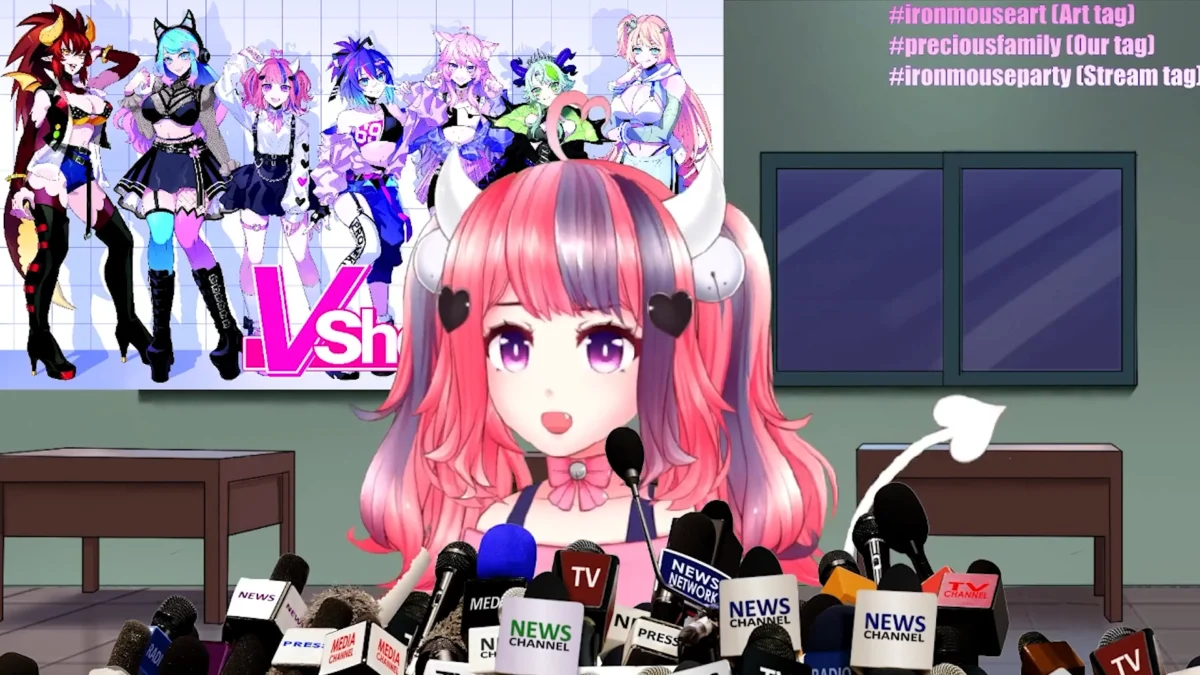
The landscape of the virtual creator industry was irrevocably altered this week as VShojo, once heralded as the premier talent-first agency for VTubers, announced its permanent dissolution. The collapse follows a tidal wave of allegations regarding severe financial irregularities, unpaid talent, and the misappropriation of charitable funds—most notably involving the agency’s failure to deliver over $500,000 raised for the Immune Deficiency Foundation (IDF).

What began as a promising enterprise designed to empower creators through autonomy and community-focused management has culminated in a bitter, high-profile failure. As of this writing, nearly the entire roster of VShojo’s English and Japanese talent has resigned, leaving the company as an empty shell and casting a long shadow over the future of creator-led agencies.

The Catalyst: Ironmouse’s Damning Disclosure
The agency’s downfall was triggered on July 21st, when Ironmouse—one of the world’s most influential VTubers and a long-time face of the VShojo brand—publicly severed ties with the company. In a candid and emotional video, Ironmouse, who has lived with Common Variable Immunodeficiency (CVID) since 2017, detailed a harrowing betrayal of trust.
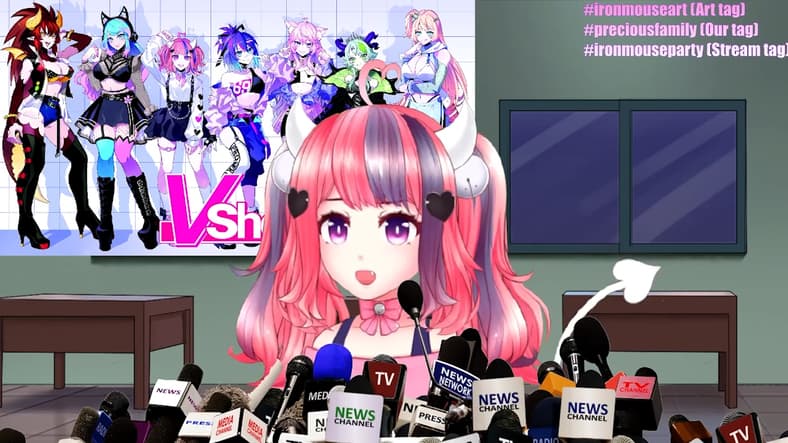
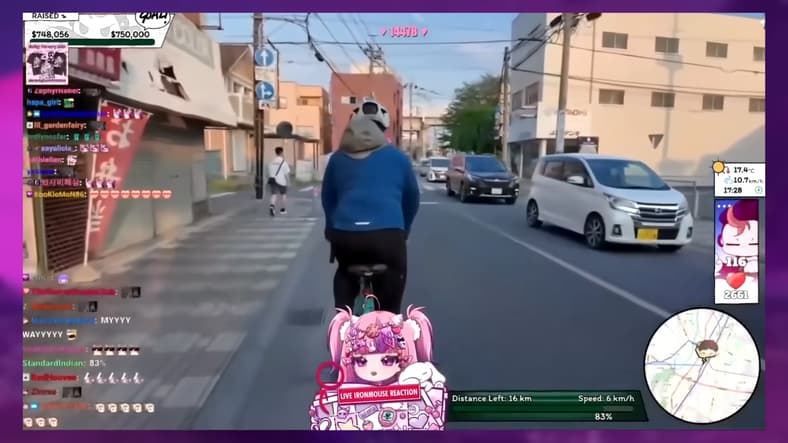
Ironmouse, who joined the agency in 2020, had been a beacon for the Immune Deficiency Foundation, leveraging her platform to raise millions for research and awareness. However, she revealed that while previous charity drives were managed properly, her most recent efforts had been stifled. Specifically, she stated that the $515,000 raised during her 2024 "Mouseathon"—a record-breaking event that saw her become the most-subscribed streamer on Twitch—had not been transferred to the charity by VShojo, despite her repeated requests.

"This entire situation has broken me," Ironmouse stated. "I just wanted to do something good, and to give back to a community that helped me. But unfortunately, that’s not the case."
Beyond the charitable shortfall, Ironmouse revealed that VShojo had failed to pay her significant sums of owed revenue, forcing her to rely on legal counsel to navigate the exit. Her departure acted as a clarion call, encouraging other talent—many of whom had been suffering in silence—to step forward.

A Chronology of Institutional Decay
The signs of instability within VShojo were not apparent to the public until recently, though internal murmurs and delayed payments suggest the cracks had been forming for months.
- Mid-2024: Multiple talents report increasingly erratic payment schedules. While the company maintained a facade of growth, behind the scenes, staff struggled to keep operations afloat.
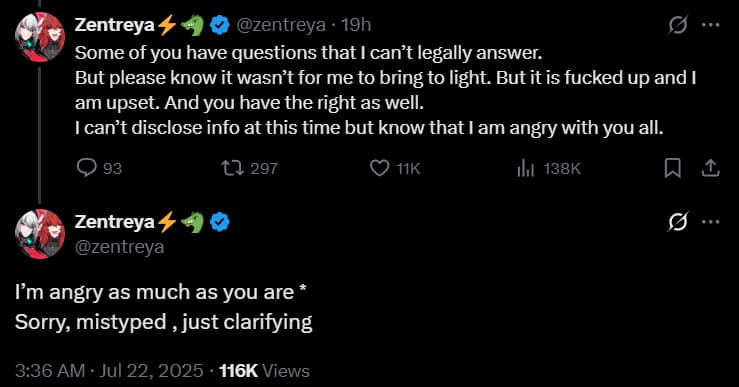
- July 11th: Zentreya, a prominent VShojo member, announces her departure. While she remained legally constrained from speaking fully, her subsequent comments on social media signaled deep-seated frustration and anger.
- July 21st: Ironmouse publishes her resignation video. The revelation about the $500,000 owed to the IDF shocks the gaming community and draws immediate scrutiny to the agency’s finances.
- July 22nd–23rd: A mass exodus begins. Talent including Amalee, Projekt Melody, Kuro, Hime, and others officially quit. Simultaneously, prospective talents like Piapi and Beri Bug, who had been in the pipeline to join, publicly announce they are rescinding their contracts.
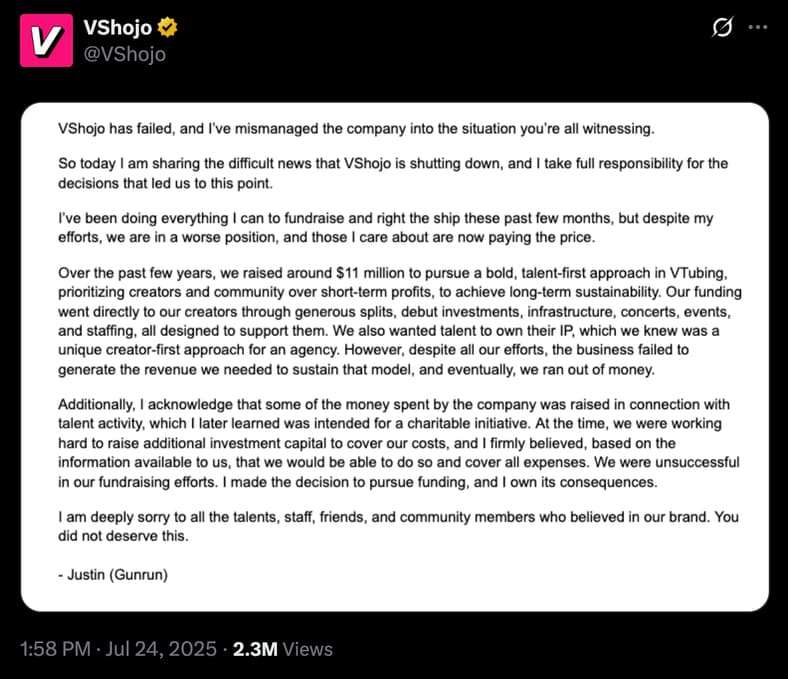
- July 24th: VShojo CEO Justin "GunRun" Ignacio issues a formal apology and confirms the company is shuttering permanently.
Financial Mismanagement and the "Charity Crisis"
The core of the controversy lies in the gross mismanagement of funds. In his official statement on X, CEO Justin Ignacio admitted, "I acknowledge that some of the money spent by the company was raised in connection with talent activity, which I later learned was intended for a charitable initiative."
Ignacio attempted to frame the collapse as a result of a "bold, talent-first approach" that failed to generate sustainable revenue. He noted that the company had raised approximately $11 million over the past few years to fund debuts, concerts, and infrastructure. However, the admission that charity money was diverted to cover operational costs has been met with universal condemnation.

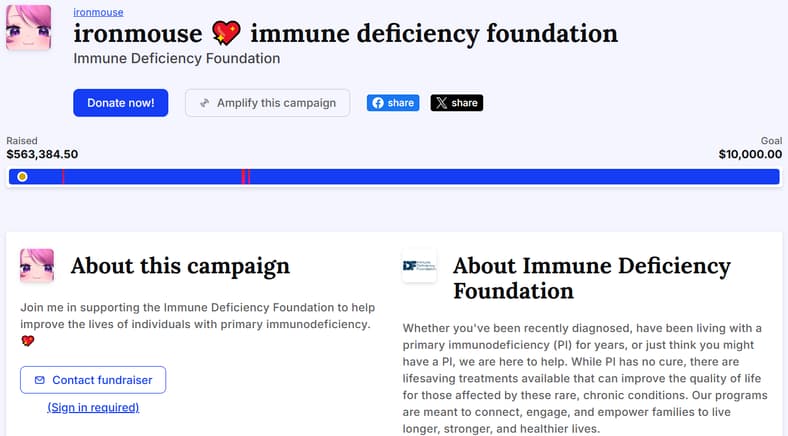
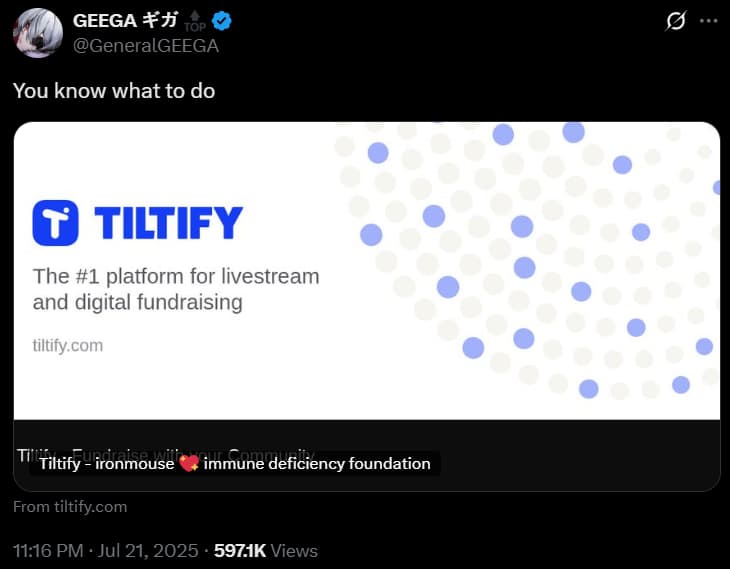
The fallout has been swift. The internet, led by prominent streamers like MoistCr1tikal and various community organizers, rallied behind Ironmouse. A new donation fund established on Tiltify, intended to replace the funds lost to the IDF, surged past $563,000 in a matter of days—surpassing the original amount owed by VShojo.
Official Responses and Internal Discord
The response from the talent roster has been a mixture of heartbreak and righteous fury.
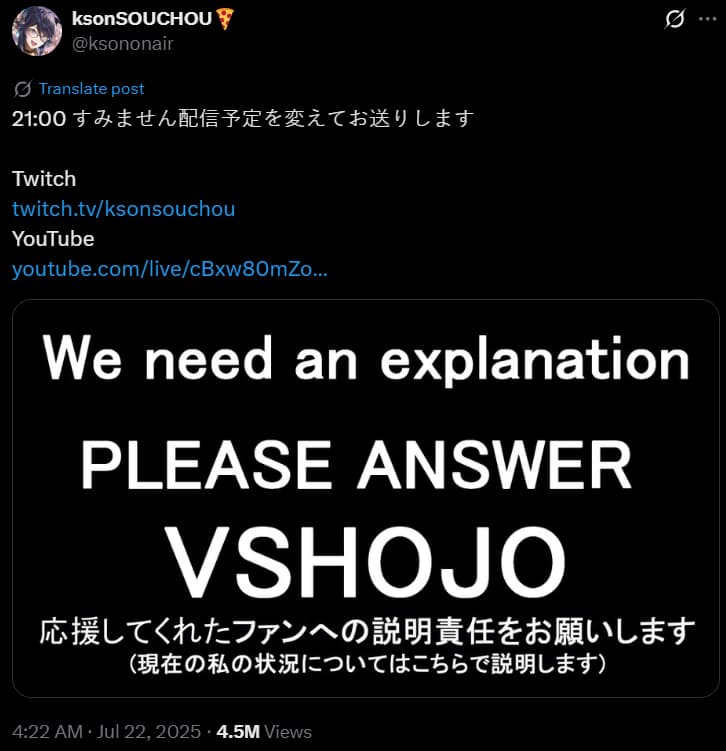
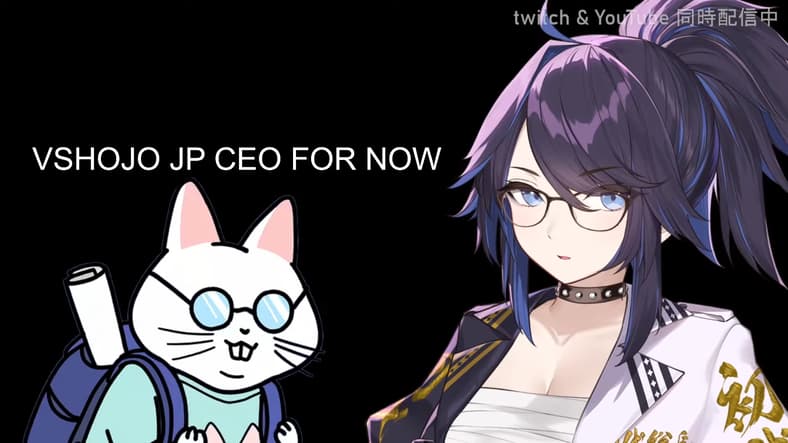
Kson’s Confrontation: Perhaps the most detailed account of the agency’s internal rot came from Kson, who led a special livestream to confront the situation. After reaching out to VShojo’s Japanese CEO, Koshi Makino, she revealed that even he was unaware of the full scope of the financial devastation. According to Kson, Makino admitted that the company had been consistently failing to pay its Japanese talent, and that he himself was receiving only half of his agreed-upon compensation.
GEEGA’s Perspective: GEEGA, another former member, provided insight into the culture of the company, stating that she saw "the writing on the wall" months ago. She described being misled by management regarding the company’s stability, echoing the sentiment that the agency had become a hollow enterprise built on empty promises.
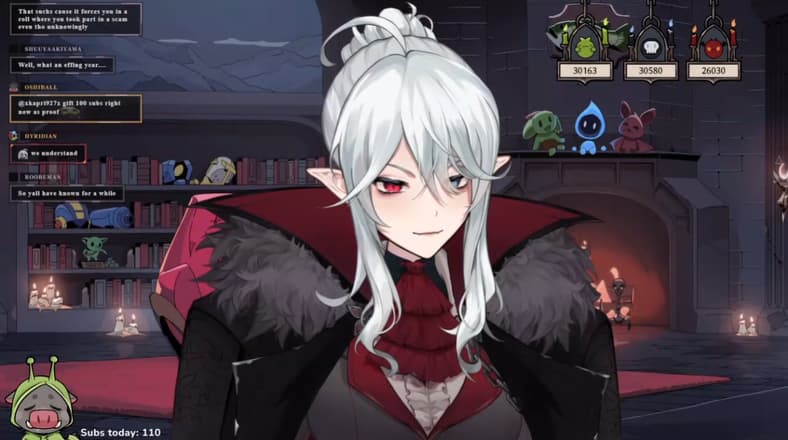
Management’s Admission: In his final statement, Ignacio took full ownership of the disaster. "I made the decision to pursue funding, and I own its consequences," he wrote. "I am deeply sorry to all the talents, staff, friends, and community members who believed in our brand." Despite these words, the damage to the reputation of VShojo and its leadership is likely irreparable.
Broader Implications for the VTubing Industry
The collapse of VShojo serves as a cautionary tale for the creator economy. The "agency model," which promises management, production, and legal protection in exchange for a revenue share, relies heavily on the ethical conduct of the agency’s leadership.
- Trust in Intermediaries: The case highlights the risks of allowing agencies to handle payouts directly. Many VTubers use these agencies for privacy, but as Ironmouse’s case proves, this centralization can lead to catastrophic financial vulnerability.
- Charity Governance: The misappropriation of funds meant for the Immune Deficiency Foundation is likely to result in stricter standards for how streamers manage charity drives. Platforms like Tiltify may implement new safeguards to ensure funds go directly to the beneficiary, bypassing agency middle-men.
- The Shift Toward Independence: We are likely to see a significant shift away from large, centralized agencies toward smaller, independent collectives or personal management structures. The "talent-first" branding used by VShojo has now become a source of skepticism rather than a mark of quality.
As the dust settles, the VTubing community is left to pick up the pieces. For the talent, the challenge remains to reclaim their professional autonomy and re-establish the financial security they were denied. For the industry, the fall of VShojo stands as a stark reminder that even the most innovative models can collapse when they are built on the shifting sands of financial negligence and broken promises.









No comments yet. Be the first to join the conversation!