

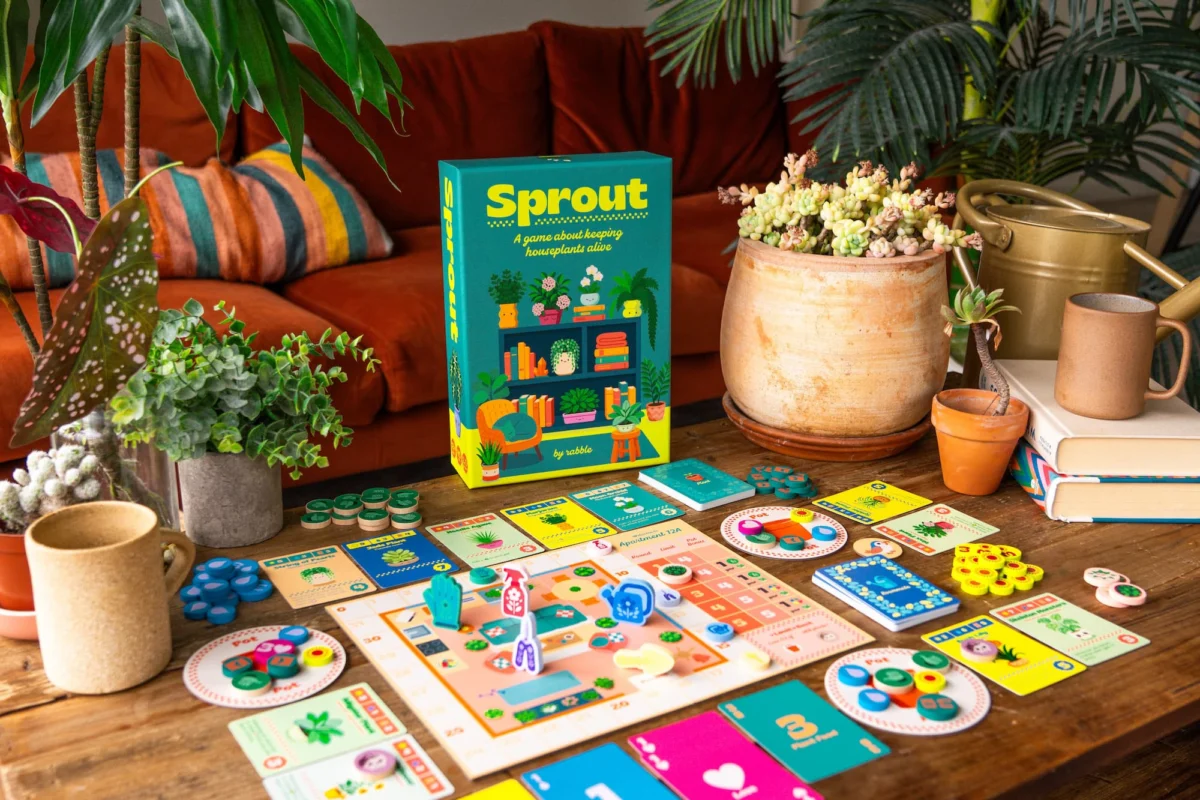
In the burgeoning world of modern tabletop gaming, where themes range from complex engine-building in space to intricate historical simulations, a new contender is taking root in a surprisingly cozy setting. Rabble Games has officially announced Sprout, a strategic board game that transforms the domestic hobby of houseplant cultivation into a competitive, high-stakes experience. With a Kickstarter campaign slated for launch later this month, Sprout promises to blend the tranquility of gardening with the tension of "push-your-luck" mechanics and tactical tableau building.
Designed for two to five players, Sprout invites participants to become competitive plant enthusiasts, carefully curating their own indoor jungles while balancing the volatile realities of limited resources. As the gaming community pivots toward accessible yet deeply strategic titles, Sprout arrives at a pivotal moment, offering a blend of lighthearted theme and robust mechanical depth.
Main Facts: The Anatomy of Sprout
At its core, Sprout is a game of resource management and calculated risk. The objective is simple in concept but challenging in execution: players must nurture a collection of houseplants, ensuring they remain healthy while maximizing their point-earning potential.
- Player Count: 2–5 players.
- Play Time: 45 to 75 minutes.
- Target Audience: Ages 10 and up.
- Core Mechanics: Push-your-luck, tableau building, and semi-cooperative interaction.
- Thematic Depth: Players act as plant owners, managing the delicate ecosystem of their personal pots.
The game is structured across five rounds, each divided into two distinct phases: the Nutrient Phase and the Sprout Phase. The Nutrient Phase acts as the game’s primary risk-management engine. Players draw cards to secure essential nutrients for their collection. However, the game implements a "bust" mechanic: greedily hoarding resources can result in an overabundance of specific nutrients, which leads to plant loss—a thematic nod to the common struggle of overwatering or over-fertilizing real-world flora.

Once nutrients are secured, the Sprout Phase allows players to spend these resources to expand their botanical collection. With over 100 unique plant cards planned for the final release, the game encourages significant replayability, as each plant provides distinct point values and ongoing or immediate effects that can shift the tide of the game.
Chronology: From Concept to Kickstarter
The journey of Sprout from an internal prototype at Rabble Games to a polished tabletop product has been one of careful refinement. The design philosophy centered on creating a game that feels approachable to casual players while offering the strategic depth required by tabletop veterans.
The Development Timeline
- Initial Conception: The design team at Rabble Games focused on the intersection of the "plant parent" trend and the "push-your-luck" genre, identifying a gap in the market for a game that felt relaxing yet intensely tactical.
- Artistic Direction: Throughout the development process, co-founder Jake took the lead on all visual elements. By illustrating the box art and the expansive deck of plant cards himself, the team ensured a cohesive, vibrant aesthetic that reflects the game’s organic theme.
- Playtesting and Balancing: Over the past year, the team has focused on calibrating the risk-to-reward ratio in the Nutrient Phase to ensure that no single strategy—be it aggressive expansion or conservative growth—dominates the meta.
- Pre-Launch Hype: With the Kickstarter campaign announcement, Rabble Games has begun the final stretch, confirming that upgraded components—such as wooden nutrient tokens and player markers—are planned as stretch goals for backers.
- The Future: Looking beyond the base game, the team has officially confirmed that a dedicated solo mode is currently in active development, catering to the growing demographic of players who enjoy solo tabletop experiences.
Supporting Data: The Mechanics of Growth
To understand why Sprout has garnered early attention, one must look at its mechanical infrastructure. The game does not merely rely on luck; it forces players to interact with one another through the clever inclusion of "Roommate Cards."
The "Roommate" Dynamic
The semi-cooperative elements of Sprout are perhaps its most innovative feature. Roommate Cards allow players to trigger beneficial effects that serve their own goals while simultaneously providing auxiliary support to opponents. This creates a "table talk" environment where players must negotiate and weigh the cost of helping a rival. Is the immediate benefit of a card worth the long-term gain you might be handing to your competitor? This tension prevents the game from becoming a "multiplayer solitaire" experience, keeping all players engaged even when it is not their turn.

The Plant Ecosystem
The inclusion of over 100 plant types suggests a game that relies heavily on synergy. Some plants offer passive, ongoing benefits—perhaps a boost to nutrient intake or a reduction in risk during the draw phase—while others provide high-scoring endgame objectives. This variety ensures that no two sessions feel the same, as players must adapt their growth strategy based on the specific plants available to them in the shared market.
Official Responses and Developer Vision
Rabble Games has maintained a transparent dialogue with the community regarding the game’s development. In recent statements, the team emphasized that the artistic integrity of the game is just as vital as the mechanics. By keeping the design and illustration in-house, they believe they have captured a specific "vibe" that resonates with the current generation of board game hobbyists who prioritize table presence and thematic immersion.
Regarding the upcoming Kickstarter, the developers have noted that the goal is not merely to fund the production of the base game, but to elevate the physical quality of the experience. The inclusion of wooden components is a direct response to community feedback, moving away from plastic tokens in favor of more tactile, premium materials that fit the "natural" theme of the game.
The decision to develop a solo mode is also a calculated move, acknowledging that the board game industry has seen a massive surge in demand for single-player content. While details remain scarce, the developers have promised that the solo mode will provide a distinct challenge that mirrors the tension of the multiplayer game without relying on a simple "beat your own score" mechanic.

Implications: The Rise of "Cozy" Strategy
The emergence of Sprout highlights a broader trend in the tabletop industry: the rise of "cozy" games. For years, the market was dominated by intense war games or complex economic simulators. Today, there is a clear shift toward games that utilize relaxing themes—gardening, nature, art, and coffee—while retaining the deep, satisfying mechanical loops of heavier strategy games.
Impact on the Market
- Broadening the Audience: By choosing a theme as universally understood as gardening, Rabble Games is positioning Sprout to bridge the gap between "gateway games" (like Catan or Ticket to Ride) and more complex hobbyist titles.
- The Power of Aesthetic: In an era of social media-driven marketing, the visual appeal of Sprout—characterized by vibrant, organic illustrations—is a significant asset. A game that looks beautiful on a shelf or a table is significantly more likely to gain traction in the crowded crowdfunding space.
- Social Dynamics: The focus on "Roommate Cards" serves as a reminder that board games are, fundamentally, social instruments. By forcing players to interact and negotiate, Sprout encourages the kind of table-side conversation that makes board gaming a uniquely human experience compared to digital alternatives.
Final Thoughts on Success
As the Kickstarter launch approaches in late June, the success of Sprout will be a barometer for the health of the mid-weight strategy category. If the campaign hits its funding goals, it will demonstrate that players are eager for games that reward thoughtful planning and clever social maneuvering, all wrapped in a package that celebrates the small, rewarding act of watching something grow.
For those interested in following the development of Sprout, the community is already forming around the promise of lush art, challenging risk-management, and a unique take on the "plant parent" lifestyle. Whether you are a seasoned strategist or a casual player looking for a new weekend staple, Sprout appears set to bloom into one of the year’s most anticipated titles. Keep a close watch on the Rabble Games social channels as the final countdown to the Kickstarter launch begins.












No comments yet. Be the first to join the conversation!