Iffa Jayyana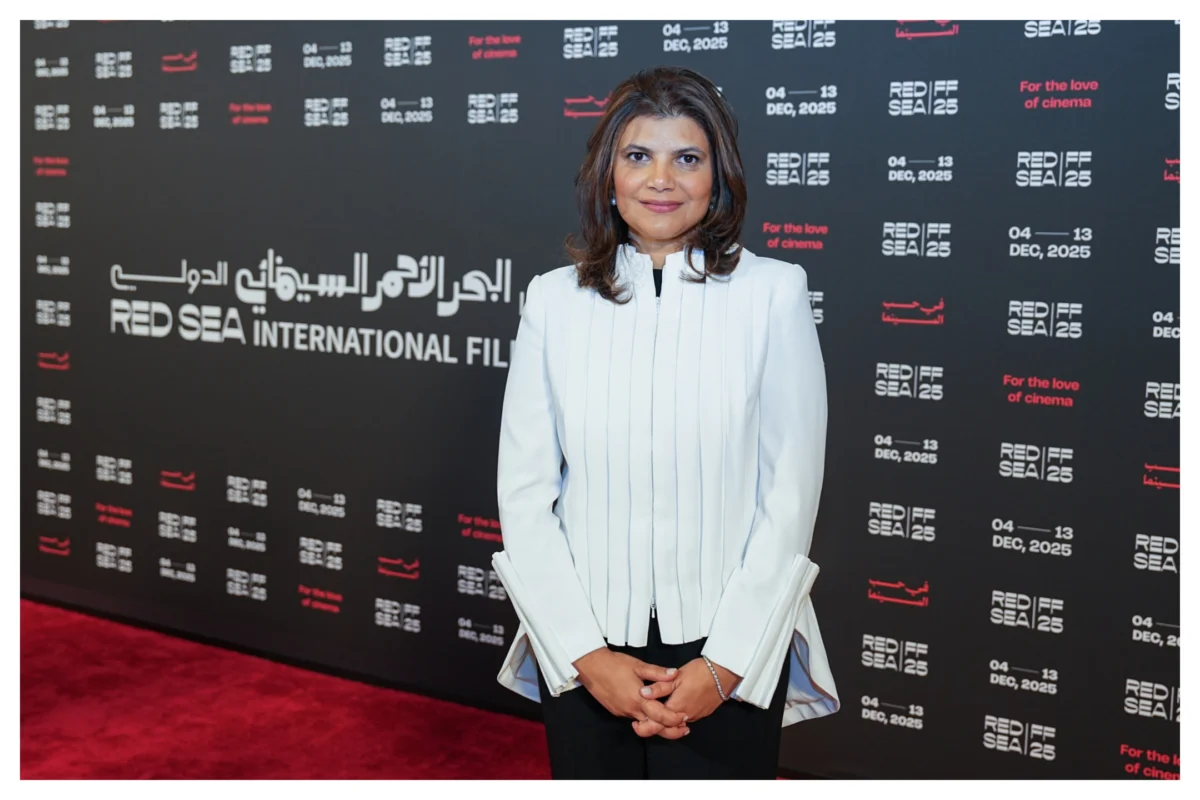
In a significant leadership transition for the burgeoning Middle Eastern cinematic landscape, Shivani Pandya Malhotra, the long-standing general manager of the Red Sea International Film Festival (RSIFF), has announced her departure. Her exit marks the end of a seven-year tenure that saw the festival transform from an ambitious concept into the preeminent film market and cultural showcase in the Middle East and North Africa (MENA) region.
Pandya Malhotra’s departure comes at a pivotal juncture for the Red Sea Film Foundation, the governing body that oversees the festival, its associated film fund, and its year-round educational incubator, Red Sea Labs. As the Kingdom of Saudi Arabia continues its aggressive push to position itself as a global entertainment hub under its Vision 2030 initiative, the change in leadership signals a potential shift in the strategic direction of one of the region’s most influential cultural institutions.
A Legacy of Rapid Development
When Shivani Pandya Malhotra joined the Red Sea Film Foundation, she faced the daunting task of building a world-class film festival in a country that had only recently lifted a 35-year ban on commercial cinema. Established in 2019, the foundation launched its inaugural edition in 2020, just as the global film industry was grappling with the unprecedented disruptions of the COVID-19 pandemic.
Despite these hurdles, Pandya Malhotra utilized her extensive industry experience—honed previously at the now-defunct Dubai International Film Festival—to assemble a team of international and local professionals. Under her stewardship, the festival evolved rapidly. By its second year, the event had transformed into a major fixture on the international circuit, attracting 40,000 filmgoers and over 4,000 industry professionals.
Her tenure was characterized by a focus on bridging the gap between Arab cinema and the global market. Through the Red Sea Fund, she helped champion 170 projects, providing essential financial support to filmmakers whose voices had historically been marginalized on the international stage.
Chronology of an Ascent: From Jeddah to the World Stage
To understand the magnitude of the foundation’s growth, one must look at the rapid-fire succession of milestones achieved under the outgoing general manager:
- 2018: Saudi Arabia officially lifts the decades-long ban on public cinema, sparking a gold rush of investment and infrastructure development.
- 2019: The Red Sea Film Foundation is established in Jeddah.
- 2020: The inaugural edition of the festival is held, marking a historical moment for Saudi culture.
- 2022: The festival cements its status as a major player, hosting a star-studded gala with a jury presided over by legendary director Oliver Stone.
- 2023: Under the theme "Your Story, Your Festival," the event reaches a global crescendo. Baz Luhrmann serves as jury president, and the festival showcases high-profile films such as Jeanne du Barry and Four Daughters, solidifying its reputation as a premiere destination for the international press and elite filmmakers.
- 2024: The festival continues its expansion, hosting an A-list roster of talent, including Dakota Johnson, Uma Thurman, and Michael Caine, effectively positioning Jeddah as the "Cannes of the Desert."
- 2025: Following the appointment of Faisal Baltyuor as CEO of the Foundation in May, the organizational structure shifts, leading to the eventual announcement of Pandya Malhotra’s resignation.
Supporting Data and Institutional Impact
The success of the Red Sea Film Festival is not merely anecdotal; it is backed by significant metrics that underscore its role as the MENA region’s top movie market. By fostering a environment where international distributors meet regional creators, the festival has effectively replaced the vacuum left by the collapse of other regional film circuits.
The "Red Sea Fund" has become the lifeblood of the organization. By supporting 170 films, the festival has ensured that the Saudi and broader Arab narrative is not just represented, but critically acclaimed. For instance, the inclusion of Four Daughters and other regional titles in high-profile slots has forced the global film community to take the Saudi market seriously.
Furthermore, the festival’s ability to attract Hollywood royalty—such as Vin Diesel, Queen Latifah, and Johnny Depp—has been a strategic masterstroke in rebranding Saudi Arabia as a destination for global tourism and creative investment. This "soft power" diplomacy has been a cornerstone of the foundation’s growth strategy.
Official Responses and Internal Dynamics
The departure of a figure as central as Pandya Malhotra inevitably raises questions about internal cohesion. In a formal statement, she expressed deep gratitude for her time at the organization:
"After seven incredible years and five remarkable editions of the Red Sea International Film Festival, I leave with immense pride in everything we have built together. It has been a privilege to be part of the Foundation’s journey from the very beginning and to witness its growth into a globally respected institution."
She extended personal thanks to Chairwoman Jomana Al Rashid and CEO Faisal Baltyuor, emphasizing the collaborative nature of the project. However, industry insiders suggest that the transition was not without friction. Reports indicate that the arrival of Faisal Baltyuor as CEO in May 2025 introduced a new, distinctly Saudi-led vision for the organization. Sources close to the foundation have noted that Baltyuor’s strategic priorities and operational methodology were not always in alignment with those of Pandya Malhotra, leading to a natural, if not sudden, conclusion to her contract.
Baltyuor, a pioneer in the Saudi film scene, offered a measured response to the departure: "Shivani has played an important role in the Foundation’s journey, working alongside a talented team of Saudi and international professionals to help shape its growth. We thank her for her contributions and wish her every success in the next chapter of her career."
Implications for the Future of Saudi Cinema
The exit of a seasoned, internationally recognized executive like Pandya Malhotra leaves a void that the foundation must now fill with caution. The implications for the future are twofold:
1. The "Saudi-First" Pivot
With Faisal Baltyuor at the helm, the organization is expected to double down on the "Saudi-first" mandate. This means a sharper focus on local talent incubation, domestic production capacity, and the development of the Saudi film industry as a self-sustaining economic engine rather than just a host for international glitz. While this is a logical evolution for a maturing industry, it risks distancing the international partners who were brought in during the foundation’s nascent years.
2. A New Chapter for Pandya Malhotra
For Shivani Pandya Malhotra, the transition marks a shift from institutional management to creative production. Her recent role as executive producer for the Yemeni-Scottish drama The Station, which premiered to critical acclaim at the Cannes Critics’ Week, demonstrates her intent to pivot toward the content-creation side of the business. Her success in Cannes provides a strong indicator that her influence will continue to be felt in the industry, albeit from a different vantage point.
3. Institutional Stability
The coming months will be a test of the foundation’s institutional robustness. Can the Red Sea Film Festival maintain its A-list allure and international market relevance without the specific network and expertise that Pandya Malhotra brought to the table? The upcoming 2025/2026 cycle will be the first true test of the organization’s resilience under its new, fully integrated Saudi leadership.
Conclusion
Shivani Pandya Malhotra leaves behind a transformed cultural landscape. In seven years, she helped steer the Red Sea Film Festival from a bold experiment into a cornerstone of the global film calendar. As the organization transitions into its next phase, the focus will undoubtedly shift toward balancing the high-octane international appeal of the festival with the deeper, long-term goals of the Saudi film industry. While her departure marks the end of an era, it also signifies the coming of age of a festival that is no longer in its infancy, but ready to stand on its own as a permanent, influential fixture on the world stage.

 Nana Wu
 Jia Lissa