Lina Hope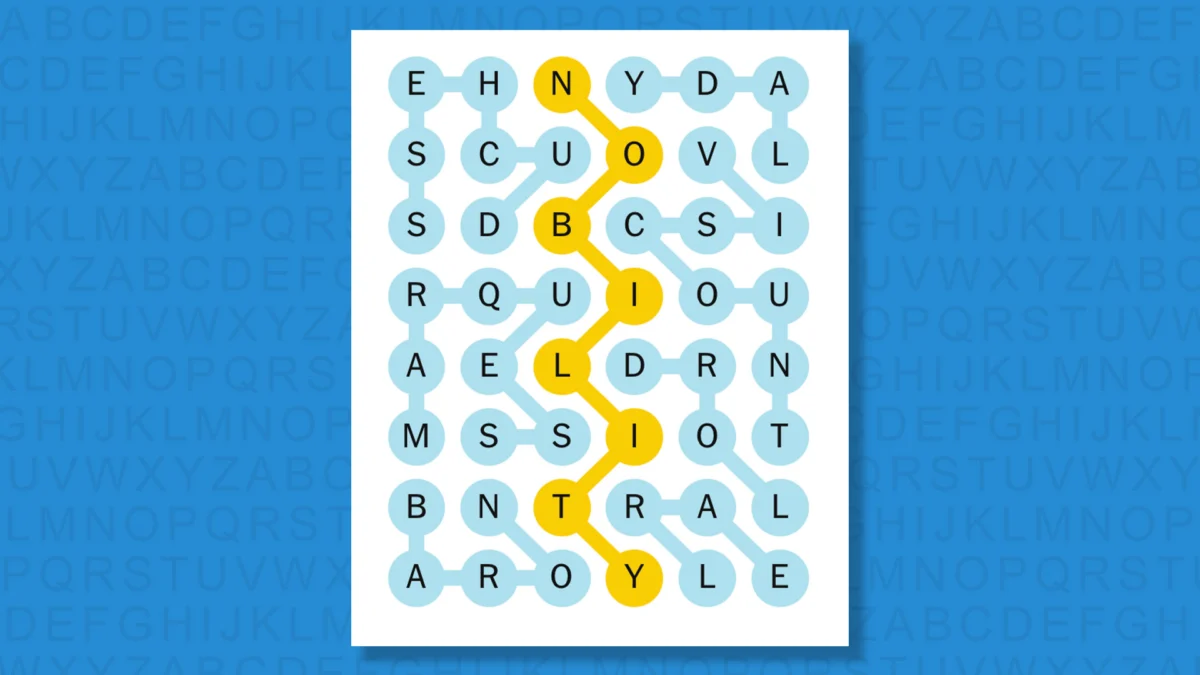
For word game enthusiasts, the daily ritual of logging onto the New York Times Games portal has become as essential as a morning cup of coffee. Among the stable of linguistic challenges—which includes the globally viral Wordle, the brain-teasing Connections, and the meditative Spelling Bee—the latest addition, Strands, has carved out a unique niche. Combining the mechanics of a word search with the thematic depth of a cryptic crossword, Strands requires players to find hidden words based on a cryptic clue, culminating in a "spangram" that ties the board together.
Today, we analyze the puzzle for game #833, themed "Peer group." As players navigate the grid, they encounter a landscape of aristocracy, titles, and the peculiar social hierarchy of the British nobility.
The Main Facts: Decoding "Peer Group"
For those arriving at today’s puzzle, the theme "Peer group" serves as a direct, albeit slightly ironic, nod to the British peerage system. In Strands, players are tasked with identifying specific terms that fall under the umbrella of nobility.
The challenge, as with all Strands puzzles, is that the words are not merely listed; they must be identified within a chaotic grid of letters. For game #833, the target words center on the ranks and titles that have historically defined the upper echelons of British society. As the player identifies words like "EARL," "LADY," and "LORD," the broader picture begins to emerge. However, the difficulty lies in connecting these disparate threads into a coherent theme without exhausting your hints.
Chronology of the Challenge
The NYT Strands cycle resets at midnight local time, creating a rolling global experience. While some players in the Eastern time zone may be putting the final touches on their solutions, others are just beginning their morning commute.
Initial Strategy
Upon opening the board for #833, the initial visual sweep suggests a density of letters that can be intimidating. The most effective strategy for Strands—and particularly this board—is to look for the "easy wins" first.
- The Early Phase: Identifying shorter, high-frequency words like "EARL" or "LORD" acts as a vital anchor. These words provide the initial momentum needed to unlock the in-game hint system.
- The Mid-Game: Once the low-hanging fruit is harvested, the grid becomes more sparse, allowing for the identification of longer, more complex titles.
- The Spangram Hunt: The spangram, which describes the board’s theme in its entirety, is the crown jewel of the puzzle. For game #833, the spangram is an 8-letter word stretching from the top of the 3rd column to the bottom of the 4th column.
Supporting Data and Thematic Analysis
The concept of the "peerage" is a subject that often feels antiquated in the 21st century. Historically, the British peerage (comprising Dukes, Marquesses, Earls, Viscounts, and Barons) held immense political and economic power. In the modern era, however, their role has shifted significantly.
The "Nobility" Paradox
In contemporary society, the peerage exists in a state of suspended animation—partly ceremonial, partly historical curiosity. The allure of the "peer group" theme in a modern digital game highlights a fascinating cultural dichotomy. We are living in a digital age defined by democratized information, yet we remain captivated by the archaic structures of hereditary status.
When playing game #833, one cannot help but notice the juxtaposition of the slick, minimalist interface of the New York Times app against the heavy, centuries-old weight of words like "DUKE" or "BARON." It is this contrast that makes Strands particularly engaging; it forces a collision between the modern user interface and the historical lexicon.
Official Context: What is NYT Strands?
Strands has officially graduated from its experimental phase to become a permanent fixture in the New York Times games ecosystem. Unlike Wordle, which relies on five-letter patterns and process-of-elimination logic, Strands requires a more fluid, spatial awareness.
- Mechanics: Players are given a clue and a grid. They must find all words, including the spangram, to clear the board.
- The Hint System: If a player finds enough non-thematic words, they earn a hint, which highlights the path of a required word. This is crucial for players who, like many, may find themselves stuck on the more obscure titles within the nobility theme.
Implications: The Evolution of Word Games
The sustained popularity of games like Strands signals a shift in how we consume digital media. We are moving away from passive consumption toward active, skill-based engagement. The New York Times has successfully commodified the "daily brain training" market, turning the morning word puzzle into a shared cultural touchstone.
The success of #833, with its sophisticated "Peer group" theme, demonstrates that the game developers are willing to push the boundaries of general knowledge. By choosing a theme that requires a grasp of history—or at least a cursory knowledge of Downton Abbey-style tropes—the game elevates itself from a simple word search to a trivia-adjacent experience.
The Cultural Legacy of the "Peer Group"
Reflecting on the gameplay experience, it is impossible to ignore the role of the media in shaping our perception of these titles. Many players will associate these words not with historical textbooks, but with 1980s television advertisements—specifically the iconic Grey Poupon commercials that utilized the imagery of the aristocracy to sell a premium product.
This association proves that these words have transcended their original political meaning to become shorthand for "luxury," "exclusivity," and "eccentricity." In the context of the game, this makes for a satisfying, if slightly humorous, solving experience. We aren’t just finding words; we are unearthing the linguistic artifacts of a bygone era.
Final Tips for Solving Game #833
If you find yourself struggling with today’s grid, consider the following:
- Don’t ignore the Spangram: The spangram is the key to the entire board. If you find the spangram first, it often provides the spatial context needed to solve the rest of the puzzle.
- Scan for common prefixes/suffixes: Words related to nobility often share similar letter patterns.
- Use your hints wisely: There is no shame in using the hint system. The goal is to finish the board, and sometimes a nudge in the right direction is exactly what is needed to break a mental block.
Conclusion
NYT Strands game #833 offers a delightful, if challenging, foray into the world of the British peerage. Whether you are an amateur historian or simply a fan of high-quality word puzzles, today’s theme serves as a reminder of the enduring power of language to transport us—even if only for a few minutes—into a world of lords, ladies, and the complex social structures of the past.
As the New York Times continues to iterate on these daily challenges, one thing is clear: the appetite for high-quality, intellectually stimulating games is stronger than ever. So, take your time, clear the board, and enjoy the satisfaction of completing yet another daily puzzle. And remember, in the game of Strands, everyone is a peer—at least until the next midnight reset.


 Nana
Nana
 Reynand Wu