Asep Darmawan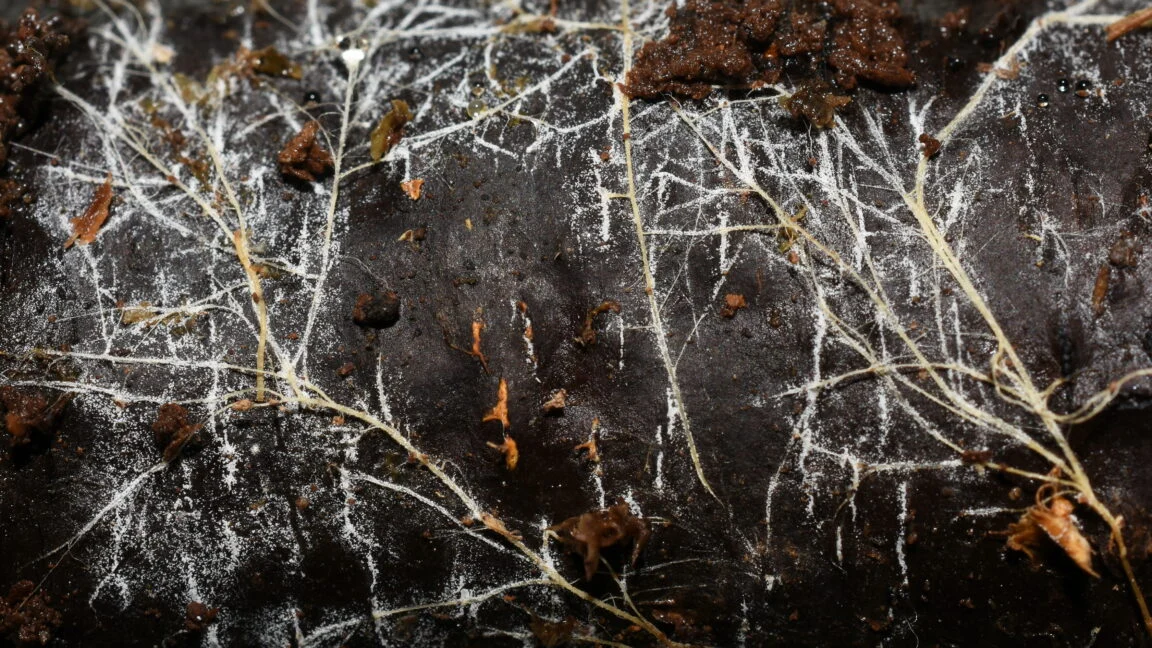
Deep beneath our feet lies a vast, complex, and largely invisible infrastructure that sustains life on Earth. Arbuscular mycorrhizal (AM) fungi—microscopic organisms that form symbiotic relationships with the roots of over 80 percent of terrestrial plants—are the silent architects of our ecosystems. They facilitate nutrient exchange, bolster plant health, and act as a critical, yet largely unquantified, reservoir for carbon sequestration.
However, a groundbreaking new study reveals that this subterranean "wood wide web" is under unprecedented threat. As scientists begin to map these fungal networks, they are discovering a stark reality: human activity is fragmenting these vital systems, and our current policies are woefully inadequate at protecting them.
The State of the Soil: Key Findings from the Mapping Initiative
The recent research, spearheaded by the Society for the Protection of Underground Networks (SPUN), provides the first comprehensive look at the global density and distribution of these fungal networks. The results are both illuminating and alarming.
The study confirms that croplands, the backbone of human food production, are significantly degraded in terms of fungal health. Fungal network densities across these cultivated areas are roughly half of what is observed in wild, undisturbed ecosystems. This reduction is not merely a loss of biological diversity; it represents a fundamental impairment of the soil’s ability to cycle nutrients and store carbon efficiently.
Perhaps most concerning is the vulnerability of grasslands. These ecosystems host approximately 40 percent of the world’s arbuscular mycorrhizal biomass. Yet, grasslands are among the least protected biomes on the planet. They are being converted into agricultural land at a rate four times faster than forests. Every acre of grassland plowed under represents a permanent disruption to an ancient, carbon-sequestering network that takes decades, if not centuries, to establish.
The "Dead" Data Gap
While this study serves as a critical baseline, lead researchers acknowledge a significant blind spot: the current data only accounts for living fungal networks. Dead fungal networks, which remain in the soil, also play a vital role in carbon sequestration and structural stability. By excluding these "necromass" components, the current study may actually be underestimating the total biomass and the true influence these networks exert on global ecosystems. Research into the longevity and carbon-retention properties of these dormant fungal structures remains a high-priority frontier in soil science.
A Chronology of Discovery and Neglect
The realization that fungi are not just passive inhabitants of the soil, but active participants in global climate regulation, has been a slow-dawning reality for the scientific community.
- Early Mycology (19th – 20th Century): Scientists identified the symbiotic nature of mycorrhizal fungi, noting how they help plants absorb phosphorus and nitrogen. For decades, however, research was largely restricted to laboratory settings or small-scale greenhouse experiments.
- The Rise of Macro-Ecology (2010s): As climate modeling became more sophisticated, researchers began to realize that soil carbon stocks were being improperly accounted for in climate projections. The focus shifted toward the "global soil microbiome."
- The SPUN Era (2022–Present): With the founding of SPUN, a concerted, global effort was launched to map these underground networks. The 2025–2026 period saw a surge in data collection, highlighting that 90 percent of global fungal hotspots lack any form of formal environmental protection.
- The Current Moment: Researchers are now shifting their focus from "where are they?" to "why are they dying?" and "what are the consequences of their loss?" This trajectory leads directly to the upcoming UN Climate Change Conference (COP31), where these findings will be presented to global policymakers for the first time.
Supporting Data: The Fragility of the Underground
The data provided by the SPUN team paints a picture of a system in retreat. When examining the geographical distribution of fungi, the lack of data is as concerning as the loss of density.
For example, ecosystems such as the deserts of the American Southwest—which house unique, hardy species adapted to extreme water scarcity—remain critically understudied. The lack of information creates a "policy vacuum." Because we cannot quantify the ecosystem services these desert fungi provide, they are rarely factored into land-use planning or conservation efforts.
Furthermore, the conversion of grasslands is not just an issue of biodiversity loss; it is a climate crisis. When a grassland is converted to a monoculture crop, the soil is physically disturbed, the fungal hyphae are severed, and the carbon sequestered by those fungi is released back into the atmosphere as CO2. By failing to protect these networks, we are effectively accelerating the very climate change we seek to mitigate.
Official Responses: Bridging the Gap Between Science and Policy
As the scientific community prepares for COP31, the rhetoric from researchers is shifting from academic observation to urgent advocacy.
Corentin Bisot, a biophysicist at AMOLF and co-author of the study, emphasizes that while we have the map, we lack the "toolbox" to act. "We’re still far from completely understanding how, if you have a grassland next door, and you want to increase microbes and fungi there, we don’t have the toolbox for you to do it," Bisot explains.
The challenge, according to the research team, is twofold:
- Policy Recognition: Policymakers currently treat "nature" as the surface layer—the trees, the crops, the animals. Fungi are rarely mentioned in international climate treaties like the Paris Agreement or the Kunming-Montreal Global Biodiversity Framework.
- Implementation: Even if policymakers were to prioritize fungal health, restoration ecology for subterranean networks is in its infancy. Unlike planting a tree, where the success rate is easily measured, "planting" a fungal network requires a fundamental shift in how we manage soil chemistry, tillage, and chemical inputs like fungicides and synthetic fertilizers.
The SPUN team aims to use the COP31 platform to argue for the inclusion of soil microbial health in "Nationally Determined Contributions" (NDCs)—the climate action plans submitted by individual countries.
Implications: A New Era of Conservation
The study’s lead author, Stewart, offers a humble perspective on the research. He compares the current maps of fungal networks to the early Spanish maps of California. "They presented the state as an island," he notes. "There will be new discoveries about the density of fungi networks around the globe to grow the public’s understanding of them."
This is not a final document, but a starting point. The implications for the future are profound:
Rethinking Agriculture
If we recognize that croplands are suffering from a 50 percent deficit in fungal density, the argument for regenerative agriculture moves from a niche interest to a global necessity. Practices such as no-till farming, cover cropping, and reducing synthetic chemical applications are not just "sustainable"—they are essential to restoring the underground infrastructure that feeds the planet.
Carbon Sequestration and Policy
Current carbon markets focus heavily on reforestation. However, if fungal networks are, in fact, a massive, underutilized carbon sink, they could become the next major frontier in carbon credit schemes. Protecting existing, high-density fungal grasslands could potentially offer a more immediate climate return than waiting for new forests to mature.
The Knowledge Frontier
The most significant implication is the call for more research. We are currently living on a planet whose primary life-support system—the soil microbiome—is being eroded without a comprehensive understanding of the cost. The push for more research into understudied regions like the Sonoran Desert is not merely for the sake of scientific curiosity; it is a prerequisite for survival.
Conclusion: The Ground Beneath Us
As we look toward the future of climate policy, we must widen our lens. The story of the planet is not just written in the air above us or the forests before us; it is being written in the dark, intricate, and ancient networks beneath our feet.
The SPUN study serves as a wake-up call. We have been ignoring the engine room of the planet for too long. If we are to meet the ambitious climate goals of the coming decades, we must move beyond the surface. We need to protect the fungi, restore the soil, and recognize that the most powerful technology for carbon sequestration isn’t a machine—it’s a network that has been doing the work for millions of years.
As COP31 approaches, the message to policymakers is clear: To save the world, we must start from the ground up.


 Rifan Muazin
 Nila Kartika Wati