Rifan Muazin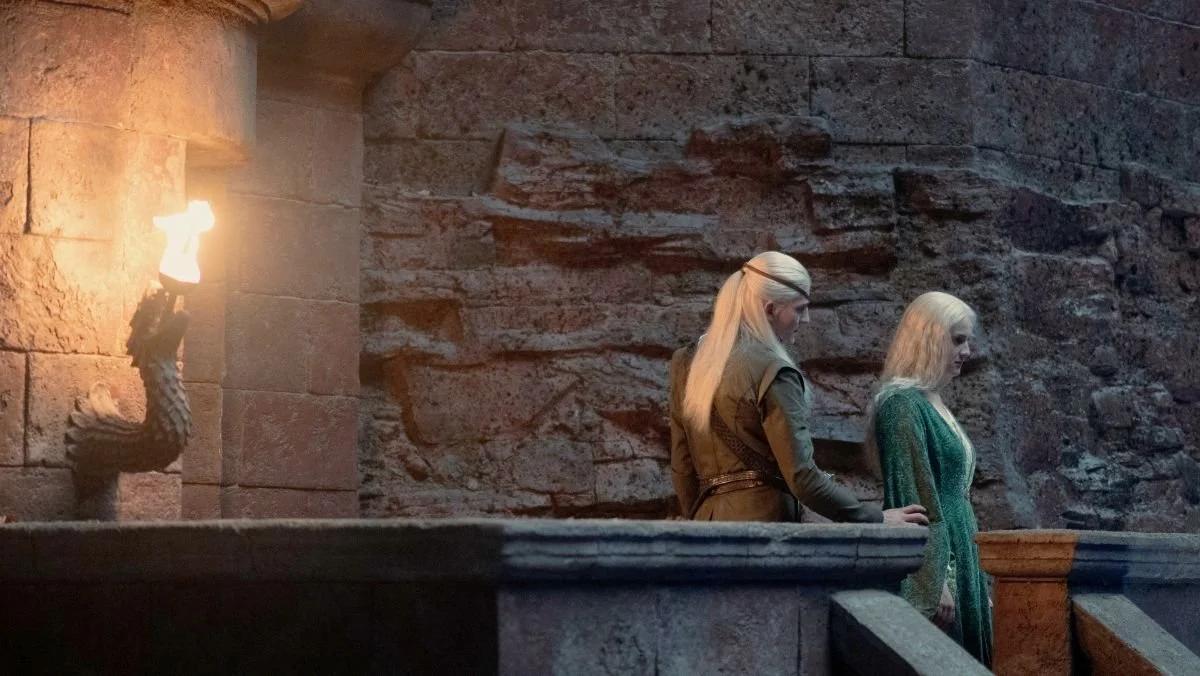
It has been a significant interval since the skies over Westeros last roiled with the heat of dragon fire, but the shadow of the Targaryen civil war looms larger than ever. As fans await the penultimate chapter of HBO’s House of the Dragon, the political landscape of the Seven Kingdoms remains as fractured and volatile as the charred ruins left in the wake of the Dance of the Dragons. With the series confirmed to conclude with its fourth season, the stakes for the upcoming third season have never been higher.

Before we return to the carnage of the civil war, here is a definitive guide to the current state of the Realm, the strategic maneuvering of the rival factions, and the complex web of betrayals that define this brutal era of Targaryen history.

The Roots of the Conflict: A Chronological Context
To understand the present violence, one must look back to the catalyst of the discord. The "Dance of the Dragons" is the epochal civil war of the Targaryen dynasty, occurring roughly 130 years after Aegon the Conqueror first unified the Seven Kingdoms. Set approximately 170 years before the events of Game of Thrones and 90 years prior to the era of A Knight of the Seven Kingdoms, the conflict is a direct consequence of the succession crisis following the death of King Viserys I Targaryen.

The war is fundamentally a collision between two branches of the same house: the Blacks, led by Rhaenyra Targaryen, and the Greens, who installed her half-brother, Aegon II, upon the Iron Throne. This is not merely a dispute over a crown; it is a war of ideology, legitimacy, and the survival of the Targaryen bloodline itself.
The State of the Blacks: Rhaenyra’s Strategic Pivot
For much of the second season, Queen Rhaenyra’s forces were effectively gridlocked, restricted primarily to Dragonstone. Her position was precarious, as her small council—largely composed of men wary of her leadership—often stifled her tactical ambitions. The internal tension was exacerbated by the open secret regarding the parentage of her heirs, Jacaerys and Joffrey, and the constant fear that losing Rhaenyra would result in the total collapse of their faction’s legitimacy.

The Rise of New Dragonriders
Recognizing that the war could not be won with tradition alone, Rhaenyra pivoted toward a radical solution: the "Red Sowing." By opening the call to those with Valyrian blood, she sought to claim the riderless dragons of Dragonstone. The process was gruesome and claimed many lives, but it ultimately yielded significant assets:

- Hugh Hammer: A grandson of the late King Jaehaerys, he claimed Vermithor, a dragon second in size only to Aemond’s Vhagar.
- Ulf the White: A man believed to be the bastard half-brother of Viserys and Daemon, he secured the loyalty of Silverwing.
- Addam of Hull: In a rare display of dragon-will, Seasmoke—the dragon formerly belonging to Rhaenyra’s husband, Laenor Velaryon—chose Addam as his new rider. Addam, a bastard son of Corlys Velaryon, represents a crucial, if unconventional, addition to the Blacks’ aerial arsenal.
Daemon’s Descent and Enlightenment
Prince Daemon Targaryen’s journey in the Riverlands was a descent into psychological madness. Haunted by the spirits of Harrenhal and guided—or perhaps manipulated—by the mysterious Alys Rivers, Daemon’s campaign was marked by erratic cruelty. However, the turning point came in the form of a prophetic vision. Witnessing the "Song of Ice and Fire," the Three-Eyed Raven, and the existential threat of the White Walkers, Daemon underwent a profound shift in priorities. Abandoning his personal quest for the throne, he reaffirmed his commitment to Rhaenyra’s cause, bringing the full weight of the Riverlands to her side.

The State of the Greens: A House Divided
The faction supporting King Aegon II is currently suffering from a crisis of leadership and stability. The death of Aegon’s young son, Jaehaerys, at the hands of assassins, triggered a spiral of rage and incompetence. Aegon’s subsequent purge of the ratcatchers in King’s Landing stripped the Greens of the public sympathy Otto Hightower had worked so tirelessly to manufacture.

The Fall of the King
The conflict at Rook’s Rest proved disastrous for the Greens’ stability. While Aemond Targaryen and Ser Criston Cole succeeded in neutralizing Princess Rhaenys and her dragon Meleys, the victory was hollow. Aemond, sensing an opportunity to seize power, attempted to kill his own brother, Aegon, during the skirmish. Aegon survived, but his severe injuries and physical scarring have forced him into the shadows, leaving Aemond to rule as Prince Regent.

The Internal Purge
The internal structure of the Green council is crumbling. Otto Hightower, once the architect of the Green claim, has been stripped of his position as Hand of the King and, in a chilling development, now languishes in a dark dungeon. Meanwhile, Tyland Lannister has been dispatched to Essos to secure the naval support of the Triarchy, a move intended to break the blockade imposed by Corlys Velaryon.

The Alicent Factor: A Secret Capitulation
Perhaps the most significant development in the lead-up to the third season is the shifting allegiance of Alicent Hightower. Having realized that her interpretation of King Viserys’s final words was fundamentally flawed—that he never intended for Aegon to rule and was instead speaking of the apocalyptic prophecy of the White Walkers—Alicent has become disillusioned with the war.

In a clandestine meeting at Dragonstone, Alicent offered Rhaenyra a path to victory: she would open the gates of King’s Landing, effectively sacrificing her own son and Aemond to ensure the survival of Helaena and herself. Rhaenyra has accepted the terms of this deal, but the execution of such a plan remains fraught with the peril of an unpredictable war.

Official Responses and External Friction
The production of House of the Dragon has not been without its own "civil war." George R.R. Martin, the architect of this world, has publicly expressed significant dissatisfaction regarding the creative deviations taken by showrunner Ryan Condal and his team. Martin’s criticism of the adaptation highlights the ongoing tension between source material fidelity and the exigencies of modern television production. Whether these two parties can find common ground before the series concludes in season four remains an open question, one that fans are watching with equal parts anxiety and curiosity.

Implications for Season Three
As the series moves into its penultimate season, the theater of war is expanding. The arrival of forces from the North, commanded by Cregan Stark, and the march of the Hightower army from Oldtown suggest that the conflict is about to shift from a dragon-centric struggle to a full-scale continental war.

Key questions remain:

- Will Rhaenyra succeed in taking the capital? With Alicent’s betrayal, the gates may be open, but the loyalty of the Gold Cloaks and the common folk remains uncertain.
- What role will the dragon-less play? With Rhaena Targaryen still scouring the mountains for the wild dragon Sheepstealer, the potential for another wildcard in the sky is high.
- Can Aemond be stopped? Now serving as the de facto leader of the Greens, Aemond’s erratic nature and Vhagar’s immense power represent the single greatest threat to Rhaenyra’s survival.
The stage is set. The alliances are thin, the blood is boiling, and the dragons are hungry. The third season of House of the Dragon promises to be a devastating installment in the history of Westeros, as the cost of the Iron Throne continues to be paid in the currency of fire and blood.

 Siti Muinah
 Azzam Bilal Chamdy