Raul Delapena Setiawan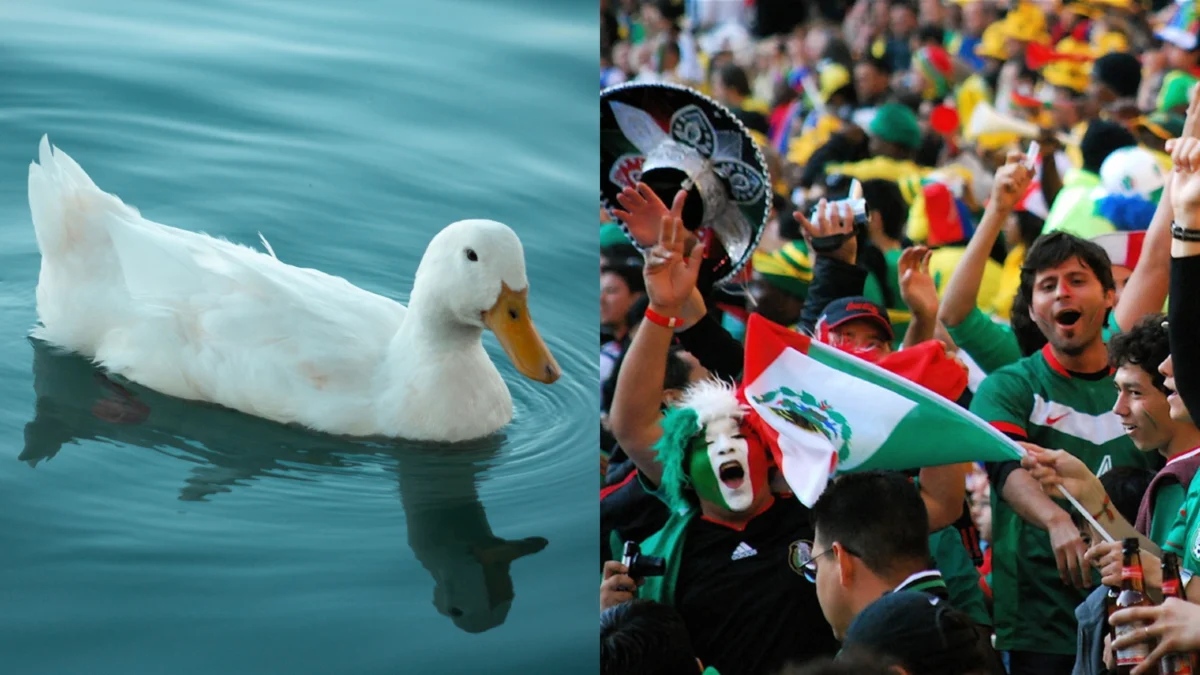
Introduction: An Unlikely Mascot Emerges
The 2026 World Cup has already provided no shortage of drama, from high-stakes disciplinary action on the pitch to unexpected security concerns off it. However, amidst the tactical analyses and the fervor of global soccer, the tournament’s most unexpected protagonist has emerged not from the ranks of FIFA-certified athletes, but from the local waterfowl population.
On Saturday, June 13, social media platforms were set ablaze by footage of an American Pekin duck, outfitted in a custom-fitted Mexico national team jersey, waddling with surprising confidence through the streets surrounding Mexico City’s iconic stadium. The bird, which has since become a viral sensation, has sparked a wave of curiosity, humor, and national pride, serving as a bizarre but beloved mascot for a nation currently riding the high of a successful tournament opening.
The Chronology of the Event
The phenomenon began shortly after Mexico’s opening match on Thursday, June 11, against South Africa. The match, which served as the official curtain-raiser for the 2026 tournament, was a gritty, contentious affair that set the tone for the competition. It was a game marked by high tension, resulting in a rare triple-red-card incident—two for the South African side and one for the host nation. Despite the chaos, Mexico secured a decisive 2-0 victory, igniting celebrations that spilled out of the stadium and into the streets of the capital.
It was during these massive, city-wide celebrations that the duck was first identified. Observers initially dismissed the sighting as a trick of the light or an elaborate digital manipulation. However, as multiple angles of the bird—strutting calmly amidst thousands of chanting, jersey-clad fans—began to circulate on platforms like X (formerly Twitter) and TikTok, the reality of the situation set in.
By Saturday, June 13, the duck was still being spotted in the vicinity of the stadium. It appeared unfazed by the cacophony of vuvuzelas, drums, and fireworks. Despite the absence of a visible owner, the duck seemed entirely comfortable in the chaotic environment, its miniature green, white, and red kit suggesting it was a deliberate, albeit eccentric, effort by a supporter to show team spirit.
Analysis of the World Cup Opening
To understand why this duck has captured such global attention, one must look at the atmosphere surrounding the 2026 World Cup. The tournament is being held under a microscope, with the world watching to see how Mexico handles the pressure of hosting.
The match against South Africa was a spectacle of passion. Mexican fans, widely regarded as some of the most dedicated in the sport, transformed the city into a sea of green. The sheer volume of supporters, combined with the volatility of the game—the red cards, the late-game surges, and the tactical deadlock—created an environment of extreme intensity.
The presence of the duck provided a moment of levity in an otherwise high-stakes professional environment. It acted as a "neutralizing agent" for the stress of the tournament, reminding spectators that at the heart of the World Cup is the joy of celebration.
Supporting Data: The Viral Phenomenon
The statistics behind the duck’s rise to fame are staggering. Within 48 hours of the first clip appearing online, the hashtag #DuckOfMexico began trending, garnering over 15 million impressions across major social media platforms.
The virality of the incident highlights the intersection of modern sports fandom and internet culture. While traditional media focused on the tactical breakdown of the 2-0 win, the "Duck in a Jersey" narrative dominated the cultural discourse. Marketing analysts have noted that this type of organic, "meme-worthy" content provides more engagement than traditional advertising, as it taps into the collective human instinct to find humor in absurdity.
Implications for the Tournament
The appearance of the duck raises several questions regarding the logistics and security of a World Cup venue. While the duck has been treated with amusement, it also serves as a reminder of the challenges of managing public spaces during an event of this magnitude.
Wildlife and Public Spaces
Animal rights activists have noted that while the duck appears well-fed and calm, the noise and density of a crowd of thousands could potentially be stressful for an animal. There have been no reports of injury or distress to the animal, and it appears the bird has found a niche in the local ecosystem near the stadium.
The "Guadalajara" Problem
With Mexico’s next fixture scheduled against South Korea in Guadalajara—a city roughly 500 kilometers away—the question of the duck’s future has become a point of playful speculation. Will the "super-fan" bird be transported to the next venue?
Logistically, the transport of live animals across regional borders during a high-security event like the World Cup presents significant hurdles. Mexican law and FIFA regulations regarding pets and wildlife in fan zones are strict. Unless the duck has a legitimate owner who can navigate these regulations, it is highly likely that the mascot’s journey ends in Mexico City.
Contextualizing the World Cup Environment
The duck incident is not the only strange occurrence to plague the 2026 World Cup. The tournament has already seen a bizarre security scare involving venomous rattlesnakes at the Swiss national team’s training facility. The discovery of these reptiles forced a temporary relocation of training operations, highlighting the unpredictable nature of hosting a tournament in diverse climates.
Furthermore, the lead-up to the competition was marred by a massive, FIFA-backed crackdown on digital piracy. Over 27,000 illegal streaming sites were dismantled in a global effort to protect broadcast rights. Against the backdrop of high-tech piracy, security threats, and intense national pressure, the simple image of a duck in a jersey has served as a much-needed breath of fresh air.
Official Responses and Public Reaction
As of Monday, there has been no official statement from the Mexican Football Federation (FMF) or local city authorities regarding the bird. However, the lack of official interference suggests that the authorities are content to let the mascot remain a piece of local folklore.
Public sentiment has been overwhelmingly positive. Many fans have taken to social media to propose names for the bird, with "El Patito," "Quack-auhtémoc" (a play on the name of legendary Mexican player Cuauhtémoc Blanco), and "Ducker" emerging as frontrunners.
The incident has also provided a boost to local vendors, with reports of "duck-themed" merchandise—unofficial, of course—already popping up near the stadium. This organic growth of a sub-narrative around the World Cup demonstrates the deep-seated cultural significance of the sport in Mexico.
Conclusion: A Legacy of Quacks
Whether the duck is a trained performance animal, a stray that stumbled into a costume, or an elaborate piece of performance art by a local supporter, it has undoubtedly secured its place in the history of the 2026 World Cup.
As the tournament progresses and the stakes grow higher, the memory of the "Duck in a Jersey" will likely persist as a symbol of the unscripted joy that only a global event like the World Cup can produce. It serves as a reminder that even in the most structured, high-pressure environments, there is always room for the unexpected.
For now, the people of Mexico City remain on the lookout for their feathered friend. Whether it makes an appearance at the next match or remains in the capital, the "Duck of Mexico" has already won the most important contest of all: the hearts of the fans. As the tournament moves forward, we await the next chapter in this bizarre, lighthearted saga—a welcome distraction from the intense pressure of the world’s most popular game.


 Layla Zulfa
 Sagoh
Sagoh