Evan Lee Salim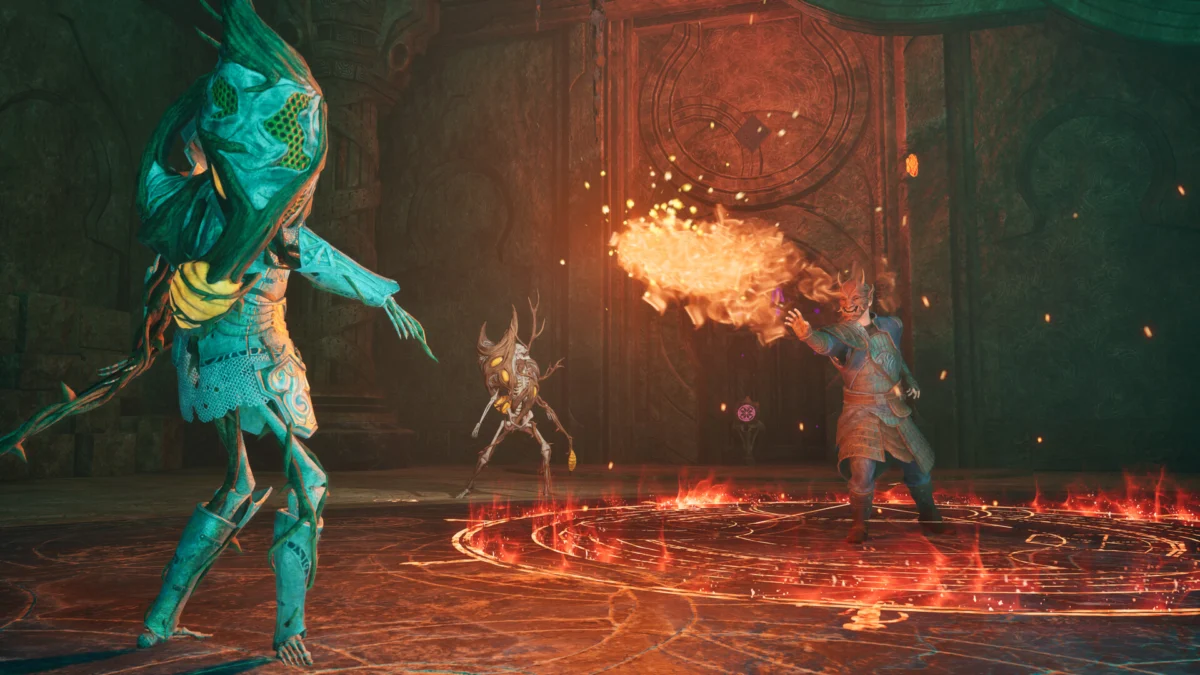
Nine Dots Studio, the visionary developers behind the cult-classic survival RPG Outward, have officially signaled that the return to the harsh, unforgiving landscapes of Aurai is imminent. With the launch of the Outward 2 open beta, the studio is opening its doors to the community, inviting players to stress-test the systems that define one of the most uncompromising adventure simulators in modern gaming. As the July 7th Early Access release date approaches, anticipation has reached a fever pitch for a title that promises to double down on the punishing, high-stakes philosophy that made its predecessor a sleeper hit.
Main Facts: A Sequel Built on Grit and Preparation
At its core, Outward 2 is not your standard power-fantasy RPG. Nine Dots Studio has reiterated that players will not step into the boots of a prophesized hero, a "chosen one," or an omnipotent warrior. Instead, you are an ordinary adventurer. In the world of Aurai, you are just as vulnerable to the elements, infection, and starvation as the common NPCs you encounter.
The game is scheduled for an Early Access launch on July 7, 2026, across Windows PC via Steam, GOG, and the Epic Games Store. The current open beta represents a critical milestone for the development team, allowing them to gather player feedback on core mechanics—such as the revamped combat flow, the survival simulation aspects, and the intricate, non-linear quest systems.
The fundamental pillars of the gameplay remain unchanged:
- The Weight of Preparation: Survival is not a passive stat; it is an active process. Players must manage their inventory, maintain their physical health, and plan their excursions with military precision.
- The "Drop Your Bag" Mechanic: Combat remains tactical and risky. Players are encouraged to shed their heavy backpacks before engaging in battle to maintain mobility, a design choice that forces the player to constantly weigh the risk of losing their gear against the reward of superior maneuverability.
- Consequential Failure: Death in Outward 2 is not a "Game Over" screen; it is a narrative beat. Defeat often leads to being left for dead, kidnapped, or rescued by a stranger, forcing the player to adapt to new, often dire, circumstances.
Chronology of the Development Cycle
The journey to Outward 2 has been marked by a transparent and community-driven development philosophy.
- Initial Teases (Late 2025): Following the massive success of the Outward: Definitive Edition, rumors began to circulate regarding a sequel. Nine Dots Studio maintained a period of "radio silence" to ensure their vision was fully realized before public announcement.
- Official Reveal (Early 2026): The studio broke its silence, confirming that Outward 2 would be built on a more robust engine, promising expanded biomes, more fluid animations, and deeper survival systems.
- The Closed Beta (May 26, 2026): Nine Dots initiated a limited testing phase to troubleshoot critical bugs and performance issues. This period allowed early backers and select community members to experience the new combat engine and survival loops.
- The Open Beta (June 2026): Expanding the testing pool, the open beta marks the final stage before the Early Access rollout. It serves as a stress test for server stability and provides the developers with the large-scale data required to balance the game’s notoriously steep difficulty curve.
- Early Access Launch (July 7, 2026): The official start of the player-driven development phase.
Supporting Data: Why "Survival" Matters
To understand the hype surrounding Outward 2, one must look at the data provided by the success of the first game. Outward (2019) defied industry trends by rejecting the "hand-holding" approach common in AAA RPGs. It focused on simulation mechanics: temperature, hunger, thirst, and physical degradation.
The market data from the original Outward showed that players were starving for a "true" survival experience—one that rewarded patience. According to player retention metrics from the original title, the most engaged users were those who spent hours researching alchemy recipes, map navigation, and equipment maintenance. Outward 2 is designed to lean even harder into this "Adventure Simulator" label. By integrating more complex enemy AI and dynamic weather patterns, the developers are creating a world that feels alive and actively hostile, rather than a static playground.
Official Responses and Developer Philosophy
Guillaume Boucher-Vidal, the CEO of Nine Dots Studio, has been vocal about the studio’s design intent for the sequel. In various press releases and developer diaries, he has emphasized that the goal is to make the player feel like a participant in the world rather than the protagonist of it.

"We want players to feel the weight of their decisions," the studio stated during the announcement of the open beta. "In most games, the world reacts to you. In Outward 2, you must react to the world. If you walk into a snowy pass without a fur cloak, you will freeze. If you charge into a camp of bandits without setting traps, you will die. We aren’t creating a game that plays itself; we are creating a world that tests your capability as a strategist."
The studio has also noted that they are listening intently to the feedback from the open beta. They have established dedicated forums and Discord channels to track "frustration points"—areas where the difficulty might feel unfair rather than challenging—ensuring that the final release maintains the game’s identity without becoming needlessly obtuse.
Implications: The Future of the Survival RPG Genre
The release of Outward 2 arrives at a pivotal time for the RPG genre. With many mainstream titles moving toward simplified combat and automated exploration, Outward 2 stands as a defiant alternative. Its success (or failure) will likely set a benchmark for how indie studios approach the "hardcore" RPG market.
1. Re-defining the "True" RPG
If Outward 2 succeeds, it will prove that there is a sustainable, lucrative market for games that refuse to compromise. It pushes the boundaries of what is acceptable in terms of player friction, suggesting that gamers are increasingly tired of "theme-park" open worlds and are looking for environments that offer genuine, high-stakes exploration.
2. Community-Driven Development
The use of an open beta leading into Early Access is a testament to the modern "live" development model. By involving the community in the balancing of enemy health pools, stamina costs, and loot drop rates, Nine Dots is ensuring that the game feels balanced by the people who will actually play it, rather than just internal testers. This symbiotic relationship between developer and player is becoming the gold standard for independent projects.
3. The Bar for Immersion
With the integration of more advanced survival systems, the bar for immersion is being raised. Future developers will likely look at the Outward series as the blueprint for how to handle inventory management and environmental interactions. The "drop your bag" mechanic, in particular, is a masterclass in risk-reward design that will likely be studied and adapted by other studios in the years to come.
Conclusion
As the clock ticks down to the July 7th launch, the gaming community is witnessing the evolution of a genre-defining title. Outward 2 is more than just a sequel; it is a refinement of a philosophy. It challenges the player to be more than just a button-masher, demanding that they become a planner, a survivor, and a student of the world around them.
Whether you are a veteran of the original game who knows the sting of a failed expedition or a newcomer looking for a challenge that respects your intelligence, the Outward 2 open beta is your first opportunity to step into the mud, find your backpack, and see if you have what it takes to survive in Aurai. The world is unforgiving, the path is dangerous, and for those who embrace the struggle, the experience promises to be unlike anything else currently on the market.


 Asro
Asro
 Muslim