Jia Lissa
The landscape of professional content creation underwent a seismic shift between 2024 and 2026. As generative artificial intelligence (AI) moved from a niche experiment to an industrial standard, the role of the copywriter transformed from a creator of raw text to an architect of AI-driven strategy. With social media trends now showing that AI-generated content officially outpaces human-written output for the first time, organizations face a critical juncture: how to harness the speed of machine intelligence without sacrificing the soul of their brand.

The Mechanics of Modern AI Copywriting
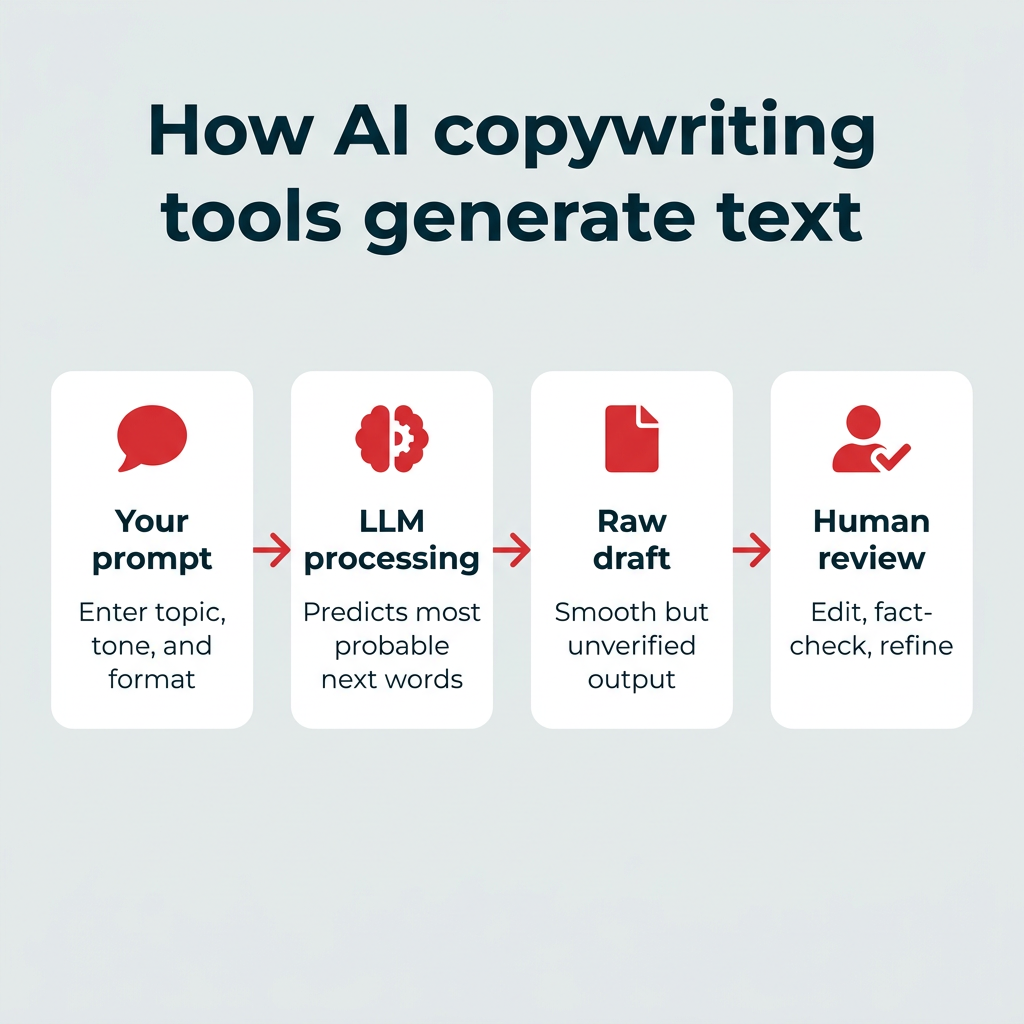
To understand the current state of AI copywriting, one must first demystify the technology. AI copywriting tools are not "intelligent" in the human sense. They do not possess consciousness, opinions, or genuine understanding. Instead, they operate as sophisticated predictive engines built on Large Language Models (LLMs).

When a user provides a prompt, the model analyzes vast datasets to predict the most statistically probable next word in a sequence. While this results in text that is grammatically fluid and stylistically coherent, it carries a significant caveat: the machine prioritizes probability over veracity. This is the root of the "hallucination" phenomenon, where an AI might confidently invent historical facts, false statistics, or non-existent citations. In the high-stakes world of marketing, where brand credibility is a currency, this technical limitation remains the primary barrier to total automation.

Chronology of Adoption: From Novelty to Necessity
The evolution of these tools has been remarkably rapid:
- 2023–2024: The "Gold Rush" phase. Companies experimented with basic ChatGPT prompts, testing the limits of LLMs for social media captions and email drafts.
- Early 2025: The integration era. AI moved from standalone chatbots into integrated enterprise ecosystems. Tools like Hootsuite’s OwlyWriter AI became standard, embedding generative capabilities directly into scheduling and publishing workflows.
- 2026 (The Current State): The era of "Human-in-the-Loop" maturity. The industry has moved past the novelty of AI generation to focus on governance, compliance, and brand-voice calibration. Consumer sentiment has also caught up, with data indicating that 50% of consumers now prefer brands that explicitly limit the use of GenAI in consumer-facing communications, forcing companies to adopt more transparent, hybrid content models.
Supporting Data: The ROI vs. Risk Paradox
The adoption of AI copywriting is driven by a clear economic imperative. Organizations that leverage these tools report significant gains in efficiency, specifically in breaking writer’s block, scaling content production across multiple channels, and reducing the overhead costs associated with manual drafting.
However, the risk profile is equally substantial. Recent surveys highlight a persistent tension in the industry:
- Accuracy as the Top Barrier: 60% of advertising industry professionals cite the accuracy of AI output as the primary reason for hesitation.
- Consumer Preference: Half of all consumers (50%) expressed a preference for human-authored content, highlighting a growing "authenticity premium" in the marketplace.
- Strategic Gaps: While AI can generate thousands of words, it remains unable to replicate emotional nuance, high-level brand strategy, or cultural context.
Tactical Applications: Where AI Wins
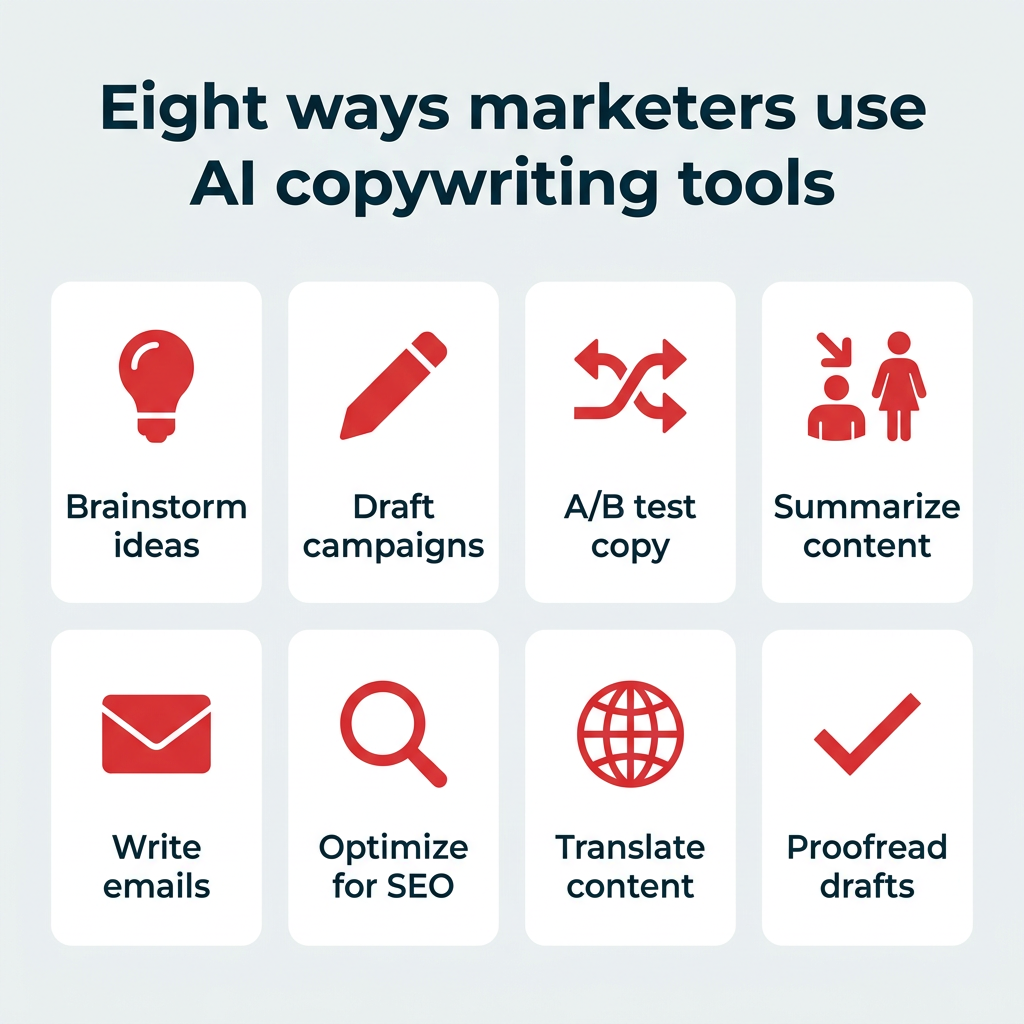
Despite the risks, the strategic value of AI in a modern workflow is undeniable. When used as a "knowledgeable but literal-minded intern," AI excels in the following areas:
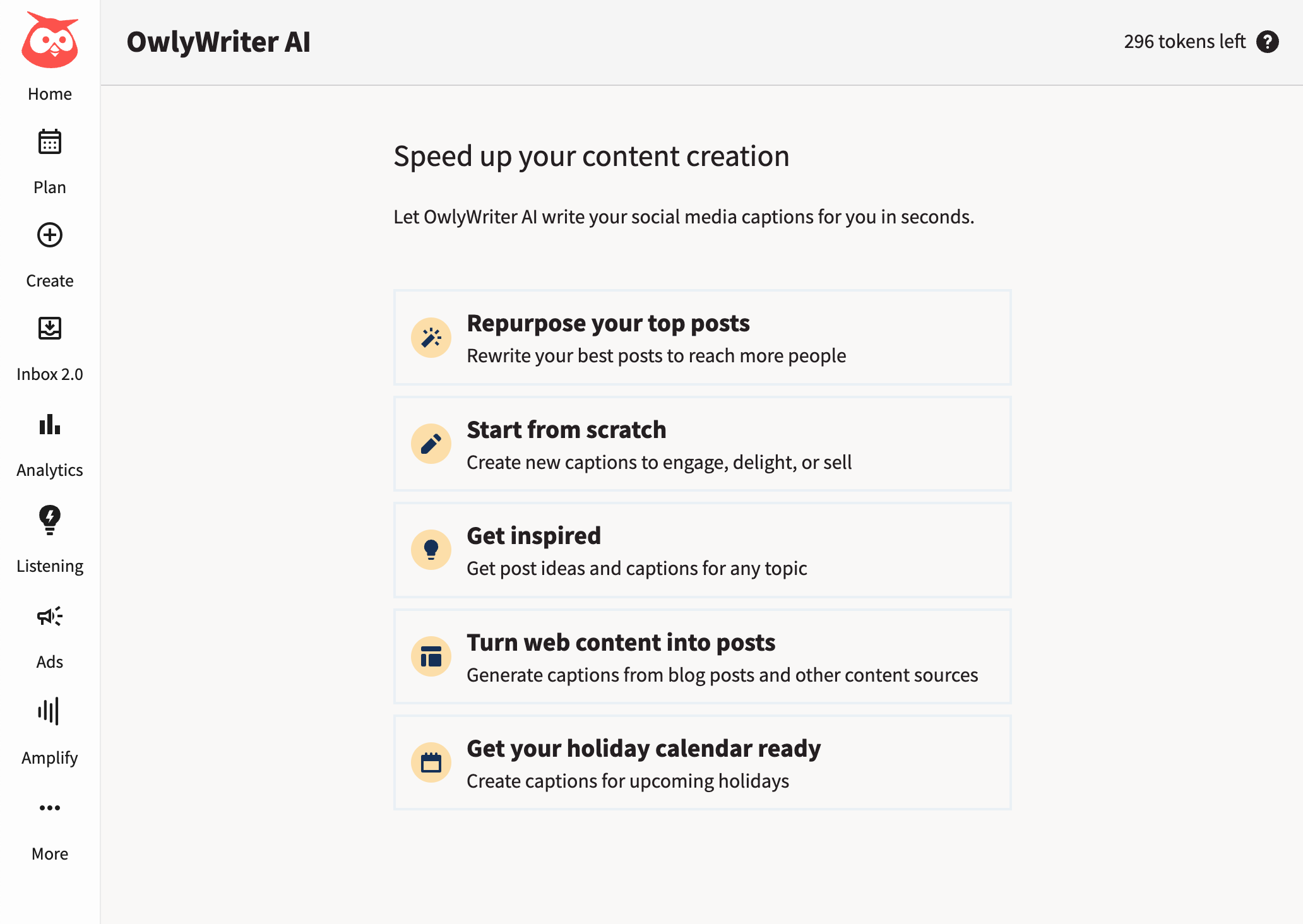
- Drafting and Ideation: Generating ten variations of a social media caption in seconds, allowing the human lead to select the best option.
- Localization and Translation: Adapting content for global markets while maintaining grammatical standards.
- Content Repurposing: Turning a long-form white paper into a series of punchy tweets or LinkedIn updates.
- SEO Optimization: Suggesting keyword-rich meta descriptions and structured content outlines.
- Tone Adjustment: Using tools like DeepL Write or Grammarly to ensure existing drafts meet specific brand guidelines.
The Toolkit: Top Platforms for 2026
The market has bifurcated into general-purpose engines and specialized marketing suites.

1. The Integrated Powerhouses
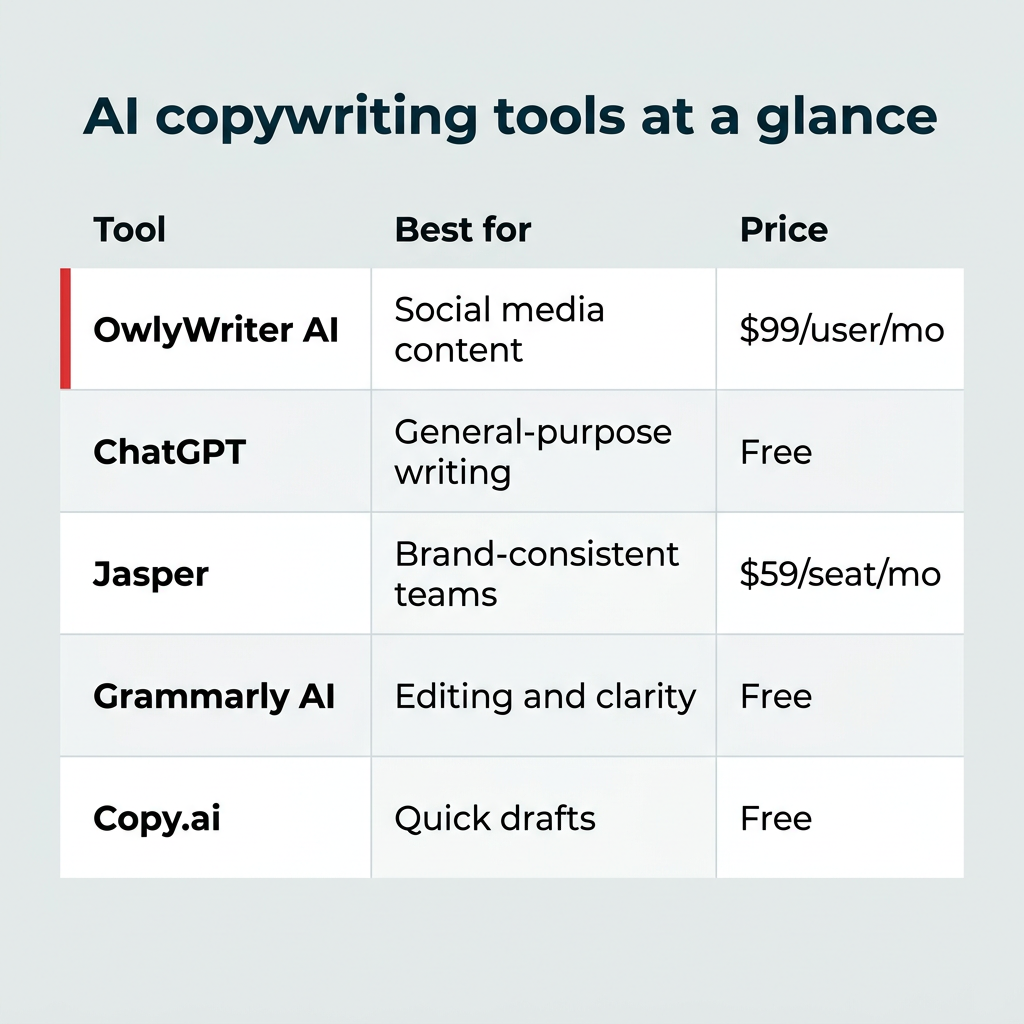
- OwlyWriter AI: Built directly into the Hootsuite dashboard, this tool is the gold standard for social media teams. By leveraging OwlyGPT, it allows users to repurpose existing web content into social posts, generate ideas from scratch, and schedule content without leaving the platform.
- HubSpot AI Content Writer: Essential for CRM-connected marketing, allowing teams to generate email and web copy that aligns with existing customer data and sales funnels.
2. The Versatile Drafting Tools
- ChatGPT (OpenAI): The industry benchmark for conversational, general-purpose writing. Its ability to maintain "memory" of a project makes it a favorite for brainstorming.
- Jasper: Designed specifically for enterprise teams, Jasper excels at brand-voice training and collaboration, ensuring that every piece of content sounds like it came from the same company.
- Copy.ai: Favored for its template-driven approach, which allows for near-ready-to-publish content with minimal editing.
3. The Editors and Refiners
- Grammarly AI: The go-to for clarity, correctness, and tone checking.
- QuillBot: The premier tool for paraphrasing, which is invaluable when a brand needs to distribute the same core message across multiple social platforms without triggering duplicate content penalties.
- DeepL Write: A focused, high-precision tool for those who want to improve phrasing without the complexity of prompt engineering.
Official Industry Stance: Compliance and Governance
As the use of AI enters the regulated domain, enterprise leaders are shifting their focus toward governance. The consensus among marketing executives is that AI-generated content must never reach a public channel without a human audit.
Key Principles for Enterprise Adoption:

- Mandatory Human Review: Every statistic, external link, and claim must be verified by a human against primary sources.
- Brand Voice Guardrails: Tools should be calibrated with custom datasets that reflect the specific tone and vocabulary of the brand.
- Disclosure and Transparency: In an era where consumers are increasingly skeptical of "bot-written" content, many leading brands are adopting policies that disclose when AI has assisted in the content creation process.
- Security: Enterprises must prioritize tools that offer secure, private data handling to prevent sensitive business information from being ingested into public training sets.
Implications for the Future
The rise of AI does not mark the end of the human copywriter; it marks the evolution of the role. The "writer" of 2026 is an editor, a strategist, and a brand guardian. The ability to craft a brilliant prompt is becoming as important as the ability to craft a brilliant sentence.

As we look toward the remainder of 2026, the competitive advantage will go to organizations that treat AI as a lever for human creativity rather than a replacement for it. Brands that use AI to handle the "busywork" while reserving human intellect for emotional resonance and strategic oversight will not only survive the transition—they will thrive in it.

The final verdict is clear: The technology is a powerful partner, but the thinking, the final call, and the responsibility for the message still belong, as they always have, to the human behind the screen. Whether you are managing a global social media presence or drafting internal communications, the goal remains the same: use the machine to save time, but use the human to build trust.


 Nana
Nana