Lina Hope
The world of open-world racing games has long been dominated by a select few, and among them, the Forza Horizon series stands as a towering beacon of success. Known for its breathtaking vistas, expansive car rosters, and an infectious festival atmosphere, each new iteration arrives with immense anticipation. Forza Horizon 6, the latest entry from acclaimed developer Playground Games and publisher Xbox Game Studios, takes players to the vibrant and diverse landscapes of Japan. Yet, as the asphalt unfolds beneath virtual tires, a central theme emerges: for all its visual splendor and refined mechanics, Forza Horizon 6 is content to largely stay the course, offering a meticulously polished experience that prioritizes broad appeal over radical reinvention.
The game’s opening moments are a confident declaration of its intent, instantly immersing players in the series’ signature blend of high-octane action and unadulterated automotive fantasy. From the carefully curated opening song that sets an immediate tone to the iconic main menu showcasing gleaming vehicles against dynamic backdrops, Horizon 6 feels reassuringly familiar. However, after dozens of hours spent navigating its twisty mountain roads and bustling city streets, it becomes clear that while the game excels at what it does, those hoping for a significant departure from the established formula might find their expectations unmet.
Main Facts: The Latest Iteration on Familiar Roads
Forza Horizon 6 plunges players into a sprawling, meticulously crafted rendition of Japan, encompassing everything from the neon-lit urban sprawl of downtown Tokyo to the serene, winding roads of its rural prefectures. At its heart, the game remains an open-world driving and car-collecting extravaganza, enveloped in the electrifying energy of a perpetual music and automotive festival. Developed by Playground Games, a studio lauded for its consistent delivery of high-quality experiences, and published by Xbox Game Studios, Horizon 6 aims to cement the franchise’s reputation as a premier destination for automotive enthusiasts.
The core gameplay loop, as veterans of the series will attest, revolves around exploring a vast map, participating in an endless array of races and challenges, and accumulating an impressive garage of dream cars. The game’s central premise, as highlighted by initial impressions and extensive playtime, is to deliver a comfortable, accessible experience that prioritizes breadth of content and visual spectacle. It eschews the often-punishing difficulty curves of traditional racing simulations, instead fostering an environment where players can simply enjoy the act of driving and collecting. The review’s opening statement — that "Forza Horizon 6 is content to just stay the course" — encapsulates this philosophy. It’s not a game that diminishes itself, nor one that drastically alters a winning formula; rather, it refines and re-presents it in a fresh, captivating setting.
From the moment players hit ‘play,’ they are thrust into an exhilarating opening drive, showcasing a tantalizing glimpse of the new Japanese locale. This immediate immersion quickly establishes the game’s particular competition structure, culminating in the player’s first meaningful decision: choosing their initial car. This swift onboarding ensures that players are never far from the action, reinforcing Horizon 6’s identity as a car-collecting driving game, a crucial distinction that shapes the entire player experience.
Chronology: Evolution of an Open-World Racing Giant
The journey of the Forza franchise is one of strategic divergence and consistent innovation. Originating with the more simulation-focused Forza Motorsport series, which meticulously recreated the physics and feel of track racing, the brand expanded in 2012 with the launch of Forza Horizon. This new sub-series carved its own niche, shifting the focus from sterile circuits to dynamic open worlds, infused with the vibrant energy of a continuous music and car festival.
From Track to Festival: A Consistent Vision
- Forza Horizon 1 (Colorado, 2012): The groundbreaking debut that established the core tenets: an open-world map, a fictional music festival, diverse car classes, and a blend of street races, off-road events, and speed challenges. It laid the foundation for accessible, exhilarating driving.
- Forza Horizon 2 (Southern Europe, 2014): Expanding upon its predecessor, FH2 introduced a seamless open world, dynamic weather systems, and significantly enhanced social features. Its picturesque setting of France and Italy further cemented the series’ reputation for stunning environments.
- Forza Horizon 3 (Australia, 2016): This iteration refined the open-world experience, offering unprecedented freedom to customize events and even become the festival boss. Its diverse Australian biomes, from rainforests to deserts, showcased the series’ visual prowess.
- Forza Horizon 4 (Great Britain, 2018): A monumental leap, FH4 introduced shared-world multiplayer and, most notably, dynamic seasonal changes that fundamentally altered the landscape and gameplay weekly. This innovation provided constant novelty and engagement.
- Forza Horizon 5 (Mexico, 2021): Pushing graphical fidelity to new heights, FH5 delivered a vast, biome-rich recreation of Mexico. It further iterated on the festival structure, offering more narrative-driven expeditions and community-focused challenges.
Forza Horizon 6: The Japanese Chapter
Forza Horizon 6 seamlessly slots into this esteemed lineage, not as a revolutionary overhaul, but as a meticulously polished continuation. It embodies Playground Games’ confidence in its proven formula, opting to transport the familiar mechanics and engaging gameplay loop to a fresh, visually distinct setting: Japan. The game’s approach, therefore, is one of refinement rather than radical departure, ensuring that the core experience that millions have come to love remains intact and enhanced.
The player’s journey through Horizon 6 chronologically mirrors the well-trodden path of its predecessors. The initial moments are carefully orchestrated to set the tone, with a choice of opening song immediately communicating the game’s high-energy vibe. The sight of the main menu, with its looping shots of "Cool Cars and the less cool people standing around them," has become an iconic and comforting staple for fans. Upon hitting ‘play,’ players are instantly thrust into an exhilarating opening drive, traversing a small but representative slice of the game’s new headline location – a captivating mix of downtown Tokyo’s urban density and Japan’s picturesque rural areas. Within minutes, the game establishes the vague structure of its particular competition, culminating in the player being offered their first car. This rapid immersion ensures that the player quickly understands the game’s fundamental identity: it is a car-collecting driving game, not merely a racing simulator, a distinction that underpins its design philosophy and player engagement. The continuity in this chronological player experience across titles is a deliberate choice, designed to provide both comfort for veterans and a welcoming entry point for newcomers.
Supporting Data: Unpacking the Japanese Festival Experience
Forza Horizon 6’s strength lies in its comprehensive approach to delivering an open-world driving fantasy. This is evident in its gameplay philosophy, meticulously designed progression systems, intuitive user interface, and groundbreaking technical achievements.
Gameplay Philosophy: Accessibility Over Austerity
The review astutely points out that Horizon 6 is fundamentally a "car-collecting driving game, not a racing game." This is a crucial distinction. Unlike traditional racing simulators that demand mastery of circuits, intricate car tuning, and unforgiving physics, Horizon 6 prioritizes the sheer joy of driving, exploration, and the acquisition of a dream garage. Players are not pressured to spend hours perfecting lap times or fine-tuning suspension settings for every race. Instead, the game offers a more forgiving environment where success is attainable through various means.
The game’s approach to mitigating challenge is a prime example of this philosophy. If a particular race proves too difficult, players have several avenues to ease the friction. Lowering the difficulty of AI opponents is always an option, but the game also allows players to "throw money at the problem." This involves purchasing recommended, higher-performing cars or downloading community-created tunes (though availability can vary pre-launch) that optimize a vehicle for specific event types. This design choice democratizes the racing experience, ensuring that even casual players can progress and enjoy the vast content without hitting insurmountable roadblocks.
Progression Systems: Guiding the Grand Tour
Horizon 6 employs two parallel progression tracks to keep players engaged and exploring: the familiar Wristband system and the new Discover Japan initiative.
The Wristband System
This system serves as the primary progression for the Festival’s racing events. Players earn points by participating in "Qualifiers" and other Festival races. Winning yields the biggest payouts, but even landing on the podium contributes significantly, especially in the early tiers. As points accumulate, players progress through Wristband tiers, gradually unlocking access to more challenging events and, naturally, requiring faster, more powerful cars to compete effectively.
To supplement race earnings, players can engage in a plethora of PR Stunts. These include smashing XP Boards hidden across the map, hitting high speeds through speed cams, and demonstrating skill in drift zones. While these activities are plentiful and offer a satisfying sense of accomplishment, the review notes their predictability, suggesting that they largely echo similar challenges from previous Horizon titles.
Discover Japan
Running in parallel to the Wristband system, Discover Japan offers a more narrative-driven and explorative progression path. Its core mission is to introduce players to the world’s ten distinct regions, guided by "paper-thin characters" who serve as tour guides. This track often features more unusual and engaging activities that diverge from traditional racing:
- Food Delivery Missions: A charming distraction that involves carefully transporting goods through city streets, testing precision driving rather than outright speed.
- Car Testing Expeditions: Tasks players with pushing the limits of freshly restored or unique vehicles, often in specific environments or under particular conditions.
- Convoy Tours: Relaxed group drives through stunning locations, emphasizing the scenic beauty of Japan over competitive racing.
These activities are generally less demanding, focusing on immersive strolls through breathtaking landscapes where racing and shaving seconds off lap times are secondary. Discover Japan also houses some of the more interesting race styles, including the challenging Touge races (mountain pass events that demand precision and nerve) and exciting street races that weave through urban environments.

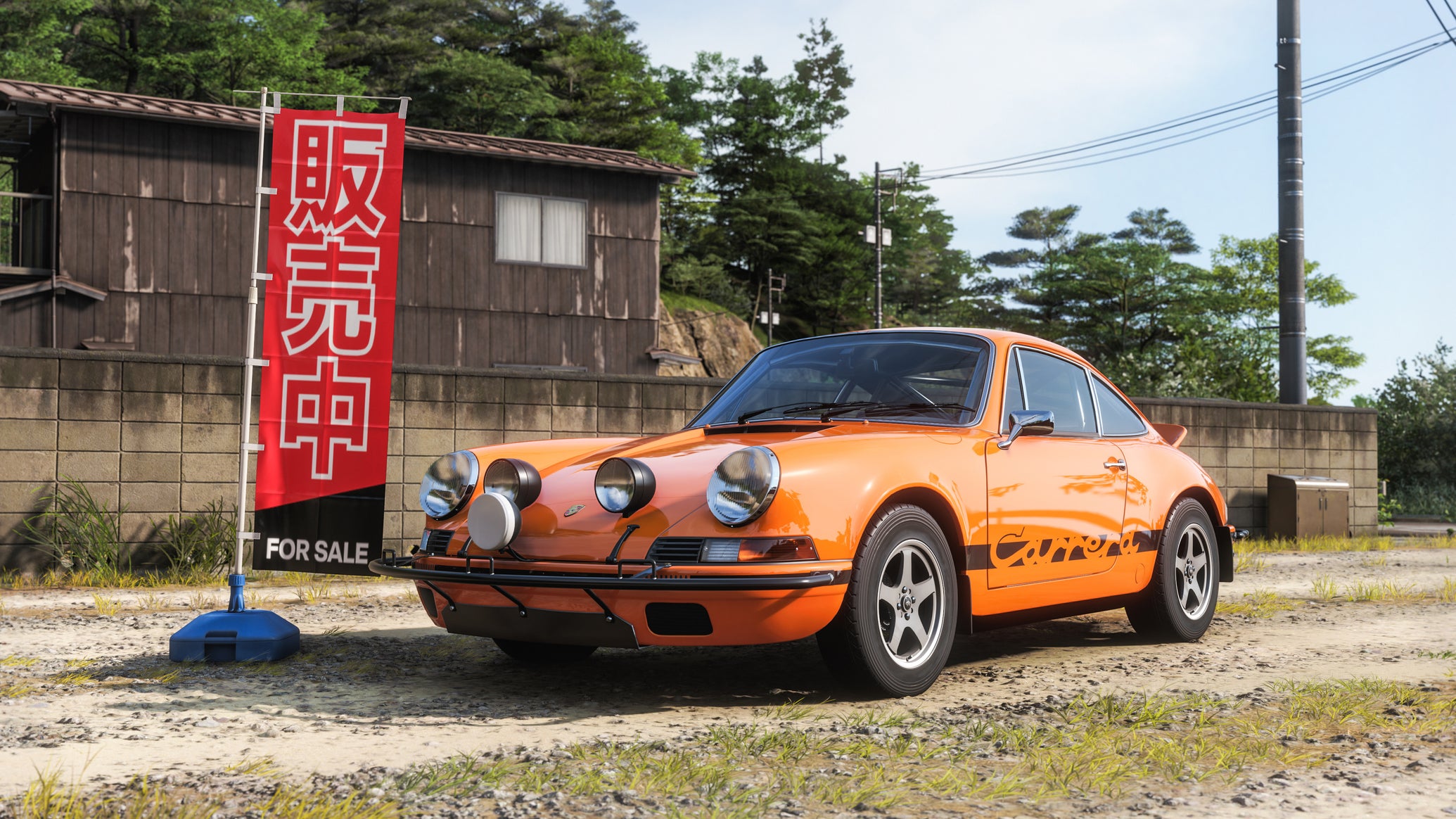
A clever evolution within Discover Japan is the introduction of Treasure Cars, a new take on the series’ beloved Barn Finds. Historically, Barn Finds involved hearing rumors of classic cars abandoned in sheds, with players then searching a sizeable radius on the map to locate them. Treasure Cars, however, present players with a photo of a car against a backdrop of specific monuments. Players must then deduce the angle from which the photo was taken and narrow down the location to find the vehicle. The review found Treasure Cars to be generally easier to locate than traditional Barn Finds, primarily because monuments offer more distinct visual cues than barns hidden in dense forests.
User Interface and Onboarding
Playground Games has long excelled at managing the sheer volume of content in the Horizon series, and FH6 is no exception. The menu system smartly starts with many locked tiles, which gradually unlock as players progress. This prevents new players from being overwhelmed by the staggering number of activities, cars, and features available. Even for long-time fans, the interval between new Horizon releases is significant enough that this "hand-holding" approach is appreciated, allowing players to naturally discover new facets of the game.
Innovation within Familiarity: Horizon Rush Events
While much of Horizon 6 refines existing elements, the Horizon Rush events stand out as a genuine and welcome addition. These races take place on makeshift circuits – essentially obstacle courses characterized by sharp corners and a deliberate lack of clarity regarding the optimal path. Rush races demand a level of precision not often found in other Horizon activities. Crucially, the player’s car is often pre-determined, forcing them to adapt and truly understand how a specific vehicle handles. These time-trial-like events cannot be treated like any other race; they require focus, strategic braking, and precise steering, offering a much-needed layer of demanding gameplay.
Visual and Technical Prowess
Horizon 6 continues the series’ tradition of pushing graphical boundaries. The implementation of ray tracing brings the world to life in ways few other driving games of this scale can match. In areas rich with nature and foliage, the realism is astounding, making players feel as if a video game car has been Photoshopped into a real photograph. While demanding on hardware, the visual payoff is immense, contributing significantly to the game’s immersive quality.
Beyond raw graphical power, the game also boasts a wealth of accessibility options. While many players may not require them, the review highlights the utility of the proximity radar. This feature displays nearby cars in a 360-degree radius, proving incredibly handy for tactical racing, such as blocking trailing opponents, or enhancing situational awareness when driving in first-person view. Such thoughtful additions underscore Playground Games’ commitment to making the game enjoyable for the widest possible audience.
Official Responses: The Developer’s Stance and Design Philosophy
While the original article is a review and does not contain direct official quotes, we can infer Playground Games’ long-standing design philosophy and implied "official responses" through the consistent choices evident in Forza Horizon 6 and its predecessors.
Playground Games’ Vision: Refinement and Broad Appeal
The studio’s approach to Forza Horizon 6 strongly suggests a deep-seated commitment to refinement over revolution. This isn’t a team afraid of innovation, as evidenced by features like dynamic seasons in FH4 or the extensive biome diversity in FH5. However, with FH6, their primary goal appears to be perfecting the established, highly successful formula rather than risking radical changes that might alienate their massive player base. This strategy is common among highly successful franchises, where maintaining consistent quality and delivering on core expectations often takes precedence over experimental design.
A core tenet of their philosophy is broad appeal. The game is meticulously designed to be accessible to a wide audience, from casual players who simply want to cruise and collect cars, to enthusiasts who delve into tuning and competitive racing. The options to lower AI difficulty, use player-created tunes, and the generally forgiving nature of the gameplay are all deliberate choices aimed at minimizing friction for newcomers and ensuring a welcoming experience for everyone. This accessibility has been a cornerstone of the Horizon series’ success, allowing it to transcend traditional racing game demographics.

Furthermore, Playground Games consistently focuses on content generation. Each Horizon title is a colossal undertaking, brimming with an almost overwhelming number of activities, challenges, and cars. FH6 continues this trend, ensuring that players always have something new to discover or achieve. This approach, combined with robust post-launch support (seasonal updates, new cars, expansions – a strategy highly likely for FH6 despite not being in the review), aims to foster long-term player engagement and create a vibrant, ever-evolving game world.
Their commitment to technical excellence is undeniable. The implementation of ray tracing in FH6 is a testament to their dedication to pushing visual boundaries and delivering a high-fidelity experience. This constant pursuit of graphical realism and performance optimization ensures that the game not only plays well but looks stunning.
Finally, the studio empowers players through extensive player choice and customization. From granular difficulty settings and assists to the deep tuning options and livery editor, players are given the tools to tailor their experience precisely to their preferences, further enhancing the game’s broad appeal.
Addressing Criticisms (Implicitly)
The review touches upon certain frustrations, such as the unpredictable AI that can swing from "rowdy rammers" to "world-class racers" seemingly on a whim, and the overall "lack of rewarding friction" for those seeking a more hardcore challenge. Playground Games might implicitly argue that these are necessary trade-offs for achieving broad accessibility. The "friction," they might contend, exists for those who seek it out: by increasing AI difficulty, participating in specific demanding events like Horizon Rush, or by engaging with the intricate tuning mechanics. The design allows players to dial the challenge up or down, making the experience what they want it to be, rather than imposing a single, rigid difficulty curve. This aligns with their overarching goal of creating a customizable and enjoyable experience for a diverse player base.
Implications: The Road Ahead for Forza Horizon
Forza Horizon 6’s release, with its blend of familiar strengths and subtle innovations, carries significant implications for the franchise, the broader racing genre, and its dedicated player base.
For the Franchise: Sustainable Success vs. Future Innovation
The "stay the course" mentality of Forza Horizon 6, while potentially leaving some craving more, almost certainly guarantees continued commercial success and a loyal player base. In an industry often fixated on constant reinvention, Playground Games’ strategy of refining an already winning formula is a testament to its confidence and understanding of its audience. Why fix what isn’t broken, especially when the "broken" parts are minor grievances amidst a sea of excellence?
However, this approach also raises questions about the long-term future of the series. Will players eventually demand more substantial innovation beyond new geographical settings and refined mechanics? Is there a risk of fatigue setting in if future iterations don’t introduce genuinely transformative gameplay elements? For now, FH6 successfully reinforces the series’ identity as the ultimate accessible car fantasy, carving a distinct path from more hardcore simulation racers. The consistent quality and predictable yet expansive content ensure its place at the top, but the pressure to innovate will undoubtedly mount with each subsequent release.
For the Racing Genre: A Benchmark and a Template
Forza Horizon 6 continues to set an incredibly high bar for visual fidelity, open-world design, and sheer content in the racing genre. Its breathtaking environments, dynamic weather, and advanced graphical features like ray tracing serve as a technical benchmark that competitors will strive to match. The game’s blend of accessibility, diverse activities, and engaging progression systems also provides a template for how to successfully create a mass-market open-world racing experience.

Its success might encourage other developers to emulate its accessible, content-rich approach, potentially leading to a more homogenized market if innovation is stifled elsewhere. The game’s design, with its constant flow of activities, seasonal events, and progression systems, also aligns strongly with a "live service" model, ensuring sustained player engagement and a long tail of content updates. This model has proven incredibly effective for player retention and community building.
Player Experience: Satisfied Majority, Discerning Minority
For the vast majority of players, particularly those seeking a beautiful, expansive, and relaxing driving experience with an endless supply of cars to collect and customize, Forza Horizon 6 will be a thoroughly satisfying and enjoyable game. It delivers precisely what the established fanbase expects and enjoys, fulfilling the fantasy of driving unattainable cars in stunning, real-world-inspired locations.
However, for a discerning minority who crave deep mechanical challenge, a more complex narrative, or genuinely fresh ideas that push the boundaries of the genre, the game might feel somewhat conservative. The review highlights the frustrating inconsistency of the AI, which can detract from the competitive aspect of races. This "unpredictable AI dilemma" can lead to uneven and sometimes frustrating experiences for players who prioritize consistent, fair competition. While the new Horizon Rush events offer a welcome spike in challenge, they remain an isolated element within an otherwise familiar structure.
Cultural and Economic Impact
The choice of Japan as a setting is a shrewd move, tapping into a rich global automotive culture and offering stunning new aesthetics that resonate with a wide audience. The game’s meticulous recreation of Japanese landscapes, from urban neon to serene countryside, not only provides a visually distinct experience but also subtly influences player interest in the region’s culture and car scene. Economically, as a first-party Xbox title, its presence on Xbox Game Pass further amplifies its reach, potentially boosting subscription numbers and ensuring a massive player base from day one. This integration into the Game Pass ecosystem fundamentally changes its commercial model, prioritizing engagement and subscription value over traditional unit sales.
Conclusion
Forza Horizon 6 stands as a magnificent, highly polished, and undeniably fun open-world driving game. It is a testament to Playground Games’ mastery of its craft, delivering an experience that is both visually stunning and incredibly rich in content. In choosing to refine its proven formula rather than reinvent it, the game successfully caters to its established fanbase, providing the ultimate fantasy fulfillment for car enthusiasts.
Its strengths are numerous: a breathtaking rendition of Japan, an unparalleled car roster, robust accessibility options, and the sheer volume of engaging activities. Innovations like the Treasure Cars and, more significantly, the demanding Horizon Rush events, demonstrate that the developers are not entirely averse to new ideas. However, the game’s commitment to broad appeal means that it sometimes lacks the "edge" or "rewarding friction" that more hardcore players might seek, and the occasional inconsistency in AI difficulty remains a minor but noticeable frustration.
Ultimately, Forza Horizon 6 delivers precisely what it promises and what its audience expects. It solidifies its position as a top-tier title in the racing genre, offering a comfortable, expansive, and visually spectacular escape into the world of automotive dreams. While it may not drastically alter the landscape of open-world racing, it undeniably perfects the path it has already forged.
Reviewed on PC, code provided by publisher.


 Lina Irawan
 Sagoh
Sagoh