Dwi Wanna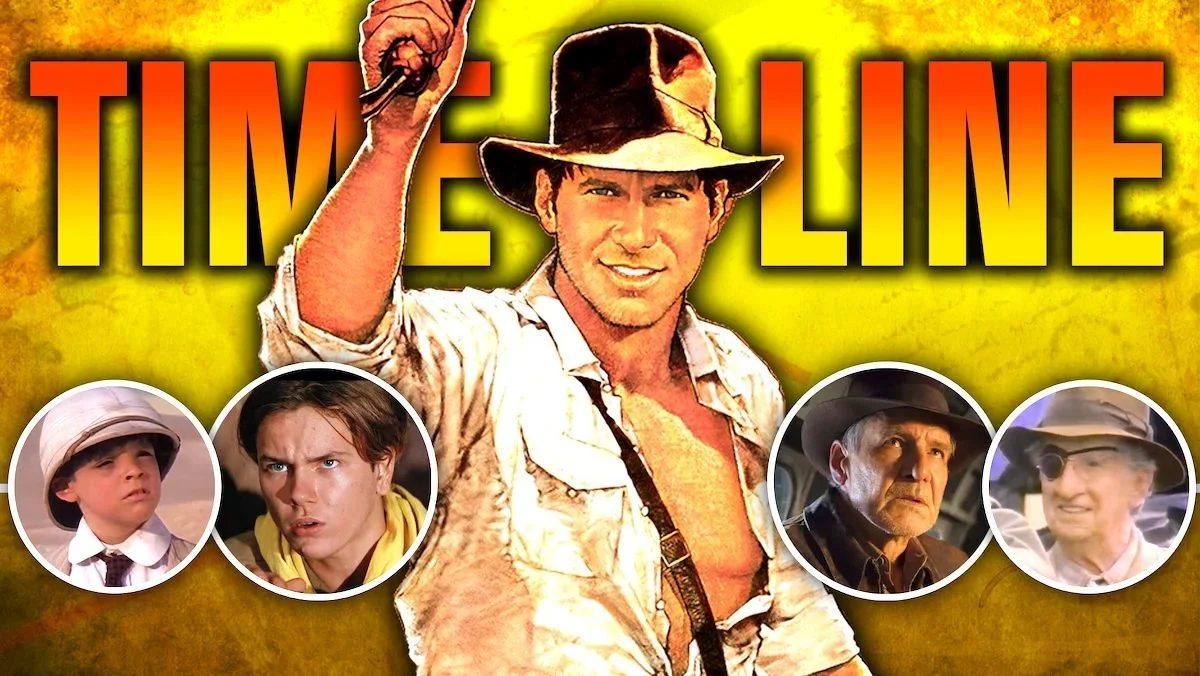
The Indiana Jones franchise has evolved far beyond the boundaries of the silver screen. Over the course of the 45 years since Raiders of the Lost Ark first cracked its whip in theaters, the character of Henry “Indiana” Jones Jr. has transcended his cinematic origins to become a multimedia titan. From sprawling television episodes and literary novels to immersive video games and bizarre cross-promotional marketing campaigns, the legacy of the world’s most famous archeologist is vast, complex, and—at times—intentionally fragmented.
For decades, fans have debated the chronological order of Indy’s exploits, attempting to reconcile his youthful escapades with his tenure as a seasoned professor and his later years as an aging, reflective legend. To settle the matter, Nerdist’s own Adam Murray has undertaken a monumental archival deep dive, consolidating the disparate pieces of the Indiana Jones mythos into one definitive, comprehensive timeline.
Main Facts: The Scope of the Legend
When we speak of the Indiana Jones franchise, we are discussing a narrative tapestry that spans nearly a century of fictional time. While casual viewers may be familiar with the core five films, the true scope of the character’s life is hidden within the margins of expanded media.
The primary challenge in mapping Indy’s life is the non-linear nature of his releases. Indiana Jones and the Temple of Doom is a prequel to Raiders of the Lost Ark, yet it was released afterward. The Young Indiana Jones Chronicles introduced us to the character’s formative years, while the Dial of Destiny pushed his narrative arc into the twilight of his life.
Adam Murray’s research addresses the central questions that have long plagued the fandom: When did Henry Jones first don the fedora? At what point did he secure his teaching position at Marshall College? And, perhaps most importantly, how do we categorize the "nebulous" entries—such as the recent Indiana Jones and the Great Circle—that occupy a gray area in the overarching canon?
Chronology: A Life Spent Chasing Antiquities
To understand the man, one must understand the timeline. Murray’s investigation segments the life of Indiana Jones into distinct, digestible eras, allowing for a clearer picture of his evolution from a curious child to a weathered, one-eyed veteran.
The Formative Years: Young Indy
Long before the iconic score by John Williams was written, a young Henry Jones Jr. was traveling the globe with his parents. These adventures, documented extensively in the television series, provide the essential bedrock for his later characterization. During this period, we witness the seeds of his lifelong obsession with history and his innate ability to find himself in the middle of global geopolitical shifts.

The Prime Years: The Academic and the Adventurer
This era represents the peak of the franchise. It encompasses the cinematic outings that defined a generation. Here, we see the dual life of the protagonist: the mild-mannered, tweed-wearing professor lecturing on the complexities of archeology, and the globe-trotting mercenary securing "belongs in a museum" artifacts. This is the period where Indy encounters the supernatural, the occult, and the persistent threat of fascist regimes.
The Twilight Years: Reflection and Retirement
As the timeline progresses, the tone shifts. We see a man burdened by the weight of his history, dealing with the loss of family, the changing landscape of the Cold War, and the physical toll of a life spent in peril. The inclusion of the "Old Indy" segments—often depicted as a man with an eye patch in later life—adds a layer of poignant melancholy to the high-octane action, reminding audiences that even legends are subject to the passage of time.
Supporting Data: Navigating the Canon
One of the most valuable aspects of Murray’s timeline is his rigorous approach to what constitutes "official" canon. In an age of franchise fatigue and corporate synergy, determining the hierarchy of storytelling is no small feat.
Defining the Canon
Murray’s video explainer meticulously dissects the official Lucasfilm stance on the expanded universe. He addresses the reality that some materials were intended to provide backstory for the films, while others—like certain video games or promotional tie-ins—are treated as "secondary" or "legendary" materials.
The Canonical Gray Areas
The inclusion of titles like Indiana Jones and the Great Circle presents a unique case study. These stories are often designed to fit snugly within the established timeline, yet their interactive nature and corporate ownership structures sometimes create friction with the established film continuity. Murray categorizes these entries not as "non-canon," but as essential narrative expansions that fill the gaps between the feature films.
Archival Research
The sheer volume of material required to compile this timeline is staggering. Murray navigated through:
- Novels: The various literary spin-offs that fleshed out Indy’s travels during the inter-war years.
- Comics: The Dark Horse and Marvel runs that provided standalone adventures.
- Video Games: From classic point-and-click adventures to modern cinematic experiences, each game adds a piece to the puzzle.
- Promotional Media: Even the obscure fast-food marketing campaigns were analyzed for any potential "lore" implications.
Official Responses and Industry Context
The effort to organize the Indiana Jones timeline is not merely a fan project; it reflects the ongoing interest from Lucasfilm in maintaining the brand’s longevity. While the studio has remained relatively tight-lipped about the "official" status of every single piece of peripheral media, the recent push to standardize the timeline—seen in the release of comprehensive compendiums and the careful placement of the Great Circle game—suggests a desire to keep the franchise cohesive for new generations.
Industry experts note that by mapping out a definitive timeline, companies like Lucasfilm/Disney can better leverage their back catalog. When fans understand where a game or a book fits in the "Indy life cycle," they are more likely to engage with that content. Murray’s work serves as a road map for this engagement, turning a chaotic collection of disparate media into a coherent historical narrative.
Implications: Why the Timeline Matters
Why do we care about the chronology of a fictional archeologist? For the Indiana Jones franchise, the timeline is more than just a list of events; it is a testament to the character’s endurance.
The Evolution of the Hero
By viewing the timeline in its entirety, we can observe the evolution of the archeological profession itself through the lens of Indy’s life. We see the shift from colonial-era relic hunting to the more academic, preservationist approach he champions in his later years. The timeline reveals a man who grew alongside the 20th century, struggling to remain relevant in a world that increasingly viewed his methods as archaic.
Cultural Impact
The Indiana Jones timeline is essentially a map of 20th-century history as filtered through a pulp-adventure lens. By tracking his movements, we see the changing face of global conflicts—from the rise of the Nazis in the 1930s to the encroaching shadows of the Cold War and the Space Race. The timeline provides context for the historical events that shape the stakes of each adventure.
The "Whopper" Connection
As teased in the Nerdist presentation, the timeline even includes surprising details about the franchise’s history, including the infamous and bizarre cross-promotional campaigns (such as the Indiana Jones Burger King "Whopper" tie-ins). While these may seem like trivial footnotes, they provide a fascinating window into the marketing strategies of the 1980s and 90s, proving that even the most "serious" franchises were subject to the whims of commercial pop culture.
Conclusion
Adam Murray’s definitive Indiana Jones timeline is a triumph of fan scholarship. By synthesizing decades of film, literature, and gaming into a singular, flowing narrative, he has provided the community with a tool that makes the dense history of Henry Jones Jr. accessible and understandable.
Whether you are a newcomer looking to understand the order of the films or a lifelong devotee hoping to find the exact year of Indy’s first professional lecture, this project is the gold standard. It reminds us that Indiana Jones is more than just a man with a whip; he is a historical constant, a figure who has spent his life chasing the shadows of the past to ensure that the truth is never truly buried. As we look back at his life—from the wide-eyed boy to the weary professor—we see a legacy that is, in every sense of the word, timeless.

 Siti Muinah
 Azzam Bilal Chamdy