Azzam Bilal Chamdy
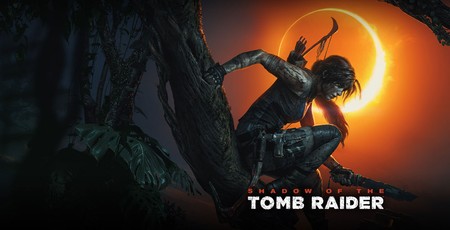
In the ever-evolving landscape of PC gaming, few subjects incite as much debate as digital rights management (DRM). Among the various anti-tamper solutions available to publishers, Denuvo has long stood as the industry standard, yet it remains a lightning rod for criticism. Recently, the discourse surrounding Denuvo has been reignited following the discovery that Square Enix and Crystal Dynamics have quietly removed the software from the 2018 title Shadow of the Tomb Raider. This development has provided the gaming community with a rare, controlled environment to quantify exactly how much "performance tax" this controversial technology extracts from hardware.
The Economics of Anti-Tamper Software
To understand why Denuvo is removed from games years after release, one must first understand its business model. Denuvo is not a one-time purchase for developers; it is a service that comes with a recurring cost. As previously reported by industry analysts, the licensing fees for Denuvo protection can be substantial—sometimes reaching six-figure sums for a 12-month period of protection.
For a major AAA release like Shadow of the Tomb Raider, the primary objective of anti-tamper tech is to protect the crucial "launch window." During the first few months of a game’s lifecycle, publishers aim to capture the highest possible volume of sales before the title is inevitably cracked by pirate groups. Once a game has aged, however, the protection no longer offers a favorable return on investment. The cost of renewing the Denuvo contract begins to outweigh the projected revenue from potential sales. Consequently, publishers often reach a "pivot point," choosing to strip the software away, thereby saving on overhead and simultaneously appeasing a vocal segment of the PC gaming community that views DRM as a performance-inhibiting burden.
Chronology: From Launch to Exorcism
The journey of Shadow of the Tomb Raider regarding its DRM status serves as a case study for industry trends.
- September 2018: Shadow of the Tomb Raider launches with Denuvo Anti-Tamper integrated into its core files. Like many modern AAA titles, the inclusion of this tech is a standard procedure for Square Enix to prevent day-one piracy.
- Late 2021: Players and performance analysts notice an unexpected change. A new update for the game on Steam arrives, and eagle-eyed users observe that the game’s executable file size has changed and that the Denuvo trigger, which historically caused friction with some security software and performance monitoring tools, is no longer present.
- The Rollback: Shortly after the initial discovery, it becomes clear that the non-Denuvo version was released via a patch but was subsequently "rolled back" on the main Steam branch. However, the publishers left the DRM-free build accessible via the "Beta" section of the game’s Steam properties, allowing tech enthusiasts to compare the two versions directly.
Performance Analysis: The "Truth" Revealed
The controversy surrounding Denuvo has always centered on its alleged impact on CPU cycles. While publishers and Denuvo’s parent company, Irdeto, have historically maintained that the impact on frame rates is negligible, anecdotal evidence from the PC gaming community has long suggested otherwise.
To settle the debate, The Dark Side of Gaming (DSOG) conducted a comprehensive A/B test. Using a rigorous methodology, the team tested both the Denuvo-protected build and the newly released DRM-free build on identical hardware configurations.
Testing Methodology
The tests were conducted at 1080p resolution under two primary configurations: "Highest Settings" and "Lowest Settings." To ensure accuracy, the built-in Shadow of the Tomb Raider benchmark was utilized. Researchers intentionally avoided the use of DLSS (Deep Learning Super Sampling) because, while DLSS is a powerful tool for performance optimization, the patch notes indicated that DLSS implementation had been refined in the non-Denuvo version, which would have introduced a variable that could skew the results. By keeping the test environment as static as possible, the researchers focused solely on the impact of the DRM.
The Findings: Where the CPU Suffers
The results of the testing provided empirical evidence for the claims that Denuvo imposes a performance cost. At the highest settings, the differences were measurable but relatively modest. However, when the settings were dialed down to the "Lowest" configuration—shifting the bottleneck away from the GPU and toward the CPU—the impact became stark.
The study reported an average frame rate increase of 17fps after the removal of Denuvo. Even more significant was the performance delta observed when Hyper-Threading (HT) was disabled on the test processor. In this specific scenario, the non-Denuvo version saw a staggering 30fps improvement.
This data suggests a clear trend: Denuvo’s anti-tamper routines require consistent CPU overhead to verify the game’s integrity. On high-end systems with significant CPU headroom, this impact is often masked. However, for users running older processors or those with lower core counts—users who are arguably the most sensitive to frame-rate fluctuations—the performance hit is tangible.
Implications of Driver Overhead and Hardware Bottlenecks
It is essential to acknowledge that the performance hit is not always solely the fault of the DRM. The interaction between Denuvo and other low-level software, such as Nvidia’s graphics drivers, can create a compounding effect.
The report from DSOG noted that while Denuvo is clearly consuming CPU cycles, there is a known "Nvidia Driver Overhead" that can also affect lower-power PC systems. When Denuvo’s calls to the CPU are added to the background processes required by modern GPU drivers, the CPU can quickly become overwhelmed. This creates a "stutter" or a "frame-time spike" that significantly diminishes the smoothness of the gameplay experience, even if the average frame rate appears acceptable.

The Broader Industry Impact
The removal of Denuvo from Shadow of the Tomb Raider raises broader questions about the ethics and logistics of DRM in the modern era.
The Consumer Perspective
For the end-user, the removal of DRM is almost universally seen as a positive. Beyond performance gains, removing Denuvo increases the long-term preservation of a title. If a company were to go bankrupt or shut down its activation servers, a DRM-protected game could potentially become unplayable. By "exorcizing" the DRM, publishers ensure that the game remains functional for decades to come, independent of the publisher’s server status.
The Developer Perspective
Conversely, publishers view DRM as an essential safeguard for their creative labor. In a market where game development budgets frequently exceed $100 million, the threat of piracy is treated as a direct threat to the financial viability of the studio. The "pivot point"—the moment when a publisher decides to remove DRM—is a calculated business decision. It is an acknowledgment that the game has reached the end of its peak sales cycle and that the cost of protection is no longer justified.
Future Outlook
As the industry continues to move toward cloud-based services and digital-only storefronts, the nature of DRM is shifting. However, as long as titles are released for offline play on PC, the tug-of-war between publishers and pirates—and the resulting performance tax on legitimate consumers—will persist.
The findings from Shadow of the Tomb Raider serve as a vital piece of evidence for the gaming community. It proves that the "performance tax" is not a myth; it is a measurable reality. As more publishers follow the trend of removing Denuvo from aging titles, we are likely to see more "performance refreshes" that give older hardware a second wind.
Ultimately, the goal for the industry should be to balance the protection of intellectual property with the respect for the hardware that customers have purchased. If Shadow of the Tomb Raider is any indication, the future of aging games looks brighter, smoother, and—perhaps most importantly—free from the invisible strings of anti-tamper tech.


 Ammar Sabilarrohman
 Reynand Wu