
 Basiran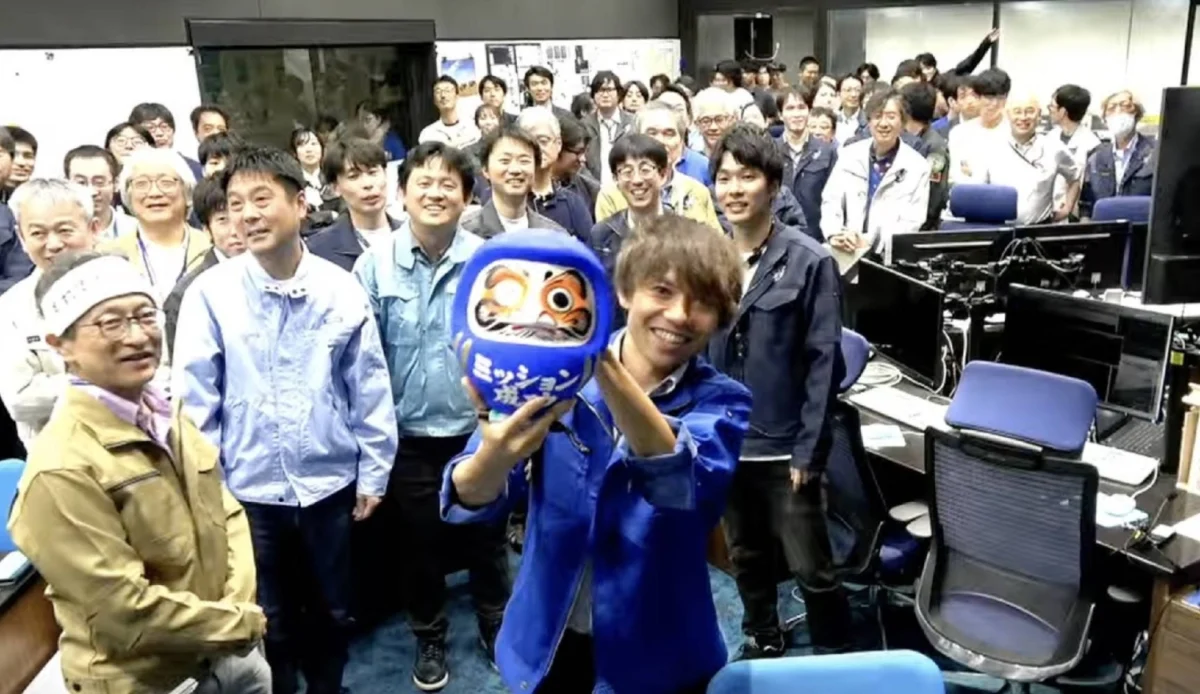
In a remarkable display of precision engineering and long-term space navigation, Japan’s Hayabusa2 spacecraft successfully executed a high-velocity flyby of the asteroid Torifune this past Sunday. The maneuver, conducted at roughly 6:30 p.m. Japan Standard Time, represents one of the most technically challenging and significant operations in the probe’s illustrious history. By navigating within an exceptionally tight margin of the 450-meter-wide celestial body, the Japan Aerospace Exploration Agency (JAXA) has not only extended the life of a legendary machine but has also secured critical data that could fundamentally reshape our understanding of planetary defense.
The Mission: A New Phase for an Old Explorer
The successful flyby of Torifune serves as a vital bridge in the extended life of Hayabusa2. Having already cemented its status in the annals of space exploration by successfully retrieving and returning pristine samples from the asteroid Ryugu to Earth in 2020, the probe was initially expected to conclude its mission. Instead, JAXA mission controllers opted to push the spacecraft further, embarking on a deep-space odyssey to test the limits of autonomous navigation and remote sensing.
Torifune, a near-Earth asteroid measuring approximately 450 meters in diameter, provided the perfect "practice" target for the team. The encounter was not merely a sightseeing tour; it was a high-stakes test of the probe’s optical navigation systems, which must accurately identify and track targets while traveling at staggering speeds. This testing phase is the final hurdle before the probe’s ultimate destination: the asteroid 1998 KY26, which the agency plans to reach in 2031.
Chronology: A Sunday of High-Stakes Maneuvering
The operation was a symphony of automated commands and meticulous preparation. On Sunday, as the probe approached the asteroid, it was traveling at a relative speed of 5 kilometers per second—roughly 18,000 kilometers per hour.
- The Approach: In the hours leading up to the encounter, mission controllers at JAXA’s Sagamihara Campus monitored the probe’s health and trajectory. Because of the vast distance between Earth and the spacecraft, real-time manual control is impossible; the probe functioned entirely on pre-programmed sequences designed to adjust its orientation as it closed the gap.
- The Encounter: At approximately 6:30 p.m. JST, Hayabusa2 reached its point of closest approach. During this window, the probe’s cameras and sensors were activated to capture high-resolution imagery and spectroscopic data.
- The Confirmation: Following the flyby, the probe successfully re-established communication with the Deep Space Network, beaming back the "telemetry gold" that confirmed the maneuver was executed within the projected parameters. JAXA officials were seen celebrating in the control room as the data stream confirmed the craft had survived the encounter unscathed and remained on its planned trajectory.
Technical Specifications and Supporting Data
The flyby of Torifune is a testament to the durability of Japanese aerospace technology. Hayabusa2 has been in operation since its launch in December 2014, and its ability to remain operational for over a decade is a significant achievement in itself.
The data gathered during this flyby focuses on the surface composition and the physical structure of Torifune. By analyzing how light reflects off the asteroid’s surface, scientists can determine its mineralogical makeup. Furthermore, the flyby provided a "gravity assist" test, helping the navigation team refine their models for how small celestial bodies influence the movement of nearby objects.
The primary challenge of this encounter was the speed. At 18,000 kilometers per hour, the margin for error is measured in milliseconds. Any slight deviation in the probe’s attitude could have resulted in a blurred image or, worse, a collision with debris surrounding the asteroid. By successfully passing the target, Hayabusa2 has demonstrated that its hardware, including its star trackers and ion thrusters, is performing well beyond its original warranty.
Official Responses: JAXA’s Strategic Vision
The mood at JAXA has been one of tempered triumph. In the wake of the successful flyby, agency spokespeople emphasized the importance of this mission for the future of humanity.
"The successful flyby of Torifune is a massive milestone for our engineering team," said a JAXA representative during a post-mission briefing. "While Hayabusa2 has already provided us with invaluable information about the formation of our solar system through its Ryugu mission, this extended journey is about the future. We are learning how to operate in deep space with extreme precision, which is the cornerstone of protecting our planet from potential impact threats."

The global scientific community has also lauded the achievement. By sharing data from the Torifune flyby, JAXA continues to maintain its reputation as a transparent and collaborative leader in the international space sector. Scientists from NASA and the European Space Agency (ESA) are already looking forward to the integration of this data into global planetary defense databases.
Implications for Planetary Defense
Perhaps the most compelling aspect of the Torifune flyby is its connection to planetary defense. Asteroids like Torifune and 1998 KY26 are categorized as Near-Earth Objects (NEOs). While these bodies offer a window into the early history of our solar system, they also represent a potential risk.
The ability to intercept a fast-moving, relatively small target with a high degree of accuracy is a capability that has massive implications for planetary defense. If a future asteroid were found to be on a collision course with Earth, the primary method of deflection would likely involve a "kinetic impactor"—a spacecraft designed to slam into the asteroid to alter its path. The navigation skills JAXA is currently honing with Hayabusa2 are the exact skills required to guide such a defensive craft to its target.
Furthermore, by studying the surface density of asteroids like Torifune, researchers can better predict how an impactor would affect the target. Is the asteroid a solid rock, or is it a "rubble pile" held together by weak gravity? Understanding the physical integrity of these bodies is essential for determining how much force would be required to deflect them.
The Road to 2031: The Legacy of Hayabusa2
As Hayabusa2 continues its voyage, the focus now shifts toward the final chapter of its mission: the rendezvous with 1998 KY26. This target is distinct from Ryugu and Torifune due to its size and rapid rotation.
The journey to 1998 KY26 is expected to be long and arduous, requiring the probe to utilize its remaining ion engine propellant with maximum efficiency. If successful, the mission will be the first of its kind to explore such a small, fast-rotating asteroid in such detail.
The legacy of Hayabusa2 is already secure, but its continued activity serves as a reminder of the relentless pursuit of knowledge. In an era where space exploration is often defined by commercial competition, Japan’s commitment to fundamental science and engineering excellence stands out. By pushing the boundaries of what a legacy spacecraft can do, JAXA is ensuring that the lessons learned in the 2010s will pay dividends in the 2030s and beyond.
As the probe travels further into the silent, cold expanse of the solar system, it carries with it the aspirations of a nation and the hope of a world that is increasingly aware of its cosmic vulnerability. The Torifune flyby was more than just a mission success; it was a demonstration of human ingenuity—a promise that, with enough precision and preparation, we can better understand the dangers of the cosmos and perhaps, one day, turn them aside.


 Neng Nana
 Asro
Asro





