Layla Zulfa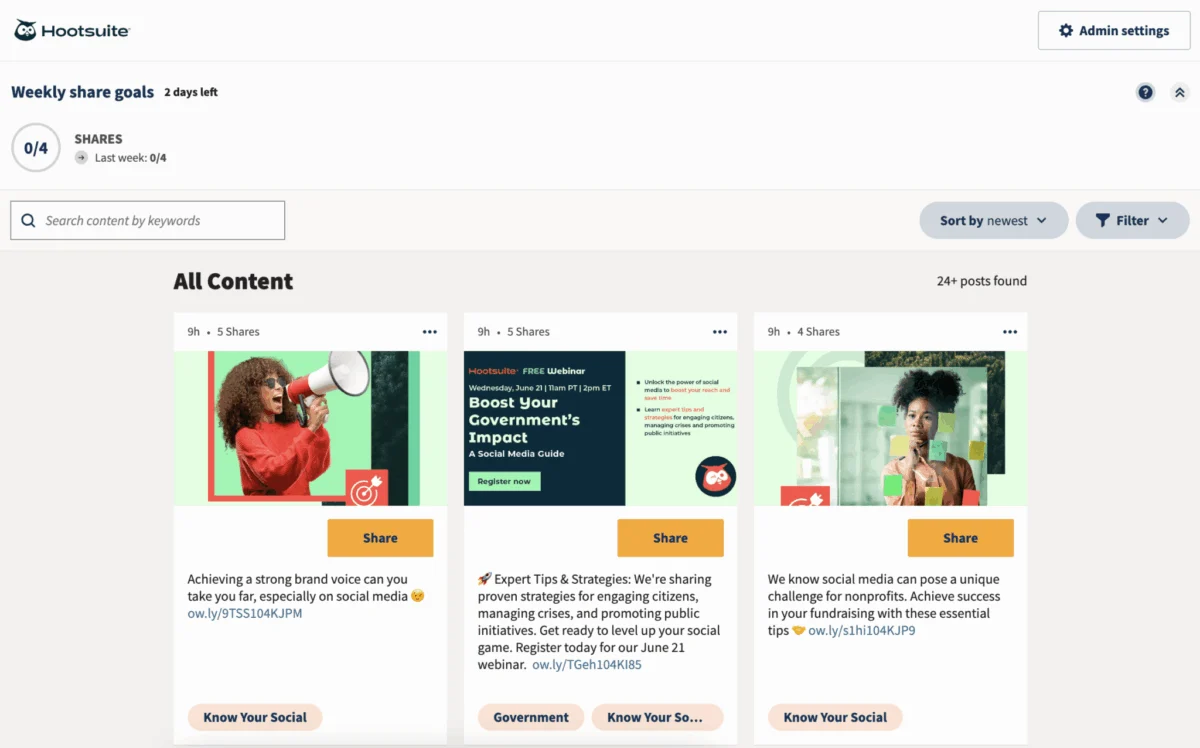
In the modern digital landscape, a thousand likes on an employee’s post might feel like a victory, but seasoned marketing leaders know the truth: "likes" do not pay the bills, fill the hiring pipeline, or close enterprise-level deals. As organizations increasingly pivot toward human-centric marketing, employee advocacy has transitioned from a "nice-to-have" social experiment into a critical business growth engine.
However, the transition from informal sharing to a structured, repeatable advocacy program requires more than just enthusiasm; it requires a rigorous commitment to measurement. To prove the value of advocacy to the C-suite and secure ongoing budget, organizations must move past vanity metrics and embrace a framework that tracks reach, engagement, lead generation, and tangible cost savings.
The Evolution of Advocacy: What Does "Success" Look Like?
Measuring employee advocacy is the process of mapping social activity to hard business outcomes. At its core, it involves evaluating a program’s performance through a comprehensive set of Key Performance Indicators (KPIs).

Tracking these results does more than provide data—it transforms "fluffy" social media activity into a clear evidentiary case for leadership. When an organization can demonstrably link an employee’s LinkedIn post to a high-quality job applicant or a qualified sales lead, the program ceases to be a marketing side-project and becomes a strategic asset.
A Case for Real-World Impact
The power of this data-driven approach is evidenced by companies like Major Tom, a digital agency that successfully leveraged advocacy to prove significant ROI. Victoria Samways, Marketing & Brand Manager at Major Tom, emphasizes the importance of granular tracking. By utilizing UTM parameters on shared links, the team was able to attribute over $100,000 in pipeline value to a single campaign. "This resulted in a higher-than-average win rate due to the referral-like context of these leads," Samways notes, underscoring that the social proof inherent in employee sharing acts as a powerful trust accelerator.
Why Measurement is the Lifeblood of Advocacy Programs
Advocacy initiatives often find themselves competing for budget and headcount against high-visibility initiatives like paid advertising or demand generation. Without a data-backed defense, these programs are frequently the first to be cut during budgetary reviews.

Running an unmeasured program carries three significant risks:
- Lack of Strategic Direction: Without data, content creation becomes a guessing game, preventing teams from doubling down on high-performing topics.
- Declining Participation: When employees don’t see the impact of their contributions, morale and participation rates naturally wane.
- Visibility Gaps: Without proof of contribution to the bottom line, advocacy programs remain invisible to executive leadership, limiting their ability to scale.
Crucially, the act of measurement is, in itself, a participation lever. When employees see the direct impact of their digital presence—such as their influence on a candidate’s decision to apply or a client’s interest in a product—they are significantly more likely to remain active and engaged over the long term.
The Seven Pillars of Advocacy Metrics
To build a holistic view of your advocacy program, you must track performance across seven distinct categories.
1. Awareness and Reach
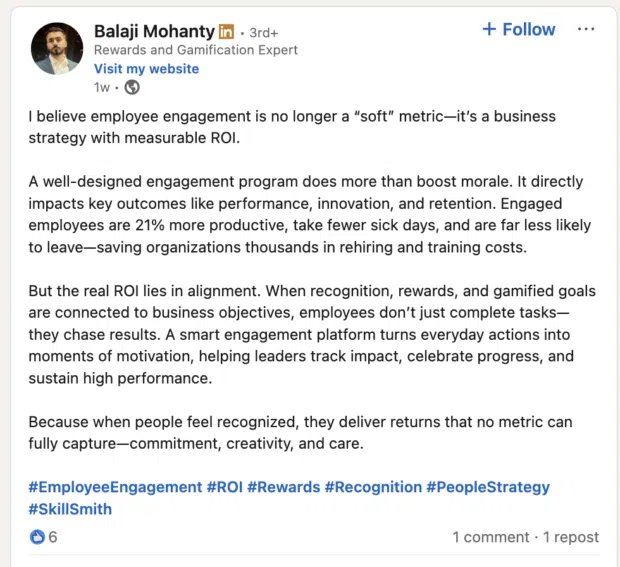
This measures the "amplification factor"—how far your brand content travels when it moves through the personal networks of your team. Key metrics include total reach, impressions, and share of voice. The goal here is to convert these figures into "earned media value" (EMV), showing the C-suite exactly how much paid advertising budget was saved through organic employee distribution.
2. Engagement Metrics
Engagement—likes, comments, and shares—serves as a barometer for content resonance. More importantly, click-through rates (CTR) on employee-shared content are often significantly higher than on branded posts. Data from LinkedIn suggests that content shared by an employee receives, on average, 2x the engagement of the same content shared via a brand page.
3. Recruitment and Talent Acquisition
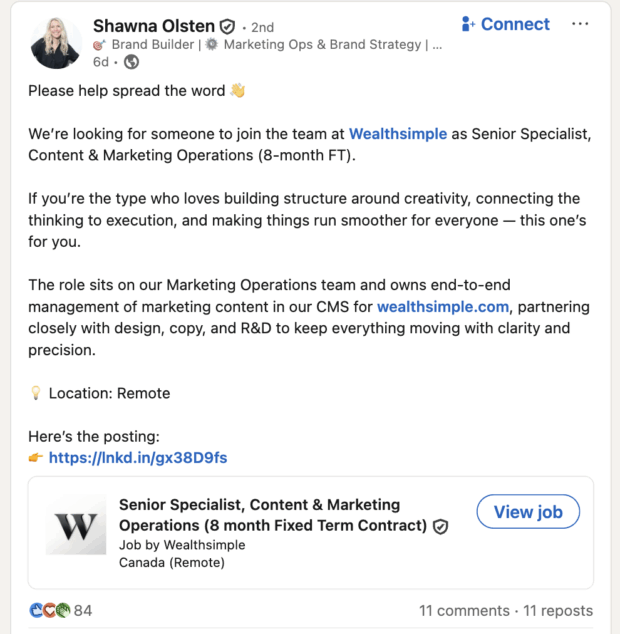
Employee advocacy is a potent tool for employer branding. By tracking applicant volume and quality from employee-referred links, companies can measure the efficiency of their talent pipeline. An employee sharing a job opening acts as a "cultural vouch," which often leads to higher-quality candidates who have a better understanding of the company’s mission.
4. Sales and Lead Generation
This is where the program proves its financial mettle. By monitoring site traffic, lead conversions, and "pipeline influence," companies can demonstrate that advocacy directly contributes to revenue. Research indicates that sales representatives who share content regularly are 45% more likely to exceed their sales quotas.
5. Employee Participation
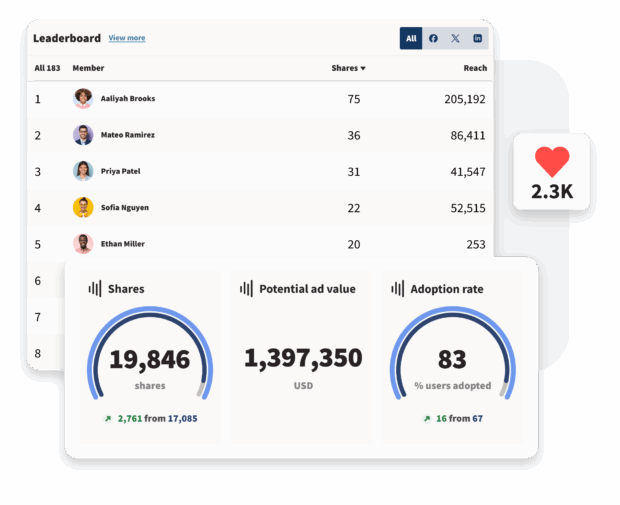
If your program is a "ghost town," no amount of content will save it. Tracking adoption rates, participation frequency, and the average number of shares per employee allows managers to identify bottlenecks. Gamification—such as leaderboards or rewards for top contributors—is a proven method for maintaining high participation levels.
6. Cultural Impact
Advocacy is a reflection of employee pride. By using internal surveys and measuring sentiment, companies can gauge whether their program is fostering a sense of community. When advocacy becomes a way for employees to grow their own thought leadership, they are more likely to view the program as a benefit rather than a chore.
7. Retention Metrics
Does advocacy correlate with tenure? While indirect, many organizations find that employees who actively advocate for their brand feel a stronger sense of loyalty and alignment with company goals. Tracking the correlation between advocacy and retention can highlight potential long-term cost savings in recruitment and onboarding.
Calculating the ROI of Advocacy
To calculate the Return on Investment, businesses must assign a dollar value to the outcomes and compare them against the total program costs (software, management time, and incentives).
The ROI Formula:
ROI (%) = [(Value generated – Program costs) / Program costs] x 100
To calculate "Value Generated," aggregate:
- Attributed Revenue: Direct sales from advocacy-led traffic.
- Recruitment Savings: The cost saved by not using headhunters or paid job ads.
- Earned Media Value (EMV): The cost of purchasing the equivalent impressions through paid social ads.
- Retention Value: Estimated cost savings from lower turnover.
For example, a program costing $20,000 that generates $190,000 in combined value yields an 850% ROI—a figure that is impossible for leadership to ignore.
Best Practices for Scaling Success
Achieving these results requires a disciplined, strategic approach. Based on industry best practices, here are the core pillars for success:

- Build a Culture of Pride: Advocacy should be a natural extension of employee experience, not a corporate mandate.
- Avoid Mandates: The most effective programs are opt-in. Use encouragement and gamification rather than top-down requirements.
- Standardize Tracking: Use UTM parameters on every single link to ensure data accuracy.
- Connect to CRM: Link your advocacy platform to your CRM to track the full lifecycle of a lead, from the initial share to the final sale.
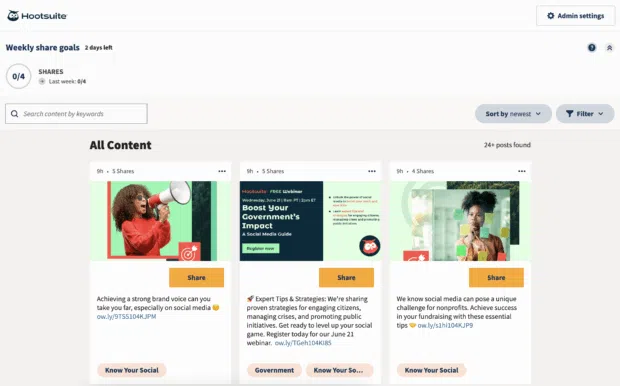
- Invest in Intuitive Tech: Use integrated platforms like Hootsuite Amplify, which allow for one-click sharing and unified analytics, reducing friction for the end-user.
- Gamify and Reward: Publicly celebrate top advocates. Whether through leaderboards, gift cards, or professional development opportunities, rewarding active participation keeps momentum high.
- Treat Tech Issues as Critical: A broken integration or a disconnected social account is a momentum killer. Maintain a clean, functional tech stack to ensure employees can share content without friction.
Conclusion: The Future is Human-Led
The shift toward employee advocacy is not merely a marketing trend; it is an evolution toward a more authentic, trust-based digital presence. By moving beyond vanity metrics and focusing on the seven pillars of advocacy measurement, businesses can prove that their greatest marketing asset is not their paid ad budget, but the people who make the company what it is.
When you measure with precision and manage with a culture-first mindset, employee advocacy becomes a repeatable, scalable growth engine that provides a competitive advantage in both the marketplace and the war for talent.


 Nana Wu
 Nana
Nana