Asro
Asro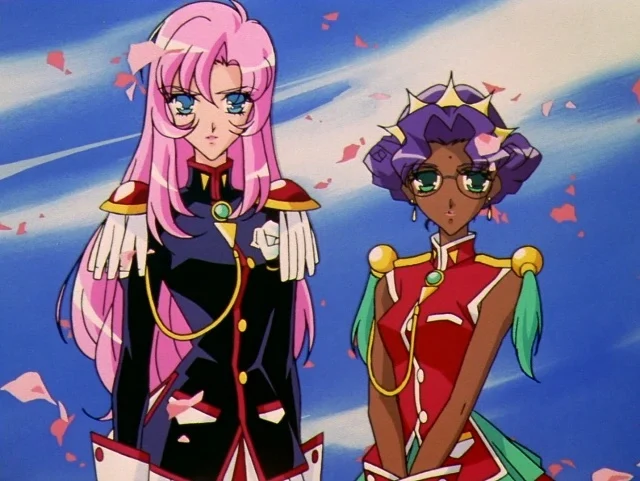
This story first appeared in the animation newsletter “Sketch to Screen.” Subscribe here to receive a new entry every Thursday.
In the landscape of contemporary animation, queer anime is currently enjoying a long-overdue renaissance. Once confined to the margins of fandom—often relegated to fan-fiction forums or whispered about in convention hallways—LGBTQ+-themed narratives have moved into the spotlight. Recent hits like the atmospheric The Summer Hikaru Died and the tender, grounded Go For It, Nakamura! have garnered both critical acclaim and mainstream visibility. Even the broader cultural lexicon has been reshaped by these tropes; thanks to the massive popularity of works like Heated Rivalry, terms like "yaoi" and "fujoshi" have migrated from niche otaku subcultures into the general pop-culture consciousness.
However, beneath this recent wave of visibility lies a foundational masterpiece that has served as the North Star for queer storytelling in the medium for nearly three decades: Revolutionary Girl Utena. As GKIDS prepares for the June 21 theatrical release of the film reimagining Adolescence of Utena—a work that functions as both a surrealist expansion and a bold re-contextualization of the original series—it is time to revisit the 39-episode classic that changed the DNA of television.
A Legacy of Transgression: The Chronology of an Icon
To understand the weight of Utena, one must understand the environment of its birth. Japan’s relationship with homosexuality is complex, characterized by a paradoxical blend of traditional conservatism and a unique, fluid openness found in its artistic history. While mainstream anime historically avoided overt queer representation, the 1990s served as a critical turning point.
It was Sailor Moon that first nudged the door open, famously introducing an openly lesbian couple, Sailor Neptune and Sailor Uranus. Yet, while Sailor Moon pushed boundaries, Revolutionary Girl Utena kicked them down entirely. Produced in 1997, the series was the brainchild of Be-Papas, a creative collective spearheaded by Kunihiko Ikuhara.

Ikuhara, a veteran of Toei Animation who directed three seasons of Sailor Moon and its 1993 feature film, grew increasingly stifled by the creative limitations of the mainstream industry. In 1996, he departed Toei to form his own production group. He assembled a powerhouse team: manga artist Chiho Saito, animator Shinya Hasegawa, and writers Yōji Enokido and Yōichirō Oguro.
The initial pitch was deceptively conventional. Early concepts envisioned a traditional "shojo" (girls’ manga) series about a group of magical female warriors fighting to save the world—a standard genre trope. But as production progressed, Ikuhara’s vision underwent a radical metamorphosis. He moved away from the formulaic and toward the avant-garde, drawing heavily from the Japanese underground experimental theater scene and commissioning a haunting, iconic score from composer J. A. Seazer. The result was a series that defied categorization, blending high-concept symbolism with a deeply personal, subversive queer narrative.
Deconstructing the Fairy Tale: Aesthetic and Thematic Innovation
Revolutionary Girl Utena is often compared to historical classics like Osamu Tezuka’s Princess Knight or The Rose of Versailles. All three feature cross-dressing heroines, sword-fighting, and complex gender dynamics. However, the similarities end at the surface.
Princess Knight relied on a binary, essentialist view of gender—the protagonist’s "male heart" provided her strength, and the narrative concluded with her shedding her "male side" to embrace a conventional feminine role. Utena acts as a direct deconstruction of this. The protagonist, Utena Tenjou, does not wish to be a man; she wishes to embody the qualities of a "prince"—strength, nobility, and the agency to protect others.
The series interrogates these roles within the surreal, self-contained vacuum of Ohtori Academy. Here, students engage in ritualistic duels for the hand of Anthy Himemiya, the "Rose Bride," who holds the power to "revolutionize the world." By positioning Utena and Anthy’s relationship at the heart of this power struggle, Ikuhara forces the audience to confront the limitations of gender roles. The series suggests that "prince" and "princess" are not biological categories, but performance traps that constrain the human spirit.

Supporting Data: The Impact of Creative Risk
The production of Utena was not without friction. Behind the scenes, there was significant pushback regarding the central romance. Chiho Saito, whose distinct, florid artistic style defined the show’s aesthetic, was initially hesitant. She feared that the mainstream young female audience—the primary demographic for the show—would reject a non-heterosexual pairing.
However, as the narrative deepened, the creative team realized that the subversion was exactly what made the story compelling. The show’s willingness to treat the romance between Utena and Anthy as the primary emotional anchor, rather than a secondary subplot, was a watershed moment in anime history.
The production also broke ground in visual language:
- Shadow Play: The inclusion of recurring shadow-puppet vignettes served as a Greek chorus, providing meta-commentary on the main plot.
- Stained-Glass Motifs: The show frequently utilized religious and architectural symbolism, marking scenes with ornate, stained-glass framing that emphasized the characters’ entrapment within their own mythologies.
- Noh Theater Influence: The dueling choreography drew directly from the stylized, rhythmic nature of traditional Japanese Noh theater, distancing the fights from conventional action sequences and turning them into character-driven dramatic performances.
Official Responses and Cultural Resonance
Over the decades, Revolutionary Girl Utena has transcended its medium. It is frequently cited by contemporary showrunners, animators, and literary critics as a primary influence. Its legacy is found in the DNA of modern shows that prioritize "queer-coded" storytelling, such as Steven Universe or She-Ra and the Princesses of Power, both of which share Utena’s interest in deconstructing gendered archetypes and the power of chosen family.
Despite its age, the series remains difficult to track down in some regions, a fact that has only added to its cult mystique. The upcoming GKIDS re-release of the Adolescence of Utena film is a significant cultural event, as the movie is arguably even more surreal and explicitly romantic than the original television run. In the film, the constraints of 90s television are cast aside, allowing for a more intimate, physical, and devastatingly honest portrayal of the bond between Utena and Anthy.

Implications for the Future of Anime
What does the enduring relevance of Revolutionary Girl Utena tell us about the current state of animation? It proves that audiences are not just looking for "representation"—they are looking for artistic courage.
While the current wave of "fluffy" queer rom-coms serves a valuable purpose in providing comfort and sweetness to the community, Utena reminds us that queer storytelling has the capacity to be challenging, abrasive, and structurally revolutionary. It challenges the creator to ask: Are we just adding queer characters to existing structures, or are we using queer perspectives to dismantle the structures themselves?
As the industry moves forward, Revolutionary Girl Utena remains the benchmark. It is a work that is "queer" in every sense—not just in its romantic pairings, but in its storytelling ethos, its visual defiance, and its refusal to offer easy answers. For those who care about the future of television, watching Utena is not merely an act of historical appreciation; it is a masterclass in how to push the boundaries of what a story can be. Whether it is your first time witnessing the Rose Gate open or your fiftieth, Revolutionary Girl Utena remains, unequivocally, a masterpiece for the ages.


 Sagoh
Sagoh
 Nana Wu