

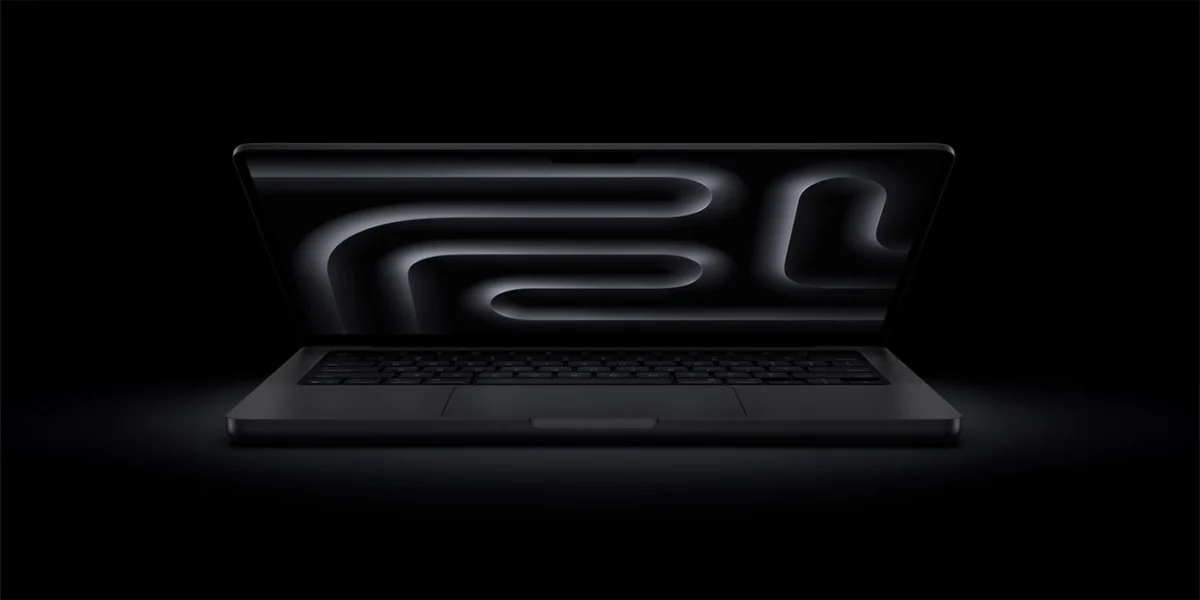
The landscape of high-end mobile computing has fundamentally shifted. For decades, Apple’s professional-grade hardware has occupied the upper echelon of the consumer electronics market, often serving as the benchmark for both performance and price. However, with the release of the latest generation of M5-powered MacBook Pros, the company has breached a psychological and financial barrier that was once reserved for specialized industrial workstations or boutique enterprise hardware. A fully configured 16-inch MacBook Pro now commands a five-figure price tag, reaching a staggering $10,149.
This development has ignited a firestorm of debate among developers, creative professionals, and tech analysts. While Apple has long been criticized for its "Apple Tax"—the premium charged for proprietary RAM and SSD upgrades—the current pricing structure represents a departure from historical norms.
Main Facts: A New Economic Reality for Pro Users
The core of the controversy lies in the disparity between base model adjustments and the cost of configuration upgrades. According to data analyzed by industry veteran John Gruber of Daring Fireball, while Apple’s base model pricing saw a relatively modest increase of 13% to 15% across the board, the true financial sting is felt when users attempt to customize their machines for high-intensity workflows.
The most aggressive hikes are concentrated in the memory and storage tiers. Upgrades that were once considered expensive are now being categorized by industry observers as exorbitant. Specifically, the cost of transitioning to higher-tier RAM configurations for the M5 Max chip has seen increases of up to 100% in some instances.
To achieve the "maxed-out" configuration—the 16-inch model featuring the M5 Max chip, 128GB of unified memory, and 8TB of high-speed SSD storage—the consumer is now required to pay a total of $10,149. This figure places the MacBook Pro in a price category previously dominated by rack-mounted servers, high-end workstations like the Mac Pro, or specialized engineering hardware.

Chronology: The Escalation of Upgrade Costs
To understand how we arrived at a five-figure laptop, one must look at the trajectory of Apple’s component pricing over the last several hardware cycles.
The M1 Era: Setting the Standard
When Apple transitioned to its own Silicon, the value proposition was initially seen as revolutionary. The M1 MacBook Pro offered performance per watt that embarrassed the contemporary Intel-based machines. At the time, RAM and storage upgrades were pricey but largely viewed as a trade-off for the unprecedented performance gains.
The M2 and M3 Increments
During the M2 and M3 generations, Apple began to tighten its margins. While the base prices of the machines remained relatively stable to maintain market share, the company began to aggressively raise the costs of "Build to Order" (BTO) components. Analysts noted a gradual, year-over-year increase in the price of unified memory, which is soldered directly onto the silicon package.
The M5 Shift: The "Double-Down" Strategy
With the launch of the M5 series in mid-2026, the pricing model underwent a noticeable shift. Instead of incremental adjustments, the cost of the 64GB and 128GB RAM upgrades effectively doubled. This shift was not accompanied by a corresponding drop in storage prices; rather, SSD upgrades saw their own 50% to 67% increase, compounding the total cost for power users who require high capacity for 8K video editing, large-scale machine learning model training, or complex 3D rendering.
Supporting Data: Dissecting the Premium
The sheer magnitude of these increases is best understood through a breakdown of the upgrade costs. When one compares the price of the M5 Max configurations to their M4 predecessors, the data reveals a clear strategy of extracting higher margins from the professional segment.

| Component Upgrade | Previous Generation Cost | Current M5 Cost | Percentage Increase |
|---|---|---|---|
| 64GB RAM Upgrade | $400 | $800 | 100% |
| 128GB RAM Upgrade | $800 | $1,600 | 100% |
| 4TB SSD Upgrade | $600 | $900 | 50% |
| 8TB SSD Upgrade | $1,200 | $2,000 | 67% |
These figures, while estimates based on current market retail pricing, highlight that Apple is no longer charging a "convenience fee" for integrated components; it is charging a luxury tax. Critics argue that these prices are disconnected from the actual market cost of high-bandwidth memory (HBM) and enterprise-grade NAND flash storage, which have seen varying degrees of price volatility over the last eighteen months.
Official Responses and Corporate Positioning
To date, Apple has remained characteristically silent regarding the specific pricing adjustments for its latest professional hardware. It is the company’s long-standing policy not to comment on internal pricing strategies or the specific margin breakdown of its BTO options.
However, internal corporate messaging from Apple’s executive leadership consistently emphasizes "value" rather than "cost." In past earnings calls, Apple executives have defended high-tier pricing by pointing to the "unmatched integration" of hardware and software. The argument is that the M5 Max chip, combined with the macOS ecosystem, provides a specialized workflow that cannot be replicated by off-the-shelf components.
From the perspective of Apple’s supply chain, the integration of memory directly into the silicon architecture is presented as a technological necessity for high-speed unified memory access, rather than a method to lock users into proprietary upgrade paths. By controlling the entire stack, Apple claims it offers a "pro-grade" experience that justifies the premium, regardless of the retail cost of individual components.
Implications: The Future of Professional Computing
The transition to a $10,000 laptop has significant implications for both the individual consumer and the enterprise sector.

The "Niche" Problem
Apple is correct in noting that the $10,149 configuration is an "exceedingly niche" build. Most professionals, including software developers and graphic designers, will find that the mid-tier configurations provide more than enough overhead for their daily tasks. However, the psychological impact of seeing a five-figure price tag for a "portable" device has caused a shift in perception. It signals that Apple is moving away from being a "prosumer" brand and is leaning heavily into the elite workstation market.
Impact on IT Budgets
For enterprise procurement departments, the price hike is more than just a number—it is a budgetary hurdle. Companies that previously refreshed their engineering fleets every three years with top-tier MacBook Pros now face a massive increase in capital expenditure. This may lead to one of three outcomes:
- Extended Life Cycles: Companies may keep machines for 4–5 years instead of 3, putting pressure on hardware durability.
- Configuration Downgrading: IT departments may restrict employees to base or mid-tier models, potentially impacting productivity for those who truly need the extra overhead.
- Market Defection: Some firms may reconsider the "Apple-only" policy, exploring high-end Windows or Linux-based workstations that offer more modularity or lower total costs of ownership.
The Resale Value Paradox
Historically, high-end Macs held their value remarkably well on the secondary market. However, as the initial entry price climbs into the five-figure range, the depreciation curve becomes steeper. A machine that costs $10,000 today will be difficult to sell at a reasonable fraction of its price in three years, as the technology will have inevitably moved forward, and the initial premium will have been "sunk" into proprietary, non-upgradable components.
Conclusion: A Turning Point?
The launch of the M5-powered MacBook Pro serves as a definitive turning point in Apple’s history. By pushing the price of a laptop into the territory of high-end automotive repair or specialized medical equipment, Apple is testing the elasticity of its professional user base.
The company is banking on the fact that for many, the MacBook Pro is not just a tool—it is an essential instrument of their craft. When the software, the hardware, and the ecosystem are as deeply intertwined as they are in the Apple world, the cost of switching platforms becomes higher than the cost of the hardware itself.

Whether this pricing strategy is a sustainable model for the long term or a miscalculation that will drive top-tier professionals toward more modular and cost-effective alternatives remains to be seen. For now, the "maxed-out" 16-inch MacBook Pro stands as a monument to Apple’s confidence in its brand power, marking a moment where the term "pro-grade" officially entered the five-figure bracket. As the tech industry watches, the question remains: is the performance gain worth the premium, or has Apple finally pushed the price of productivity past the point of diminishing returns?











