Asep Darmawan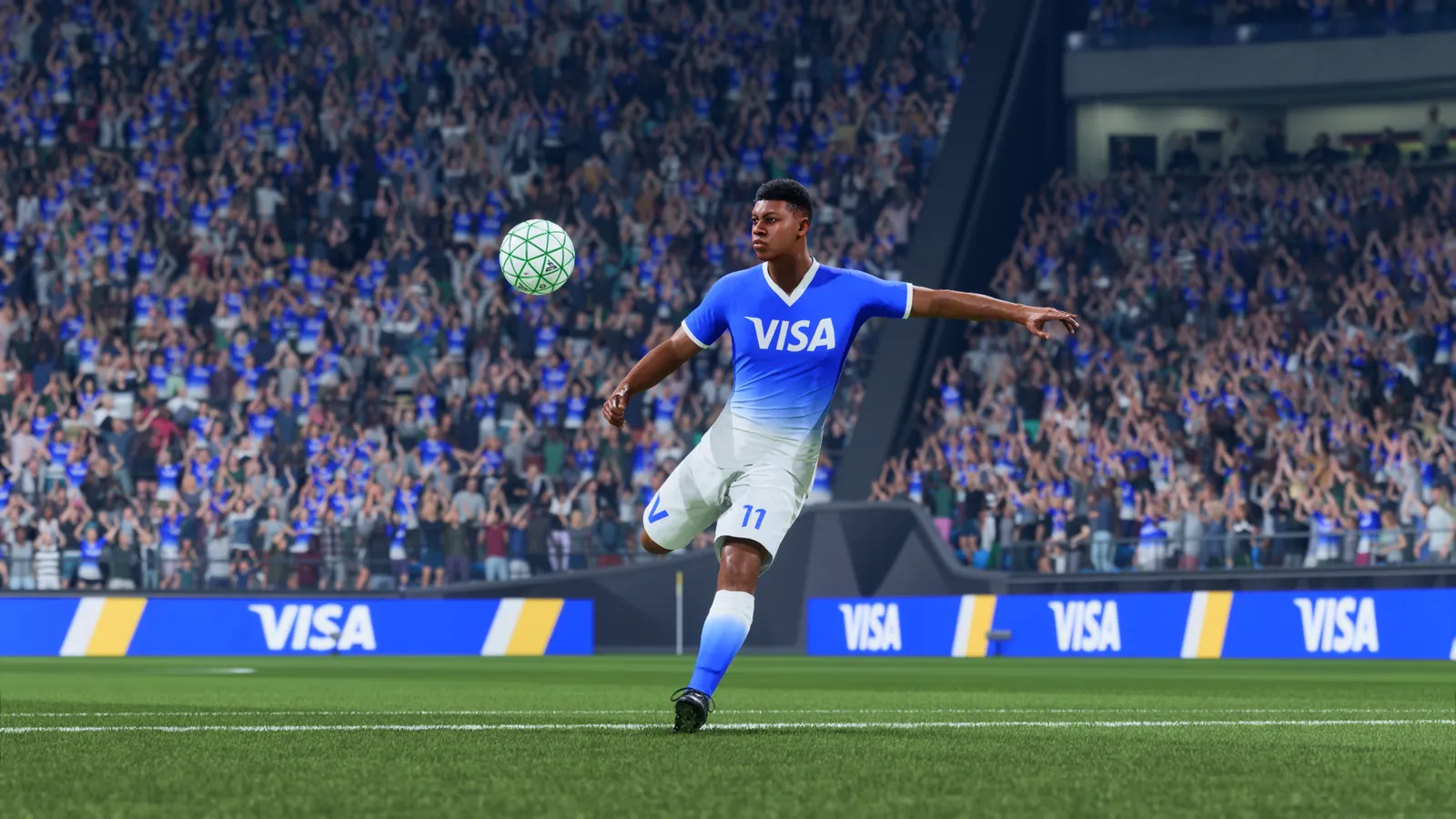
In a strategic shift that underscores the growing importance of gaming as a primary advertising channel, Electronic Arts (EA) has officially launched "EA Advertising." The new platform is designed to consolidate the company’s vast portfolio—which engages over 120 million monthly active users—into a unified, streamlined marketplace for brand partners. By moving away from fragmented, ad-hoc partnerships toward a cohesive ecosystem, EA is signaling that it intends to capture a larger share of the global marketing spend, positioning its titles not just as entertainment products, but as premium media environments.
The Evolution of In-Game Advertising
For years, in-game advertising was often viewed as a "Wild West" of unpredictable integrations that could potentially disrupt the user experience. EA’s new platform seeks to professionalize this by providing a single point of entry for campaign creation, implementation, and performance measurement.
The platform offers brands a variety of sophisticated, non-intrusive ad units. These include digital advertising boards, dynamic scoreboards, and brand-broadcast overlays that mirror real-world sports coverage. Crucially, the platform allows for real-time optimization. Partners can adjust their campaigns based on engagement metrics, ensuring that the advertisements evolve in tandem with how players interact with the game environment. By adhering to IAB (Interactive Advertising Bureau) standards for targeting and consistency, EA is positioning itself as a "brand-safe" environment for Fortune 500 companies, a critical requirement for scaling ad revenue.
A Chronology of Strategy and Expansion
The seeds for this pivot were sown long before the formal launch of the advertising platform. The company’s move into the ad-tech space represents the culmination of a multi-year effort to modernize its monetization strategy.
- Early 2024: EA begins testing deeper brand integrations beyond simple logos, experimenting with mission-based objectives that reward players with branded items.
- January 2025: EA demonstrates the potential for non-sports crossover by partnering with luxury brand Coach to bring virtual fashion items into The Sims 4, reaching a massive audience of 85 million players.
- June 2025: In a clear signal of its intent to build a robust media business, EA hires Alex Dao, a veteran executive formerly of Snap, to lead its global advertising and sponsorship division.
- September 2025: Amidst broader organizational changes, EA enters into a definitive agreement to be acquired by an investment consortium for $55 billion. The deal, involving Silver Lake, Affinity Partners, and Saudi Arabia’s Public Investment Fund, sets the stage for a new phase of capital-intensive growth.
- Current Day: The official rollout of EA Advertising, supported by infrastructure built directly into the company’s proprietary Frostbite game engine.
The EA Sports Partner Program: A Premium Ecosystem
While the advertising platform serves the entire company, the "EA Sports Partner Program" serves as the crown jewel of the new strategy. This initiative focuses on high-value, co-created activations that go beyond simple impressions.
The program offers select partners access to a multi-platform audience spanning mobile, console, and PC, reaching hundreds of millions of players annually. Beyond standard ad placements, the program includes:
- Live Event Integration: Opportunities to align brands with major competitive gaming events, such as the EA Sports Presents Madden Bowl.
- Athlete Engagement: Through the GEN/EA Sports platform, brands can collaborate with professional athletes, facilitating storytelling that bridges the gap between digital fandom and real-world celebrity.
- Community Programs: Deep integrations where brands become part of the game’s meta-progression, allowing players to earn branded gear or participate in sponsored tournaments.
Performance Metrics and Case Studies
The efficacy of EA’s new approach is already visible in the pilot programs rolled out with major brands. By focusing on objectives that feel native to the game, EA has achieved engagement levels that traditional digital advertising often struggles to match.
Recent activations demonstrate the power of this "value-add" philosophy:
- Red Bull: By integrating in-game objects, athlete collaborations, and team kits into the FC (formerly FIFA) franchise, Red Bull recorded over 128 million played matches, with 1.2 million user objectives completed.
- Lowe’s: Utilizing a multi-game approach across FC, Madden NFL, and College Football, the home improvement retailer saw nearly 1 million games played and 200,000 challenges completed, proving that even non-endemic brands can find a home in sports simulations.
These figures illustrate a fundamental shift: instead of forcing players to watch a video ad, EA is incentivizing players to interact with the brand as part of the gameplay loop.
Official Perspectives: The Philosophy of "Respectful Integration"
David Tinson, Chief Experiences Officer at Electronic Arts, has been vocal about the necessity of maintaining the integrity of the user experience. "Players come to EA’s games and live experiences every day to play, watch, create, and connect," Tinson stated during the launch. "That gives brands a meaningful opportunity to show up in ways that add value and respect the player experience, while maintaining authenticity in the worlds our teams are building."
Tinson’s comments highlight the delicate balancing act EA must perform. In an era where gamers are increasingly sensitive to "pay-to-win" mechanics and intrusive advertising, EA’s mandate is to make advertisements feel like a natural extension of the game world—much like a billboard in a stadium or a branded kit on a player.
Industry Implications: Gaming as the New Frontier
EA is not acting in a vacuum. The gaming industry is currently undergoing a massive correction in how it views advertising revenue. As the cost of acquiring users continues to rise and the market for premium game sales faces volatility, advertising offers a recurring, high-margin revenue stream.
Other major players are moving in lockstep:
- Microsoft/Minecraft: The expansion of the Minecraft creator affiliate program is professionalizing the "creator economy," allowing brands to leverage the influence of top community members.
- Roblox: The introduction of "Brand Link" is an attempt to standardize how brands navigate the platform’s sprawling user-generated content ecosystem.
Gaming is widely considered one of the largest "untapped" marketing audiences globally. Despite the massive time spent in these virtual worlds, gaming historically receives only a small fraction of total global advertising dollars compared to social media or traditional television. EA’s move suggests that the industry is finally ready to bridge this gap, utilizing standardized tools and sophisticated software development kits (SDKs) to make game environments as easy to buy for media planners as a display ad on a website.
Challenges and Future Outlook
Despite the excitement, the path forward is not without hurdles. The pending $55 billion acquisition of EA by a consortium led by private equity interests has been met with scrutiny. While the deal promises to provide the capital necessary for this aggressive expansion into advertising, it has also sparked protests from a vocal segment of the gaming community concerned about the potential for further commercialization of their favorite titles.
Furthermore, EA must maintain a rigorous standard of quality. If the advertisements become too frequent or too intrusive, the company risks alienating its core user base—a group that values immersion above all else.
As the industry moves toward 2026, the success of EA Advertising will be a bellwether for the entire gaming sector. If EA can prove that brand integrations can increase player satisfaction—by providing rewards, new content, or enhanced realism—they will have unlocked a revenue engine that could redefine the economics of video games for the next decade. If they fail to maintain that balance, they risk damaging the very brand equity that makes their games so valuable in the first place. For now, however, the strategy is set, the infrastructure is built, and the world’s biggest brands are lining up to join the game.


 Jia Lissa
 Raul Delapena Setiawan