Siti Muinah
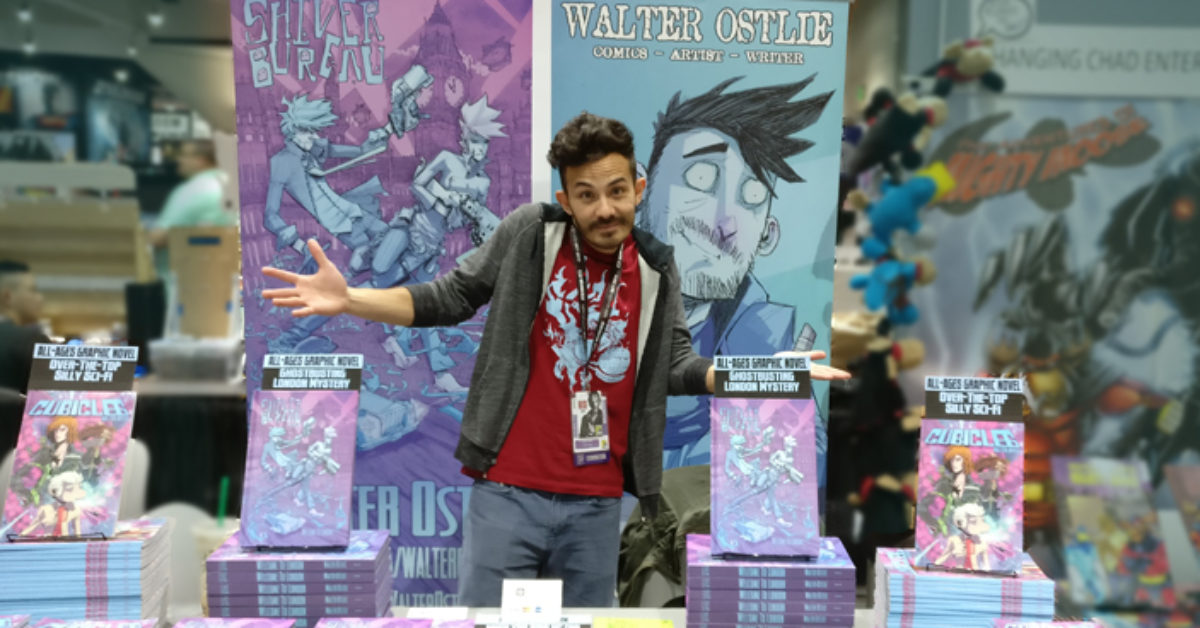
In the rapidly shifting landscape of independent comics, few creators have managed to bridge the gap between traditional print media and the explosive growth of digital platforms as effectively as Walter Ostlie. A writer, artist, and educator, Ostlie has spent over a decade refining his craft, transitioning from a self-taught enthusiast to a full-time professional whose work—ranging from Cubicles and Shiver Bureau to the hit Webtoon Haxor and the viral sensation MetalShark Bro—has resonated with audiences worldwide.
This article examines the trajectory of Ostlie’s career, the technical evolution of his artistic style, and his insights into the changing economics of the comic book industry.
The Path to Professionalism: A Chronology of Success
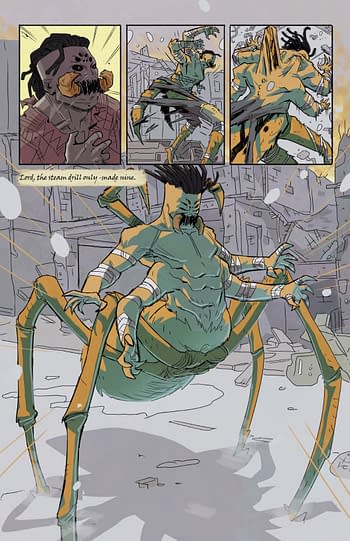
Walter Ostlie’s journey into the comic industry began in 2008, a period he describes as a self-directed intensive education in writing and sequential art. His professional breakthrough arrived in 2011 with the publication of Cubicles through Red5 Comics. This success provided the foundation for his sophomore project, Shiver Bureau, a supernatural investigation series set in an alternate London. Through the power of community-backed funding, Shiver Bureau raised over $13,000 on Kickstarter, later catching the attention of Scout Comics for wider Diamond distribution.
This early success was not merely a matter of luck but a result of rigorous consistency. Following his work on the award-winning series Is’nana: The Were-Spider—a collaboration with creator Greg Anderson Elysee—Ostlie caught the eye of the Webtoon editorial staff. This pivot to the digital vertical-scroll format became the catalyst for his full-time career. His Webtoon series, Haxor, provided the steady professional income necessary to transition away from his 9-to-5 employment. By November 2020, Ostlie marked his third year as a full-time, self-employed creator, a testament to the viability of creator-owned digital content.
The Economics of Digital vs. Traditional Models
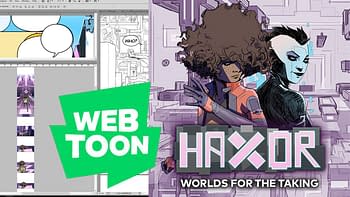
One of the most significant shifts in Ostlie’s career has been his embrace of Webtoon. For many traditional comic creators, the platform remains an enigma, but for Ostlie, it represents a "game-changer."
The "Netflix of Comics"
Ostlie characterizes Webtoon not just as a hosting site, but as a studio ecosystem. "It’s a webcomic platform, like YouTube, but for comics," he explains. "Webtoon is also like Netflix, in that they will fund comics. These are their ‘Originals.’ They pay the creators a publishing fee, and the creators still retain their IP."
This model contrasts sharply with the traditional American comic distribution system. By offering a platform that allows for consistent monetization—through both ad revenue and direct funding—Webtoon has allowed creators like Ostlie to move beyond the feast-or-famine cycle typical of the independent graphic novel market.
Adjusting the Creative Workflow
The transition to Webtoon required more than just a business shift; it necessitated a complete re-evaluation of storytelling. The platform’s "infinite vertical scroll" offers a unique canvas that demands a different approach to pacing.
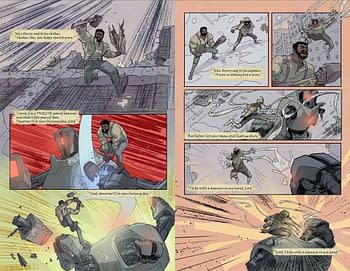
"It’s a little bit of a learning experience, reprogramming everything I know about traditional comic storytelling," says Ostlie. He notes that while splash pages and wide establishing shots—staples of the traditional 6×9 page—are less effective in the vertical format, the medium allows for deeper character exploration. "I could use ten panels of the same face, slowly changing the expression from confusion to horror if I wanted. Which really allows for a lot of character building."
Technical Mastery and the "Obstacle Course" of Art
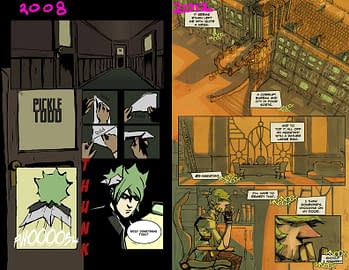
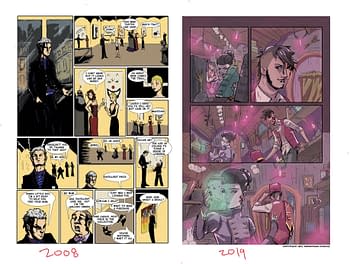
Ostlie’s artistic development has been driven by a philosophy of efficiency. While he admits to feeling as though his raw artistic "leveling up" has plateaued in recent years, he emphasizes that the true growth lies in speed and technical versatility.
The Speed Catalyst
"Stuff that would have taken me a few hours to draw, I can now draw in 30 minutes," Ostlie observes. "Which isn’t something you can see on the surface, but behind the scenes, making art for a living, it makes a huge difference."
He views the creation of a comic as an "obstacle course." Because a comic artist must be proficient in drawing everything from architecture and vehicles to human anatomy and monsters, the sheer volume of work forces growth. "You can’t walk away from a 100-page comic without having grown in some way," he adds.
Artistic Influences
Ostlie’s aesthetic evolution has moved away from the hyper-realistic styles he grew up with, such as those of Jim Lee, toward more stylized creators. He cites Skottie Young and Ben Templesmith as pivotal figures who showed him that "you can draw differently and still have your comic at Barnes & Noble." Today, he draws inspiration from the work of James Harren, Daniel Warren Johnson, and Karl Kerschl, as well as the narrative style of Bryan Lee O’Malley.
Managing the Workflow: A Full-Time Reality
The life of a full-time comic creator is far from the romanticized image of the starving artist working in a fever dream. For Ostlie, it is a disciplined, six-day-a-week operation.
His routine is structured for maximum productivity:
- 07:00 AM: Wake and breakfast.
- 08:00 AM – 11:30 AM: Focused drawing block.
- 11:30 AM – 12:00 PM: Lunch break.
- 12:00 PM – 05:00 PM: Afternoon drawing block.
- 05:00 PM – 08:00 PM: Secondary, lighter administrative or creative work.
- 10:00 PM: Lights out.
This "old person schedule" is designed to preserve his most valuable resource: focus. He notes that sleep deprivation is the enemy of productivity, a lesson learned early in his freelance career.
The Phenomenon of MetalShark Bro
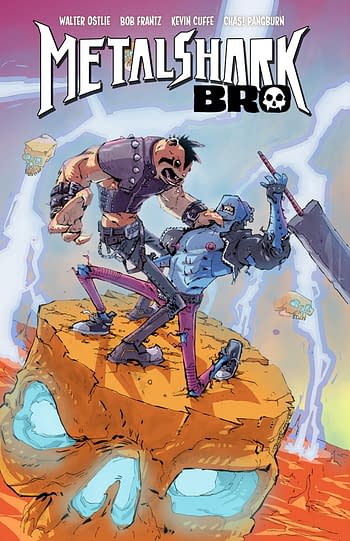
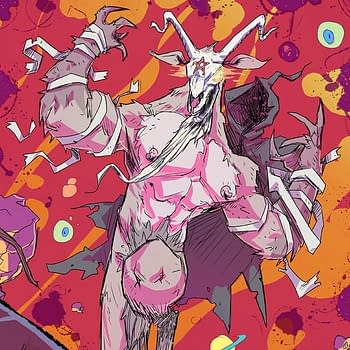
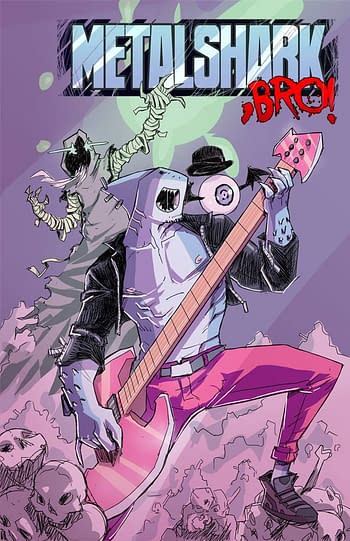
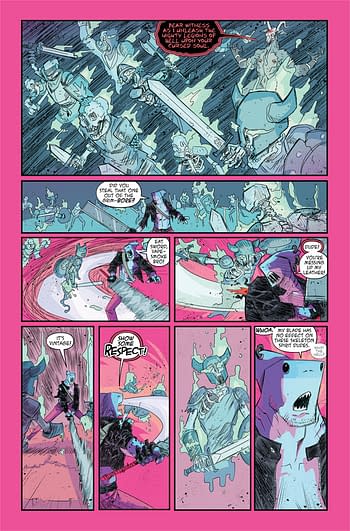
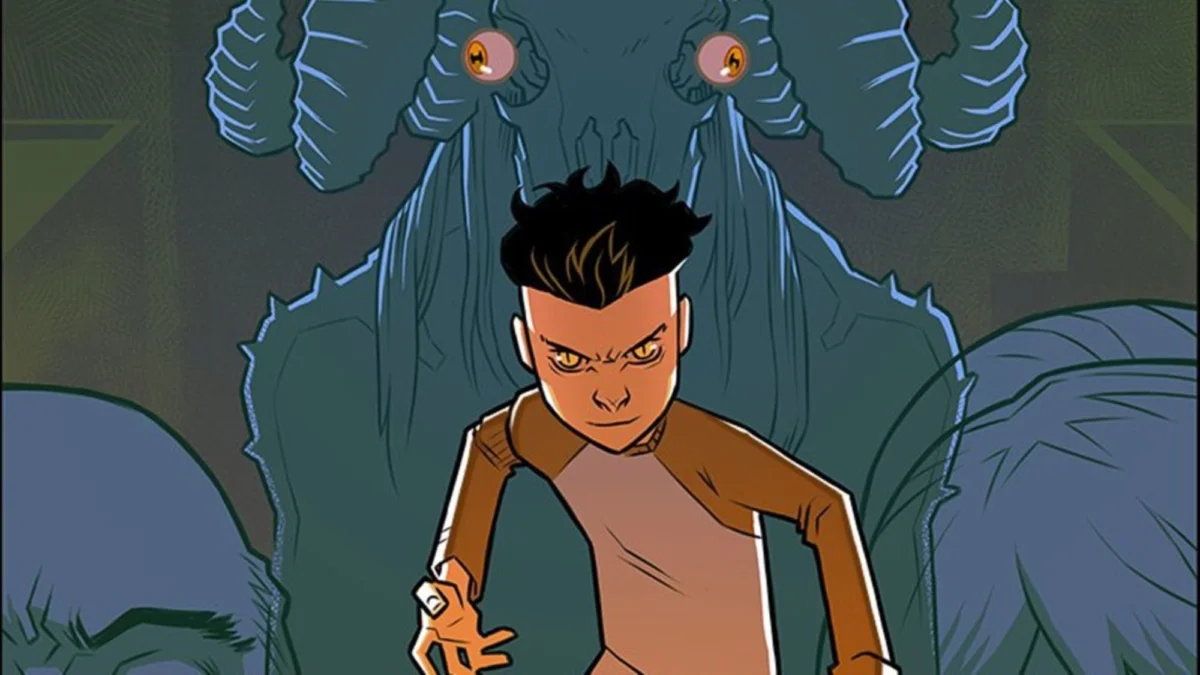
Perhaps the most unique entry in Ostlie’s bibliography is MetalShark Bro, a project that he admits "doesn’t really make sense." Despite its absurd premise—a shark-man battling demons—the book was a massive success, raising over $50,000 on Kickstarter and eventually securing distribution through Scout Comics.
The project highlights the importance of creative synergy. Working with writers Bob Frantz and Kevin Cuffe, Ostlie was given the freedom to interpret their scripts in his own "wacky" way. The success of the title proves that there is a significant audience for high-concept, irreverent stories that don’t take themselves too seriously. As Ostlie notes, "I think people see the name MetalShark Bro and immediately think they are gonna get some type of ‘bro’ book. Then they open up the book and just aren’t ready for what it really is."
Implications: The Future of the Creator-Led Industry
Ostlie’s influence extends beyond his own pages and onto YouTube, where his channel—boasting over 4,500 subscribers—serves as a technical guide for aspiring creators. His content focuses on the mundane but essential realities of the industry: lettering, layout, and the technical hurdles of self-publishing.
A Call for Better Collaboration
When asked about advice for writers looking to work with artists, Ostlie emphasizes the necessity of open dialogue. He believes that the best results occur when writers are willing to tell an artist when a scene isn’t working, and when artists are equally transparent about their own creative visions.
"A writer needs to be okay with telling an artist that something isn’t right," Ostlie advises. "An artist needs to be okay with telling a writer that a scene doesn’t work. So I’d say writers should open that dialogue up."
Final Thoughts
As for the future, Ostlie has recently signed contracts for a major new project, keeping him booked well into 2021. While fans of his earlier work, such as Shiver Bureau, clamor for a return to those worlds, Ostlie remains pragmatic about his capacity. "Either you die or live long enough to see yourself become the villain," he jokes, referencing the difficulty of balancing multiple ongoing projects.
Ultimately, Walter Ostlie represents a new breed of creator: one who is not beholden to the whims of a single publisher, but rather one who treats his career as a sustainable, multi-faceted business. By blending traditional work ethic with modern digital distribution, he has carved out a path that serves as a blueprint for the next generation of independent comic artists.

 Reynand Wu
 Asro
Asro