Evan Lee Salim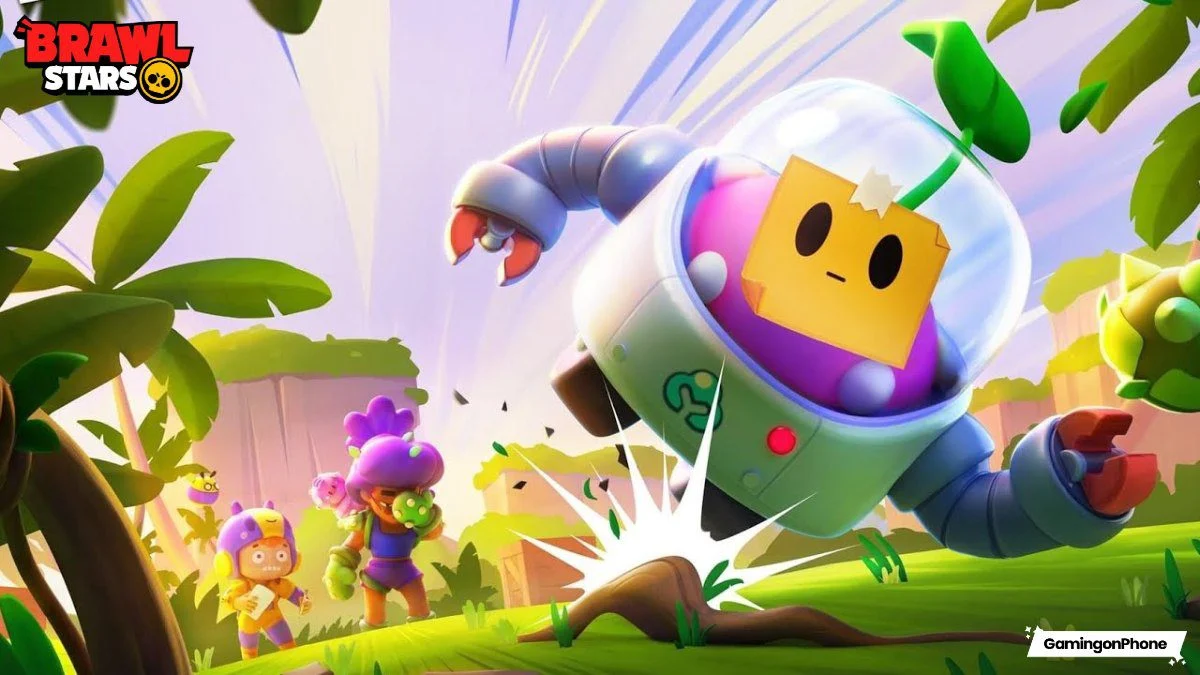
In a landmark legal ruling that has sent shockwaves through the mobile gaming industry, the popular hit Brawl Stars, developed by the Finnish gaming giant Supercell, has been found guilty of intellectual property infringement. A decision handed down by the Paris Judicial Court in December 2025 has ruled that the design of the fan-favorite Brawler, "Sprout," bears an unlawful resemblance to the "Andrea" air purifier, a high-end designer appliance created by French visionary Mathieu Lehanneur.
The fallout from this ruling is significant, forcing Supercell to face substantial financial penalties and a mandatory design overhaul. As players notice the sudden disappearance of promotional assets featuring the character across European social media channels, the industry is left grappling with the complexities of digital character design and the boundaries of creative inspiration.
The Origin of the Dispute: Anatomy of a Design
The legal battle centers on the visual DNA of Sprout, a support-class Brawler known for its robotic, plant-based aesthetic. The claimant, Mathieu Lehanneur, is a celebrated French designer whose "Andrea" air purifier—first introduced to the market in 2009—features a distinct, futuristic aesthetic centered around a central living plant housed within a translucent, capsule-like vessel.
In its detailed judgment, the Paris Judicial Court meticulously cataloged the striking parallels between the two designs. The court highlighted a convergence of key visual elements that moved beyond mere "coincidence" or "industry archetypes":
- The Capsule Silhouette: Both the Andrea purifier and Sprout utilize a rounded, bio-mimetic capsule shape that serves as the central focal point.
- The Transparent Dome: The use of a clear, dome-like housing for the "biological" component (the plant) was deemed a core protected feature of the Andrea design.
- Segmented Construction: The distinct, deliberate separation between the upper, transparent housing and the base structure was identified as a signature stylistic choice shared by both entities.
- Integration of Life: The conceptual fusion of a machine acting as a life-support system for a plant was central to both the function of the air purifier and the character design of the Brawler.
While Supercell’s legal team argued that the addition of robotic limbs, wheels, and a expressive digital face differentiated Sprout as a distinct creative work, the court remained unconvinced. The presiding judges concluded that these additions were merely superficial modifications placed upon an already derivative base structure.
A Self-Inflicted Wound: The Role of Concept Art
Perhaps the most damaging aspect of the proceedings was a tactical error by Supercell itself. During the discovery phase of the trial, Supercell’s legal defense submitted early-stage concept art of Sprout to demonstrate the character’s creative evolution.
This decision backfired spectacularly. The court observed that the initial concept sketches for Sprout bore little to no resemblance to the Andrea air purifier. However, as the development progressed, the character’s design underwent a series of iterations that moved it closer and closer to the aesthetic of the 2009 appliance. This provided the court with a "roadmap" of the infringement, effectively proving that the similarities were not the result of a parallel creative process, but rather an incremental adoption of protected visual elements. This evidence proved fatal to Supercell’s defense, stripping away any claim of independent creation.
Financial Repercussions and Legal Penalties
The financial burden placed on Supercell is extensive. The Paris Judicial Court has mandated a multi-tiered compensation structure, reflecting both the economic success of the character and the "moral damages" caused to the original designer.
The Breakdown of Costs:
- Provisional Economic Damages: €250,000 (approximately $287,500), reflecting the estimated profit share generated by the character in the French market.
- Moral Damages: €80,000 (approximately $92,000), awarded for the dilution of the original designer’s intellectual property rights.
- Legal Costs: €40,000 (approximately $46,000) to cover the plaintiff’s attorney fees and trial expenses.
Furthermore, the ruling requires Supercell to provide a transparent, audited financial report detailing the total revenue generated specifically by Sprout-related cosmetic sales and associated merchandise in France since April 2020. This indicates that the initial €250,000 payment may merely be the floor; if the financial reports show significant revenue, the court may adjust the damages upward.

Perhaps more costly than the fines is the operational injunction: Supercell has been ordered to immediately cease the use of the default Sprout design, as well as all its cosmetic variants, within the French territory. Failure to comply with these orders carries a daily penalty of €1,000, creating an urgent pressure on the developer to act quickly.
The Path Forward: Remodeling and Global Implications
Despite the severity of the ruling, the impact is currently localized to France. Supercell has not indicated a plan to remove the character from the global version of Brawl Stars, but the writing is on the wall. According to reports from the community, such as those from the Chosen Network, the development team is already preparing to address the issue on a global scale.
Update 68, currently in the final stages of production, is expected to introduce a comprehensive visual "remodel" for Sprout. The goal is to move the character’s design far enough away from the Andrea purifier to avoid future litigation while retaining the essence of the Brawler that fans have grown to love.
Why this matters for the Industry
This case serves as a cautionary tale for game developers and design studios. In an industry where "referencing" real-world objects is a standard part of the creative process, the line between inspiration and infringement is often blurred.
- Documentation is Key: This case highlights the importance of keeping detailed records of the creative process. If a developer can prove their design evolution was organic and distinct, they are shielded from such claims.
- The Risks of "Aesthetic Borrowing": Large companies often view their designs as distinct enough to avoid copyright infringement, but courts are increasingly scrutinizing the "total concept and feel" of digital assets.
- Cross-Sector Scrutiny: This ruling proves that designers of physical products are becoming increasingly aware of their intellectual property rights within the virtual realm. The gaming industry can no longer operate as an island where physical world copyrights do not apply.
Looking Ahead: The Future of Brawler Design
As Supercell pivots to address these legal challenges, the Brawl Stars community remains divided. While some players express disappointment that a character they have spent years bonding with is undergoing a facelift, others view it as a necessary step for the studio to maintain its reputation and legal integrity.
The upcoming patch notes are highly anticipated, as they will likely contain the first official statements from Supercell regarding the nature of the remodel. Will the new Sprout retain its iconic status, or will it become a shadow of its former self? More importantly, will this ruling set a precedent that leads to a wave of similar lawsuits against major game developers?
For now, the French courts have made their stance clear: the protection of artistic property extends to the digital canvas, and no amount of "robotic limbs or wheels" can mask the unauthorized borrowing of a designer’s vision. Supercell’s struggle to resolve this issue serves as a stark reminder that in the hyper-connected world of modern media, creative integrity is not just a moral obligation—it is a legal necessity.
As the gaming world watches, the "Sprout Case" will undoubtedly be cited in future intellectual property disputes, signaling a shift in how game developers approach character design in the years to come.

 Nana
Nana
 Jia Lissa