

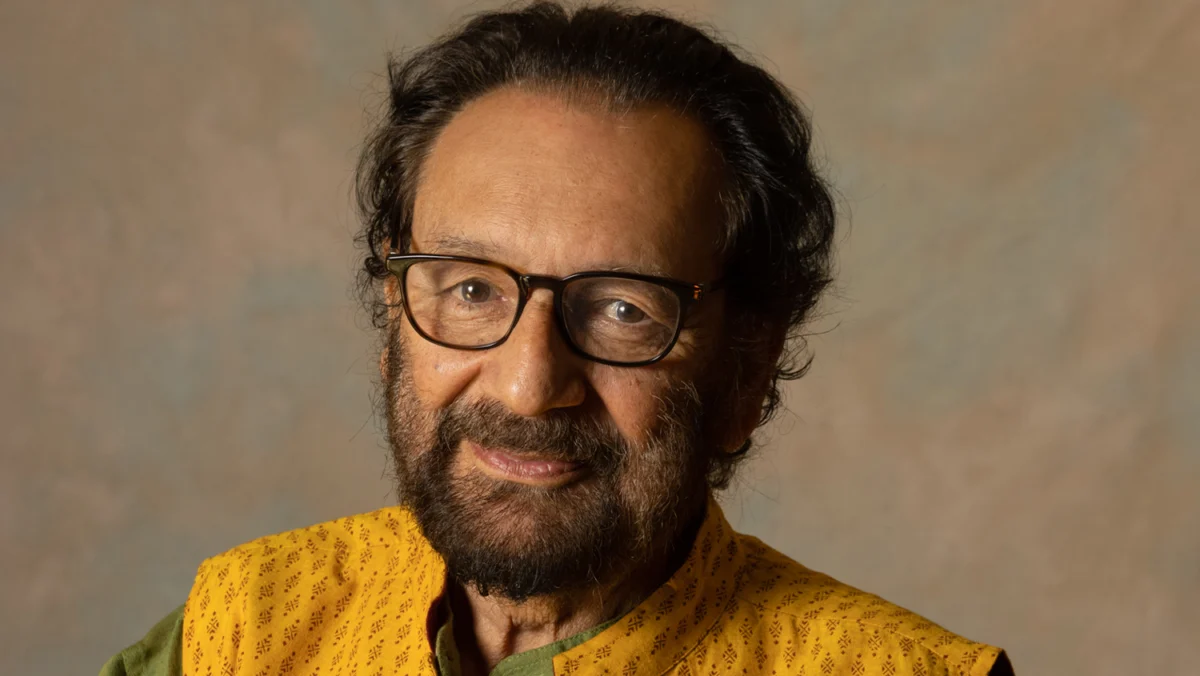
EXCLUSIVE: In a cinematic endeavor that promises to marry the sweeping grandeur of historical epics with the intimate intensity of a character study, BAFTA-winning filmmaker Shekhar Kapur has been tapped to direct Foreign Bodies. The project, an ambitious biopic, chronicles the life and tumultuous career of Waldemar Haffkine, the Ukrainian-Jewish bacteriologist whose pioneering work in the late 19th and early 20th centuries saved millions from the ravages of cholera and the bubonic plague.
The announcement, which has generated significant buzz at the Cannes Film Market, positions the film as a high-stakes drama exploring the intersections of colonial politics, scientific breakthrough, and the profound personal cost of being a man ahead of his time.
The Life and Legacy of a Forgotten Titan
Waldemar Haffkine remains one of the most consequential yet overlooked figures in the history of medicine. Born in Odesa, then part of the Russian Empire, Haffkine was a man defined by his status as an outsider. His journey took him from the intellectual hubs of Paris—where he worked under Louis Pasteur—to the frontlines of the British Raj in India.
Haffkine’s primary contribution was the development of the first vaccines against cholera and the bubonic plague. At a time when medical science was still grappling with the mechanics of germ theory, Haffkine’s willingness to test his vaccines on himself made him a legendary, if controversial, figure. In India, he was hailed by the masses as a "Mahatma" (a great soul) for his efforts to stem the tide of pandemics, yet his life would eventually be derailed by institutional paranoia and anti-Semitism.
The film’s narrative arc follows Haffkine through his formative years in Europe and his eventual appointment as the State Bacteriologist in India. It promises to dive deep into the harrowing period of the “Second Dreyfus Affair,” a moment in history where Haffkine was scapegoated following a tragic incident in Mulkowal, where nineteen people died after receiving a cholera vaccine contaminated with tetanus—a catastrophe for which Haffkine was unfairly blamed by colonial authorities.
Chronology of a Scientific Odyssey
The narrative structure of Foreign Bodies will span multiple continents and decades, reflecting the peripatetic nature of Haffkine’s life.
- 1860–1890s: The Formation of a Scientist: The early acts of the film will explore Haffkine’s roots in Odesa and his rigorous education in Paris. It captures the intellectual fervor of the Pasteur Institute and the birth of modern immunology.
- 1893–1899: The Indian Mission: Haffkine’s arrival in India marks the turning point of the film. Here, the viewer is introduced to the complexity of the British Raj, the cultural nuances of Mumbai and Kolkata, and the sheer scale of the epidemics he sought to conquer.
- 1902–1907: The Betrayal: The film’s dramatic climax centers on the Mulkowal tragedy. This period chronicles the bureaucratic coldness of the British colonial administration, the rise of the "Second Dreyfus Affair," and the subsequent public and professional disgrace Haffkine endured.
- 1907–1930: Vindication and Exile: The final chapters will look at the long road to his partial exoneration and his eventual retirement, highlighting the enduring impact of his work on modern global health.
Production and Creative Vision
The film is being brought to life by an international consortium of producers, including Helen Hadfield of Snapper Films, Alexandra Stone of Streetcar Productions, Egor Olesov of United Heroes, and J.D. Zacharias of Curiosity Rights.
The screenplay is the result of three years of exhaustive research by British screenwriter Paul Twivy. Twivy, who secured access to private family records and archives, has crafted a script that moves beyond the typical "great man" biopic trope. Instead, the focus is on the "brilliant outsider," a man defined by his exile and his stubborn commitment to empirical truth.
Shekhar Kapur, a director known for his visual mastery and his ability to handle complex historical narratives—as evidenced by his seven-time Oscar-nominated Elizabeth and its sequel Elizabeth: The Golden Age—was the natural choice to helm the project.
"Foreign Bodies is a large-scale character drama about a man caught at the intersection of epidemic, empire, prejudice, and faith," Kapur told Deadline. "This is a story of such epic scale, yet of such personal and internal conflict—of a man who saved millions of lives, becoming both worshiped as a God and reviled as the devil. It has a love story that transcends cultural conflict and is heart-warming and heart-breaking at the same time. In another time and another context, but in its epic nature, this film reminds of Lawrence of Arabia."
Twivy added, "Shekhar’s extraordinary skill and insight when directing biopics such as Elizabeth makes him a perfect fit for a story that blends in-depth character study with scientific discovery, romantic obsession, and sweeping historical upheaval."
Supporting Data: The Magnitude of Haffkine’s Work
To understand the gravity of the story, one must look at the data of the era. Before Haffkine’s intervention, cholera was a death sentence, causing tens of thousands of fatalities annually in India alone. Haffkine’s vaccine reduced mortality rates in infected groups by over 70%.
The "Second Dreyfus Affair" remains a dark chapter in the history of colonial science. Historians have noted that the accusation against Haffkine was rooted in a combination of administrative incompetence and latent anti-Semitism, as the authorities sought a scapegoat for the contaminated serum. The fact that the British government spent years trying to suppress his exoneration speaks to the fragility of truth within imperial power structures.
The film aims to reconstruct these events with historical accuracy, utilizing the "sweeping historical upheaval" of the turn of the century as a backdrop for Haffkine’s internal battle.
Implications: A Contemporary Resonance
Why tell this story now? In the wake of a global pandemic, the public’s relationship with vaccines, scientific authority, and the politicization of medicine has never been more strained. Foreign Bodies arrives at a moment when society is once again grappling with the same themes Haffkine faced: the necessity of science, the danger of misinformation, and the cost of human progress.
By focusing on the "personal and internal conflict" of a man who was simultaneously a hero to the poor and a pariah to the powerful, Kapur is positioning the film to be more than a dry historical record. It is a mirror held up to the present.
The film’s production team is currently in Cannes, engaging in high-level casting discussions and seeking international distribution partners. Given the prestige of the director and the universality of the themes, industry insiders suggest that the project is likely to attract A-list talent interested in the demanding role of Haffkine.
Conclusion
Foreign Bodies represents a monumental undertaking. It is a story of a man who, despite losing his reputation and his home, never lost his faith in the scientific process. As the production moves into its next phase, the focus will shift to finding the right ensemble cast to portray the intricate web of colonial officials, Indian colleagues, and family members who populated Haffkine’s world.
With Shekhar Kapur at the helm, the film promises to be a visual and emotional odyssey—a cinematic tribute to the man who saved millions, only to be erased by the very empire he served. As the industry turns its eyes toward the development of this biopic, the world awaits the long-overdue rediscovery of Waldemar Haffkine.











No comments yet. Be the first to join the conversation!