Neng Nana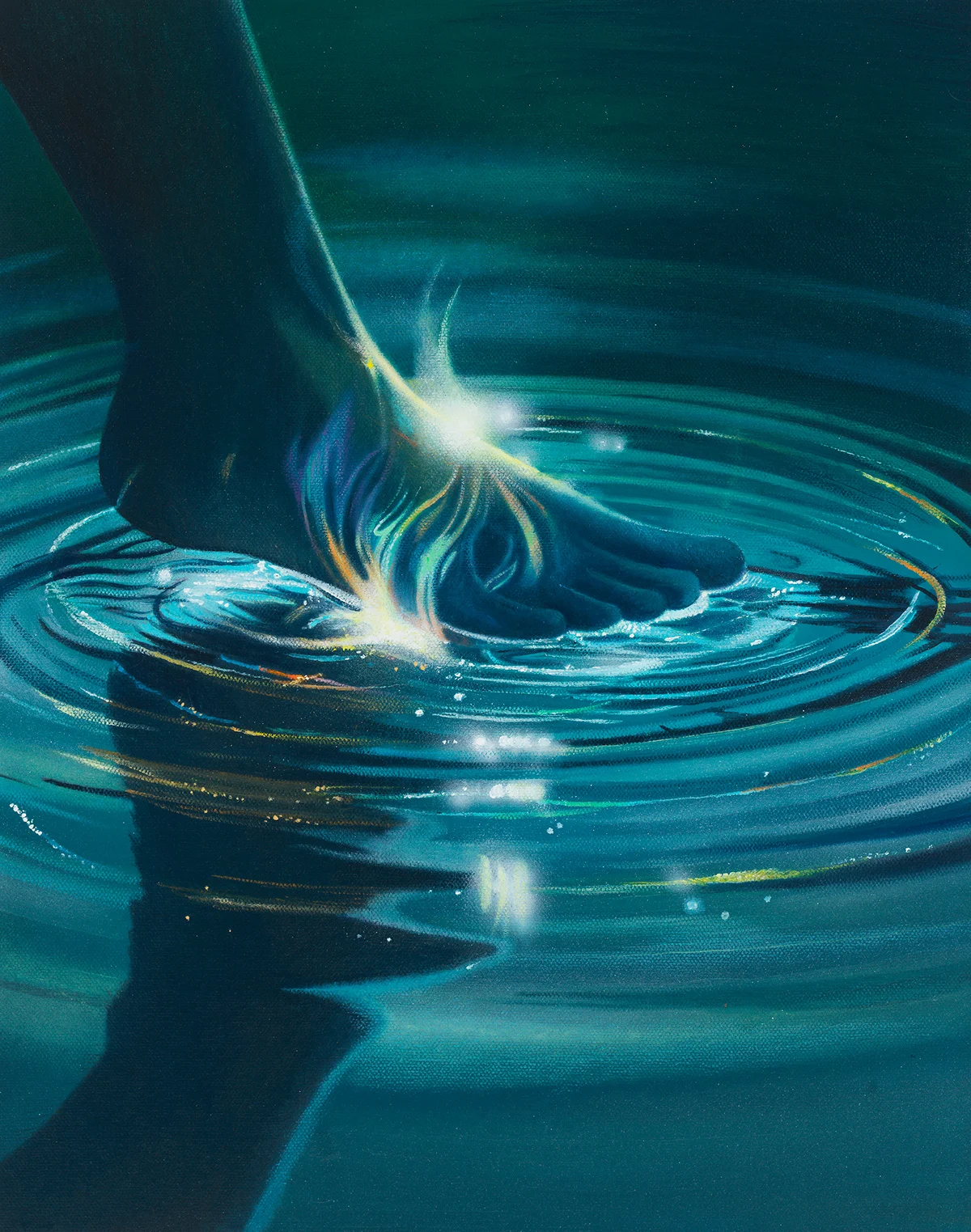
In an era defined by the relentless acceleration of digital life, political polarization, and a pervasive, low-frequency hum of existential dread, the role of the artist as a conduit for the sacred has become increasingly complex. Chicago-based painter Cindy Bernhard confronts this tension head-on in her latest exhibition, Broken Vessels, currently on view at the Plato Gallery. Through a series of monumental, six-foot-tall canvases, Bernhard explores the intersection of human frailty and the divine, offering a visual meditation on how the soul persists amidst the wreckage of contemporary life.
The Architect of Transcendence: A Profile of Cindy Bernhard
Cindy Bernhard’s practice is rooted in a rigorous academic foundation that bridges traditional technique with contemporary theological inquiry. After earning her BFA from the American Academy of Art in Chicago in 2011, she pursued further refinement of her craft at the Laguna College of Art and Design, where she received her MFA in 2014.
Throughout her decade-long career, Bernhard has consistently gravitated toward the "spiritual rupture"—that precise moment where human certainty collapses and something more transcendent must take its place. Her work does not shy away from the darker aspects of the human condition; rather, it attempts to map the geography of our internal lives, exploring how belief systems are tested by the external pressures of a fractured world. By utilizing the body as a central metaphor—a vessel for spirit and conviction—Bernhard elevates the personal struggle to the level of the universal.
"Broken Vessels": A Chronology of Concept and Creation
The genesis of Broken Vessels began as a response to the sensory overload of the 2020s. As Bernhard observed the collective psyche of her peers struggling under the weight of constant information consumption and socio-political instability, she began to conceive of a body of work that could serve as a site for contemplation.
The development of the series followed a deliberate, almost ritualistic progression:
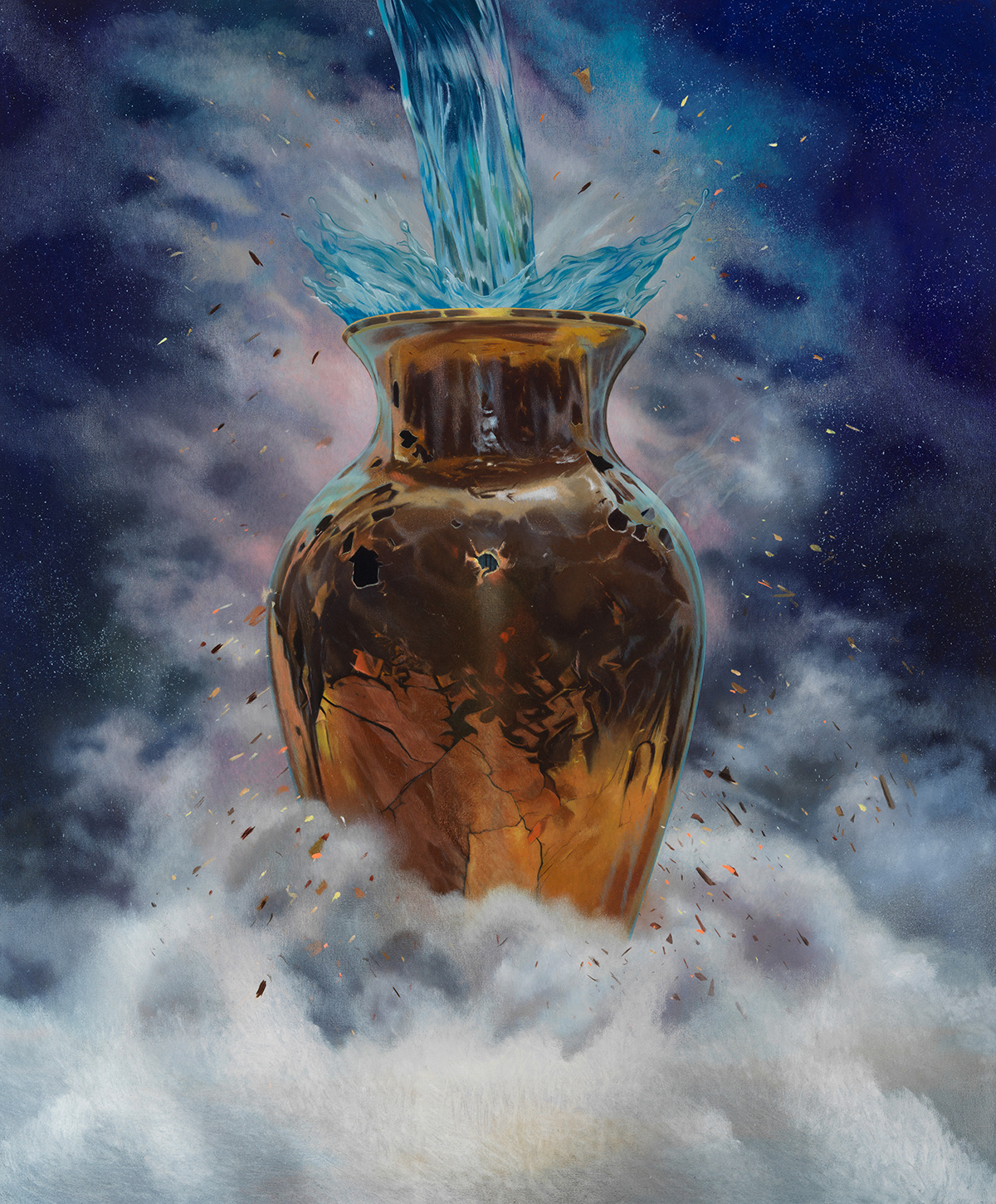
- The Conceptual Framework (2022–2023): Bernhard spent over a year researching the intersection of Christian mysticism and contemporary existentialism. She looked to the Japanese art of kintsugi—the practice of repairing broken pottery with gold lacquer—as a foundational metaphor for the human condition.
- Material Experimentation (2023): Transitioning from smaller studies to the six-foot monumental scale required a shift in her process. She began integrating metallic pigments and textured mediums to mimic the fractured nature of the subjects she was depicting.
- The Production Phase (2024–Early 2025): The physical act of painting these canvases became an exercise in endurance. Working on such a large scale, Bernhard treated the canvas not as a flat surface, but as an architectural space, layering paint, water, and fire-inspired pigments to build "vessels" that appear both solid and disintegrating.
- The Final Curation (2025): The selection for the Plato Gallery exhibition focused on the interplay between light and shadow. The resulting show, which opened earlier this year, invites viewers to walk through a gallery space that acts as a secular cathedral for the modern age.
Supporting Data: The Symbology of the Divine
At the heart of Broken Vessels lies an archetypal obsession with gold. In historical and religious contexts, gold is the material of the eternal, the incorruptible, and the divine. By juxtaposing this "holy" material with imagery of fracturing and collapse, Bernhard creates a visual paradox.
Her work relies on a recurring lexicon of symbols:
- Gold: Represents the inherent value of the human spirit, even when that spirit is shattered. It serves as the "glue" that binds the broken pieces together.
- Water: Used as a symbol of purification and the fluidity of identity. In Bernhard’s paintings, water often washes over the golden forms, suggesting a process of constant renewal.
- Fire and Smoke: These elements represent the heat of political and personal trial. They are the agents of transformation that test the "vessel," refining the material through pressure.
- Fragmentation: This is the defining aesthetic of the series. Bernhard argues that in a world defined by spectacle and consumption, the "whole" is a myth. By highlighting the cracks, she forces the viewer to acknowledge that our wounds are not just failures—they are the conduits through which grace enters.
The Artistic Discourse: Perspectives on Modernity
While the gallery has not issued a formal "manifesto," the curatorial notes provided by Plato Gallery emphasize the importance of Bernhard’s work in the current cultural climate. The exhibition is framed as an inquiry: What remains sacred when everything is for sale?
Critics and observers have noted that Bernhard’s work aligns with a resurgence of "new mysticism" in contemporary art—a movement that seeks to reclaim spiritual language without adhering to dogmatic religious institutions. By stripping away the specific iconography of organized religion, Bernhard allows the viewer to project their own anxieties and hopes onto the golden, wounded forms.
In the words of the gallery’s exhibition statement, "Bernhard asks us to consider that we are not broken despite our humanity, but rather, our humanity is defined by the ways in which we are broken. Transcendence is not found by ignoring the cracks, but by leaning into them."
Implications for the Contemporary Art Scene
The significance of Broken Vessels extends beyond its aesthetic merits. As the art world grapples with the influence of AI-generated imagery and the commodification of digital assets, Bernhard’s work serves as a reminder of the "human touch." The sheer physical labor required to produce these six-foot paintings—the texture of the paint, the brushwork, the visceral presence of the canvas—cannot be replicated by digital means.
Furthermore, the exhibition highlights a growing trend among mid-career artists to move toward larger, more immersive installations. By scaling her work to the size of the viewer, Bernhard forces an intimate confrontation. One cannot view these paintings from a distance; one must stand before them, effectively becoming a part of the "vessel" reflected in the paint.
Conclusion: Finding Light in the Cracks
Broken Vessels is a testament to the resilience of the human spirit. In a time when "spectacle" is the currency of the day, Cindy Bernhard offers a quiet, shimmering alternative. She does not promise that the pressures of modern life will cease, nor does she claim to have the answers to our political or existential crises. Instead, she offers a mirror.
As visitors walk through the Plato Gallery, they are confronted with a question: If we are indeed broken vessels, what is the light that we are holding? Bernhard’s work suggests that it is precisely our capacity to hold light within our fractures that makes us divine.
Broken Vessels remains on display at the Plato Gallery through July 11th. It is a vital stop for anyone seeking to reconcile the weight of modern existence with the enduring need for spiritual grounding.
Staying Connected to the Creative Pulse
For those interested in exploring the broader context of the art world, there are several avenues to stay informed. As the industry continues to evolve, platforms like Booooooom remain at the forefront of identifying emerging talent and supporting the creation of physical art media.
The 2026 Booooooom Art & Photo Book Award
If you are an artist or photographer looking to document your own work in a physical format, the 2026 Booooooom Art & Photo Book Award is currently accepting submissions. The program is selecting eight artists to receive support in turning their portfolios into professional-grade books or zines. It is an invaluable opportunity for creators to transition from digital visibility to physical legacy.
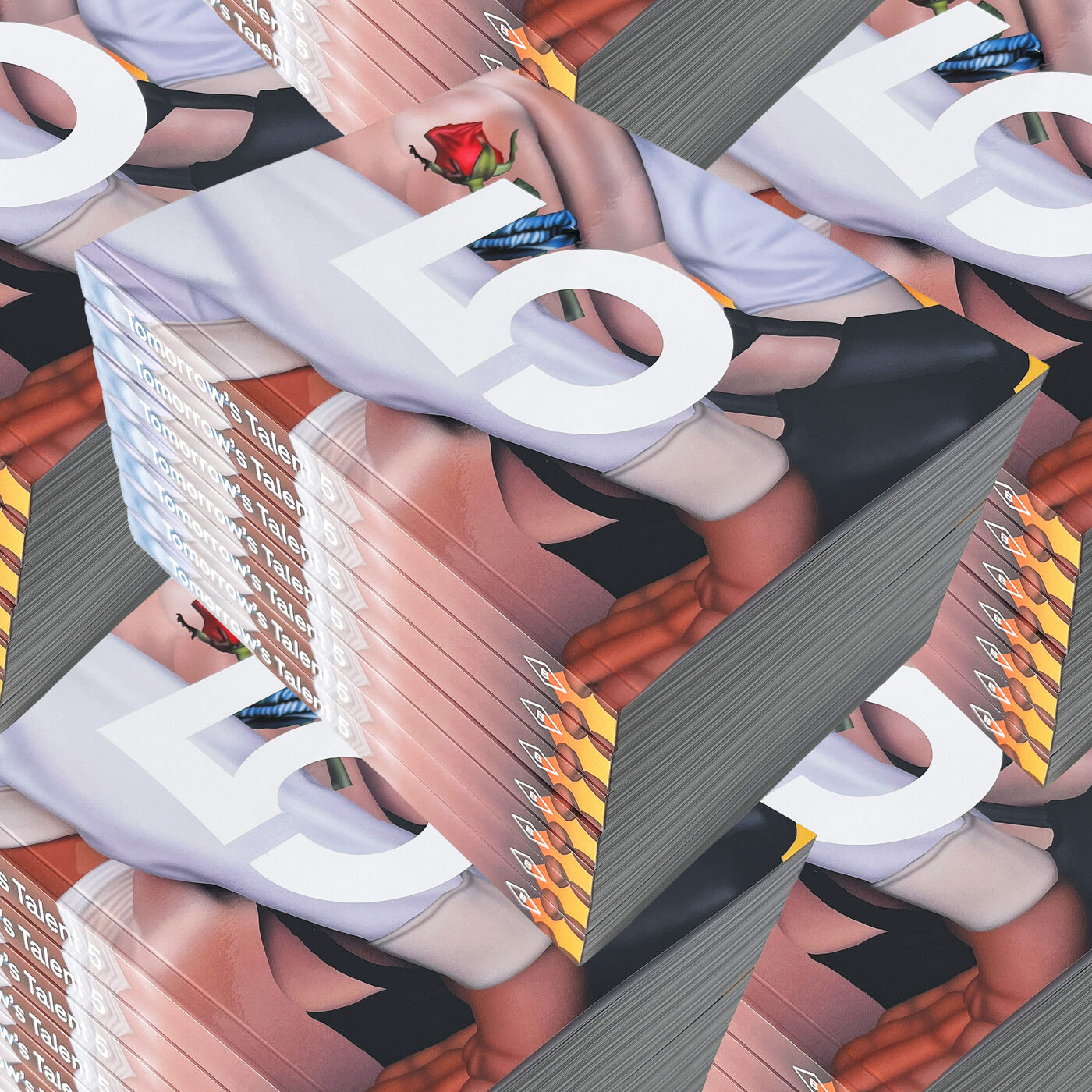
Tomorrow’s Talent 5
For a comprehensive look at the current state of global artistry, the Tomorrow’s Talent 5 book is now available. This volume features the work of over 60 artists and spans 276 pages. As the largest volume in the series to date, it captures the diverse, fragmented, and beautiful voices defining the next generation of creative production.
The Secret Email Club
To keep track of open calls, exhibitions like Bernhard’s, and deep dives into the contemporary art scene, we invite you to join our Secret Email Club. This weekly newsletter provides curated links, industry updates, and exclusive content that does not appear on our main feed. Join the community and ensure you never miss a beat in the rapidly shifting world of art and design.

 Asro
Asro
 Sagoh
Sagoh