Lina Irawan
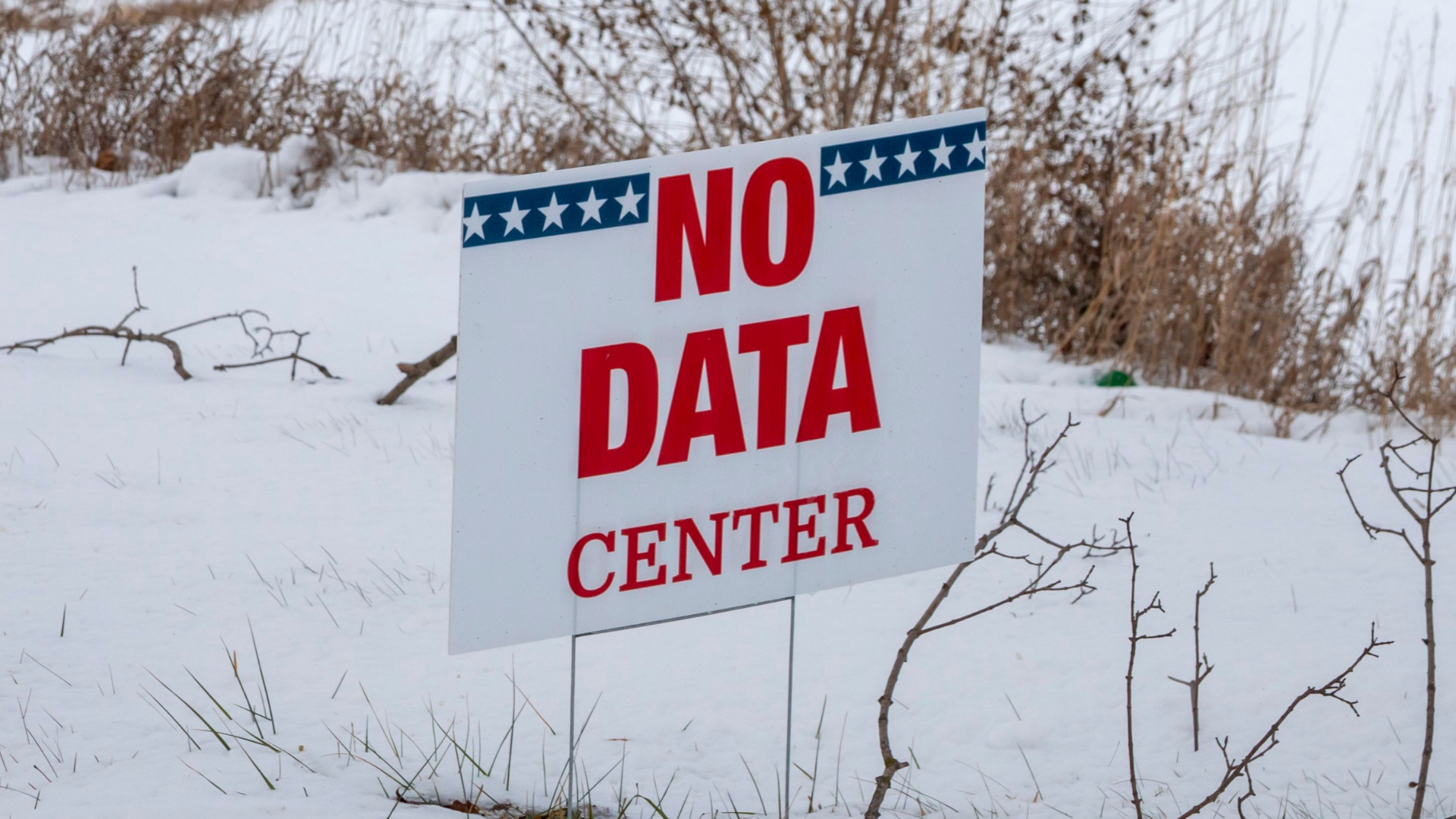
In the quiet corners of rural Tennessee, a battle is being waged that pits the burgeoning, power-hungry appetite of the artificial intelligence revolution against the fundamental quality of life in local communities. Across Warren County, McMinnville, and beyond, local governments are slamming the brakes on data center development, implementing temporary moratoriums that are beginning to reshape the landscape of American digital infrastructure.
This move is not merely a localized protest; it is part of a growing, nationwide trend of skepticism toward the massive, resource-intensive facilities required to power the next generation of AI compute. As hyperscalers like Microsoft, Amazon, and independent ventures like Elon Musk’s xAI seek to expand their footprint, they are finding that the "cheap land and low regulation" playbook is no longer an automatic ticket to expansion.
The State of Play: A Wave of Regulatory "Time-Outs"
The city of McMinnville has officially enacted an 18-month moratorium on new data center permits. This hiatus is specifically designed to grant city officials the necessary breathing room to conduct comprehensive impact studies. The city’s list of concerns is extensive: electrical grid capacity, water consumption, stormwater management, environmental degradation, public health risks, noise pollution, and—perhaps most intangibly but significantly—the "community fit" of these industrial-scale facilities.
The movement is spreading rapidly. Coffee County, which shares a border with Warren, has already mirrored this ban. Meanwhile, larger jurisdictions are closely watching these developments. Knox County is currently slated for a decisive vote on similar restrictions, and even in Nashville, the state’s capital, the Metropolitan Council has passed a moratorium bill on its first reading. With only a single dissenter among 40 members, the message from Tennessee’s political leadership is becoming increasingly clear: the era of "unquestioned growth" for data centers is over.
Chronology: From Silicon Valley Dreams to Localized Resistance
The rise of AI has necessitated a physical build-out of unprecedented scale. For the past decade, tech giants have scoured the United States for regions that offer proximity to power lines, tax incentives, and low-cost real estate. Tennessee, with its relatively lenient zoning laws and affordable rural acreage, became an attractive target.
- The Early Phase (2020–2024): Developers identified Tennessee as a prime location, capitalizing on its business-friendly climate. Projects were often pushed through local planning commissions with minimal public debate, as many residents were unaware of the sheer scale of the power and water demands these buildings would require.
- The Inflection Point (2025): As the true energy costs of AI models like GPT-4, Claude, and xAI’s "Colossus" became public knowledge, local awareness spiked. Residents began to notice the massive electricity load requirements—often measured in hundreds of megawatts—and the significant strain on local water tables used for cooling.
- The Current Resistance (2026): By early 2026, the movement had moved from informal town hall grumbling to formal legislative action. The Tennessee moratoriums are now part of a larger national tally, with 69 jurisdictions across the United States having enacted similar blocks as of May 2026.
Supporting Data: The Anatomy of a Resource Drain
To understand why these communities are resisting, one must look at the numbers. Tennessee currently hosts 63 data centers, according to the Data Center Map. While these facilities are often touted as economic engines that provide jobs, critics argue that the jobs-to-resource-consumption ratio is heavily skewed against the local population.
Power Demands
Modern AI training clusters are "monstrous" in their consumption. For instance, Elon Musk’s recent expansions in Memphis—aimed at powering the Colossus cluster—have pushed capacity demands into the gigawatt range. A single gigawatt is enough to power hundreds of thousands of homes. When a data center arrives in a rural town, it does not just plug into an existing wall outlet; it requires a complete overhaul of the local electrical grid, which often results in rate hikes for local residents and businesses.
Water and Environmental Impact
Data centers are notoriously thirsty. They require millions of gallons of water annually for evaporative cooling systems. In regions where water security is becoming a climate-change-related concern, the prospect of a tech company siphoning off local reserves has become a rallying cry for environmental activists and farmers alike.
The Financial Disconnect
Kai Sage, a resident of McMinnville, captured the sentiment of many when she noted: "I think that they’re aiming these at these smaller places in Tennessee because our land is so cheap, our laws are so lenient, the income isn’t taxed like it is anywhere else, and generally they’re just not going to get a lot of pushback." This perception of "regulatory arbitrage"—where companies hunt for the path of least resistance—has catalyzed the current legislative pushback.
Official Responses: Responsible Governance or Stifled Progress?
The official response from local administrators has been one of caution rather than outright hostility. McMinnville City Administrator Nolan Ming has been careful to frame the moratorium as a tool for governance, not a permanent blockade.
"A moratorium is not a permanent ban," Ming stated on social media. "It is a responsible time-out. It gives us time to study the issues carefully, update our zoning and land use regulations, and make sure any future decisions are based on solid information, not rushed approvals."
This rhetoric highlights a crucial shift in local governance. Officials are no longer willing to accept developer-provided impact statements at face value. They are commissioning independent studies to understand the long-term tax implications, the impact on local property values, and the noise pollution—a frequent complaint from residents living near the massive banks of industrial fans required to keep servers cool.
The National Context: A Pattern of Friction
Tennessee is not an outlier; it is a bellwether. The tension between AI infrastructure and local communities is playing out across the United States.
- The Seattle Precedent: Even in the heart of Big Tech country, Seattle has implemented a one-year pause to evaluate the community impact of data centers.
- The Maine Veto: Maine’s legislature attempted to pass a long-term moratorium until 2027, though it was ultimately vetoed by Governor Janet Mills, who expressed concern over blocking specific, well-supported projects.
- The Bipartisan Shift: Across the U.S., more than 75 data center build-outs, valued at approximately $130 billion, have been successfully blocked or stalled in the first four months of 2026 alone. This is not a partisan issue; it is a bipartisan concern over the soaring costs of power and water that directly impact the average taxpayer.
Implications for the Future of AI
The "wrench" thrown into the plans of AI hyperscalers is likely to have significant, long-term consequences for the tech industry.
1. The Cost of Compute
If developers are forced to navigate 18-month-long moratoriums, land-use battles, and intense public scrutiny, the cost of building AI infrastructure will skyrocket. This could, in turn, increase the cost of AI services for consumers and businesses, potentially slowing the rate of adoption for smaller firms that cannot afford the "premium" of energy-constrained regions.
2. A Move Toward "Green" and Modular Infrastructure
In response to these bans, we may see a pivot in how data centers are designed. Expect increased investment in small modular reactors (SMRs), waterless cooling technologies, and brownfield site redevelopment (using abandoned industrial zones rather than greenfield land). Companies that can prove their data centers are "net-positive" or "resource-neutral" will likely find a warmer reception than those pushing for traditional, land-intensive builds.
3. The Rebirth of Local Zoning Power
The most profound implication is the empowerment of local municipal governments. For years, digital infrastructure was considered an "invisible" utility. Now, it is being treated with the same scrutiny as a toxic waste dump or a major power plant. This shift signifies that the "digital" world is no longer separate from the "physical" world; it is competing for the same resources that communities need to thrive.
Conclusion
The 18-month moratorium in McMinnville is a microcosm of a global debate. As the demand for AI compute continues to grow at an exponential rate, the physical world is beginning to push back. Whether these "time-outs" lead to more sophisticated, community-aligned data centers or a permanent rift between the tech industry and rural America remains to be seen. However, one thing is certain: the era of the "unseen" data center is over. Developers must now contend with a public that is informed, organized, and deeply invested in protecting the resources of their own backyards.


 Nana Wu
 Nana Muazin