Evan Lee Salim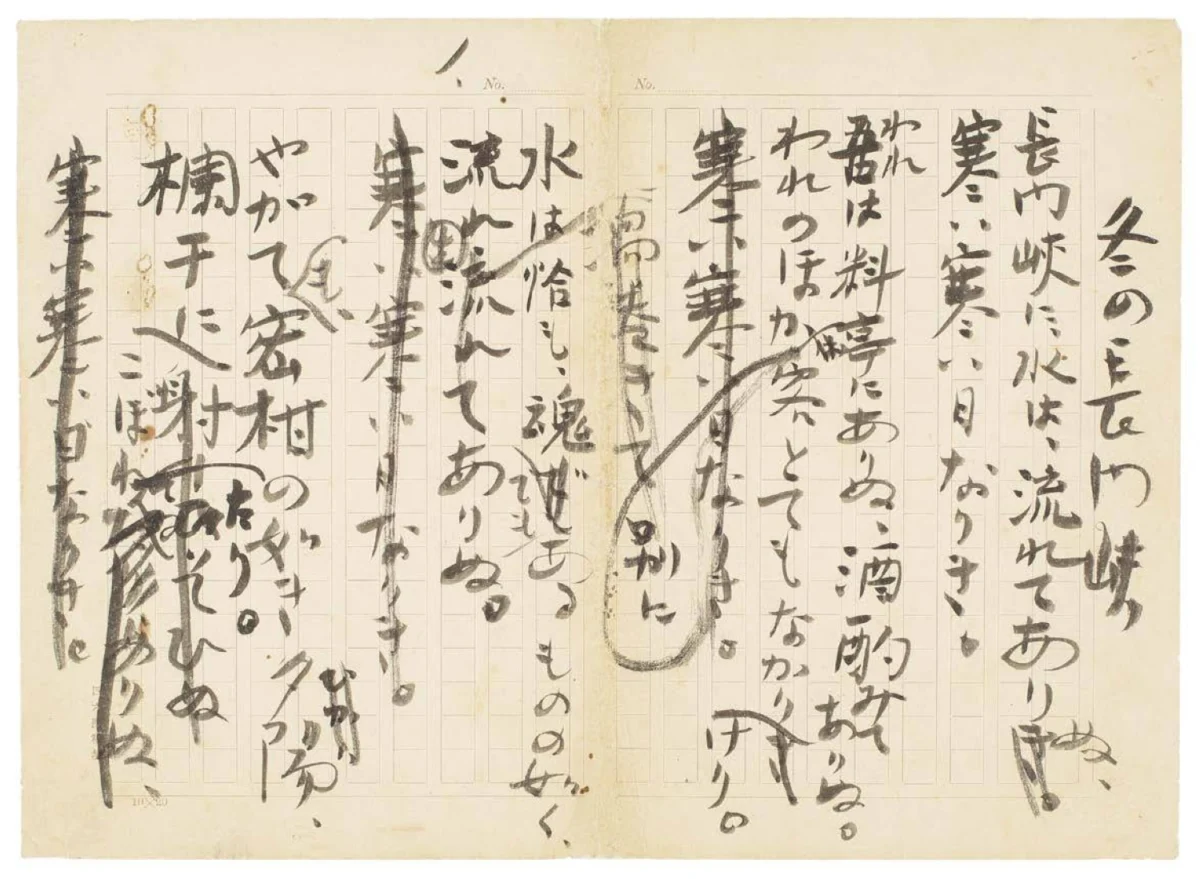
In the annals of Japanese literature, few figures are as poignant or as paradoxically influential as Chuya Nakahara. A man who lived, breathed, and died in the shadows of obscurity, Nakahara’s trajectory from a self-published poet struggling to sell a mere 50 copies of his first collection to a titan of the Japanese literary canon is a story of enduring brilliance. Today, he is a cultural touchstone in Japan—a poet so iconic that, much like the haiku master Basho or the ukiyo-e giant Hokusai, he is referred to simply by his given name: Chuya.
Eighty-seven years after his untimely death at the age of 30, the barrier of language is finally being dismantled. This year marks a historic milestone for global literature: for the first time, the complete body of Chuya’s work is becoming accessible to English-speaking audiences. Through the release of The Poetry of Chuya Nakahara, translated by Christian Nagle and published by Tuttle, and the impending Penguin Classics volume Angel at the Earth’s Extreme: Collected Poems, translated by Jeffrey Angles, the world is finally invited to engage with a voice that shaped the sensibilities of generations of Japanese writers.
A Brief Chronology: The Life of a Modernist Maverick
To understand the weight of these new translations, one must first understand the brevity and intensity of Chuya’s life. Born in 1907 in Yamaguchi Prefecture, Chuya was a product of the Taisho and early Showa eras—a time of frantic modernization, rapid Westernization, and profound societal anxiety in Japan.
- 1907: Chuya Nakahara is born. His early exposure to both classical Japanese literature and the burgeoning avant-garde movements of the West would define his unique aesthetic.
- 1920s: As a young man in Tokyo, Chuya became deeply embroiled in the Dadaist movement. His work began to reflect the fragmented, nervous energy of urban life, earning him the nickname "The Japanese Rimbaud."
- 1934: The publication of his first collection, The Goat (Yagi no Uta), was a self-financed endeavor. It was a commercial failure, selling only 50 copies.
- 1937: Chuya dies of tuberculous meningitis at age 30. He did not live to see the publication of his second collection, Songs of Past Days (Arishi Hi no Uta), nor would he ever witness the posthumous acclaim that would transform him into a household name.
- Post-War to Present: Chuya’s work began to permeate the Japanese school curriculum. For decades, students have encountered his poems in textbooks, with many contemporary Japanese poets citing these early classroom readings as the moment they first understood the limitless possibilities of language.
Supporting Data: Translating the Untranslatable
The challenge of translating Chuya is not merely linguistic; it is ontological. His craft is deeply rooted in what many scholars consider "untranslatable"—a synthesis of the melancholic, the musical, and the avant-garde.
Christian Nagle’s The Poetry of Chuya Nakahara (Tuttle, 384 pages) is a monumental effort to bridge this gap. Supported by the Nakahara Chuya Memorial Museum, the collection features 102 poems, presented in a bilingual format. This structural choice is intentional; by placing the English translation alongside the original Japanese text, Nagle invites the reader to experience the visual and rhythmic cadence of the poet’s language.
The book is further enriched by a foreword from Mikiro Sasaki, a leading authority on Chuya, and a visual archive provided by the Nakahara Chuya Memorial Museum. These images—ranging from intimate childhood portraits to the poet’s own calligraphy practice sheets—offer a rare, humanizing glimpse into the man behind the myth.
Official Responses and Scholarly Perspectives
The significance of these translations cannot be overstated. By moving beyond the reductive comparisons to Western geniuses like Rimbaud or the Dadaists, modern scholars are finally allowing Chuya to stand on his own merit.
"Chuya cannot be simplified by comparisons with Western icons," notes the editorial team at Tuttle. "To do so is to ignore his profound engagement with his native tradition, denying him at least half of his brilliance."
Christian Nagle, in his introduction, acknowledges the "impossible" nature of his task. He writes with a humility that respects the poet’s autonomy, refusing to force Chuya into a rigid Western framework. Instead, Nagle employs creative liberties, such as importing Japanese poetic techniques—including the use of rhythmic blank spaces to replace traditional punctuation—to mirror the poet’s unique cadence.
This approach is best illustrated in poems like "Autumn" (1929), where the stillness of the scene is captured with a minimalist precision that rivals the greatest haiku:
The grass didn’t move at all.
A butterfly flew above.
Dressed in a yukata, he stood watching it from the porch.
The Implications: Why Chuya Matters Now
The resurgence of interest in Chuya is not merely a matter of literary archaeology; it is a vital intervention in how we consume world literature. There is a tendency to ossify poets of the past, turning their work into dusty artifacts to be examined under glass. Nagle’s translation actively resists this. By focusing on the feel of the language rather than a sterile, literal transcription, he keeps the work alive and vibrating.
The Power of the Classroom
The fact that Chuya is a staple in Japanese schools is a testament to the accessibility of his work. His poetry captures the universal experience of longing, the fragility of youth, and the tension between tradition and modernity. When a student reads Chuya, they aren’t just reading a historical document; they are encountering a voice that feels immediate and raw. By bringing this to an English-speaking audience, these new volumes offer a global readership the same opportunity for awakening.
Beyond the Western Framework
The "Japanese Rimbaud" label, while helpful for marketing, is ultimately a cage. Chuya was a poet who operated in a space between worlds. His engagement with French symbolism was not an abandonment of Japanese aesthetics but an expansion of them. The upcoming Penguin Classics volume, translated by Jeffrey Angles, is expected to further solidify this understanding, providing a scholarly but accessible context that emphasizes Chuya’s role as an innovator who bridged the gap between the Edo-period sensibility and the fractured reality of the 20th century.
Conclusion: A Poet for All Seasons
The tragedy of Chuya Nakahara’s life—his poverty, his illness, and his early death—is often where the conversation ends. But these new publications shift the focus from the tragic circumstances of his life to the triumph of his art.
In an age where global communication is instantaneous, it is remarkable that a voice as powerful as Chuya’s has remained largely muted in the English-speaking world for so long. Through the diligent work of translators like Nagle and Angles, and the institutional support of the Nakahara Chuya Memorial Museum, that silence is ending.
Chuya Nakahara was a man who wrote for the future, even when he could barely afford the paper to write upon. Today, that future has arrived. Whether through the minimalist imagery of his nature poems or the chaotic, beautiful energy of his modernist experiments, Chuya remains a poet who asks us to look closer, to listen harder, and to appreciate the profound, lingering beauty in the transient nature of existence. As these books reach bookshelves worldwide, one thing is certain: the world is finally ready to hear what Chuya has to say.


 Neng Nana
 Asro
Asro