Reynand Wu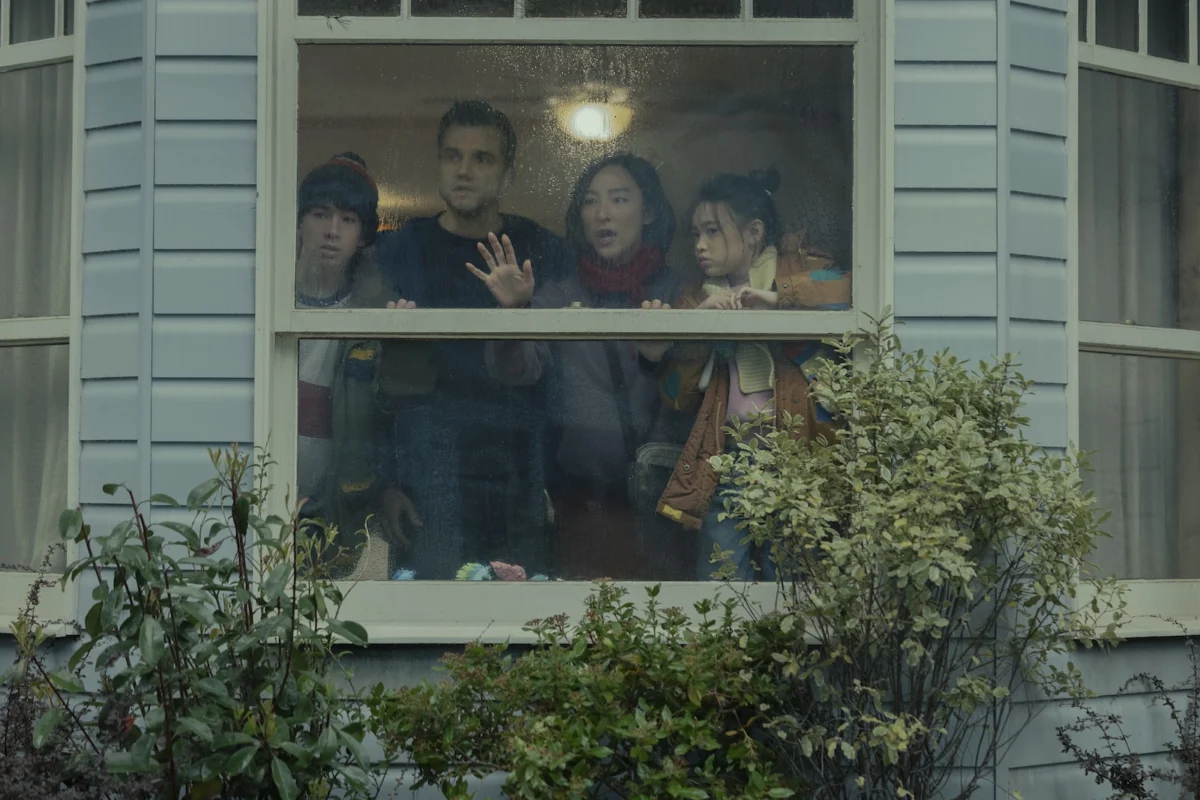
In the landscape of modern horror, the concept of the "safe haven" has long been a foundational trope. Whether it is a cabin in the woods or a suburban fortress, the home is intended to be the ultimate bastion against the unknown. However, Netflix’s upcoming feature The Last House, scheduled for a global premiere on August 7, 2026, threatens to dismantle that perception entirely. Featuring a high-profile cast led by Wagner Moura and Greta Lee, the film has already begun to generate significant discourse—not only for its A-list talent and pedigree of production but for its jarring, genre-defying evolution that has left early viewers questioning exactly what kind of story they are watching.
Main Facts: A Production of Scale and Secrecy
The Last House is the latest high-stakes project from Netflix, aiming to capture the mid-to-late summer box office equivalent of streaming dominance. The narrative follows an ordinary family who find themselves trapped within their own home by an unidentified, possibly supernatural, force.
The film is helmed by director Louis Leterrier, whose eclectic resume—ranging from the high-octane spectacle of Fast X to the intricate, character-driven fantasy of The Dark Crystal: Age of Resistance—suggests a director capable of managing both grand-scale tension and intimate, claustrophobic drama. The screenplay is penned by Matthew Robinson, known for his work on the critically acclaimed Love and Monsters, a film that similarly balanced creature-feature horror with genuine human pathos.
The cast is anchored by the powerhouse duo of Wagner Moura and Greta Lee, portraying the central husband and wife struggling to maintain sanity and safety in an increasingly impossible situation. The supporting ensemble features a blend of rising stars and established talent, including Riley Chung, Emma Ho, Noah Alexander Sosnowski, and Gabriel Barbosa. With a release date set for August 7, 2026, the film is positioned as a late-summer blockbuster intended to keep subscribers glued to their screens during the height of the vacation season.
A Chronology of Confusion: From Pandemic Parable to Cosmic Horror
The marketing campaign for The Last House has been a masterclass in tonal subversion. When the first official trailer dropped, the imagery was immediately evocative of the global lockdowns experienced during the COVID-19 pandemic. The sight of a family cordoned off within their residence, staring out at a world that has suddenly become inaccessible, strikes a deep, primal chord in the collective consciousness of a post-2020 audience.
In the opening minutes of the teaser, Wagner Moura’s character delivers a line that serves as the film’s emotional anchor: "This will end." It is a sentiment of hollow optimism that feels plucked from the darkest days of the global crisis. However, the trailer then makes a disorienting temporal jump—cutting to a title card that reads "1,000 days later."
This shift transforms the film from a grounded, sociological look at isolation into something far more volatile. As the "doors open," the narrative pivots away from the psychological toll of house arrest toward the intrusion of a "malicious-seeming force." This transition has baffled audiences and critics alike, shifting the film from a character study into a visceral, genre-bending nightmare. The film’s marketing team has clearly leaned into this ambiguity, refusing to provide a clear synopsis of the antagonist or the specific nature of the threat, ensuring that the audience enters the experience with more questions than answers.
Supporting Data: The Genre-Defying Pedigree
The success of The Last House rests heavily on the credibility of its creative team. Louis Leterrier’s involvement is particularly notable. In an era where horror is often categorized into distinct "elevated" or "slasher" silos, Leterrier’s background suggests a hybrid approach. His work on Lupin demonstrated his capacity for complex, long-form narrative structure, while The Dark Crystal: Age of Resistance proved his ability to build immersive, terrifying worlds that operate under their own internal, often alien, logic.
Matthew Robinson’s scriptwriting history is equally relevant. Love and Monsters was praised for its ability to balance the terrifying prospect of an apocalypse with humor and profound human connection. If The Last House follows a similar trajectory, the audience can expect the horror to stem not just from the external "force," but from the internal disintegration of the family unit under extreme, prolonged duress.
The casting of Greta Lee is another critical indicator of the film’s intent. Coming off critically lauded performances, Lee brings a gravitas that elevates the material from standard B-movie horror to a more prestigious, character-heavy production. The inclusion of actors like Riley Chung and Gabriel Barbosa—both of whom have shown versatility in projects like The Hunger Games: The Ballad of Songbirds & Snakes and May December, respectively—suggests that the film will rely on a robust ensemble dynamic to drive the narrative tension.
Official Responses: Challenging the Safe Haven
In an exclusive interview with Tudum, director Louis Leterrier spoke candidly about the thematic core of the film. He noted that the project is designed to "challenge the idea of a safe haven," arguing that the home, usually our most protected space, can quickly become a "hostile environment" when the barrier between the known world and the unknown collapses.
"This is an ordinary family’s worst nightmare," Leterrier stated. "It pushes them to their limits to protect each other, while simultaneously exposing the fragility of security and the desperate, often violent, fight to reclaim it."
Wagner Moura echoed these sentiments, emphasizing the unpredictable nature of the screenplay. "The storyline will evolve in ways that the audience certainly will not expect," Moura told Tudum. "There are layers and twists that I can’t wait for everyone to see." This promise of narrative evolution suggests that the "1,000 days" jump is merely the first of many structural shifts intended to keep the viewer off-balance. The film appears to be less about a single monster or event, and more about the psychological erosion of a family unit that is forced to redefine what "home" means in a world that has fundamentally changed.
Implications: The Future of High-Concept Horror
The implications of The Last House are significant for the streaming horror market. For years, Netflix has sought to define its own brand of horror—one that balances mass appeal with high-concept, often challenging narratives. The Last House appears to be the next step in this strategy. By grounding the film in the familiar, traumatic imagery of the pandemic, it immediately engages the audience’s existing anxieties before pulling the rug out from under them with supernatural or sci-fi elements.
If the film succeeds, it will prove that the "pandemic-inspired" genre still has legs, provided it can successfully pivot into more fantastical territory. However, if the film fails to reconcile its initial grounded tone with its eventual supernatural shift, it risks alienating audiences who may feel "bait-and-switched."
Furthermore, the release timing is a strategic move. By releasing in August, Netflix is betting that the end-of-summer malaise—when audiences are looking for high-engagement, conversation-starting content—will work in their favor. It is a calculated risk that reflects the platform’s confidence in the film’s quality and its ability to dominate social media discourse in the days following its debut.
Conclusion: A Test of Endurance
As the countdown to August 7, 2026, begins, the mystery surrounding The Last House only deepens. Whether it is a meditation on human resilience, a commentary on the isolation of the modern era, or simply a terrifying exploration of the unknown, the film represents a bold swing for its creative team.
The shift from the claustrophobia of a locked-down household to the terror of a predatory, unknown force is a narrative tightrope walk. Yet, with a director who thrives on world-building, a screenwriter who understands the heart of survival, and a cast capable of anchoring the most surreal of circumstances, The Last House is poised to be more than just a horror movie. It is shaping up to be an examination of the human condition under the most extreme, and most intimate, of pressures. For those watching from the safety of their own homes, the film promises a harrowing reminder: sometimes, the walls we build to keep the world out are the same walls that keep us trapped with our deepest fears.

 Neng Nana
 Layla Zulfa