Reynand Wu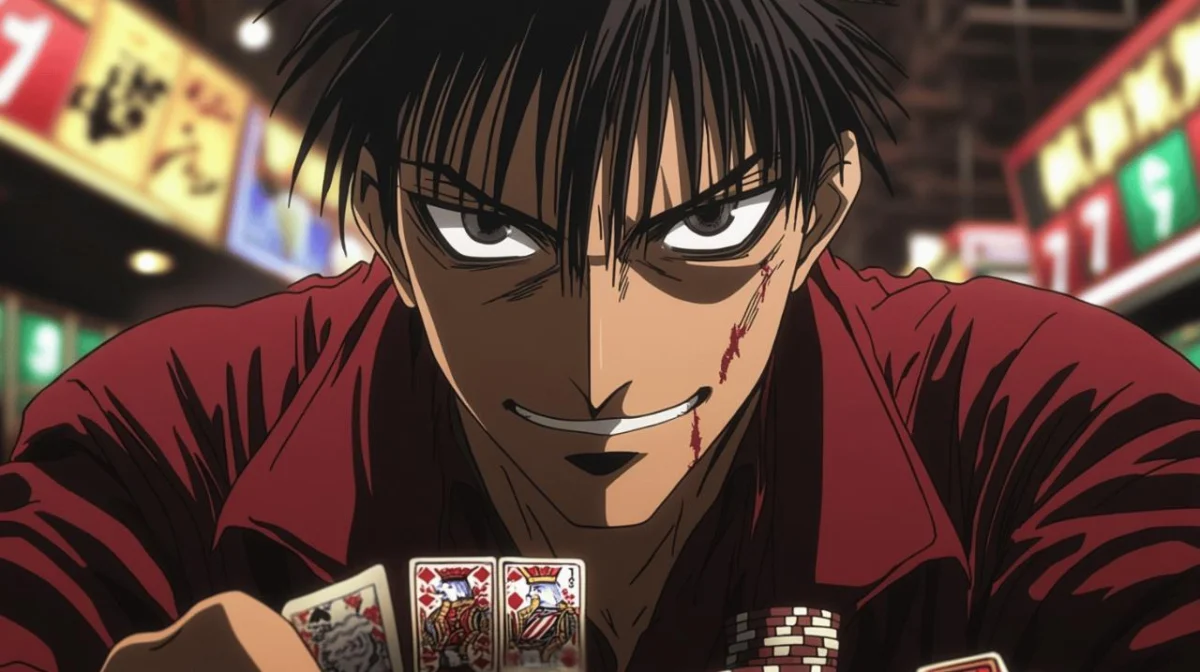
In the landscape of modern manga and anime, few works possess the visceral, claustrophobic intensity of Kaiji: Ultimate Survivor. Created by the visionary mangaka Nobuyuki Fukumoto and serialized in Weekly Young Magazine since 1996, Kaiji is not merely a story about gambling; it is a harrowing sociological autopsy of the Japanese "lost generation." Through the eyes of its protagonist, Kaiji Itou, readers are plunged into a neon-lit, underground world where human life is measured in yen, and the only currency more valuable than money is the sheer, desperate willpower to survive.
The Architecture of Despair: Main Facts and Premise
At its core, Kaiji is a seinen thriller that subverts the tropes of the "gambling" genre. Unlike stories that glamorize high-stakes poker or elegant casinos, Kaiji strips the concept of betting down to its rawest, most grotesque form.
The narrative follows Kaiji Itou, a young, aimless laborer living in a Japan stifled by economic stagnation. His life is upended when he is betrayed by a former coworker, inheriting a crushing debt of 3,850,000 yen (approximately $28,705 USD). This debt, which would be manageable in a stable economy, becomes a death sentence in the predatory underworld of the Teiai Corporation. To clear his balance, Kaiji is lured onto the Espoir, a cruise ship hosting a night of illicit, high-stakes games.
What follows is a descent into a labyrinth of psychological warfare. The series is defined by its "Death Games"—contests like Restricted Rock-Paper-Scissors, the Human Derby, and the infamous "E-Card" game. These are not games of luck; they are games of pure psychology, betrayal, and logical deduction. The stakes are rarely just money—they are fingers, eyes, years of forced labor, and ultimately, life itself.
A Chronology of a Cultural Titan
The journey of Kaiji from a serialized manga to a global pop-culture pillar spans nearly three decades. Its trajectory is marked by consistent quality and a growing realization of its prescient themes.
- 1996: Kaiji: Ultimate Survivor begins serialization in Weekly Young Magazine. It quickly garners a cult following for its unconventional art style and intense narrative tension.
- 1998: The manga is honored with the prestigious Kodansha Manga Award in the "General" category, cementing its status as a masterpiece of contemporary seinen literature.
- 2007–2008: The first season of the anime adaptation, directed by Yuzo Sato and produced by Madhouse, introduces a new generation to the visceral agony of Kaiji’s plight.
- 2011: The second season, Kaiji: Against All Rules, expands the narrative scope, focusing on the grueling "Underground Labor Camp" arc and the legendary Bog (SWAMP) pachinko machine.
- 2009–2020: The franchise transitions to live-action cinema with a trilogy of films (Kaiji: The Ultimate Gambler, Kaiji 2, and Kaiji: Final Game), proving the story’s adaptability across media formats.
- 2019 Milestone: By the end of 2019, the Kaiji manga series had surpassed 21.5 million copies in circulation, a testament to its enduring relevance and widespread appeal.
Supporting Data: The Economics of Misery
To understand the success of Kaiji, one must look at the data—both within the narrative and in the real-world market. The series operates on a "Debt-to-Death" ratio that reflects the anxiety of Japan’s economic bubble burst.
- The Debt Metric: The initial debt of 3.85 million yen is a deliberate choice by Fukumoto. It is a "realistic" amount—large enough to destroy a life, but small enough that an ordinary person feels it could happen to them. This relatability is the engine of the reader’s anxiety.
- The Pachinko "SWAMP": The Bog arc serves as a microcosm of the series’ complexity. A pachinko machine rigged by the Teiai Corporation to have a winning probability of nearly zero, it requires 4,000 yen per ball. The potential jackpot of 700 million yen represents the "American Dream" turned into a literal nightmare.
- Sales Performance: The 21.5 million copies sold demonstrate that Kaiji is not a niche product. Its resonance stems from the fact that it addresses a universal human fear: the loss of agency in the face of an indifferent, systemic financial apparatus.
Implications: The Mirror Held Up to Society
The thematic weight of Kaiji extends far beyond its entertainment value. It serves as a scathing critique of the predatory lending industry and the fragility of the social contract.
The Anatomy of Predatory Systems
Fukumoto portrays the antagonists—represented primarily by the Teiai Corporation and its chairman, Hyodo—not as cartoon villains, but as manifestations of a system that thrives on the desperation of the working class. The Yakuzas and the corporate elite in Kaiji understand that when a person is desperate, they will abandon their morality. The series forces the viewer to ask: If you were in Kaiji’s position, what would you be willing to sacrifice?
The "Squid Game" Connection
The global success of the South Korean series Squid Game has often been compared to Kaiji. The parallels are undeniable: the debt-ridden protagonists, the high-stakes games where failure equals death, the presence of an enigmatic, wealthy organization pulling the strings, and the exploration of the "game" as a metaphor for capitalism. Kaiji laid the groundwork for this genre, proving that the "survival game" narrative is a potent vessel for exploring human nature under extreme pressure.
Artistic Expression: The Aesthetics of Anguish
One cannot discuss Kaiji without addressing its polarizing, yet undeniably effective, art style. Fukumoto’s character designs—defined by sharp, angular features, jagged shadows, and facial expressions that push the limits of human anatomy—are instrumental to the series’ tone.
The "deformed" faces of the characters during moments of panic or realization serve as a visual shorthand for psychological breaking points. When a character in Kaiji realizes they have been cheated, their face doesn’t just look sad; it looks hollowed out by existential dread. This artistic choice elevates the medium, turning the static page into an instrument of emotional terror. It is not "pretty" art, but it is "honest" art, perfectly capturing the visceral, sweaty, and frantic energy of a high-stakes gamble.
Official Reception and Legacy
Critical reception of Kaiji has been consistently high, with many critics citing it as the definitive "psychological gambling" manga. While the anime adaptation by Madhouse is praised for its haunting soundtrack (composed by Takeru Kano) and its voice acting—particularly the frantic, desperate delivery of the protagonist—it is the writing that keeps audiences returning.
The series has left an indelible mark on the Japanese psyche and the international anime community. It remains a cautionary tale about the allure of "easy money" and the cold reality of a society that prioritizes profit over human dignity.
Conclusion: Why We Still Watch the Gamble
Kaiji: Ultimate Survivor is more than a series about gambling; it is a profound examination of the human condition. Through the lens of its protagonist’s endless struggles, Nobuyuki Fukumoto has created a work that challenges us to consider the value of our own lives.
Whether it is through the complex, methodical rules of the E-Card game or the agonizing wait for a single pachinko ball to fall, Kaiji captures the essence of the "all-in" mentality. In a world increasingly defined by economic uncertainty and the pressure to succeed at any cost, the story of Kaiji Itou remains as relevant today as it was in 1996. It serves as a stark reminder that while the house may always win, the true measure of a person is found in the courage to play the hand they are dealt, even when the cards are marked, the table is tilted, and the stakes are life itself.


 Siti Muinah
 Azzam Bilal Chamdy