Nana Wu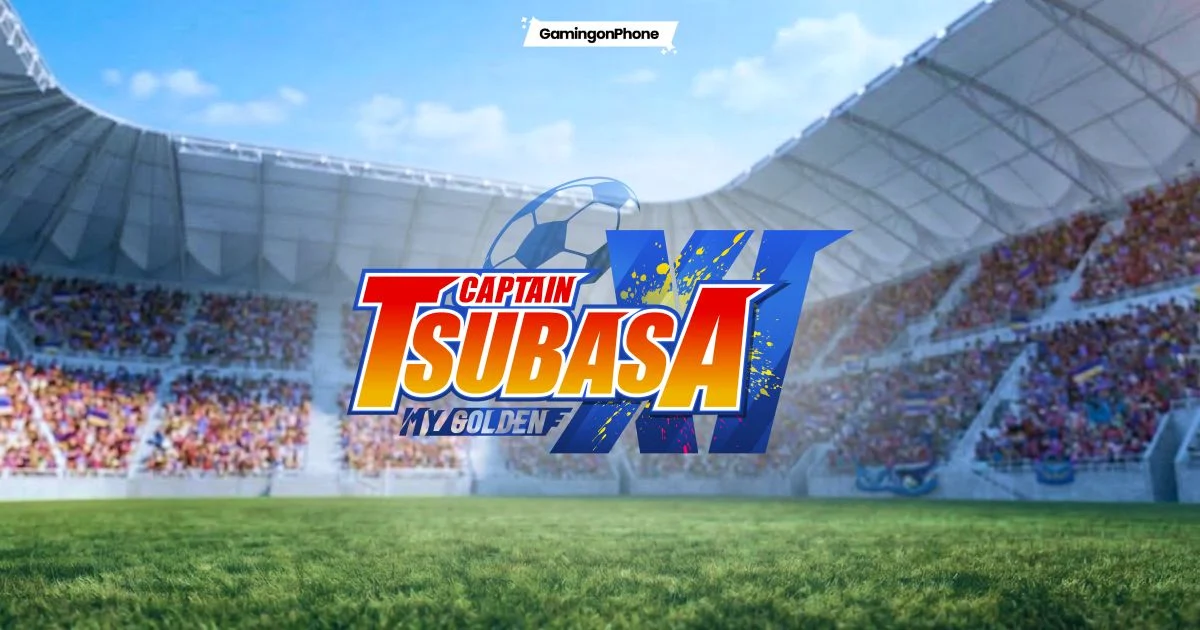
Tokyo, Japan – In the ever-evolving landscape of mobile gaming, where quick gratification often takes precedence, Captain Tsubasa: My Golden XI emerges with a refreshing, albeit complex, approach to player progression. Unlike many contemporaries that rely on straightforward experience point accumulation or skill tree unlocks, this new title, based on the iconic football manga and anime, introduces a sophisticated, board game-inspired training system. This innovative mechanic challenges players to engage in strategic decision-making, transforming what could be a mundane grind into an engaging tactical mini-game crucial for forging an elite squad.
The core of Captain Tsubasa: My Golden XI‘s player development lies not in simple numerical increments, but in a dynamic interplay of dice rolls, card combinations, and board navigation. At first glance, the system can appear daunting, a labyrinth of choices that directly impact a player’s statistical growth and overall power score. However, beneath this initial complexity lies a rewarding system that offers unparalleled depth for those willing to master its intricacies. This article delves into the mechanics of this unique training regimen, offering a comprehensive guide to understanding and optimizing player development in Captain Tsubasa: My Golden XI.
The Unconventional Training Arena: A Board Game on the Pitch
At its heart, the training system in Captain Tsubasa: My Golden XI is a cleverly designed mini-board game. Players are presented with a board populated by various tiles, and their movement across this board is governed by dice rolls. The ultimate objective is to accumulate the most potent card combinations before landing on specific "Training Tiles," which then convert these combinations into significant stat gains for the chosen player. This departure from conventional RPG-style progression is a bold move by the developers, aiming to inject strategic thinking into every facet of player growth.
The typical training session begins with a selected player ready to undergo development. Instead of simply allocating resources or tapping a "train" button, players are immersed in a turn-based sequence that requires foresight and adaptability. This gamified approach not only makes the training process more interactive but also ensures that each session offers a unique challenge and opportunity for strategic optimization. For newcomers, the initial stages might feel like navigating uncharted territory, demanding an understanding of dice mechanics, card swapping, and the critical role of multipliers. However, grasping these foundational elements is the first step towards consistently building formidable players capable of dominating the virtual pitch.
Navigating the Training Board: A Step-by-Step Chronology of Player Development
To truly master player training in Captain Tsubasa: My Golden XI, it’s essential to understand the chronological flow of a typical training session and the decisions that unfold within it.
Initiation and the Dice Roll
Each training session begins with the selection of a player and a subsequent dice roll. Initially, players are granted a default six-sided die, offering a random outcome from 1 to 6. This element of chance introduces an immediate layer of unpredictability, forcing players to adapt their strategies on the fly. As players progress and achieve certain milestones within their training runs, they may acquire special dice. These include "fixed dice," which allow players to choose their desired movement value, and "double dice," offering enhanced movement or specific bonus effects. The judicious use of these special dice becomes a critical strategic asset, enabling players to target high-value tiles or secure crucial card combinations.
Movement and Tile Interactions
Following the dice roll, the player’s avatar moves across the training board according to the number rolled. The board itself is a mosaic of different tile types, each designed to influence the training session in distinct ways. Understanding the function of each tile and planning routes accordingly is paramount. Missing a critical tile or landing on an suboptimal one due to a poor dice roll can significantly impact the efficiency of a training run. This necessitates not just reactive play but also a degree of proactive route planning, especially when special dice are available.
Card Management Phase
At the heart of the stat gain system are the "Training Menu Cards." Players consistently hold a hand of five such cards. The combination of these five cards dictates the "bonus role" that will be activated, which in turn determines the multiplier applied to stat gains. This phase is where the strategic depth truly shines. Players must constantly evaluate their current hand, anticipate potential combinations, and decide whether to hold onto existing cards or seek replacements. The goal is always to build the strongest possible five-card combo before the inevitable landing on a Training Tile.

The Training Tile Payoff
The ultimate destination for any well-executed training sequence is a "Training Tile." When a player lands on one of these crucial tiles, their current five-card combination is evaluated. The strength of this combination directly translates into a "stat multiplier," which is then applied to the base stat gains. The higher the multiplier achieved through a superior card combo, the greater the boost to the player’s attributes. This moment is the culmination of strategic dice rolls, intelligent board navigation, and astute card management.
Cycle and Progression
A training run typically consists of multiple turns, with players continually rolling dice, moving, interacting with tiles, and refining their card hands. Each successful landing on a Training Tile contributes to the player’s overall development. At the end of a fixed number of turns or when a specific condition is met, the training session concludes. The player’s cards are refreshed, and the tile placements on the board are updated, ensuring that every subsequent training run starts fresh, offering new challenges and opportunities for optimization. This cyclical nature ensures high replayability and encourages players to continuously refine their strategies.
Deciphering the Mechanics: Supporting Data and Strategic Depth
To truly excel in Captain Tsubasa: My Golden XI, players must move beyond simply understanding the sequence of events and delve into the granular mechanics that drive the training system.
The Core: Training Menu Cards and Combinations
The five Training Menu Cards held in hand are the primary drivers of stat multipliers. While the specific types of cards are not explicitly detailed in the original guide, it’s inferred that cards possess different properties or "suits" that, when combined, form various "bonus roles" similar to poker hands (e.g., pairs, three-of-a-kind, straights, flushes, full houses). Each of these bonus roles would then correspond to a different multiplier, affecting specific stats or offering an overall boost.
For instance, a combination yielding a "Speed Burst" bonus role might provide a substantial multiplier to the Speed stat, while a "Power Drive" combo boosts Power. A more complex combination, akin to a "Royal Flush," could offer a massive, all-encompassing multiplier to multiple stats. The strategic challenge lies in identifying which combinations are achievable with the current hand and board state, and whether to pursue a strong but easily attainable combo or risk holding out for a rarer, higher-value one. This requires an understanding of probability and a keen eye for potential card swaps.
Mastering the Tiles: More Than Just Landing Spots
The various tiles on the training board serve distinct strategic purposes:
- Training Tiles: These are the ultimate goal. Landing on them is the trigger for converting your card combination into stat gains. The key is not just to land on them, but to do so with the most powerful possible hand. Strategic players will often use special dice to ensure they land on a Training Tile after optimizing their card hand.
- Select Tiles: These tiles offer a crucial opportunity to influence your card hand directly. Upon landing on a Select Tile, players are presented with multiple new Training Cards and can choose one to add to their hand, often replacing an existing one or simply improving their options. These tiles are vital for steering a run towards a specific, high-value combo.
- Swap Tiles: Perhaps the most strategically impactful tiles, Swap Tiles allow players to replace one of their five current cards with a new candidate card. This is where nuanced decision-making comes into play. A smart swap can transform a mediocre hand into a powerhouse combination, even if it means temporarily sacrificing a decent combo to build towards a much larger multiplier later in the run. Players must weigh the immediate benefit against the potential for future gains, a classic risk-reward scenario.
The Arsenal of Dice: Precision and Control
While the default random dice rolls introduce an element of chance, the acquisition and judicious use of special dice provide players with a crucial degree of control:
- Fixed Dice: These allow players to choose the exact number of spaces they move. This precision is invaluable for landing on specific Select or Swap Tiles to refine a card hand, or to ensure a perfectly timed arrival on a Training Tile with a completed combo.
- Double Dice: These likely offer an enhanced range of movement or perhaps even the ability to re-roll if the initial outcome is unfavorable. Their use allows for greater flexibility in navigating the board and adapting to unforeseen circumstances.
Mastering the use of these special dice—knowing when to save them for a critical moment and when to deploy them for immediate advantage—is a hallmark of an advanced player.

The Six Pillars of Player Development
Training in Captain Tsubasa: My Golden XI enhances six major player statistics, each vital for performance on the pitch:
- Stamina: Dictates how long a player can maintain peak performance without tiring. Essential for midfielders and defenders covering large areas.
- Speed: Affects a player’s acceleration and top running velocity. Crucial for wingers, strikers, and quick defenders.
- Body: Represents physical strength and resilience, influencing duels, tackles, and resistance to being pushed off the ball. Important for defenders and powerful strikers.
- Technique: Governs ball control, passing accuracy, dribbling prowess, and shooting precision. A key stat for playmakers and goal scorers.
- Vision: Influences a player’s awareness of teammates and opponents, leading to better passing decisions and opportunistic plays. Vital for midfielders and creative forwards.
- Power: Determines the force behind shots and passes, as well as the effectiveness of tackles and headers. Essential for strikers and powerful defenders.
Different card combinations or bonus roles might be geared towards boosting specific stats, allowing players to tailor their training to the desired role of each character within their squad. For instance, a player intended to be a speedy winger would prioritize combos that heavily boost Speed and Technique, while a defensive midfielder might focus on Stamina and Body.
Design Philosophy and Player Engagement: Interpreting Developer Intent
While no explicit "official responses" from the developers are provided in the source material, the design of Captain Tsubasa: My Golden XI‘s training system clearly communicates a specific philosophy. This complex, gamified approach is likely intended to:
- Foster Deeper Engagement: By turning training into an interactive mini-game, the developers ensure that player progression is not a passive activity but an active, decision-driven process. This keeps players more invested and attentive to each session.
- Introduce Strategic Depth: The system moves beyond simple numerical progression, demanding tactical thinking, resource management (dice), and probability assessment (card combinations). This caters to players who enjoy a layer of intellectual challenge in their mobile games.
- Prevent Monotony and Increase Replayability: The dynamic board layout, random dice rolls, and evolving card hands ensure that no two training sessions are identical. This inherent variability combats the repetitive nature often found in mobile game grinding, encouraging players to return for "just one more run."
- Differentiate the Game: In a crowded market of sports-themed mobile games, My Golden XI‘s unique training system helps it stand out, offering a distinctive gameplay experience that sets it apart from more conventional titles.
- Reward Mastery: The system is designed such that initial confusion gives way to profound satisfaction as players gradually understand and master its nuances. Consistently achieving high multipliers and developing perfectly tailored players becomes a rewarding meta-game in itself.
The inclusion of an "auto mode" for beginners also suggests an awareness of the initial learning curve, offering a bridge for new players to observe and gradually understand the mechanics before diving into manual strategic play. This balance between accessibility and depth is crucial for a successful mobile title.
Implications for Team Building and Competitive Play
The intricate training system in Captain Tsubasa: My Golden XI carries significant implications for overall team building, player specialization, and competitive performance.
Player Specialization and Role Definition
The granular control offered by the training mini-game allows for highly specialized player development. Instead of generic stat increases, players can actively shape their characters to fit specific roles within their tactical setup. A striker can be trained for maximum Power and Technique, a defensive midfielder for Stamina and Body, and a winger for blistering Speed and Vision. This level of customization fosters a deeper connection between the player and their squad, as each character’s development reflects intentional strategic choices.
Enhancing Team Synergy
A well-trained squad is not just a collection of individually strong players, but a cohesive unit where each member’s strengths complement the others. The training system supports this by enabling players to address team weaknesses or amplify existing strengths. If a team lacks a fast attacker, dedicated training runs can focus on boosting a promising forward’s Speed. If the midfield struggles with ball retention, a playmaker can be developed with high Technique and Vision. This strategic approach to individual training directly contributes to overall team synergy and tactical flexibility.
The Competitive Edge
In competitive environments, whether against other players in PvP or challenging AI opponents in high-difficulty PvE content, optimized player training translates directly into a significant advantage. Higher power scores and finely tuned attributes mean players will perform better in matches, execute skills more effectively, and withstand opposition challenges. Mastering the training system is not just about making numbers go up; it’s about gaining a tangible edge that can be the difference between victory and defeat. The pursuit of the "perfect" training run becomes an ongoing endeavor for competitive players seeking to maximize their squad’s potential.

Replayability and Long-Term Engagement
The ever-changing nature of the training board, combined with the strategic choices involved, ensures high replayability. Players will continuously strive to achieve better runs, discover optimal card combinations, and refine their dice usage. This ongoing pursuit of perfection, coupled with the satisfaction of seeing tangible improvements in their players, contributes significantly to Captain Tsubasa: My Golden XI‘s long-term engagement. It provides a constant, rewarding meta-game that keeps players invested beyond the core football matches.
Advanced Strategies and Mastering the Board
For players looking to move beyond the basics and truly master the training system, several advanced strategies can significantly enhance results:
- Anticipation and Pathing: Always look ahead. Before rolling the dice, identify key Select or Swap Tiles that could complete a powerful combo. Plan your route not just for the immediate turn but for the next two or three, especially when using special dice.
- Combo Prioritization and Flexibility: Understand the hierarchy of card combinations and their corresponding multipliers. Be flexible enough to pivot if a desired high-value combo proves unattainable. Sometimes, settling for a strong intermediate combo is better than failing to complete an ambitious one.
- Resource Management (Special Dice): Treat special dice as precious resources. Avoid using fixed dice for trivial movements. Save them for critical moments when you absolutely need to land on a specific tile to secure a game-changing card swap or activate a powerful Training Tile.
- Adapting to Randomness: Even with strategic planning, randomness is inherent. Learn to adapt to unfavorable dice rolls or card draws. A bad roll doesn’t mean a ruined run; it means a different strategic puzzle to solve. Look for alternative paths or unexpected combo opportunities.
- Character-Specific Training Focus: While the game might not explicitly state it, certain characters might inherently benefit more from specific stats due to their base attributes or unique skills. Tailor training to amplify these inherent strengths rather than trying to make every player an all-rounder.
By integrating these advanced tactics, players can transform their training sessions from mere progression steps into intricate strategic puzzles, yielding consistently superior results and fostering a deeper understanding of the game’s mechanics.
Conclusion
Captain Tsubasa: My Golden XI distinguishes itself in the mobile gaming arena with its innovative and deeply strategic player training system. By fusing elements of board games and card management, it elevates player progression beyond simple numerical increases, demanding active engagement, tactical foresight, and adaptive decision-making. While initially complex, mastering this system is not just a recommendation but a necessity for players aiming to build a truly formidable team and compete at the highest levels.
This unique approach ensures that every training session is a fresh challenge, a mini-game in itself that contributes meaningfully to the overall football experience. For fans of Captain Tsubasa and mobile gaming enthusiasts seeking a title that offers both engaging gameplay and strategic depth, My Golden XI‘s training system stands as a testament to creative game design, offering endless opportunities for optimization and the satisfying reward of forging a Golden XI truly worthy of the name.


 Lina Irawan
 Sagoh
Sagoh