Ammar Sabilarrohman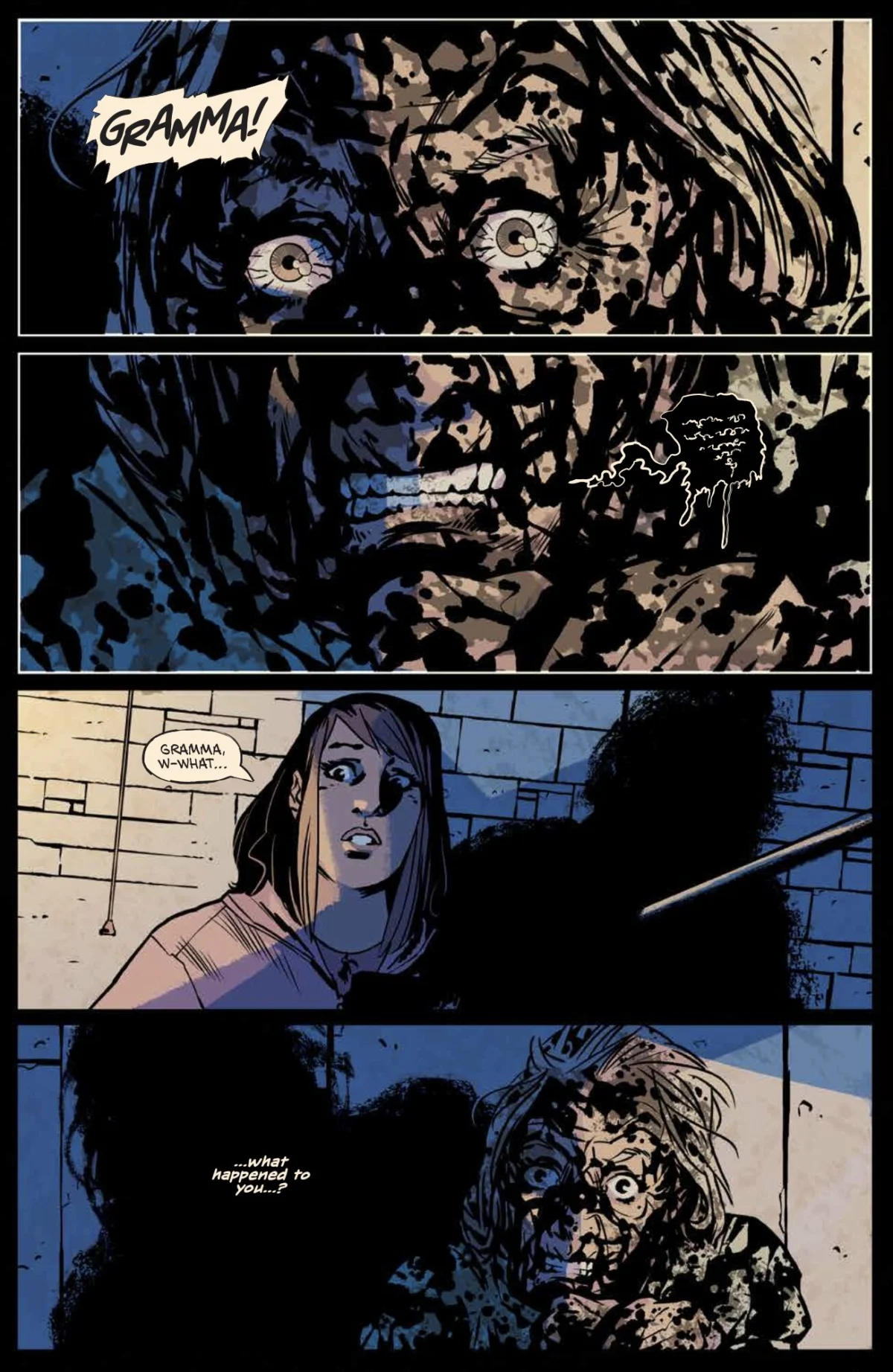
In the landscape of contemporary sequential art, few creative pairings have generated as much industry buzz as the collaboration between comic book legend Charlie Adlard and the meteoric writing talent of Chris Condon. Their latest endeavor, Of the Earth, has arrived as a chilling masterclass in atmospheric dread, establishing itself as a mandatory read for fans of both creature features and psychological horror.
While the debut issue successfully laid the groundwork for a new, grounded cryptid mythology, the recently released second issue marks a pivotal shift. It transitions the series from a curiosity-driven mystery into a deeply unsettling exploration of isolation, grief, and the terrifying unknown. By grounding supernatural phenomena in the visceral, decaying reality of rural Texas, Of the Earth #2 proves that the most effective monsters are often those that defy easy categorization.
The Core Narrative: A Descent into Isolation
Of the Earth #2 picks up immediately following the harrowing events of the premiere. The protagonist, Tabby, finds herself trapped in a suffocating environment in the middle of nowhere, Texas. Her central crisis is twofold: she is tasked with navigating the inexplicable state of her grandmother, who has been discovered in the basement, mute and inexplicably coated in thick, viscous oil.
As Tabby struggles to make sense of her grandmother’s trauma, the external environment offers no sanctuary. The family property, which features an active oil rig, begins to exhibit signs of instability. A series of localized tremors suggests that something massive and unnatural may be stirring beneath the earth’s crust. Adding to the tension, an abandoned oil company truck sits idle on the perimeter of the property, its occupants missing, leaving Tabby with the chilling realization that she is effectively cut off from civilization.
The Metaphor of Decay
One of the most compelling aspects of Condon’s writing is the thematic layering. The grandmother’s inability to communicate, paired with her physical deterioration, serves as a haunting, poignant metaphor for the slow, agonizing decline of Alzheimer’s disease. By weaving this very real, human tragedy into the fabric of a horror narrative, the series forces the reader to confront the terrifying helplessness associated with watching a loved one lose their sense of self. It is this synthesis of the mundane and the monstrous that elevates the series above typical genre fare.
Chronology of Terror: The Escalation of Issue #2
To understand the trajectory of the series, one must examine how the narrative pacing functions in this second installment. The progression of the story serves as a case study in controlled escalation:
- The Discovery: The issue opens with an intense focus on the grandmother’s psychological state. Adlard’s artistic rendering of her fear provides the emotional anchor for the entire issue.
- The Professional Intrusion: The arrival of Thomas Morton, a seasoned oil worker, introduces a glimmer of false hope. Morton is presented as a capable, grounded professional, yet his inability to diagnose the source of the basement oil leak serves to highlight the supernatural nature of the threat.
- The Revelation: As Morton investigates the machinery and the geography of the site, his own professional expertise is dismantled by the impossible details he encounters.
- The Horizon: The climax of the issue features a visual reveal on the horizon—a moment of pure, unadulterated suspense that leverages the readers’ imagination, forcing them to fill in the blanks of a monstrous entity that defies current biological understanding.
Artistic Mastery: The Adlard Effect
Charlie Adlard, known globally for his definitive, long-running work on The Walking Dead, has pivoted toward a different, more claustrophobic style of horror for Of the Earth. His approach to this series is less about the visceral gore of the zombie apocalypse and more about the "slow burn" of encroaching shadow.
Sequential Pacing and Character Acting
Adlard’s ability to manipulate the reader’s perception of time is on full display. Through his precise paneling, he forces the audience to linger on the subtle shifts in Tabby’s facial expressions—the transition from confusion to dawning horror is rendered with surgical accuracy. In a genre that often relies on jump scares, Adlard chooses to build fear through silence and space. By carefully controlling the reveals, he ensures that the reader feels just as trapped and confused as the characters themselves.

Colorist Pip Martin deserves equal recognition for the project’s visual identity. The palette, characterized by earthy, oil-slicked tones and the harsh, bleached sunlight of the Texas landscape, creates an environment that feels simultaneously organic and hostile.
Supporting Lore and Cryptid Mythology
A standout feature of Of the Earth #2 is the inclusion of extensive back-matter prose. In an era where many comics prioritize speed of consumption, Condon and Adlard have opted to reward attentive readers with supplemental material that deepens the mythology of the creature.
This prose serves as a "historical document," providing context to the entity haunting the property. By linking the creature to past, unverified accounts, the creative team adds a weight of historical legitimacy to the monster. This layering ensures that the creature is not merely a "beast of the week," but a fundamental, ancient threat that has likely existed for generations, waiting for the right conditions to emerge.
Implications: The Future of the Genre
The critical reception of the first two issues suggests that Of the Earth is poised to become a touchstone in modern horror comics. The implications for the genre are significant:
- Humanizing the Horror: By grounding the supernatural in the realities of caretaking and familial duty, the creators have demonstrated that high-concept horror functions best when it reflects human fragility.
- The Power of the Unseen: The series challenges the current industry trend of over-explaining the "threat." By keeping the monster largely obscured, Condon and Adlard utilize the "fear of the unknown," which remains the most potent weapon in a horror storyteller’s arsenal.
- Industry Shift: With high-profile creators shifting their focus toward original, creator-owned properties that emphasize atmosphere over action, Of the Earth stands as a testament to the sustainability of the "slow-burn" horror model.
Official Perspective and Reader Takeaway
While the cryptid remains elusive—a choice that may frustrate those looking for immediate, bombastic monster reveals—the consensus among critics is that this ambiguity is the series’ greatest strength.
The balance between emotional drama, mystery, and mounting dread is expertly maintained. Condon’s script avoids the traps of exposition-heavy writing, instead allowing the horror to manifest through the characters’ interactions and reactions. When paired with Adlard’s visual pacing, the result is an experience that lingers long after the book is closed.
As the series continues, the primary question remains: what happens when the entity on the horizon is no longer a distant threat, but a physical reality? Given the expert craftsmanship displayed in the first two issues, readers can expect that when the collision finally occurs, it will be as devastating as it is inevitable. Of the Earth #2 is more than just a continuation of a story; it is a confirmation that this creative team is operating at the height of their powers, delivering one of the most unsettling, rewarding, and essential reading experiences currently on the shelves.

 Sagoh
Sagoh