Jia Lissa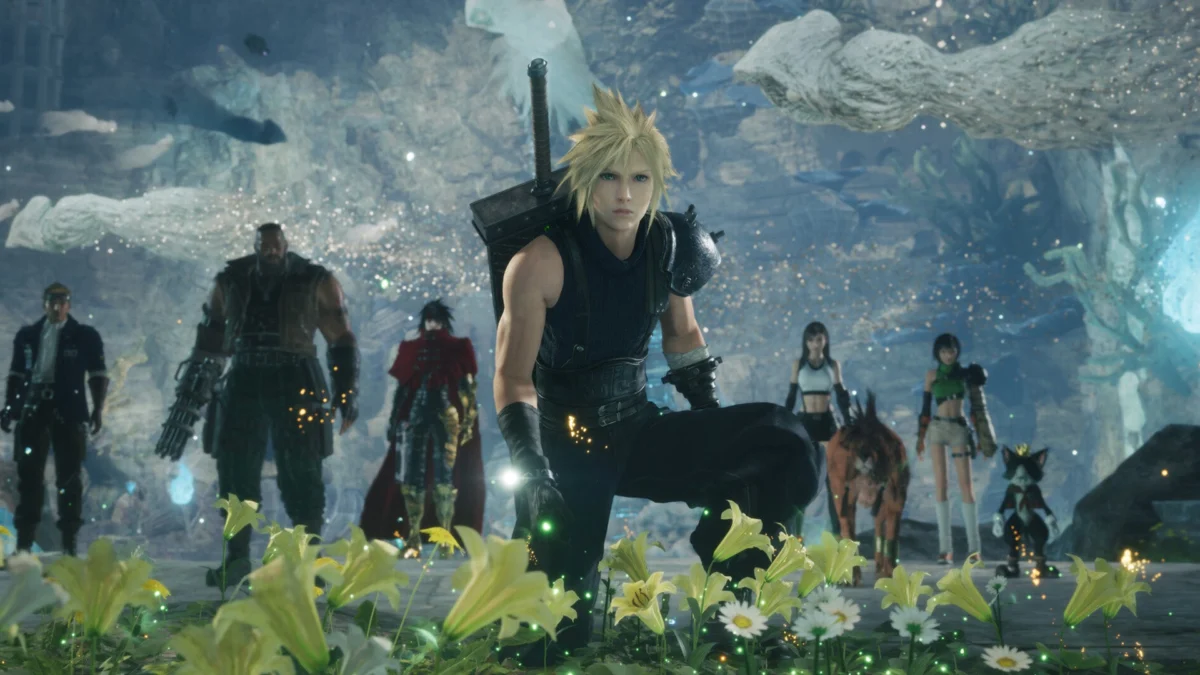
The final piece of the ambitious Final Fantasy VII remake trilogy has finally been unveiled. After years of speculation, fan theories, and the persistent (and somewhat confusing) association with the name "Reunion," Square Enix officially announced that the third installment will be titled Final Fantasy VII Revelation. The announcement, made during this year’s Summer Game Fest, marked the end of a long period of uncertainty regarding the franchise’s conclusion, shifting the narrative focus from the "rebirth" of the world to the "revelation" of its ultimate fate.
While the title has been confirmed, the road to this reveal was shrouded in unprecedented levels of secrecy—even within the development offices of Square Enix itself. As director Naoki Hamaguchi and his team begin the final stretch of production, the industry is left to analyze not just the title, but the thematic weight and developmental mystery behind the most anticipated RPG conclusion in recent history.
A Chronology of Speculation and Secrecy
The Final Fantasy VII remake project has always been defined by its subversion of expectations. When the first part, simply titled Final Fantasy VII Remake, was released in 2020, fans were initially confused, then intrigued, and finally captivated by the realization that the game was not a 1:1 recreation of the 1997 classic, but a meta-narrative sequel.
The announcement of the second part, Final Fantasy VII Rebirth, set the pattern for the "R" naming convention. Almost immediately, the rumor mill began churning for the third title. Fans were quick to propose titles like Return, Requiem, or the oft-cited Reunion. The latter was frequently championed by the community, despite the fact that Crisis Core: Final Fantasy VII Reunion had already utilized that specific moniker.
The secrecy surrounding the name Revelation was so profound that it extended to the development floor. According to Director Naoki Hamaguchi, the title was kept under wraps with a level of security typically reserved for high-stakes political documents or blockbuster film scripts. Only five or six members of the massive development team were privy to the final title before it was revealed on the Summer Game Fest stage. For the vast majority of the staff, the title was a surprise—a decision that Hamaguchi admits was necessary to maintain the "veils" of the project until the precise moment of public disclosure.
Thematic Foundations: Why "Revelation"?
In a recent interview with Game Informer, Hamaguchi shed light on the creative process behind the title. The team had been wrestling with how to encapsulate the finality of the trilogy while maintaining the thematic consistency of the previous entries.
The "Resolve" Conundrum
Interestingly, the core theme of the third installment is "Resolve." Hamaguchi noted that the development team spent significant time discussing the internal motivations of the party members as they face the final battles. "What kind of resolve do they have in them? What are they feeling? What are they thinking about?" Hamaguchi asked.
This led to a widespread expectation that the title might lean into this theme. However, when pressed on why the game wasn’t named Final Fantasy VII Resolve—especially given the convenient "R-E" start that aligns with Remake and Rebirth—Hamaguchi brushed it off as a coincidence. "That’s just a coincidence," he stated, adding that Resolve was never a serious candidate. Instead, Revelation was chosen as the word that best matched the narrative trajectory of the finale.
Unmasking the Truth
The choice of Revelation carries a dual meaning. On one hand, it refers to the literal unveiling of answers regarding the mysteries established in Remake and Rebirth. Fans have spent years questioning the nature of the Whispers, the fate of Zack Fair, and the shifting timeline of the planet. Revelation is the promise that these questions will finally be addressed.
On the other hand, the term acts as a narrative promise of finality. It suggests an apocalyptic or climactic exposure—the end of everything, where the truth of the Lifestream and the conflict between Sephiroth and Cloud Strife finally reaches its definitive conclusion. While some fans noted the Biblical undertones of the word, Hamaguchi clarified that the religious connotation is not the intended focus. Instead, it is purely about "revealing all these unanswered questions that the fans may have."
Supporting Data: The Evolution of the Trilogy
To understand the weight of Revelation, one must look at the data and structural evolution of the trilogy. The Final Fantasy VII remake project is a monumental undertaking in modern game development.
- Final Fantasy VII Remake (2020): Focused on establishing the premise, the expansion of Midgar, and the introduction of the meta-narrative elements.
- Final Fantasy VII Rebirth (2024): Focused on the open-world exploration, the deepening of party dynamics, and the divergence from the original 1997 plot.
- Final Fantasy VII Revelation (Expected 2027): Focused on the synthesis of these elements, the climax of the conflict, and the final resolution of the story.
The decision to allow players to alter aspects of the story—a mechanic introduced in previous parts and expected to continue—adds a layer of player agency that makes the "revelation" of the ending even more critical. While the developers have confirmed that there will be only one true ending, the path taken to get there is expected to be more personalized than ever.
Industry Perspectives and the "Marvel-ization" of Development
The extreme secrecy surrounding the title has drawn comparisons to the "Marvel Cinematic Universe" style of production. In an era where leaks are rampant, Square Enix’s ability to keep the title of Revelation restricted to a tiny inner circle is an impressive, if somewhat intense, feat of corporate discipline.
Industry analysts have pointed out that this level of secrecy is both a marketing tool and a creative shield. By controlling the information flow so tightly, the developers ensure that the reveal serves as a massive promotional event, successfully dominating the news cycle at Summer Game Fest. However, it also highlights the pressure under which the team is working. With the game slated for a Spring 2027 release, the team is entering a "crunch" phase where the narrative pieces must be locked, polished, and integrated.
Implications for the Finale
What does Revelation actually imply for the player?
First, it suggests that the game will be heavy on exposition. If the goal is to answer every question posed by the previous two games, players should expect a narrative-dense experience. The "resolve" of the characters will likely be tested against the "revelations" of the past, creating a high-stakes emotional environment.
Second, the title implies that the trilogy is moving toward a point of no return. In the original 1997 game, the ending was poignant but left room for interpretation. The remake project seems determined to provide a more definitive, structural closure. By calling the third part Revelation, Square Enix is signaling to fans that this is not just another chapter; it is the final act of a long-form drama.
Finally, the timeline of Spring 2027 suggests a development cycle that is being managed with precision. Given the scale of Rebirth, the team has a proven track record of delivering expansive content, but the challenge of Revelation will be to synthesize the divergent plot threads into a coherent, satisfying whole.
Looking Forward: The Final Countdown
As the dust settles from the Summer Game Fest announcement, the focus shifts to the long wait until 2027. Fans are currently dissecting every frame of the teaser imagery, looking for clues about where the journey will end.
The name Revelation has successfully ignited the community’s imagination, shifting the conversation from "what will it be called?" to "what will be revealed?" As Naoki Hamaguchi and his team continue their work in the shadows of the Square Enix offices, they carry the weight of a legacy that spans nearly three decades. The trilogy began with a "remake" of a memory, transitioned into a "rebirth" of possibility, and will culminate in the "revelation" of a new truth.
For now, all we can do is wait for the spring of 2027, when the final secrets of the Lifestream will be unveiled, and the resolve of our heroes will be put to the ultimate test. Whether the answers will satisfy the intense scrutiny of the global fanbase remains to be seen, but one thing is certain: the world of Final Fantasy VII is preparing for its most profound transformation yet.


 Asro
Asro
 Muslim