Evan Lee Salim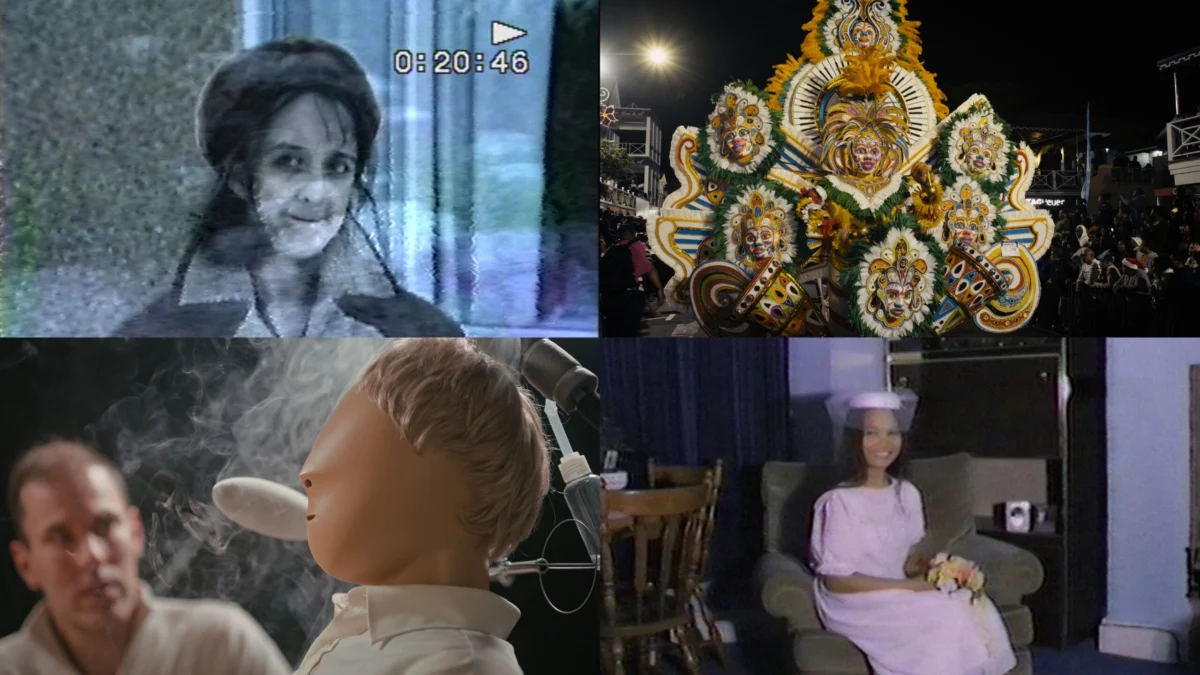
Film London has officially unveiled the shortlist for the 2026 Jarman Award, signaling a significant shift in the landscape of the UK’s most prestigious prize for experimental film. In a move that has sparked conversation throughout the arts community, the organization has condensed its traditional six-artist shortlist into a focused cohort of four: Sadia Pineda Hameed, Ilona Sagar, Rhea Storr, and Alia Syed.
As the award enters its 19th year, this selection highlights a commitment to rigorous, boundary-pushing moving image work, reinforcing the Jarman Award’s status as a bellwether for artistic excellence and a crucial precursor to mainstream institutional recognition.
The Legacy of the Jarman Award
Administered by Film London, the Jarman Award is more than a financial prize; it is a cultural institution. Named in honor of Derek Jarman—the seminal British filmmaker, gardener, and activist whose radical approach to cinema defied traditional narrative structures—the award seeks to champion artists who engage with the "experiential moving image."
The prize carries a £10,000 cash award, but its true value lies in the career trajectory it facilitates. Historically, the Jarman Award has acted as a direct pipeline to the Turner Prize. A cursory glance at the alumni list reveals a "who’s who" of contemporary British art: Lawrence Abu Hamdan, Oreet Ashery, Duncan Campbell, Monster Chetwynd, Luke Fowler, Imran Perretta, Heather Phillipson, Charlotte Prodger, Laure Prouvost, Elizabeth Price, James Richards, Sin Wai Kin, and Project Art Works. For many of these artists, a Jarman nomination was the catalyst that propelled them into the international spotlight, marking them as the primary innovators of the UK’s visual culture.
A Strategic Pivot: Why Four Instead of Six?
The reduction of the shortlist from six nominees to four for the 2026 iteration is a notable structural change. While Film London has not issued a formal manifesto explaining the contraction, industry observers suggest that the move is designed to heighten the prestige of the nomination itself. By narrowing the field, the jury effectively intensifies the focus on each individual artist’s practice, ensuring that the critical dialogue surrounding the award is as deep as it is broad.
This decision comes at a time when the arts sector is grappling with questions of sustainability, saturation, and the need for deeper engagement with individual artist practices rather than a broader "festival" approach.
The 2026 Jury: A Panel of Heavyweights
The selection process for this year’s shortlist was overseen by a diverse and highly influential jury, representing a cross-section of curatorial, academic, and practical expertise. The panel included:
- Eve Gabereau: Founder and CEO of Modern Films, whose track record in independent distribution brings a commercial and audience-facing sensibility to the jury.
- Woodrow Kernohan: Director at the John Hansard Gallery, a key voice in the regional gallery landscape.
- Luke Moody: Head of the BFI Doc Society Fund, a crucial figure in supporting non-fiction and documentary-adjacent experimental work.
- Hope Pearl Strickland: An artist whose own practice provides an essential "peer-review" perspective to the panel.
- Gilane Tawadros: Director at the Whitechapel Gallery, a powerhouse of the London art scene whose institutional oversight carries immense weight.
The consensus reached by this panel reflects a desire to celebrate artists who are not only technically proficient but are actively reshaping the language of film through themes of identity, geography, and systemic history.
The Nominees: A Closer Look at the Shortlist
Sadia Pineda Hameed
Based in the Ebbw Valley of Wales, Sadia Pineda Hameed’s work is a masterclass in material exploration. A Filipina-Pakistani artist, Hameed works across 16mm film, Hi8 video, sculptural installation, text, and performance. Her practice is deeply rooted in the physical weight of media, using the grain of film and the glitches of digital video to interrogate memory and displacement. Her recent inclusion in the Alchemy Film and Moving Image Festival, the Wales One World Film Festival, and the Queer East Film Festival underscores her growing influence as a practitioner who bridges the gap between traditional film and contemporary installation art.
Ilona Sagar
A resident of the prestigious Somerset House Studios, Ilona Sagar is a London-based artist whose work often engages with the intersection of architecture, human movement, and the body. Her films are highly choreographed, precise, and visually arresting. Sagar has built a robust international profile, with exhibitions at the 24th International Exhibition at Triennale Milano, the Serpentine Gallery, the Barbican, the Hayward Gallery, and the Wellcome Collection. Her nomination highlights the Jarman Award’s continued interest in artists who treat the moving image as a spatial experience.
Rhea Storr
Rhea Storr’s filmmaking is a profound investigation into the intersections of Black, mixed-race, and diasporic identities. Drawing from her own Bahamian-British background, Storr’s work is essential for its ability to weave personal history into broader socio-political critiques. Her recent screenings at MoMA’s Doc Fortnight, the New York Film Festival, the BFI London Film Festival, and the Berwick Film and Media Arts Festival confirm her status as one of the most vital voices in contemporary experimental documentary practice.
Alia Syed
With a career spanning over four decades, Alia Syed is the veteran of this year’s shortlist. Born in Swansea, Syed has spent 40 years honing a unique visual language that explores the fluid nature of time, language, and cultural transition. Her work has been shown in some of the most respected institutions globally, including the Whitechapel Gallery, the Yale Centre for British Art, and the Los Angeles County Museum of Art. Her presence on this year’s shortlist serves as a reminder that the Jarman Award values sustained, long-term contributions to the medium as much as it does emerging talent.
Chronology of the Selection
The 2026 process began with an open call for submissions, followed by a multi-stage review process by the Film London committee. The jury met throughout the spring and early summer to deliberate on the longlist, eventually winnowing the candidates down to the final four. This deliberate, slow-burn approach is designed to ensure that the selected artists represent the pinnacle of the current moving-image discourse in the UK.
Implications for the Industry
The Jarman Award does not operate in a vacuum. Its influence is felt in the funding cycles of the Arts Council, the programming schedules of major galleries, and the acquisition strategies of public collections. By selecting these four specific artists, the jury is implicitly setting a trend for the coming year.
The inclusion of artists like Hameed and Storr suggests a continued focus on the "politics of the archive"—the use of film to reclaim or re-contextualize suppressed histories. Meanwhile, the inclusion of Sagar and Syed emphasizes the ongoing relevance of structural and formalist experiments.
As we look toward the announcement of the winner, the arts community is watching to see how this condensed format impacts the public reception of the award. Will a shorter list lead to more intensive programming around the nominees? Will it make the final decision more contentious? One thing is certain: the 2026 Jarman Award remains the most significant barometer for the health and vitality of British experimental cinema.
Conclusion
The 2026 Jarman Award shortlist is a testament to the diversity and resilience of the UK’s experimental film sector. Whether through the technical innovation of Sadia Pineda Hameed, the spatial rigor of Ilona Sagar, the cultural inquiry of Rhea Storr, or the enduring, transformative legacy of Alia Syed, these artists represent the very best of what the medium can achieve. As Film London prepares for the final ceremony, the focus remains on the power of the moving image to challenge, provoke, and define the cultural zeitgeist. For these four artists, the nomination is not just an honor—it is a launchpad into the next chapter of their already distinguished careers.

 Nana Wu
 Layla Zulfa