Lina Irawan
Main Facts
Pearl Abyss, the renowned developer behind the visually stunning and mechanically rich Black Desert Online, has unleashed its latest ambitious creation, Crimson Desert, upon the gaming world. Pitched as a sprawling, single-player open-world action RPG, Crimson Desert arrives with a grand promise: an expansive, graphically breathtaking world paired with an intricately varied combat system. Early impressions, however, paint a picture of profound paradox, a game that simultaneously astounds with its technical prowess and bewilders with its narrative inconsistencies and baffling user interface.
At its core, Crimson Desert is presented as a "champion bodybuilder of a video game." Its world, a "gigantic" canvas of incredible scale, boasts "shining graphical fidelity," and its "muscular combat system" offers an "undeniably impressive wealth of options." Yet, this imposing physique appears to lack the fundamental "connective sinew" necessary for true functionality. Reviewers highlight "maddening systems" and "genuinely odd characterisation," suggesting a foundational disconnect that threatens to undermine its monumental achievements. The overarching sentiment is one of immense frustration intertwined with fascination: the game possesses the raw potential to be "one of the best games of the generation," but this potential is tragically overshadowed by fundamental flaws, particularly within its narrative content and player experience design. The "if only" looms large, a testament to a game that reaches for the stars but stumbles on its own intricate path.
Chronology
Development History: From MMORPG Roots to Single-Player Epic
The journey of Crimson Desert has been a long and evolving one, mirroring the grand ambitions of its developer, Pearl Abyss. Initially conceived as a prequel to Black Desert Online and envisioned as a massively multiplayer online role-playing game (MMORPG), the project underwent a significant transformation during its protracted development cycle. Pearl Abyss, celebrated for Black Desert Online‘s groundbreaking character creator, dynamic combat, and breathtaking visuals, decided to pivot Crimson Desert into a standalone, single-player open-world action RPG. This strategic shift aimed to deliver a more focused, narrative-driven experience, distinct from its MMORPG predecessor, while still leveraging the studio’s expertise in crafting vast, immersive worlds and engaging combat systems.
This evolution generated considerable anticipation within the gaming community. Trailers showcased stunning graphics, epic battles, and a rich, detailed world, leading many to believe Crimson Desert could set a new benchmark for the genre. The long gestation period, punctuated by impressive gameplay reveals, fueled expectations that Pearl Abyss was meticulously crafting a masterpiece that would blend the best elements of Western RPGs with their signature Korean flair.
Kliff’s Journey – A Narrative Overview
The narrative of Crimson Desert thrusts players into the shoes of Kliff, a member of the warrior sect known as the Greymanes. Their homeland of Pailune has been ravaged and displaced by the aggressive Black Bears, setting the stage for a classic tale of vengeance and reclamation. Kliff’s initial defeat, culminating in him being cast into a river by the Black Bears’ leader, serves as a catalyst for his transformation. Resurrected by an enigmatic magic, he is whisked away into a mystical realm known as The Void, where he acquires otherworldly abilities.
Armed with these newfound powers, Kliff embarks on a perilous quest to rally the scattered Greymanes and reclaim their lost home. This endeavor quickly spirals into a complex web of continental politics, forcing Kliff to navigate a treacherous landscape populated by powerful counts, cunning coinmasters, and seductive courtesans, alongside the inevitable encounters with blackguards and brigands. The narrative attempts to emulate the gritty, morally ambiguous tones often found in popular fantasy epics, particularly drawing comparisons to "Game of Thrones" with its mature themes and regional accents. However, as the review notes, this ambition often falters, leading to an "incongruent story" that struggles to maintain its identity and impact.
The Unfolding Experience – A Player’s Journey
The initial hours of Crimson Desert are undeniably captivating. Players are immediately struck by the sheer scale and visual splendor of the world. The first moments of control, "trudging along a twilight-dappled ridge at sunset," are described as "one of the most visually breathtaking scenes in recent memory." The sense of grand adventure is palpable, enhanced by the exhilarating freedom of "gliding across ravines on magical wings or galloping on horseback" through varied landscapes of high cliffs and yawning valleys. This early immersion creates a powerful first impression, leading players to believe they are on the cusp of an unparalleled gaming experience.
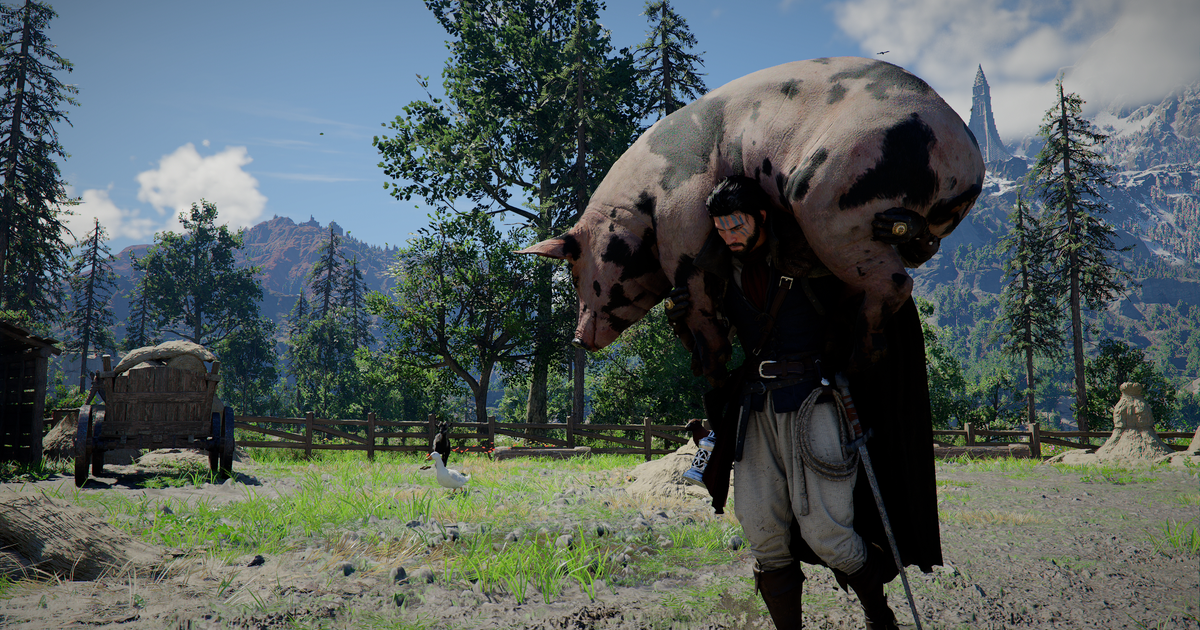
However, as the journey progresses, this initial awe begins to fray. The narrative’s shortcomings become increasingly apparent, undermining the player’s connection to Kliff and the overarching plot. The "maddening systems" and "baffling UI decisions" gradually erode the enjoyment, transforming what should be seamless gameplay into a series of frustrating obstacles. The initial promise of a truly epic adventure slowly gives way to a growing sense of disappointment as the game’s structural flaws reveal themselves, leaving players to grapple with the dissonance between its magnificent world and its unrefined core mechanics.
Supporting Data
A World of Breathtaking Scale and Fidelity
Crimson Desert‘s most undeniable strength lies in its meticulously crafted open world. Pearl Abyss has poured considerable resources into creating an environment that is not only vast but also teeming with intricate details and stunning vistas. The "gigantic world" is more than just a marketing claim; it translates into a palpable sense of scale as players traverse diverse biomes, from sprawling deserts to verdant forests, towering mountains, and bustling urban centers. The "shining graphical fidelity" ensures that every corner of this world is rendered with exceptional detail, pushing the boundaries of current-generation visuals.
Specific moments highlight this visual prowess. The described "twilight-dappled ridge at sunset" offers a masterclass in atmospheric lighting and environmental design, evoking a profound sense of wonder. The fluidity of movement, whether "gliding across ravines on magical wings" or "galloping on horseback," further enhances the player’s connection to this expansive landscape. The world feels alive, reactive, and rich with potential for exploration, fulfilling the promise of a truly "grand adventure." This environmental storytelling, devoid of narrative interference, stands as a monumental achievement, showcasing Pearl Abyss’s unparalleled ability to construct immersive digital realms.
Muscular Combat System: Depth and Variety
Complementing the awe-inspiring world is Crimson Desert‘s "muscular combat system," which offers an "awesome array of styles" for Kliff. This system is a clear evolution of Pearl Abyss’s expertise from Black Desert Online, providing players with deep and satisfying mechanics. Kliff isn’t just a generic warrior; he has access to distinct and impactful combat forms, from the strategic defense and offense of "chunky sword-and-board action" to a "spectacular selection of unarmed grappling combos." These grappling maneuvers are particularly highlighted for their "over-the-top" nature, injecting a sense of raw power and cinematic flair that contrasts yet complements the otherwise grounded fantasy setting.
The combat is described as "unassumingly deep once you’ve got the hang of everything you can do." This suggests a learning curve that rewards player investment, allowing for mastery of intricate combos and tactical approaches. The game’s ability to transition between different combat scenarios is also lauded. Players will "come to crave the larger battles where you take on almost Musou-like hordes of enemies," demonstrating the system’s capacity for wide-scale engagements. Simultaneously, the inclusion of "genuinely tough boss battles" indicates a challenge that demands strategic thinking and precise execution, ensuring a well-rounded combat experience that caters to both spectacle and skill.
The Conundrum of Kliff: Characterization and Narrative Flaws
Despite the game’s technical brilliance, the narrative and characterization surrounding Kliff emerge as significant liabilities. The "incongruent story" and "odd characterisation" of the protagonist are central to the game’s struggles. The decision to impose a fixed main character, Kliff, is perplexing, especially given Pearl Abyss’s acclaimed expertise in character creation, as seen in Black Desert Online. This feels like "packing away one of the best toys in its box for basically no reason," denying players the agency and personalization that has become a hallmark of the developer’s work.
Kliff’s dialogue is often criticized for being "hilariously sparse." The example of an NPC asking, "Are you up to the task?" followed by Kliff’s laconic "Yes," highlights a severe lack of engaging character interaction and development. More damning is the inconsistency in Kliff’s personality and tone, which "massively changes from scene to scene." He can oscillate wildly from a "stoic badass, catching punches and twisting arms like the Terminator" to "purring like a housecat serving soup to randos who’ve magically appeared to help build a tent." This dramatic shift shatters player immersion and makes it impossible to form a coherent understanding of the protagonist.
Furthermore, the storytelling often resorts to convenience and clichés. Plot points that should be arduous or significant are resolved with alarming ease; the arduous task of "reuniting the Greymanes" culminates anticlimactically when "a load of them just sort of turn up once you’ve got a camp and say ‘how do’ like it’s nothing." This "flat and uneven storytelling" extends to more problematic territory, as seen with the "Goldleaf guild" of "money-lending goblin merchants" besieging the city of Hernand. This particular instance draws criticism for straying into "stereotypes," leading to a reviewer having their "head in [their] hands," underscoring a significant lapse in narrative sensitivity and originality.

Baffling UI and Inventory Mechanics
Beyond the narrative missteps, Crimson Desert is also plagued by "baffling UI decisions" and "maddening systems" that actively detract from the gameplay experience. The inventory system is singled out as particularly egregious, designed seemingly "to simulate the experience of carrying your food home when you don’t want to pay for a carrier bag." This analogy effectively conveys the cumbersome and frustrating nature of managing items.
A critical flaw lies in the looting mechanic: "Unlike every other game, enemies don’t have a viewable inventory so you need space for everything they’re carrying before you can loot them, but you also can’t see what you’re picking up before it’s added to your bag." This design forces players to blindly collect all items, regardless of their utility, only to then sift through their cluttered inventory and discard unwanted junk. This creates an unnecessary loop of "grab every piece of junk before immediately throwing it away," transforming a basic RPG mechanic into a repetitive chore.
The most illustrative example of this poor design is the handling of in-game currency. Enemies drop "pouches of change which need to be manually opened before they’re added to your cash total." This micro-management of paltry sums is compared to a billionaire needing "to drop the downpayment on a New York apartment for it to be worth their time to pick it up." The effort involved in opening countless small bags for a "palmful of copper" is simply "not worth" the player’s time, leading to widespread disengagement from a core reward loop. These UI and inventory decisions create unnecessary friction, consistently pulling players out of the immersive world Pearl Abyss so expertly crafted.
Inspirations and Missed Opportunities
Crimson Desert clearly draws inspiration from revered open-world action RPGs like The Witcher 3: Wild Hunt and, "to an even greater extent," Dragon’s Dogma. These influences are evident in its expansive world, deep combat, and attempts at complex political intrigue. However, the game "overlooked how key a strong central character is to giving you a place and purpose within the game’s world," a lesson The Witcher 3 masterfully demonstrated with Geralt of Rivia. Geralt’s consistent characterization, moral dilemmas, and personal stakes provided an anchor for players navigating its vast world and complex narrative.
Similarly, while Dragon’s Dogma also featured a somewhat less defined protagonist, it compensated with "reactive systems and supporting characters" that "step up to fill the void and create the surprising moments and memories which stick with you." Crimson Desert, by contrast, fails to provide either a compelling central figure or sufficiently dynamic emergent gameplay/supporting cast to sustain its narrative and player engagement. The reliance on a fixed protagonist without the necessary depth, coupled with a lack of organic systems that generate memorable player experiences, represents a significant missed opportunity to truly learn from its esteemed predecessors. The game possesses the superficial trappings of these classics but fails to grasp the fundamental design philosophies that made them enduring.
Official Responses
As this article is based on a review of Crimson Desert, direct official responses to these specific criticisms are not yet available from Pearl Abyss. However, understanding Pearl Abyss’s history and typical developer-community engagement can provide insight into potential future actions.
Pearl Abyss has a reputation, particularly with Black Desert Online, for actively engaging with its player base and implementing significant updates and changes based on community feedback. Black Desert Online has seen numerous overhauls to its combat, class balance, UI, and quality-of-life features over the years, demonstrating the studio’s capacity and willingness to refine its products post-launch. This track record suggests that if the narrative inconsistencies, UI frustrations, and characterization issues highlighted in this review are echoed by a wider player base upon Crimson Desert‘s full release, Pearl Abyss would likely take note.
Future developer diaries, community Q&A sessions, or official forum posts would be the initial avenues for Pearl Abyss to address these concerns. Given the severity of the narrative and UI criticisms, any official response would need to acknowledge the feedback directly and outline a clear plan for potential patches or content updates. The challenge for Pearl Abyss would be the sheer scale of the suggested "revamp of 99% of its narrative content," which is a monumental undertaking for a game already in its release state. It’s more plausible that they would focus on improving UI, quality-of-life features, and potentially refining existing narrative elements or adding new, better-written side content, rather than a full story rewrite. The developer’s commitment to the long-term health of its games gives hope that Crimson Desert, despite its current flaws, could see substantial improvements over time.

Implications
The Paradoxical Masterpiece: Potential vs. Execution
The core implication of Crimson Desert‘s review is the stark contrast between its extraordinary potential and its flawed execution. It embodies the tantalizing idea of a "paradoxical masterpiece" – a game that showcases moments of unparalleled brilliance in world-building and combat, yet is simultaneously marred by fundamental design choices that impede its overall quality. This dichotomy creates a significant challenge for both players and critics. How does one rate or recommend a game that offers some of the best-in-class experiences in certain areas, only to undermine them with frustrating and underdeveloped elements elsewhere? This tension will likely define its initial reception, with passionate arguments emerging from both its admirers and its detractors.
Impact on Pearl Abyss’s Reputation
For Pearl Abyss, Crimson Desert‘s reception carries significant weight. While Black Desert Online established them as a powerhouse in visual fidelity and action combat, the studio has yet to deliver a critically acclaimed, single-player narrative experience on this scale. If Crimson Desert launches with these highlighted flaws, it could temper the perception of Pearl Abyss as a versatile developer capable of mastering both MMORPG and single-player genres. It might reinforce a perception that while they excel at core gameplay loops and technical presentation, narrative cohesion and user experience design remain areas for substantial growth. Conversely, if they manage to address these criticisms effectively through post-launch support, it could solidify their reputation as a responsive and dedicated studio.
Future of the Game: A Revamp on the Horizon?
The reviewer’s provocative suggestion of a "full revamp of 99% of its narrative content" underscores the depth of the game’s storytelling issues. While such a comprehensive overhaul is logistically improbable for a released title, it highlights the perceived necessity for significant narrative intervention. The future of Crimson Desert will largely depend on Pearl Abyss’s willingness and ability to address these concerns. Post-launch patches and content updates could focus on refining UI, improving quality-of-life features, and potentially adding more coherent side quests or expanded character interactions. However, a fundamental rewrite of the main questline and Kliff’s character arc would require an unprecedented commitment of resources, raising questions about feasibility and the game’s long-term trajectory. Without substantial changes, the game risks being remembered more for its missed opportunities than its monumental achievements.
The Broader Industry Context: Balancing Ambition and Cohesion
Crimson Desert‘s situation also offers a poignant case study for the broader video game industry, particularly in the realm of open-world development. It exemplifies the immense challenge of balancing grand ambition – a vast, beautiful world and complex combat – with the equally critical need for narrative cohesion, intuitive design, and a strong user experience. Many large-scale games grapple with this balance, often sacrificing one element for another. Crimson Desert‘s struggles serve as a reminder that cutting-edge graphics and deep mechanics, while impressive, cannot fully compensate for a disjointed story or frustrating interface. It emphasizes the holistic nature of game design, where all elements must work in concert to create a truly exceptional and memorable player experience.
Player Experience and Recommendations
Ultimately, the implications for players are clear: Crimson Desert will likely be a polarizing experience. For those who prioritize breathtaking visuals, expansive exploration, and deep, engaging combat above all else, and who are willing to overlook significant narrative and UI shortcomings, the game might still offer moments of genuine enjoyment. These players might find satisfaction in the sheer sandbox potential, crafting their own adventures within its stunning world. However, for players who seek a compelling story, consistent characterization, and an intuitive user experience, Crimson Desert in its current state may prove to be a source of profound frustration. The recommendation would likely be to approach the game with tempered expectations, focusing on its strengths while being prepared for its considerable weaknesses, or to wait for potential future updates that might address its foundational issues.



 Sagoh
Sagoh