Laily UPN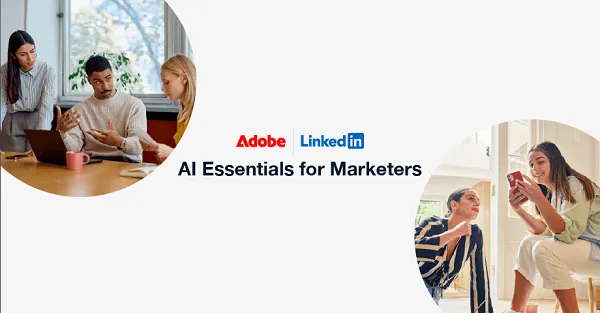
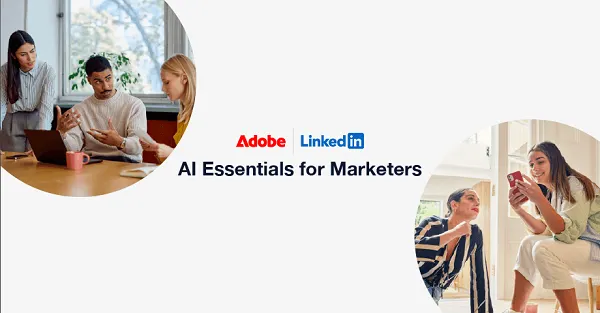
In a move signaling a fundamental shift in the professional landscape, LinkedIn has officially partnered with creative software giant Adobe to launch a comprehensive suite of artificial intelligence training courses tailored specifically for marketing professionals. As generative AI continues to reshape the workforce, this collaboration aims to democratize access to high-level technical proficiency, ensuring that marketers are not merely observers of the AI revolution, but active, skilled participants.
The initiative, hosted on the LinkedIn Learning platform, arrives at a critical juncture where the demand for AI literacy is outpacing the availability of qualified talent. By leveraging Adobe’s creative expertise and LinkedIn’s massive professional network, the two companies are attempting to standardize the "AI essentials" required to succeed in modern digital marketing.
Main Facts: The Intersection of Creativity and Technology
The core of this partnership is the "AI Essentials for Marketers" program. This series of courses is designed to move beyond theoretical discussions about AI, focusing instead on practical, role-based applications that improve day-to-day productivity and creative output.
Key features of the launch include:
- Accessibility: The courses are available in 47 languages, reflecting LinkedIn’s global reach and the universal nature of the AI shift.
- Certification: Upon completion, participants earn verified LinkedIn Learning certificates, which can be prominently displayed on their profiles to signal competency to prospective employers.
- Curriculum Scope: The initial rollout covers four primary pillars of marketing: digital marketing programs, content creation, social media communications, and data analytics.
- Expert Guidance: The content has been developed by LinkedIn’s newly formed "BrandWorks" team—a group of industry experts tasked with providing hands-on strategy and creative support to brands and advertisers.
This is not a one-off project. Both LinkedIn and Adobe have committed to a long-term partnership to continuously update the curriculum, ensuring that the training evolves in tandem with the rapid pace of AI innovation.
Chronology: The Road to AI Integration
The launch of this program is the culmination of a broader trend of professional upskilling that has accelerated since the public emergence of generative AI in late 2022.
- Q3 2024: LinkedIn begins laying the groundwork for "BrandWorks," recognizing that their enterprise customers require more than just ad space—they require strategic creative guidance.
- Early 2025: Internal research at LinkedIn reveals a dramatic spike in "AI-literate" job requirements, prompting discussions with Adobe regarding a collaborative educational framework.
- Mid-2025: LinkedIn announces the formation of BrandWorks, a team dedicated to helping brands deliver impact through creative strategy.
- Current Date: The official launch of the AI Essentials for Marketers series. The rollout serves as the first major public-facing project for the BrandWorks team, extending its insights beyond high-spending enterprise clients to the wider professional community.
Supporting Data: Why AI Literacy is the New Currency
LinkedIn’s Economic Graph—a massive repository of data on the global workforce—provided the empirical impetus for this partnership. The findings are stark:
- The 113% Surge: Marketing job postings that explicitly require AI literacy have increased by 113% year-over-year. This growth rate significantly outpaces traditional marketing skill requirements, such as basic search engine optimization (SEO) or email marketing.
- Economic Impact: As organizations transition from experimentation to full-scale AI adoption, the "productivity gap" between AI-literate employees and those without these skills is widening. Businesses are no longer just looking for creative talent; they are looking for "AI-augmented" talent.
- Global Demand: The decision to launch in 47 languages is driven by data showing that AI interest is not localized to Silicon Valley or North American markets. Emerging markets in Asia, Europe, and Latin America are showing some of the fastest growth in AI-related professional development searches.
These statistics confirm that AI is no longer an optional "hard skill" for marketers; it is becoming a baseline requirement for entry-level and senior roles alike.
Official Responses and Strategic Rationale
The partnership reflects a shared philosophy between Adobe and LinkedIn regarding the future of the creative economy.
The LinkedIn Perspective
LinkedIn leadership has framed this initiative as a necessary evolution of its "Economic Graph." By providing these tools, LinkedIn is effectively reducing the friction between the demand for AI skills and the supply of qualified professionals. A representative noted, "Our goal is to ensure that every marketing professional, regardless of their current employer or budget, has the tools to navigate the AI-driven landscape with confidence."
The Adobe Perspective
Adobe, which has pioneered AI integration through its "Firefly" model, views this as a way to ensure that its user base is fully equipped to utilize its software to its maximum potential. By training users in the fundamentals of AI usage, Adobe ensures that its tools are used ethically, efficiently, and creatively.
The Role of "BrandWorks"
The involvement of the BrandWorks team is perhaps the most significant aspect of this launch. Previously, the insights generated by BrandWorks were gated behind high-spend advertising contracts. By moving these insights into LinkedIn Learning, LinkedIn is democratizing institutional knowledge. This suggests a strategic shift: LinkedIn is moving toward becoming a holistic knowledge hub for its users, rather than just a networking and recruitment platform.
Implications: A New Era for Marketing Professionals
The launch of these courses carries profound implications for the industry.
1. The Death of the "Generalist" Marketing Role
As AI automates routine tasks—such as copywriting, data entry, and basic image generation—the role of the marketer is pivoting toward orchestration. Professionals must now act as "AI conductors," overseeing the output of machines while providing the human context, ethics, and strategic vision that AI still lacks. This course program explicitly prepares marketers for this transition.

2. Standardization of AI Competency
Before this initiative, "AI skills" was a nebulous term. A professional could claim AI literacy while only knowing how to write basic prompts. By formalizing this training through LinkedIn Learning and Adobe, the industry is establishing a common language and standard of proficiency. This makes it easier for recruiters to filter candidates and for marketers to benchmark their own progress.
3. Ethical AI Adoption
A major component of the training involves the responsible use of AI. With concerns surrounding copyright, data privacy, and algorithmic bias, having a reputable source like LinkedIn and Adobe provide standardized training ensures that the next generation of marketers is building its foundation on ethical best practices.
4. A Competitive Edge in a Crowded Market
For individual professionals, the value proposition is clear: in a job market that is increasingly saturated with talent, a verified certificate in AI marketing is a significant differentiator. It signals to employers that the candidate has proactively invested in their own upskilling and is prepared to hit the ground running with the latest tools.
Conclusion: The Future of Continuous Learning
The collaboration between LinkedIn and Adobe is a microcosm of the wider "learning-while-doing" culture that now defines the technology sector. It acknowledges that the shelf life of skills in the marketing industry is shorter than ever. By committing to ongoing updates to this training program, the two companies are positioning themselves as the primary custodians of professional development in the AI age.
For the marketing professional, the choice is becoming binary: adapt to the AI-augmented workflow or risk obsolescence. While the transition may be daunting, initiatives like this one provide a clear, structured, and accessible path forward. As LinkedIn and Adobe continue to refine these courses, the expectation is that this partnership will set the gold standard for how the workforce adapts to technological disruption in the 21st century.
As we look toward the future, it is clear that the most successful marketers will be those who can marry the creative intuition of the human mind with the computational power of artificial intelligence. Through this global initiative, the tools to bridge that divide are now firmly in the hands of the global workforce.


 Neng Nana
 Siti Muinah