Suro Senen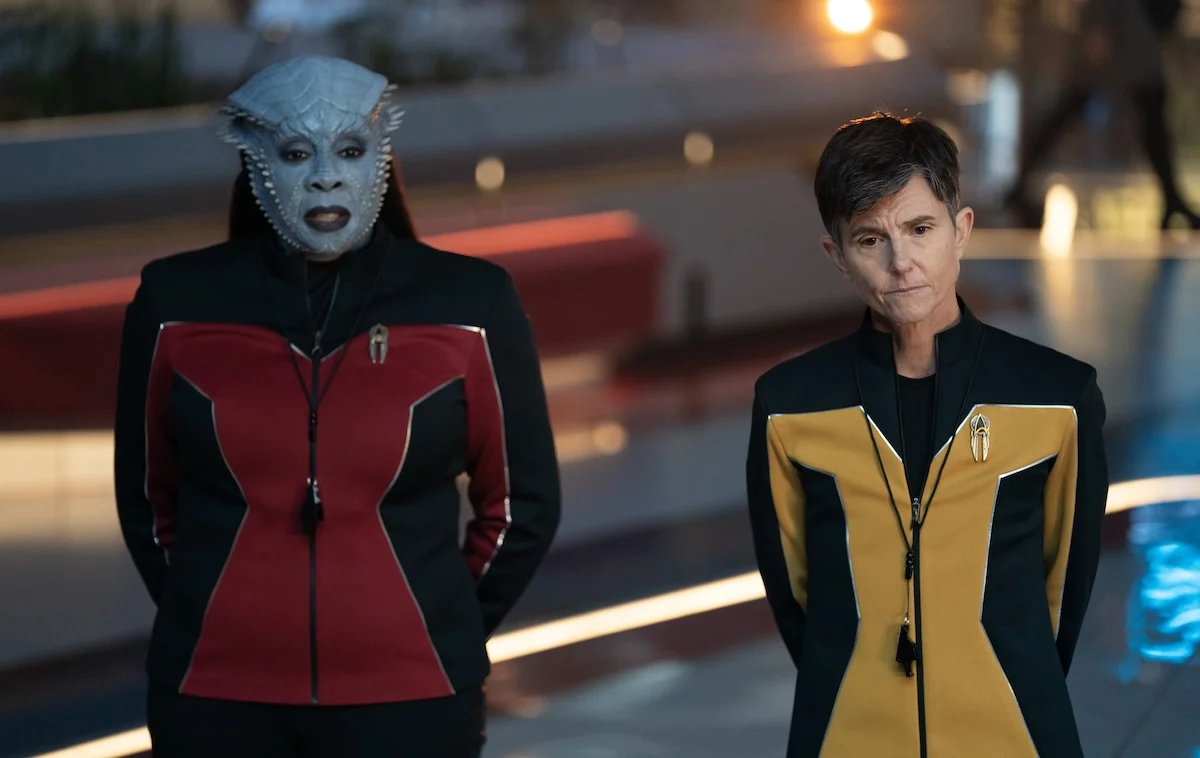
Since the U.S.S. Enterprise first graced television screens in 1966, the Star Trek franchise has functioned as a cornerstone of science fiction, continuously reinventing itself to reflect the anxieties, hopes, and technological advancements of each passing decade. From the philosophical exploration of The Original Series to the political complexity of Deep Space Nine and the sleek, modern introspection of Star Trek: Picard, the challenge for every new creative team remains the same: how to balance the weight of legacy with the necessity of innovation.
With the launch of Star Trek: Starfleet Academy on Paramount+, this challenge has fallen to cinematographer Tommy Maddox-Upshaw. Tasked with grounding a fresh, younger generation of cadets within the established lore of the Federation, Maddox-Upshaw has moved away from the cold, sterile aesthetic often associated with contemporary space opera to craft a visual language defined by intimacy, warmth, and the messy, human experience of growth.
The Weight of History: A Legacy on the Walls
To understand the visual mission of Starfleet Academy, one must first acknowledge the shadow it operates within. The franchise is built on an expansive mythology, one where icons like Spock and Kirk are not just characters, but historical touchstones. For a new series focusing on the next generation of Starfleet officers, the past is inescapable.
"Spock and everybody’s up on the wall," Maddox-Upshaw noted during a recent IndieWire Craft Roundtable. This acknowledgment is not merely a production design choice; it represents the constant pressure felt by the cadets within the show’s narrative. The characters are learning to walk in the footsteps of legends, and the cinematography reflects that tension. By keeping the presence of the past ever-present in the background, the show emphasizes the high stakes of the education these cadets are receiving.
Crafting a New Visual Identity
The primary directive for Maddox-Upshaw was to avoid the visual traps that have defined much of the modern sci-fi genre. In an era dominated by anamorphic lenses, high-contrast, "cold" digital grading, and the relentless use of long-lens cinematography to capture vast, isolating space, the visual team for Starfleet Academy chose a different path.
Breaking the Sci-Fi Mold
"Everybody, in this sci-fi space especially, is anamorphic, clean, cold, long lens, reach on a 300m," Maddox-Upshaw explained. "I was like, ‘No, these are kids, and they need to be learning about camaraderie.’"

To achieve this, the production shifted away from the detached, clinical look that often separates the viewer from the action. Instead, the team utilized lenses that allow for greater intimacy, ensuring that characters could exist within the same physical space in a single frame. This choice is thematic as much as it is technical; by bringing the actors closer together, the camera highlights the interpersonal bonds that form the backbone of the series. The goal was to create a "warm incubation" for the cadets—a visual environment that feels safe and nurturing before they are thrust into the unpredictable chaos of deep space.
A Chronology of Artistic Intent
The production process for Starfleet Academy was marked by a deliberate, phased approach to the show’s visual storytelling.
- Pre-Production/Foundations: The team focused on the "incubation" period of the cadets. The aesthetic was designed to be warm, inviting, and focused on the Academy’s campus environment. The priority was to establish a contrast between the students’ lives and the eventual reality of duty.
- Production/Principal Photography: The team began implementing a shift in tone. While the classroom and social scenes retained a grounded, warm, and intimate feel, the cinematography began to evolve as the narrative progressed.
- The Handoff: As the characters transition from trainees to officers, the visual palette subtly cools. This transition serves as a visual metaphor for the loss of innocence and the transition into the professional sphere of Federation operations.
Supporting Data: The Science of Tone
The effectiveness of Starfleet Academy lies in its ability to manipulate the audience’s subconscious through color and light. Maddox-Upshaw’s approach involves a calculated mixing of tonality. By starting with a warmer palette, the show draws the viewer into the personal lives of the characters, making their eventual separation from the Academy feel like a genuine loss.
When the cadets embark on their missions, the shift toward a cooler, more clinical aesthetic creates a jarring, intentional contrast. It signals to the audience that the "safety" of the Academy is gone. This is not just a stylistic whim; it is a narrative tool. By mixing these palettes, the show visually maps the psychological journey of the characters as they move from the theoretical world of the classroom to the harsh, unforgiving vacuum of the galaxy.
Official Responses and Creative Philosophy
The reception to the show’s visual shift has been met with praise for its willingness to break away from the "standard" look of space-based drama. In the recent IndieWire Craft Roundtable, the discourse highlighted how technical decisions—such as lens choice and color grading—can fundamentally alter the tone of a massive franchise.
The creative team has consistently emphasized that while the uniforms remain the classic red, yellow, and blue—a nod to the enduring tradition of Star Trek—the way the light hits those uniforms is entirely new. It is a synthesis of the old and the new, a way of signaling that while the institution of Starfleet remains, the people serving within it are changing, and so too must the way we perceive them.

The Implications of a "Human" Aesthetic
What does this shift mean for the future of the Star Trek universe? By prioritizing intimacy over the "technological sublime," Starfleet Academy is signaling a return to the humanist roots of Gene Roddenberry’s original vision. If the franchise is to survive another 60 years, it cannot rely solely on the spectacle of warp drives and phaser battles; it must rely on the stories of the people behind the consoles.
The implications for the industry are equally significant. As digital cinematography becomes more accessible, the tendency to default to "clean" and "cold" looks has become an industry standard for big-budget projects. Maddox-Upshaw’s work on Starfleet Academy serves as a counter-argument: a reminder that the camera should be a participant in the story, not just a recording device for action.
Looking Toward the Horizon
The transition from the warmth of the Academy to the cool, vast expanse of space is more than just a lighting shift; it is the visual definition of "Boldly Going." As the cadets navigate their training, the audience is invited to witness the slow hardening of these characters, their transformation from students to defenders of the Federation.
Through the meticulous work of the cinematographic team, Starfleet Academy manages to honor the past while carving out a space entirely its own. It is a testament to the idea that even in a universe of infinite possibilities, the most interesting things to watch are the relationships between people—and that sometimes, the best way to see the stars is to first focus on the faces of those standing next to you.
Star Trek: Starfleet Academy is currently streaming on Paramount+. For more insights into the craft behind your favorite shows, IndieWire’s Craft Roundtables are available to stream on PBS SoCal and the PBS App, as well as on IndieWire.com.


 Nana
Nana
 Lina Hope