Lina Irawan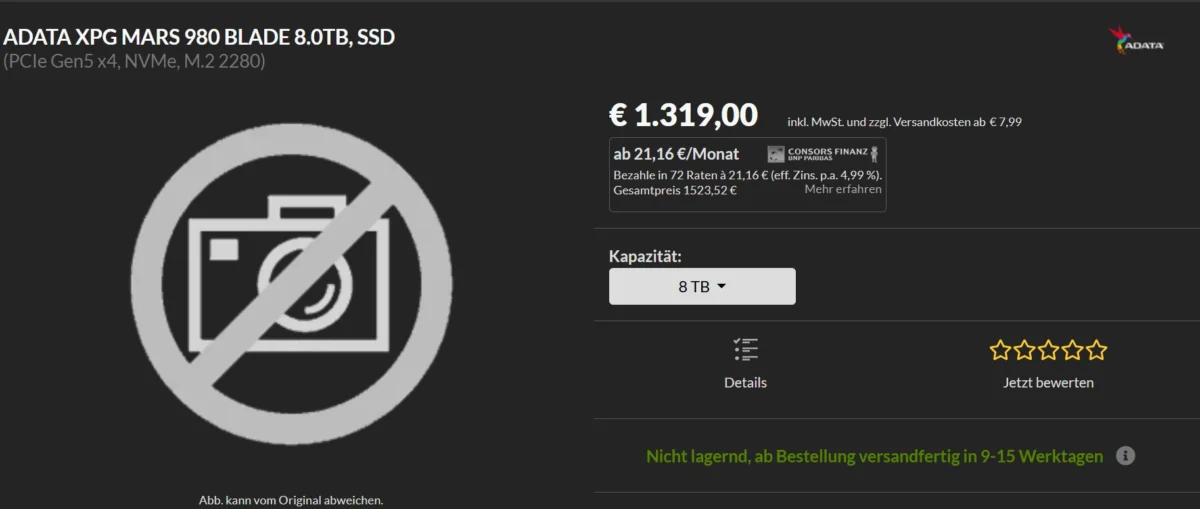
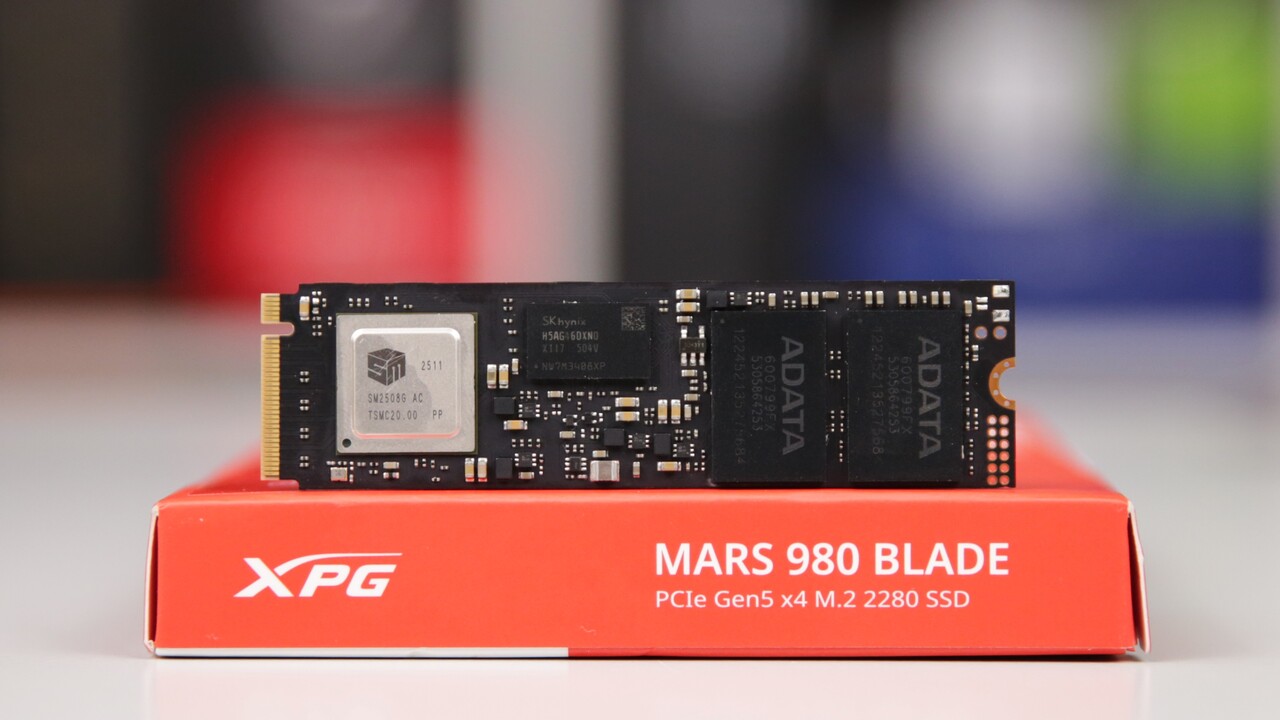
Despite a persistent memory chip crisis characterized by volatile pricing and supply chain constraints, the high-performance storage market is witnessing a paradoxical surge in capacity. Manufacturers are aggressively pushing the boundaries of consumer-grade storage by integrating 8TB models into their existing PCIe 5.0 NVMe SSD lineups. The latest player to join this trend is Adata, which is expanding its flagship XPG Mars 980 Blade and XPG Mars 980 Pro series to include massive 8TB storage capacities.
This development highlights a complex industry dynamic: while the cost of NAND flash memory remains high, the demand for "massive-capacity" storage from content creators, professional gamers, and data-heavy enthusiasts continues to drive manufacturers toward larger single-drive form factors.
Main Facts: The New 8TB Titans from Adata
Adata’s move to bolster the XPG Mars 980 series comes as a strategic effort to capture the high-end market segment that requires both the extreme speed of PCIe 5.0 and the convenience of high-density storage. While official press statements from the manufacturer are currently pending, retailers have already begun listing the products, providing a clear glimpse into the specifications and market positioning of these new drives.
According to current retail data from outlets like Alternate, both the XPG Mars 980 Blade and the XPG Mars 980 Pro are being offered for pre-order at a price point of €1,319. Shipping estimates suggest that these drives will reach the consumer market within the next 9 to 15 business days.
It is worth noting that the third iteration of this family, the XPG Mars 980 Storm, which features an integrated hybrid cooling solution, has not yet appeared in an 8TB configuration. This specific model remains generally scarce in the retail channel, likely due to the complexities of maintaining thermal efficiency in high-density NAND configurations.
The Performance Trade-off: Capacity vs. Throughput
The introduction of 8TB capacities to the XPG Mars 980 series brings with it a noticeable shift in technical performance metrics. Historically, larger capacity drives—which utilize more NAND flash channels—often maintain or exceed the speeds of their smaller siblings. However, in this specific instance, Adata’s updated datasheets indicate a slight regression in peak sequential performance.
Comparative Performance Metrics
- 4TB Models: These drives boast impressive sequential read/write speeds of up to 14,000 MB/s and 13,000 MB/s, respectively.
- 8TB Models: The new high-capacity variants are rated for up to 12,000 MB/s for both reading and writing operations.
While a reduction of 2,000 MB/s in read speeds may seem significant on paper, it remains within the upper echelon of current PCIe 5.0 performance. The performance delta is likely a result of controller limitations and the necessity to manage thermal output and error correction across the increased number of NAND dies required to reach the 8TB threshold.
Endurance and Longevity
One major advantage of the jump to 8TB is the significant increase in endurance. As the drive capacity doubles, so does the Total Bytes Written (TBW) rating. The new 8TB models are rated for 5,920 TBW, effectively doubling the lifespan of the drive under heavy write workloads compared to the 4TB models. This makes the 8TB variant a compelling choice for users involved in 4K/8K video editing or large-scale data sets, provided the warranty (standardized at 5 years) remains intact.
A Chronology of the 8TB Shift
The move to 8TB in the consumer space has not happened in a vacuum. It is part of a broader trend that has seen several key manufacturers attempt to normalize ultra-high-capacity consumer storage over the last several months.
- Early 2024: Industry discussions centered on the "memory crisis," with NAND manufacturers limiting output to stabilize pricing.
- Mid-2024 (Samsung’s Surprise): In a move that surprised the industry, Samsung introduced an 8TB version of its 870 Evo series. This was particularly notable because the 870 Evo is a SATA-based drive that has been on the market for over five years, signaling that manufacturers see value in retrofitting legacy architectures with high-capacity NAND.
- Late 2024 (Lexar’s Entry): Lexar joined the fray by expanding its NM1090 Pro flagship series with an 8TB model. Unlike Adata’s approach, Lexar’s 8TB model managed to maintain or even exceed the performance of its smaller predecessors, proving that high capacity and high speed are not mutually exclusive.
- Current Status: With Adata now entering the market, the 8TB tier is beginning to look like the new "Gold Standard" for enthusiast-level PCIe 5.0 storage, despite the significant price premium.
Market Implications: Navigating the Memory Crisis
The current market environment is defined by a "Speicherkrise" (memory crisis), where limited supply of advanced NAND flash chips has led to inflated costs for consumers. The launch of these 8TB drives during such a time appears, on the surface, to be counter-intuitive.
The Planning Gap
Analysts suggest that the decision to expand these product lines was likely finalized long before the current market volatility peaked. The development cycle for high-end SSDs, which involves complex firmware validation and hardware design, usually spans 18 to 24 months. Therefore, these product launches are the result of strategic roadmaps that could not be easily retracted, regardless of the current price of NAND chips.
The Cost Barrier
At €1,319, these drives are positioned as luxury items. For the average gamer, the price-per-gigabyte remains prohibitively high. However, for workstations, content creation studios, and power users, the ability to consolidate multiple 2TB or 4TB drives into a single 8TB M.2 slot offers immense value in terms of space management and motherboard lane efficiency.
Supporting Data: Technical Considerations
When evaluating these drives, users should consider the following technical factors that influence the 8TB experience:
- Thermal Management: PCIe 5.0 controllers run significantly hotter than their PCIe 4.0 predecessors. Adata’s "Blade" and "Pro" designs incorporate sophisticated heat spreaders. With 8TB of NAND, maintaining consistent, stable temperatures becomes even more critical to prevent thermal throttling.
- Controller Efficiency: The controller must manage a larger mapping table to keep track of the 8TB of data. This is often why we see the slight dip in performance compared to the 4TB versions; the controller has more "overhead" to manage.
- System Compatibility: Users must ensure their motherboards support the physical length of these M.2 drives and, more importantly, that the BIOS is updated to handle the latest high-capacity NVMe protocols.
Conclusion: A Glimpse into the Future of Storage
The introduction of 8TB PCIe 5.0 SSDs from Adata and its competitors serves as a microcosm for the broader hardware industry. Despite the constraints of the global chip market and the high costs passed on to the consumer, the drive for technical innovation persists.
The "Capacity Up, Performance Down" trend observed in the Adata XPG Mars 980 series is a reminder that we are hitting the physical limits of current NAND architecture. As we look ahead, the industry will likely shift focus toward increasing the efficiency and longevity of these drives rather than chasing ever-higher peak sequential numbers.
For the consumer, the arrival of these drives is a signal that while the market may be expensive, it is not stagnant. For those with the budget and the specific need for extreme capacity, the 8TB frontier is now open, offering a blend of storage density and speed that was considered science fiction only a few years ago.
Disclaimer: Some of the links provided in this report are affiliate links. Should you choose to purchase through these links, the publisher may receive a commission, which helps support further technical reporting and analysis.

 Reynand Wu
 Layla Zulfa