Lina Hope
In the crowded landscape of language acquisition resources, few innovations have captured the imagination of beginners quite like the unconventional tale of "Frank." What appears at first glance to be a whimsical piece of science fiction—an extraterrestrial stranded in the rural landscape of Japan—is actually a sophisticated, pedagogical tool designed to bridge the gap between rote memorization and true linguistic fluency.
By utilizing narrative-driven learning, the creators of the Frank series have effectively transformed the daunting task of learning Japanese into an immersive, serialized adventure. As students follow Frank’s crash-landing, his struggle to find sustenance, and his bewildered interactions with a no-nonsense local grandmother named Obaasan, they are simultaneously absorbing complex grammatical structures, essential vocabulary, and vital cultural nuances.

The Genesis of an Extraterrestrial Pedagogy
The premise is deceptively simple: Frank, an alien on an intergalactic spy mission, finds his spaceship disabled upon arrival in Fukui, Japan. Stripped of his advanced technology and his grasp of terrestrial language, he must rely on his wits and the patience of his unlikely mentor, Obaasan.
This narrative framework serves as a deliberate "scaffolding" technique. By placing the reader in the shoes of an outsider who is also learning the language from scratch, the reader’s anxiety is mitigated. When Frank stumbles over grammar or misinterprets social etiquette, the reader is not merely watching a character fail; they are identifying with a peer. This emotional connection is a cornerstone of modern language acquisition theory, which posits that low-stress, high-interest environments significantly increase retention rates for students of all ages.
A Chronology of Discovery: Following Frank’s Journey
The Frank series is structured into discrete episodes, each building upon the linguistic building blocks established in the previous one. This structured progression ensures that learners are never overwhelmed by information density.
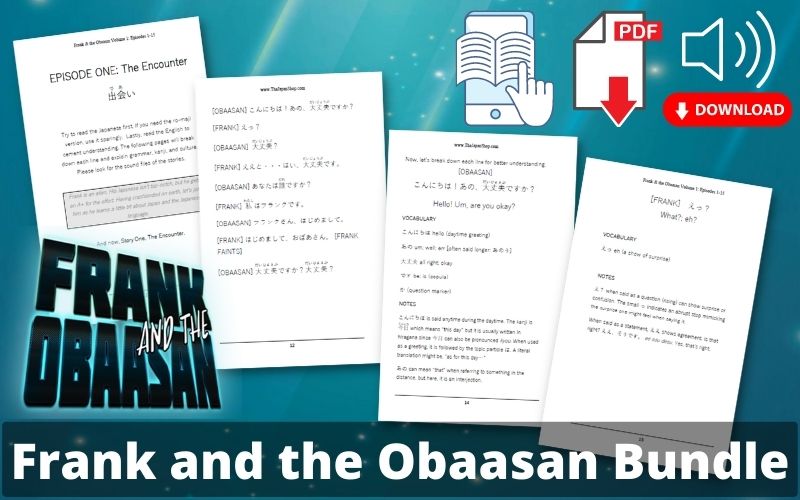
- Episode One: The Encounter: The foundation. Here, Frank and Obaasan meet. The focus is on basic greetings, self-introductions, and the fundamental question of wellness. It introduces the student to the "desu/masu" form in a natural, conversational setting.
- Episode Two: The Discovery of Water: As Frank begins to recover, he discovers "mizu" (water). This episode serves as a masterclass in vocabulary expansion, exploring how to ask for items and express simple preferences.
- Episode Three: The Sushi Misunderstanding: Frank encounters Earth food. The humor here—where Frank confuses a sushi roll for a human friend—provides a memorable mnemonic device for learning how to distinguish between animate and inanimate objects, a notoriously difficult concept for English speakers.
- Episode Four: Defining Food: A deeper dive into the mechanics of eating and the cultural significance of meals. The episode challenges the reader to understand the difference between wanting to do something and the nature of the object itself.
- Episode Five: The Identity Crisis: The stakes rise as Frank is introduced to a neighbor. The episode tackles the complexities of cultural origin and introduces the concept of self-identification, forcing the reader to move beyond simple declarative sentences.
Supporting Data: Why Narrative Learning Works
The effectiveness of this approach is supported by a growing body of evidence in the field of Second Language Acquisition (SLA). Research consistently demonstrates that "comprehensible input"—language that is just slightly above the learner’s current level—is the primary driver of fluency.
By providing a parallel English translation and a line-by-line breakdown for every sentence, the Frank series ensures that the input is 100% comprehensible. Furthermore, the inclusion of Makoto+ digital integration, such as the "Sentence Explorer," allows students to isolate specific grammatical particles or kanji compounds. This creates a feedback loop where the learner sees the word in the context of the story, then explores its mechanics in a technical database, and finally returns to the text with a deeper understanding of its utility.
Unlike traditional textbooks that rely on static, repetitive drills, the Frank series provides context. When a student learns the word for "delicious" or "faint," they do so while visualizing Frank gulping down water or falling over in confusion. These mental images act as anchors, making the vocabulary significantly harder to forget.
Official Perspectives and Educational Philosophy
The team behind The Japanese Page and Makoto+ emphasizes that their goal is not just to teach Japanese, but to foster a love for the culture. According to project developers, the "Frank" series was born out of a desire to provide something that felt less like a classroom chore and more like a hobby.
"We wanted to create a character who is allowed to make mistakes," a spokesperson noted. "In the Japanese classroom, students are often terrified of making errors. But Frank makes errors constantly. He’s an alien—he doesn’t know the rules. By watching him fail and then succeed, the reader learns that making mistakes is not only acceptable; it is the most efficient path to mastery."
This pedagogical shift—from "accuracy-first" to "communication-first"—aligns with the communicative approach to language teaching, which emphasizes the ability to convey meaning over the perfection of grammar.
Implications for the Future of Language Learning
The success of the Frank series has broad implications for how we might teach other "difficult" languages. As digital platforms continue to evolve, the trend is moving away from physical, linear textbooks and toward interactive, serialized content.
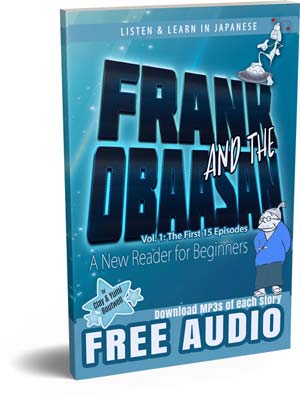
The integration of audio files, digital flashcards, and the Sentence Explorer tool represents the "new frontier" of language learning. It suggests a future where students will consume serialized content—much like a television show or a novel—and treat their study time as a period of entertainment rather than an obligation.
Furthermore, the Frank series demonstrates the power of community-based support. By offering multiple tiers of access—from free episodes for the casual learner to comprehensive membership tiers for the serious student—the project ensures that linguistic education remains accessible to a wide demographic. Whether it is through the digital bundle for beginners, the physical paperback for those who prefer tactile learning, or the full Makoto+ membership, the barrier to entry is kept intentionally low.

Conclusion: A New Standard for Beginners
For those who have struggled to progress beyond the basic hiragana alphabet, Frank offers a bridge to the next level. It provides the perfect balance of challenge and reward. By the time a student completes the five initial episodes, they have not only acquired hundreds of new words and dozens of grammatical patterns; they have participated in a cohesive, humorous, and culturally relevant story.
As the educational landscape continues to adapt to the needs of the digital-native generation, projects like Frank and the Obaasan stand as a testament to the fact that you do not need to be from another planet to find the study of Japanese both approachable and genuinely, undeniably fun. With plans for future volumes and expanded digital integration, it is clear that Frank’s journey on Earth—and the students’ journey into the Japanese language—is only just beginning.

For the dedicated learner, the message is clear: engage with the story, utilize the tools provided, and do not be afraid to follow an alien’s lead. You might just find that, like Frank, you are much more capable of understanding this new world than you originally thought.


 Neng Nana
 Asro
Asro