Raul Delapena Setiawan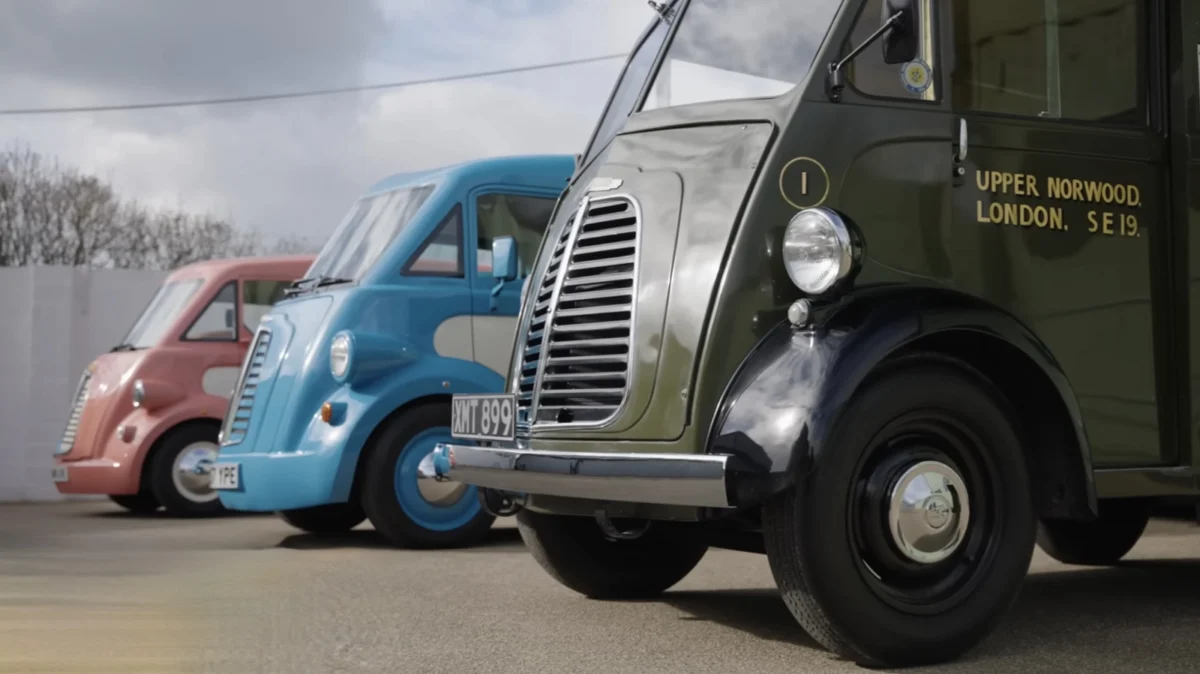
In an era defined by rapid technological disruption and the relentless pursuit of futuristic aesthetics, a curious counter-movement has taken hold in the automotive industry: the "retro-futuristic" revival. While giants like Volkswagen have attempted to capture the lightning of nostalgia with the ID. Buzz—a modern homage to the iconic Type 2 Microbus—British manufacturer Morris Commercial is taking a bolder, more historically reverent approach. The company is poised to reintroduce the legendary J-Type van to the 21st-century market, dubbed the Morris JE.
By marrying the unmistakable, curvaceous silhouette of a mid-century classic with a state-of-the-art electric powertrain, Morris Commercial is attempting to prove that the "Big Little Van" of the 1940s is just as relevant in the age of carbon neutrality as it was in the post-war industrial boom.
Main Facts: The Intersection of Heritage and Innovation
The Morris JE is not merely a cosmetic redesign; it is a fundamental reimagining of commercial transport. At its core, the JE retains the charming, bulbous aesthetic of the original Morris Commercial J-Type, a vehicle that became a cornerstone of British commerce starting in 1948. However, beneath its vintage exterior lies a sophisticated, modern engineering marvel.
The van is built upon a lightweight, modular skateboard chassis designed specifically for battery-electric propulsion. Unlike its predecessors, which relied on internal combustion engines, the JE utilizes a high-density lithium-ion battery pack. Despite its compact appearance, the vehicle is engineered for serious professional use, boasting a 1-ton payload capacity. Furthermore, the construction employs a recycled carbon-fiber monocoque body, making the JE one of the lightest commercial vehicles in its class. This weight efficiency is crucial, as it directly translates to increased range and energy efficiency—two of the most vital metrics for modern fleet operators.
Chronology: From Post-War Workhorse to Modern EV
To understand the gravity of the Morris JE, one must appreciate the history of the original J-Type.
- 1948: The Morris Commercial J-Type makes its debut at the Commercial Motor Show. It is an immediate sensation, lauded for its innovative forward-control design, which maximized cargo space while maintaining a diminutive footprint.
- 1949–1961: The J-Type becomes a staple of the British workforce. It serves as the backbone for the Royal Mail, the Post Office Telephone fleet, and countless independent businesses. Its nickname, "The Big Little Van," encapsulates its reputation as a deceptively spacious workhorse.
- 2017: Morris Commercial, a newly formed entity with the intent of reviving the brand, announces the development of an all-electric successor to the J-Type.
- 2019: The company unveils the JE prototype to global acclaim. The design is hailed as a masterclass in modernizing heritage aesthetics.
- 2024–2027: The company undergoes rigorous testing, supply chain development, and final design refinements.
- 2028 (Projected): Morris Commercial announces its target for full-scale production, marking the commercial return of the J-Type lineage after nearly seven decades.
Supporting Data: Engineering the "Big Little Van" for the Future
The shift from the original J-Type to the JE is a study in material science and efficiency. While the original J-Type relied on a 1.5-liter engine that produced modest power, the JE utilizes a drivetrain optimized for the low-end torque characteristic of electric motors.
Performance and Specifications
- Chassis: Lightweight aluminum skateboard platform.
- Body Material: Fully recycled carbon fiber (providing exceptional strength-to-weight ratios).
- Payload Capacity: 1,000 kilograms (1 ton).
- Powertrain: Battery-electric, designed for urban delivery cycles.
- Interior: Equipped with a modern infotainment suite, climate control, and ergonomic driver interfaces, contrasting sharply with the utilitarian, sparse cabins of the 1950s.
The use of carbon fiber is particularly noteworthy. By keeping the curb weight significantly lower than conventional electric vans—which often struggle with the heavy weight of battery packs—Morris Commercial is positioning the JE as a leader in "green logistics." Reduced weight means less tire wear, lower energy consumption per mile, and, crucially, a smaller environmental footprint during the manufacturing process.
Official Responses and Strategic Vision
Morris Commercial’s leadership has been vocal about the "why" behind this project. Unlike other manufacturers who treat electric vans as mere appliances, the company views the JE as a "lifestyle vehicle for the professional."
In various press statements, the development team has emphasized that the design process was governed by a desire to evoke the "emotional connection" people have with the original J-Type. "People smile when they see a J-Type," a company representative noted during the prototype unveiling. "Our goal was to ensure that the electric version retains that warmth while delivering the performance required for the next century of logistics."
Industry analysts have noted that the strategy is a high-stakes gamble. While nostalgia is a powerful marketing tool, commercial buyers are famously pragmatic. The success of the JE will depend entirely on whether the company can hit its price targets and reliability benchmarks. If the vehicle is perceived as a "toy" for boutique businesses rather than a reliable tool for large-scale fleets, its market penetration may be limited. However, with the rise of urban "last-mile" delivery services, the demand for distinctive, eco-friendly vehicles has never been higher.
Implications: A New Paradigm for Commercial Transport
The Morris JE represents a shift in how companies approach fleet identity. For decades, commercial vans were designed for maximum anonymity and utility. Today, the delivery vehicle is a mobile billboard. Brands are increasingly looking for vehicles that tell a story—and the Morris JE tells a story of British heritage, environmental consciousness, and aesthetic confidence.
The Competition
While Volkswagen’s ID. Buzz is the most visible competitor in the retro-EV space, the Morris JE differentiates itself by targeting the commercial sector more aggressively. Where the ID. Buzz is a passenger-first vehicle that has been adapted for cargo, the Morris JE was designed from the ground up to be a commercial workhorse.
The Challenges Ahead
Despite the enthusiasm, the transition from prototype to full-scale production by 2028 is a daunting timeline. The automotive industry is currently grappling with battery supply chain volatility, the need for massive investments in manufacturing infrastructure, and the cooling of the initial EV hype cycle in certain markets. Morris Commercial must navigate these macroeconomic headwinds while maintaining the high build quality required to justify the premium nature of their product.
Conclusion: The Long Road to 2028
The revival of the Morris JE is more than a sentimental journey; it is an attempt to bridge the gap between the industrial efficiency of the post-war era and the technological imperatives of the future. By maintaining the iconic, rounded aesthetic that once defined the streets of London, and populating it with a high-tech, carbon-neutral powertrain, Morris Commercial is making a bold statement: the best way to move forward is sometimes to look back.
Whether the JE will achieve the same ubiquity as its 1948 predecessor remains to be seen. However, as the automotive world moves toward a landscape of increasingly homogenized electric transport, the promise of a van with personality—a "Big Little Van" for the modern age—is an intoxicating prospect for both enthusiasts and logistics operators alike. All eyes are now on 2028, the year when the J-Type, reimagined for a new century, is finally expected to arrive.


 Ali Ikhwan
 Rifan Muazin