Asep Darmawan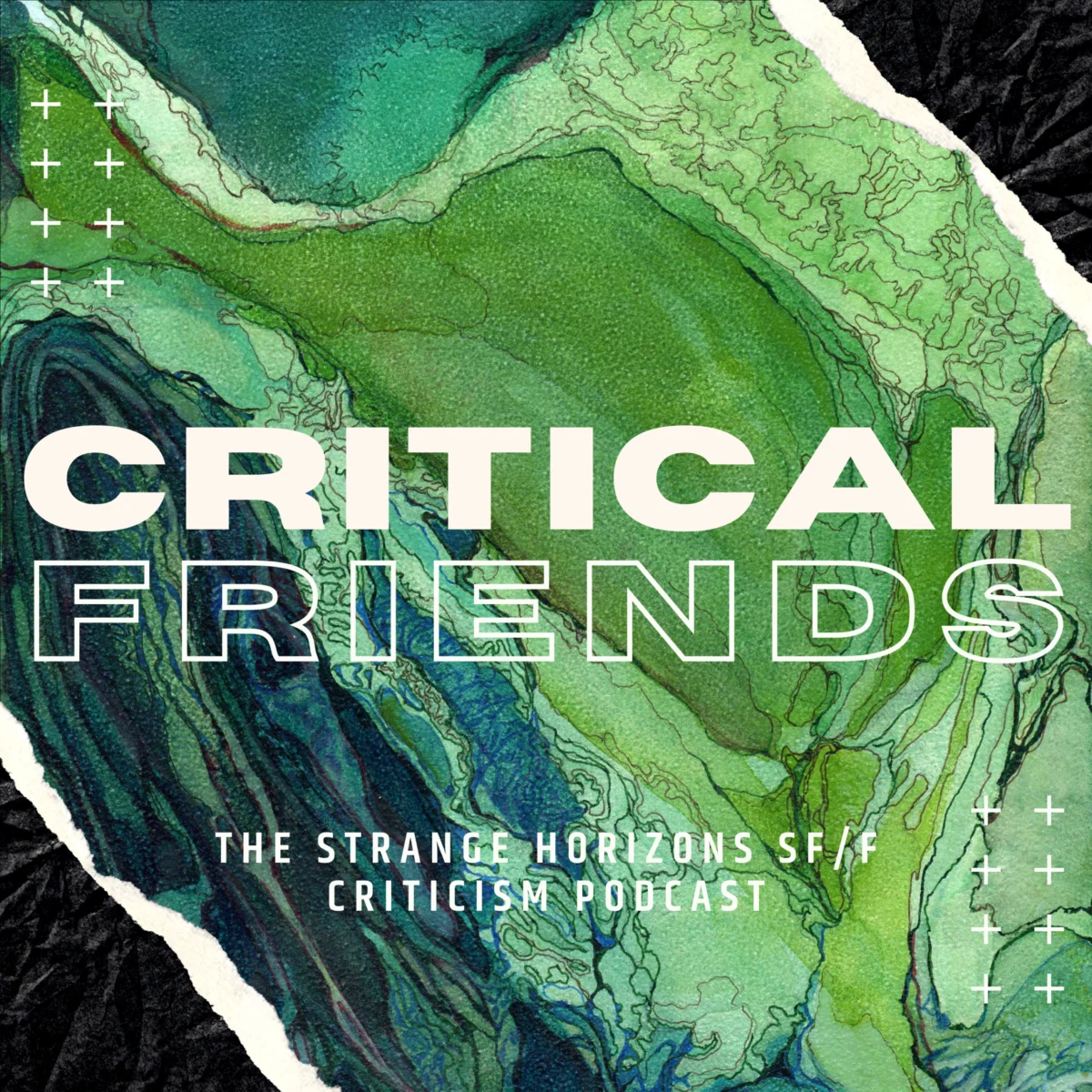
In the latest installment of Critical Friends, the flagship criticism podcast from Strange Horizons, host Dan Hartland sat down with editor Kate Macdonald and long-time reviewer Duncan Lawie to confront a perennial challenge for the speculative fiction community: the "back catalog." As the genre continues to expand, readers and reviewers are increasingly faced with the daunting task of engaging with authors who possess vast, multi-decade bodies of work. The conversation, which centered on the recent publications of Vonda N. McIntyre’s final novel, The Curve of the World, and Paul McAuley’s latest, Loss Protocol, evolved into a broader meditation on the role of the critic in managing the tension between the "shiny new thing" and the enduring legacy of an author’s entire oeuvre.
The Challenge of the Established Author
The central question posed by Hartland was one of accessibility: How should a reviewer approach a writer who has already contributed significantly to the SFF landscape? For the critic, there is a delicate balance to be struck between treating a new book as a standalone entity and acknowledging the weight of the author’s previous work.
Kate Macdonald, whose work with Handheld Press has long focused on recovering forgotten or overlooked literary history, noted that the context of a writer’s life often complicates the reading experience. Discussing her review of The Curve of the World—a book published posthumously—Macdonald highlighted the unique challenge of reviewing a work that lacked the benefit of the author’s final developmental edits. "You could see the dangling loose ends," Macdonald observed, noting that while the book was beautifully written, it occupied a space entirely distinct from the author’s previous bibliography.
Duncan Lawie, a stalwart of the Strange Horizons reviews department, offered a different perspective, emphasizing the importance of trust in the authorial voice. For Lawie, the appeal of a long-standing author like Paul McAuley lies in the unpredictability of their evolution. "I’m approaching something like this with a trust in the authorial voice," Lawie explained, suggesting that readers often return to veteran writers not because they know exactly what they will get, but because they value the author’s ongoing dialogue with the genre.
Chronology and the "Shadow of the Canon"
A recurring theme throughout the episode was the "shadow of the canon"—the idea that to fully appreciate a new book, a reader must first consume the entirety of an author’s previous output. The participants were largely in agreement that this is a counterproductive approach for modern criticism.
"We don’t want to create these walls," Hartland noted, echoing a growing sentiment in the literary community that the barrier to entry for SFF should be lowered. The panel argued that modern criticism should focus on the book at hand, allowing the reader to experience it on its own terms.
However, they also acknowledged the paradox of this approach: if critics do not explicitly point readers toward the back catalog, how can they ensure that great, older works—many of which are currently out of print—do not vanish from the cultural consciousness? Macdonald suggested that the role of the critic is often akin to that of a literary historian, tasked with finding ways to "sell" older authors to a new generation without relying on the dry, academic weight of a formal canon.
The Mechanics of Literary Ecosystems
The podcast provided a fascinating look at the logistical realities of modern reviewing. The discussion underscored that the "literary ecosystem" is not merely a collection of books, but a network of personal relationships, economic pressures, and shifting trends.
The Decline of Print Availability
One of the most sobering points raised by Macdonald was the reality of availability. "You’ve got two problems as a reviews editor," she explained. "You have to publicize the books that are in print and can be bought, or you can educate your readers to go and look on [secondhand book sites]." This limitation dictates much of the reviewing landscape, as outlets generally focus on new releases that are easily accessible to the public.
The Role of Negative Criticism
The panel engaged in a candid discussion about the necessity of negative reviews. While acknowledging the pressure to act as "PR staff" for authors, the group agreed that a healthy critical environment requires the freedom to be "honest about my opinion." As Lawie noted, there are instances where a critic may choose to stop reviewing an author simply because they can no longer maintain that necessary level of radical candor without damaging a professional or personal relationship.
Official Responses and Public Discourse
The episode also served as a coda to a previous, highly controversial discussion on debut authors, which had sparked significant debate across social media platforms. Hartland read a curated selection of responses, highlighting the diversity of opinion within the SFF community.
Correspondents like Abigail Nussbaum and Jonah Sutton-Morse emphasized the importance of maintaining a distance between critic and author, while authors like Sarah Tolcser argued that the industry often overinflates the impact of reviews on an author’s career. The discourse demonstrated that the SFF community is deeply invested in the ethics of criticism, with many participants feeling that the narrowing space for long-form reviews has given the few remaining outlets an outsized influence.
Alex Kingsley, a guest from the previous episode, provided a reflective follow-up, clarifying that their approach to reviews—which prioritizes the author’s perspective—is one personal framework among many. "I cannot help but write with knowledge of what it’s like to be on the receiving end of a review," Kingsley admitted, framing their process as an attempt to be a "good community member" rather than an objective arbiter of quality.
Implications for the Future of SFF Criticism
The conversation suggests that the future of SFF criticism lies in a more nuanced, "relational" approach. Rather than acting as gatekeepers of a rigid canon, critics are increasingly viewing themselves as guides who navigate the vast, often overwhelming terrain of published works.
The panel concluded that:
- Context is Generative: An awareness of whether a book is a debut or a later work in a long career can help critics frame their analysis, provided it does not become a prerequisite for the reader.
- Diversity of Perspective is Essential: The "literary ecosystem" thrives when there is space for both the "cheerleaders" who celebrate new releases and the "critics" who engage in deep, sometimes negative, analytical work.
- The Power of Re-discovery: There is a growing appetite for revisiting older, lesser-known works, provided they can be presented to modern readers without the "dead hand" of traditional canonization.
As the episode closed, the participants agreed that while the "shiny new thing" will always draw the most attention, the true value of the critic lies in their ability to bridge the gap between the past and the present. Whether through a 1,500-word review or a more ambitious "mini-monograph," the goal remains the same: to foster a community where books are not just consumed, but understood as part of a vibrant, ongoing conversation.
For readers looking to enter the back catalog of a prolific author, the advice from the panel was surprisingly simple: pick up the latest work, or perhaps a standalone novel, and allow the author to speak for themselves. If the interest is piqued, the rest of the oeuvre will be there waiting.


 Siti Muinah