Iffa Jayyana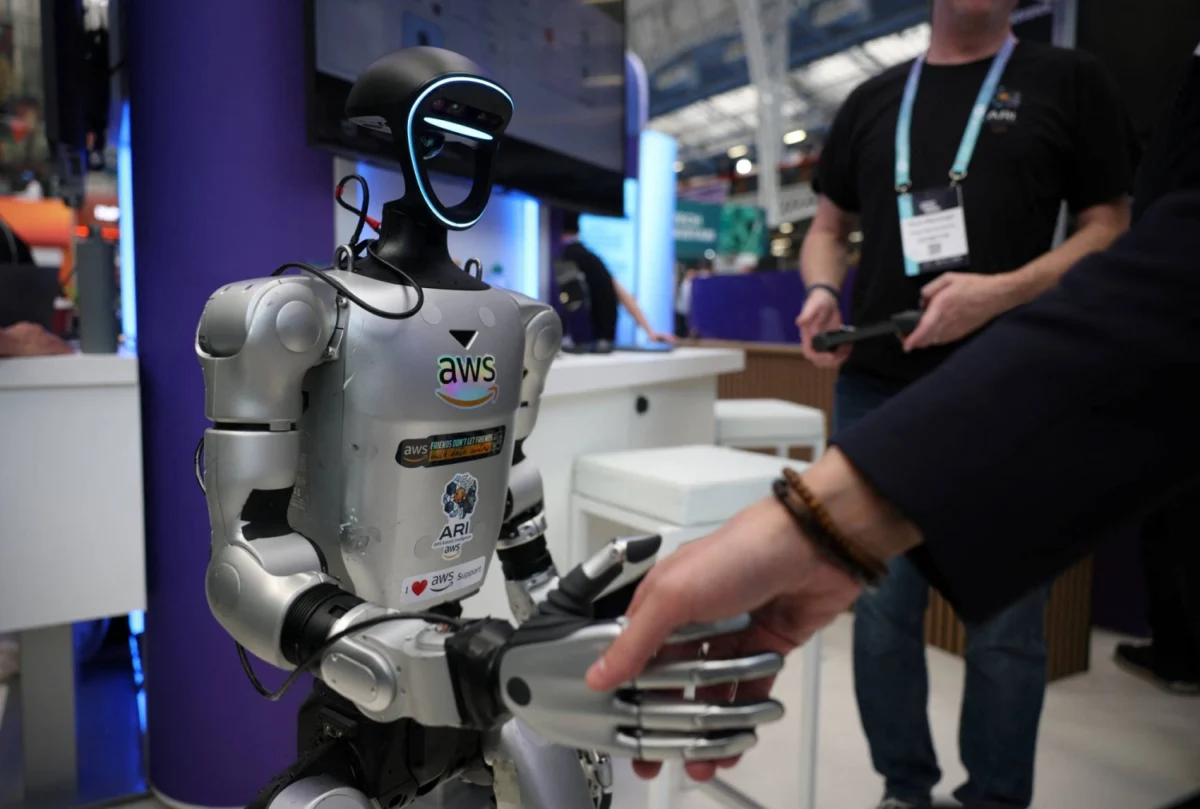
BOSTON — For decades, the humanoid robot has served as the ultimate North Star of technological ambition. From the silver screens of Star Wars to the high-stakes boardrooms of Silicon Valley, the promise of a mechanical assistant capable of folding laundry, brewing coffee, and navigating the complexities of human environments has captivated the public imagination. Yet, as the industry convenes at gatherings like the annual Robotics Summit in Boston, a stark dichotomy has emerged: the gap between the polished, viral marketing videos of the present and the functional reality of the machines on the floor is wider than ever.
While glossy brochures and carefully edited social media clips suggest that an army of androids is ready to integrate into our homes and factories, the engineers behind the hardware offer a more sobering assessment. Behind the curtain of cutting-edge innovation, many of these "autonomous" wonders are still tethered to human operators or restricted to tightly choreographed, repetitive tasks.
The Myth of Autonomy: Behind the Curtain
The recent surge in humanoid development has been nothing short of spectacular. Elon Musk’s Tesla has captivated the internet with footage of the "Optimus" prototype taking cautious, steady strides. Meanwhile, startups like Figure AI have showcased their "Figure 03" model, a third-generation machine capable of tidying a living room. In China, developers at AgiBot and Matrix Robotics have unveiled platforms designed to greet guests and serve coffee with a level of grace that rivals science fiction icons.
However, the industry is grappling with a transparency crisis. During the Robotics Summit in late May, experts were quick to puncture the illusion of universal capability.
"Most of the humanoids you see are being teleoperated, or they’ve got very specific paths and chores that they do," explained Chris Matthieu of RealSense, a company specializing in advanced robotic vision systems.
This revelation is not merely a technical nuance; it is a fundamental challenge to the industry’s narrative. For instance, when the robotics firm 1X launched its "Neo" robot last October, it was marketed as the world’s first consumer-ready humanoid designed to revolutionize domestic life. Yet, industry observers noted that during several demonstrations, the robot was being steered by a human operator situated just out of frame. This "Wizard of Oz" approach—where a human provides the intelligence while the robot provides the frame—remains a standard, if rarely discussed, practice in the field.
Chronology: From Industrial Arms to Humanoid Dreams
To understand the current state of robotics, one must look at the trajectory of the field over the last decade:
- 2010–2015: The Era of Fixed Automation. Robotics was largely defined by industrial arms in automotive factories. These machines were fast and accurate, but they were "blind" and required rigid, cage-enclosed environments to function safely.
- 2016–2020: The Rise of Mobility. Boston Dynamics’ Atlas began pushing the boundaries of movement, mastering parkour and complex terrain. While impressive, these machines were largely research-grade platforms, not commercial products.
- 2021–2023: The AI Pivot. The introduction of Large Language Models (LLMs) changed the game. Engineers realized that the logic used to predict the next word in a sentence could be adapted to predict the next movement in a physical task.
- 2024–Present: The VLA Revolution. The industry has shifted toward Vision-Language-Action (VLA) models, which represent the current "frontier" of robotic intelligence.
The Technological Engine: Why AI is the Catalyst
Despite the skepticism regarding current capabilities, progress is undeniably accelerating. The primary driver of this evolution is the integration of generative AI into the robotic control stack.
"I think AI has extremely accelerated that growth," says William Okazaki of Renesas, a global leader in sensor technology. The transition from rule-based programming—where every single movement must be hard-coded by an engineer—to machine-learning-based autonomy is a paradigm shift.
The Hand: The New Frontier
For years, the "holy grail" of robotics was the human hand. Designing a mechanical appendage that possesses both the strength to carry a box and the tactile sensitivity to pick up an egg was considered a generational challenge. Today, that goal is within reach. Modern robotic hands are now equipped with advanced haptic sensors capable of detecting pressure and even distinguishing the texture of human skin. This sensitivity is crucial for safety; a robot that can feel its environment is a robot that can work alongside humans without causing injury.
VLA Models and "World Models"
The true breakthrough lies in Vision-Language-Action (VLA) models. Unlike traditional software that operates in a silo, a VLA model acts as a bridge between input and output. It interprets a visual scene (a messy kitchen), processes a natural language command ("clean up the room"), and translates that into a specific sequence of motor actions.
Parallel to this is the development of "world models"—AI systems trained on massive datasets of video and physical interaction. These models allow a robot to simulate outcomes in its "mind" before executing them. For example, by watching millions of hours of video, the robot learns that if it squeezes a rubber ball, it will deform. It can then predict the physical consequences of its actions, allowing for more fluid and less "robotic" movement.
Official Responses and Industry Trials
The industry is currently in a "trial-and-error" phase. While the consumer market is the long-term goal, the immediate focus is on high-value industrial environments where the cost of failure is lower and the return on investment is clearer.
Boston Dynamics’ Atlas is currently being stress-tested within the Hyundai manufacturing ecosystem, while Hexagon Robotics’ AEON is undergoing trials at BMW facilities. These are not final products; they are "in-the-wild" experiments.
"Until you actually get the robot trying to do the thing you think it can do, you don’t really know," says Charlie Kemp, a prominent voice in the field. He emphasizes that the laboratory environment is an artificial bubble. Real-world chaos—varying light levels, unexpected obstacles, and unpredictable human behavior—poses challenges that even the most advanced AI struggles to navigate.
Implications: The Long Road Ahead
The implications of this technology are profound, yet the timeline remains a point of contention. While marketing departments would have the public believe that a robot butler is only a year or two away, the engineering reality suggests a more measured progression.
The Economic and Ethical Horizon
As these robots move from factory floors into warehouses, and eventually into homes, several ethical and economic questions arise:
- Labor Displacement: As robots become more capable of performing "general-purpose" tasks, the potential for workforce disruption increases, necessitating a rethink of vocational training.
- Liability and Safety: If a humanoid robot makes a mistake—whether it is breaking a plate or causing a physical injury—who is held accountable? The manufacturer, the software developer, or the user?
- The Privacy Trade-off: To be truly useful, a humanoid robot must be a master of its environment, which requires constant surveillance through cameras and sensors. This raises significant concerns regarding domestic data privacy.
The Reality Check
Daniel Fan, a representative from Innodisk, provides the most grounded perspective on the near future: "For general-purpose robots, it will take longer."
The industry is currently in the "model T" phase of humanoid development. Just as the first automobiles were unreliable, expensive, and required a mechanic to operate, today’s robots are cumbersome, power-hungry, and limited in scope. However, the foundational technology—AI, sensor integration, and motor control—is maturing at a breakneck pace.
Conclusion
The humanoid robot of 2024 is a complex paradox. It is a masterpiece of modern engineering that can demonstrate incredible feats of dexterity, yet it remains fundamentally reliant on human oversight. The marketing hype serves to attract the capital necessary for research, but the true breakthroughs are happening quietly in the labs, where engineers are slowly teaching machines how to "see" and "understand" the physical world.
We are, perhaps, at the end of the beginning. The transition from a robot that is "steered" to a robot that "thinks" is the current frontier. While we are years away from the C-3PO reality promised by futuristic films, the path is now clear. The challenge is no longer about whether these machines can exist, but how we refine them to function reliably in the messy, unpredictable, and beautiful chaos of the real world. For now, the best advice for the consumer is one of cautious optimism: admire the progress, but keep a firm hand on the remote control.


 Neng Nana
 Asro
Asro