Evan Lee Salim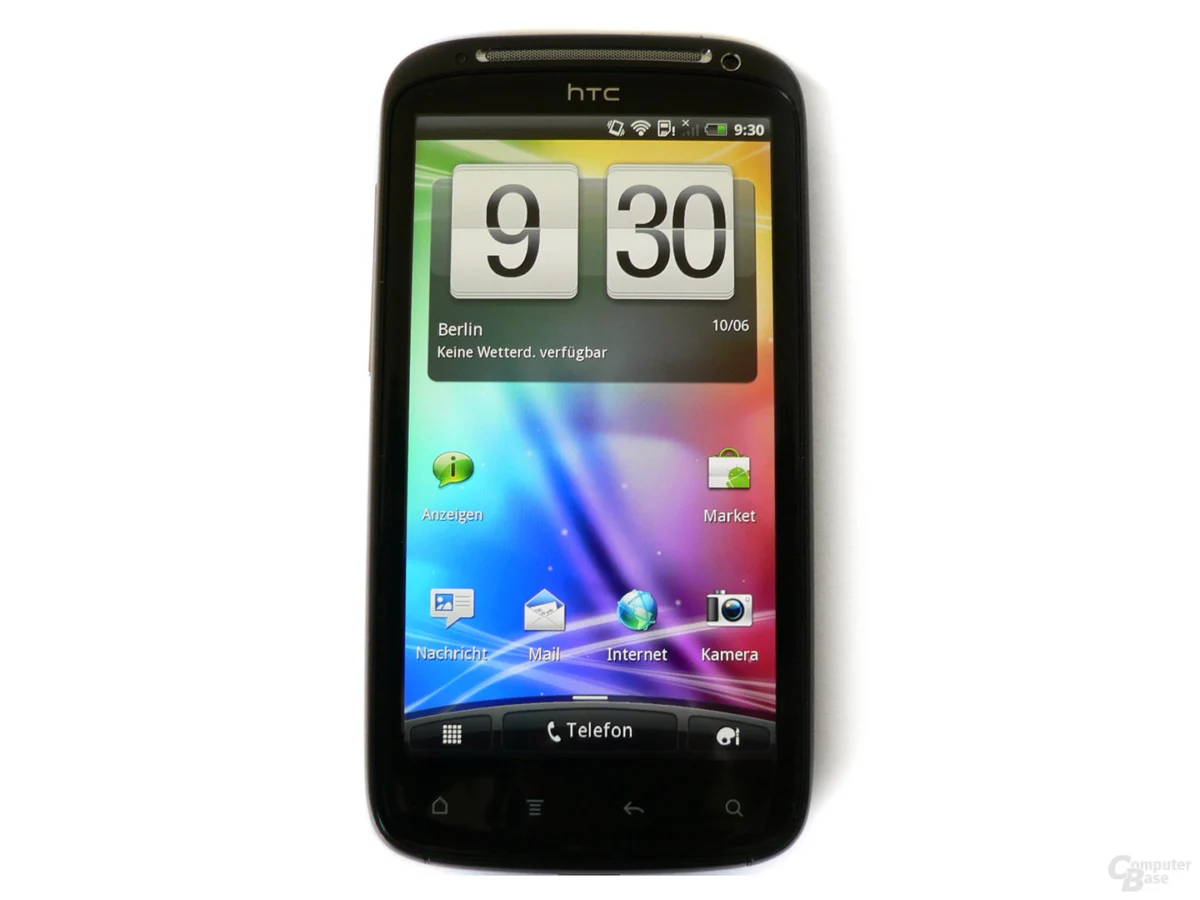
In the rapidly evolving landscape of mobile technology, 2011 stands out as a watershed year. It was the era when the "Dual-Core" race truly ignited, transforming smartphones from simple communication tools into pocket-sized powerhouses. Among the frontrunners was the HTC Sensation, a device designed to cement HTC’s position at the pinnacle of the Android ecosystem. However, as history often reveals, technical ambition is only half the battle. When pitted against the industry-defining Samsung Galaxy S II and the aggressive pricing of the LG Optimus Speed, the HTC Sensation found itself in a precarious position—a premium contender struggling to justify its existence in a crowded market.
The Design Philosophy: Premium Hardware, Practical Hurdles
At its launch, the HTC Sensation was a quintessential representation of the HTC design language—a brand known for its commitment to build quality and industrial aesthetics. While competitors were increasingly relying on lightweight, high-gloss polycarbonate, HTC leaned into its roots. The Sensation featured a unibody-inspired design with a sophisticated aluminum chassis, conveying a sense of weight and durability that felt "premium" in the hand.
However, this commitment to high-end materials came at a physical cost. Measuring 126.1 x 65.4 x 11.3 mm and weighing in at 148 grams, the Sensation was undeniably hefty compared to the Samsung Galaxy S II, which, despite its plastic construction, managed to stay at a remarkably light 116 grams. This weight disparity became a point of contention among tech reviewers of the time; while some praised the "heft" as a hallmark of quality, others viewed it as an ergonomic burden.
The device’s silhouette was further characterized by a slight curvature and a subtle, protruding camera housing. While the design was undoubtedly unique, it prevented the phone from resting perfectly flat on a surface, a minor but recurring annoyance for users. The front was dominated by a 4.3-inch display, framed by four capacitive touch buttons—a standard layout for the era, but one that would soon be superseded by the move toward on-screen navigation.
Chronology: The Pursuit of Dual-Core Dominance
The development of the HTC Sensation was a response to a shifting market demand. As Android evolved from version 2.2 (Froyo) to 2.3 (Gingerbread), the demand for raw processing power skyrocketed. HTC’s strategy was to integrate the Qualcomm MSM 8260 Dual-Core SoC, clocked at 1.2 GHz, and pair it with 768 MB of RAM.
By mid-2011, the "Dual-Core" marketing buzz was in full swing. HTC, however, faced significant challenges in supply chain management and component integration. While the Samsung Galaxy S II was capturing headlines for its blistering speed and vibrant Super AMOLED display, HTC was still refining its software overlay—HTC Sense—which, while visually stunning, was notoriously heavy on system resources.
The release window for the Sensation was tight. It arrived when consumers were beginning to compare spec sheets with newfound fervor. By the time the Sensation reached retail shelves in June 2011, the market was already saturated with devices boasting faster 3G speeds (HSPA+ at 21 Mbps for the Galaxy S II vs. the Sensation’s standard HSPA at 14.4 Mbps), leaving the HTC device looking like a laggard right out of the gate.
Supporting Data: Technical Benchmarks and Real-World Usage
The technical underpinnings of the HTC Sensation revealed a device of contradictions. While the CPU performance was respectable, the graphics processing unit (GPU)—the Adreno 220—was the "Achilles’ heel."
Performance Metrics
In benchmark testing, the Sensation often struggled to keep pace with its rivals. In CPU-intensive tasks, it performed admirably, but in GPU-centric applications and high-end mobile gaming, it frequently lagged behind the Mali-400 GPU found in the Galaxy S II by as much as 50%.

| Component | HTC Sensation Specification | Competitive Landscape |
|---|---|---|
| SoC | Qualcomm MSM 8260 (1.2 GHz) | Dual-Core, but GPU-limited |
| Display | 4.3-inch Super-Clear LCD | Lower contrast than Super AMOLED |
| RAM | 768 MB | 1 GB standard for flagships |
| Storage | 1 GB internal (expandable) | Generally perceived as tight |
| Connectivity | 3G HSPA (14.4 Mbps) | HSPA+ (21 Mbps) on competitors |
Despite these benchmark numbers, it is important to note that the "real-world" experience was largely positive. HTC Sense, despite its weight, was well-optimized for the device’s dual-core architecture. The interface was fluid, the transition animations were polished, and the device rarely suffered from the stuttering common in lower-end Android phones of that period.
Display and Camera Analysis
The Super-Clear LCD, while sharp, lacked the deep blacks and vibrant color saturation of the AMOLED panels favored by Samsung. In direct sunlight, the Sensation’s display was readable due to low reflection, but it remained a middle-of-the-road panel compared to the industry leaders.
The 8-megapixel camera was another area of mixed results. It provided adequate photos for casual social media sharing, but it was plagued by a 1.5-second shutter lag—an eternity when trying to capture a moving subject. For a "flagship" camera, this performance was deemed insufficient by critics who demanded instant response times.
Official Responses and Market Positioning
HTC’s official marketing focused on the "Sense" experience—the user interface, the social networking integration, and the seamless nature of the hardware-software ecosystem. HTC executives at the time emphasized that a smartphone was not just a collection of specifications, but an experience.
However, the market was indifferent to the "experience" argument when the price tag was set at approximately €540. At this price point, the Sensation was positioned directly against the Galaxy S II, which offered superior speed and a better display. Meanwhile, the LG Optimus Speed (marketed as the world’s first dual-core phone) was available for significantly less—around €370—making it the "performance-per-euro" king of 2011.
HTC’s response to these competitive pressures was to lean into its brand loyalty and the perceived build quality of its aluminum housing. They attempted to differentiate the Sensation as a more "mature" and "solid" device than the plastic-heavy competition. While this resonated with a specific demographic of users who detested the "cheap" feel of plastic, it did not move the needle for the mass market.
Implications: The Legacy of the Sensation
The story of the HTC Sensation is a case study in the perils of being a "me-too" manufacturer in a fast-moving market. By attempting to compete on hardware specs that it couldn’t quite lead, HTC found itself squeezed between high-value, lower-cost devices and high-performance, industry-leading flagships.
Strategic Consequences
- The Erosion of Value: The Sensation proved that premium materials could not compensate for a lack of top-tier performance if the price remained at the top of the market.
- Software Bloat Concerns: The incident highlighted the growing friction between custom UI skins like HTC Sense and the desire for raw, unadulterated Android performance.
- The Importance of Timing: The 1.5-second shutter lag and the lack of HSPA+ support demonstrated that in the mobile sector, missing a technological trend—even by a small margin—can significantly damage a product’s reputation.
In retrospect, the HTC Sensation was not a "bad" phone; it was a competent, well-built, and reliable device that simply lacked the "wow factor" necessary to overcome its high price. It serves as a reminder that in the hyper-competitive world of technology, a device is only as good as the value it provides relative to its peers. For HTC, the Sensation was a turning point, marking the beginning of a period where they had to pivot their strategy to find a sustainable place in a market dominated by the giants of Samsung and, eventually, Apple.
Today, the Sensation is remembered by enthusiasts as a sturdy piece of hardware that looked great on a desk but struggled to keep up with the breakneck pace of 2011’s technological revolution. It remains a testament to the fact that, in the smartphone wars, the strongest metal in the world cannot protect a company from the harsh realities of the market.

 Nana Muazin
 Raul Delapena Setiawan