


When The Witcher 3: Wild Hunt launched in 2015, it didn’t just set a bar for graphical fidelity or open-world scale; it revolutionized how players perceived narrative agency. At the heart of that transformation was Konrad Tomaszkiewicz, the project’s director. Now, years after his departure from CD Projekt Red, Tomaszkiewicz and his team at the newly formed studio, Rebel Wolves, are preparing to challenge the very foundations of the genre once more. Their debut title, The Blood of Dawnwalker, is not merely an homage to the past—it is a systematic deconstruction of the traditional RPG quest structure.
The Core Objective: A Narrative Without a Map
In the modern landscape of role-playing games, players are accustomed to a familiar rhythm: a linear main narrative punctuated by side distractions. The Blood of Dawnwalker rejects this paradigm entirely. Instead of a scripted sequence of events that pushes the player along a predetermined path, the game offers a single, urgent, and deceptively simple goal: breach a heavily fortified castle, dismantle the captors holding the protagonist Coen’s family, and secure their release.
You have 30 days and 30 nights to accomplish this. How you spend that time is entirely up to you.
“We don’t have the ‘main story’ as people typically define it—a series of quests leading you by the hand to the end,” explains Konrad Tomaszkiewicz. “We created it differently.” This philosophy echoes the emergent gameplay found in The Legend of Zelda: Breath of the Wild, where the player’s primary goal is always present, but the route taken to achieve it is a canvas for individual strategy. Whether you spend your time gathering allies, sabotaging the castle’s defenses, or simply surviving the volatile world around you, every action is a "satellite" task that feeds directly into the finale.
Chronology of a Design Shift
To understand why Rebel Wolves is taking this risk, one must look at the evolution of quest design over the last decade. For years, developers have struggled with the "ludonarrative dissonance" of side quests—the feeling that while a player is tasked with saving the world, they are distracted by mundane chores like hunting monsters or gathering herbs.

The Blood of Dawnwalker aims to eliminate this gap by making every mission meaningful. Lead Quest Designer Rafał Jankowski notes that there are no "mandatory" hurdles in the traditional sense. “All the stories we prepared for the players are technically optional,” he states. “But we encourage them to follow these threads, to explore, and to learn. The more you engage with the world, the more approachable the final assault on the castle becomes.”
This represents a maturation of the design philosophy Tomaszkiewicz pioneered at CDPR. In The Witcher 3, side quests were praised for their narrative depth, often spiraling into complex dramas that felt as vital as the main quest. In The Blood of Dawnwalker, that "side quest" energy has been promoted to the status of the primary experience.
The "Game Master" Philosophy: Data and Design
Creative Director Mateus Tomaszkiewicz describes the game as being “closer to a pen-and-paper RPG where the Game Master is deciding how he wants to lead you.” However, in a brilliant inversion, the player is the one who holds the agency.
Shaping Coen: Beyond Character Customization
While Coen is not a "blank slate" character, players are given substantial freedom in defining his moral compass. The game tracks your behavior through two primary systems:
- Relationship Dynamics: How NPCs perceive your actions, influenced by your choices during specific quests.
- The Infamy System: A broader tally of your reputation in the world.
If you choose to solve problems through brute force, theft, or wanton violence, the world will react. NPCs will remember your transgressions, and this can have cascading effects on future quest availability. Furthermore, the game features a permanent consequence model: NPCs can die—either by your blade or through your failure to intervene. When a character dies, their related quest lines vanish, permanently altering your playthrough and the eventual state of the world.
The Burden of the Vampire
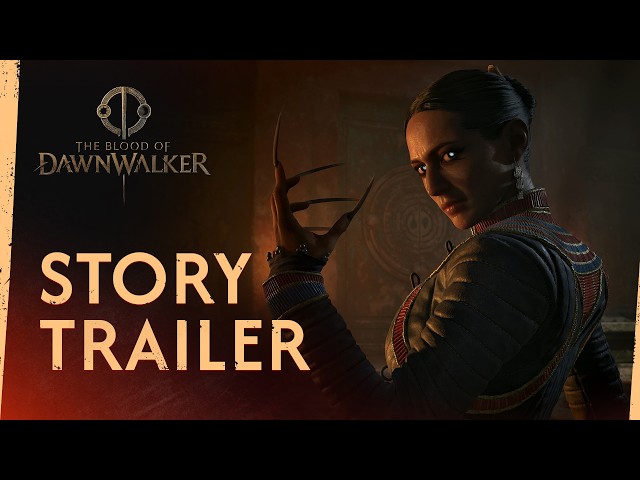
Perhaps the most potent element of the game’s design is the constant, looming pressure of Coen’s vampiric nature. It is not merely a stat bar; it is a narrative anchor. Mateus Tomaszkiewicz emphasizes that the hunger is a "constant point of pressure." Without it, he argues, the protagonist would risk feeling like a standard superhero. The hunger forces the player to make difficult ethical compromises, creating a "layer of weight and darkness" that is integrated into every mechanical system.
Implications for the Future of RPGs
The decision to remove the traditional "main quest" structure is a high-stakes gamble. By shifting the focus from a guided narrative to a sandbox of "narrative samples," Rebel Wolves is trusting the player to curate their own experience.
Konrad Tomaszkiewicz is acutely aware of the potential pitfalls. "You cannot copy this scheme [of choices and consequences] too often," he warns, "because if you do it more than once, people will be aware of that, and it starts to feel artificial." The studio’s goal is to keep the player in a state of constant uncertainty. In life, as in The Blood of Dawnwalker, the outcomes of our choices are not always predictable. By avoiding the trope of the "correct" moral path, the developers hope to foster a genuine sense of anxiety and accomplishment.
This structural shift suggests a future where RPGs focus less on the "quantity" of content and more on the "connectivity" of content. If the team succeeds, they will have effectively turned the RPG into a systemic narrative engine where the story is not told to the player, but rather authored by the player.
Industry Context: A Return to Roots
The timing of this release is particularly significant. As the gaming industry moves toward increasingly bloated, checklist-driven open worlds, The Blood of Dawnwalker serves as a counter-movement. By limiting the scope of the world’s duration (the 30-day clock) and increasing the density of consequence, the game promises a more intimate, intense experience.

Interestingly, this arrives in tandem with continued interest in the Witcher franchise. As CD Projekt Red prepares to release its final, post-launch DLC for The Witcher 3 in 2027, the industry is witnessing a "passing of the torch." The veterans who built the world of Geralt of Rivia are now evolving that DNA into something entirely new.
Conclusion: The Horizon
The Blood of Dawnwalker is set to launch on September 3, 2026. While fans of the Witcher series will undoubtedly look for similarities, the game appears to be a distinct entity—a gritty, systems-driven experience that favors player agency over scripted spectacle.
If the developers can successfully balance the "Game Master" style of storytelling with the freedom they’ve promised, The Blood of Dawnwalker could well be the title that defines the next generation of role-playing games. It challenges the player not just to fight, but to survive, to choose, and—most importantly—to live with the consequences of their actions. For those who have grown weary of the "follow the map marker" style of modern gaming, September 2026 cannot come soon enough. The stage is set; the castle awaits; and for once, the way you get there is entirely, unapologetically, yours.












No comments yet. Be the first to join the conversation!